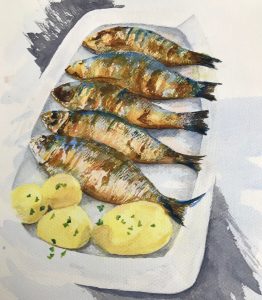
I found the book, Gombrich, E.H. (2014), Shadows; The Depiction of Cast Shadows in Western Art. Yale University Press, very helpful in thinking about the placement and intensity of shadows. In particular, I liked a pair of very old quotations which made real sense to me:
“Shadow: The darkness created by opaque bodies on the opposite side of the illuminated part.”
“Shadow: In the language of painters it is generally understood to refer to the more or less dark colour which serves in painting to give relief to the representation by gradually becoming lighter. It is divided in three degrees called shadow, half-shadow and cast shadow. By shadow (ombra)is meant that which a body creates on itself, as for instance a sphere that has light on one part and gradually becomes half light and half dark, and that dark part is described as shadow (penumbra). Half-shadow (mezz’ombra)is called that area that is between light and the shadow through which one passes to the other, as we have said, gradually diminishing little by little according to the roundness of the object. Cast shadow(sbattimento)is the shadow that is caused on the ground or elsewhere by the depicted object….”
After Filippo Baldinucci, Vocabularia Toscano dell’Arte del Disegno, Florence 1681.
I know this is frightfully wordy and technical, but I hadn’t really thought before about the shape of an object causing its own shadow on itself, and then also being subject to the shadows cast upon it by other things. I have been consciously trying to think of this as “modelling shadow” and “cast shadow” when I have been sketching – as exemplified by the painting by Giovanni Battista Moroni – Portrait of a Gentleman with his Helmet on a Column Shaft, 1555-6.
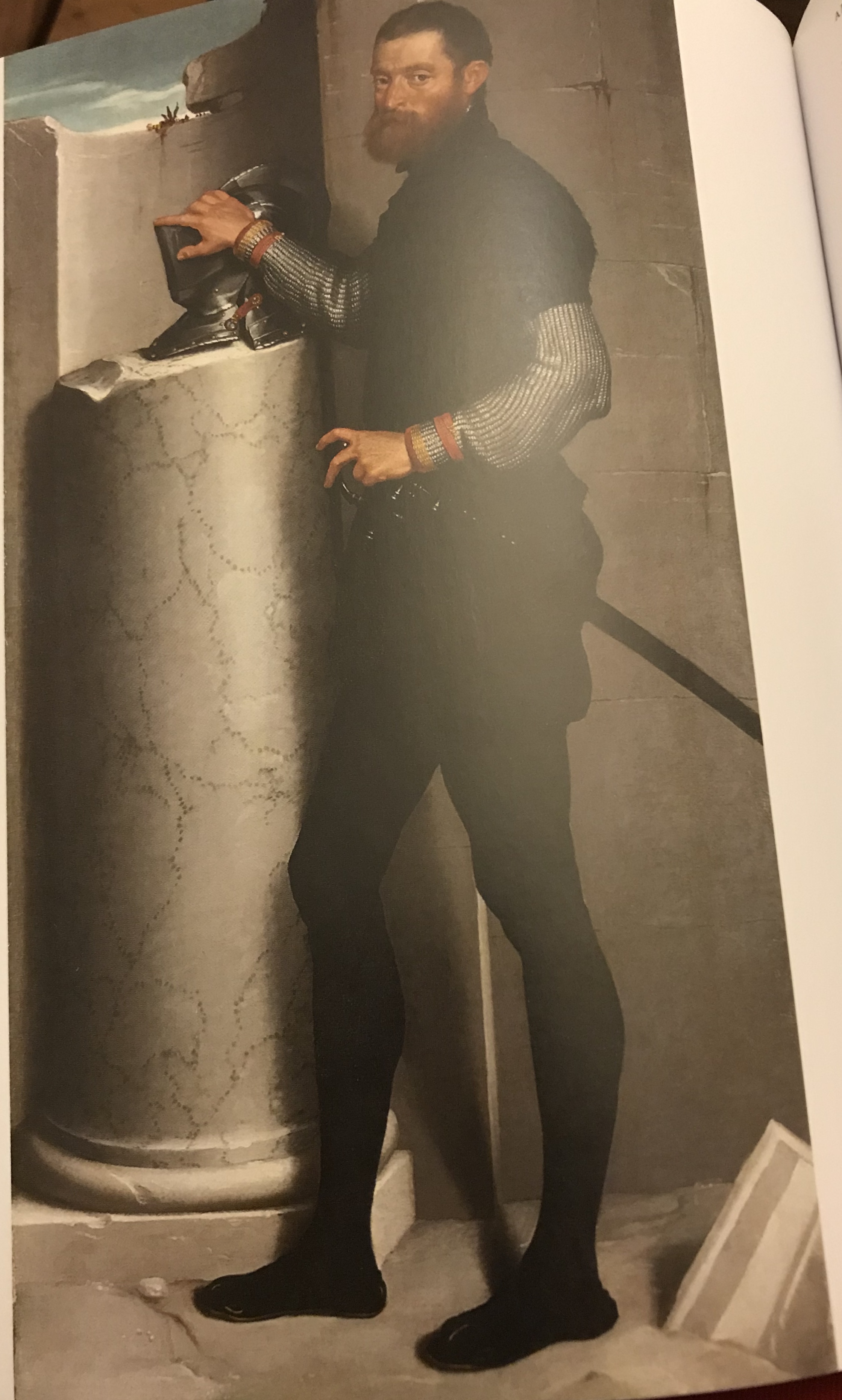
I shall continue to keep looking really carefully and drawing what I see, but it’s useful to have something which helps you to understand and analyse when you get to that part of a drawing where you have to look over and over to try and make sense of what you’re seeing.

 Sue J's blog