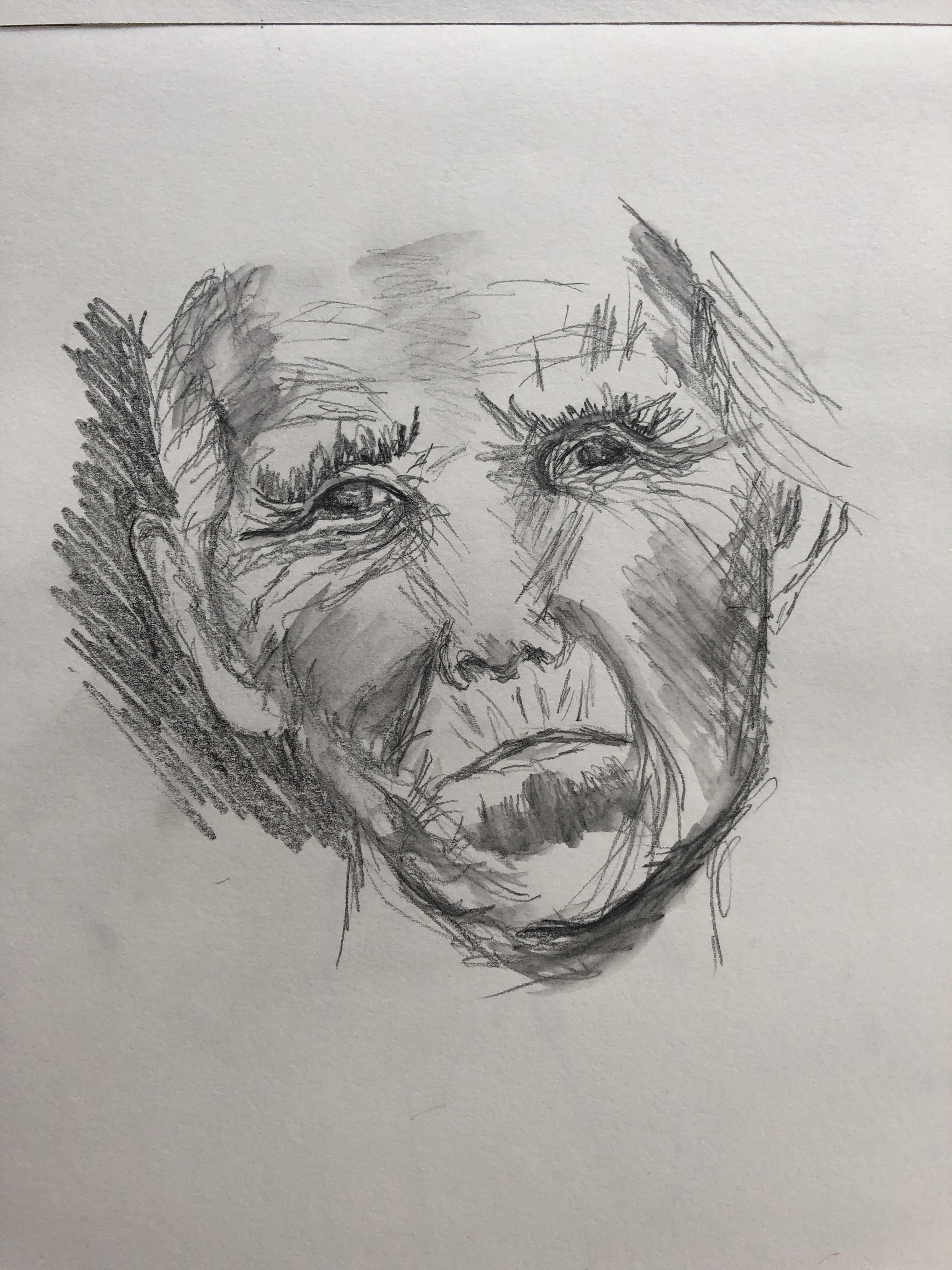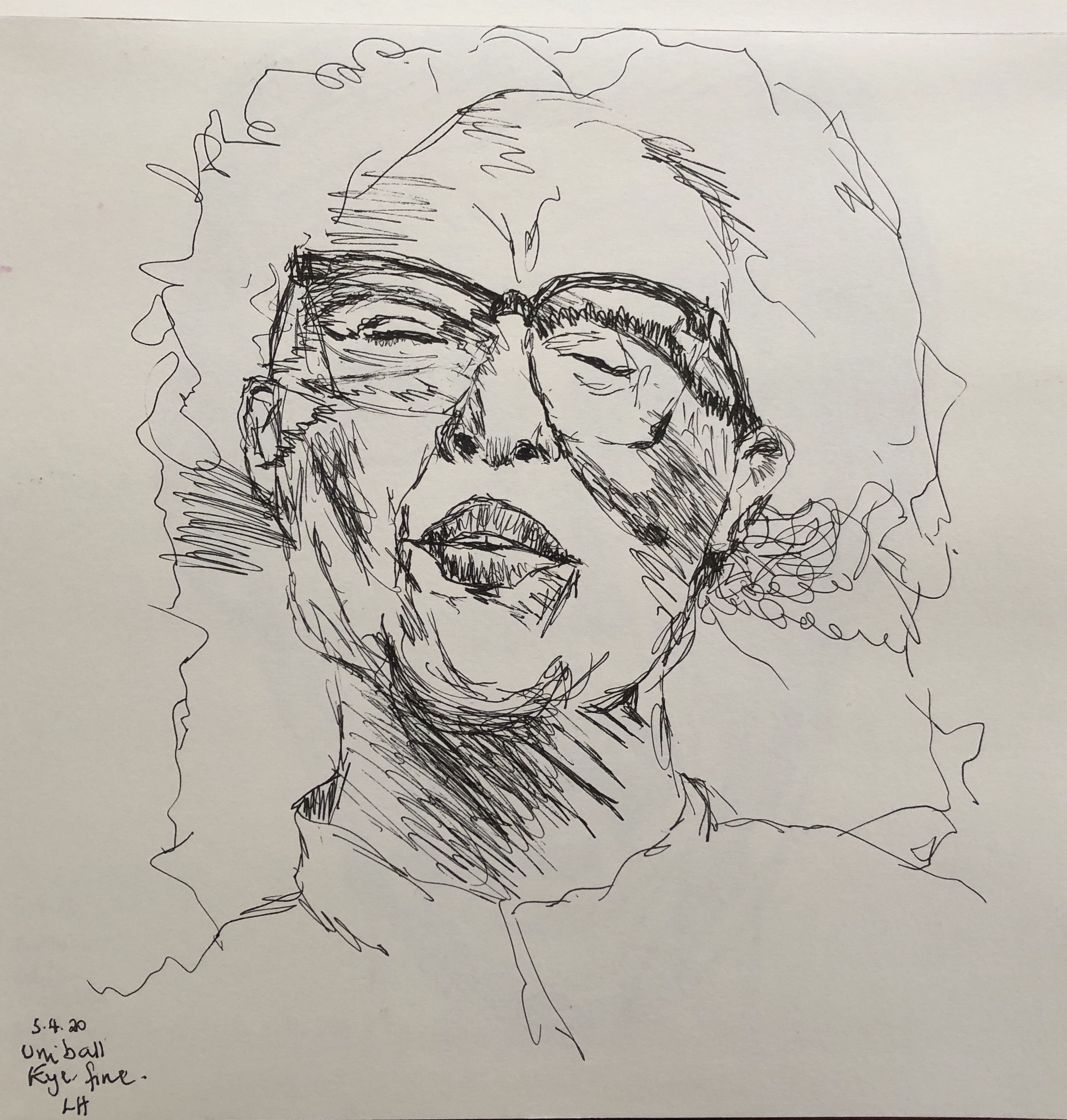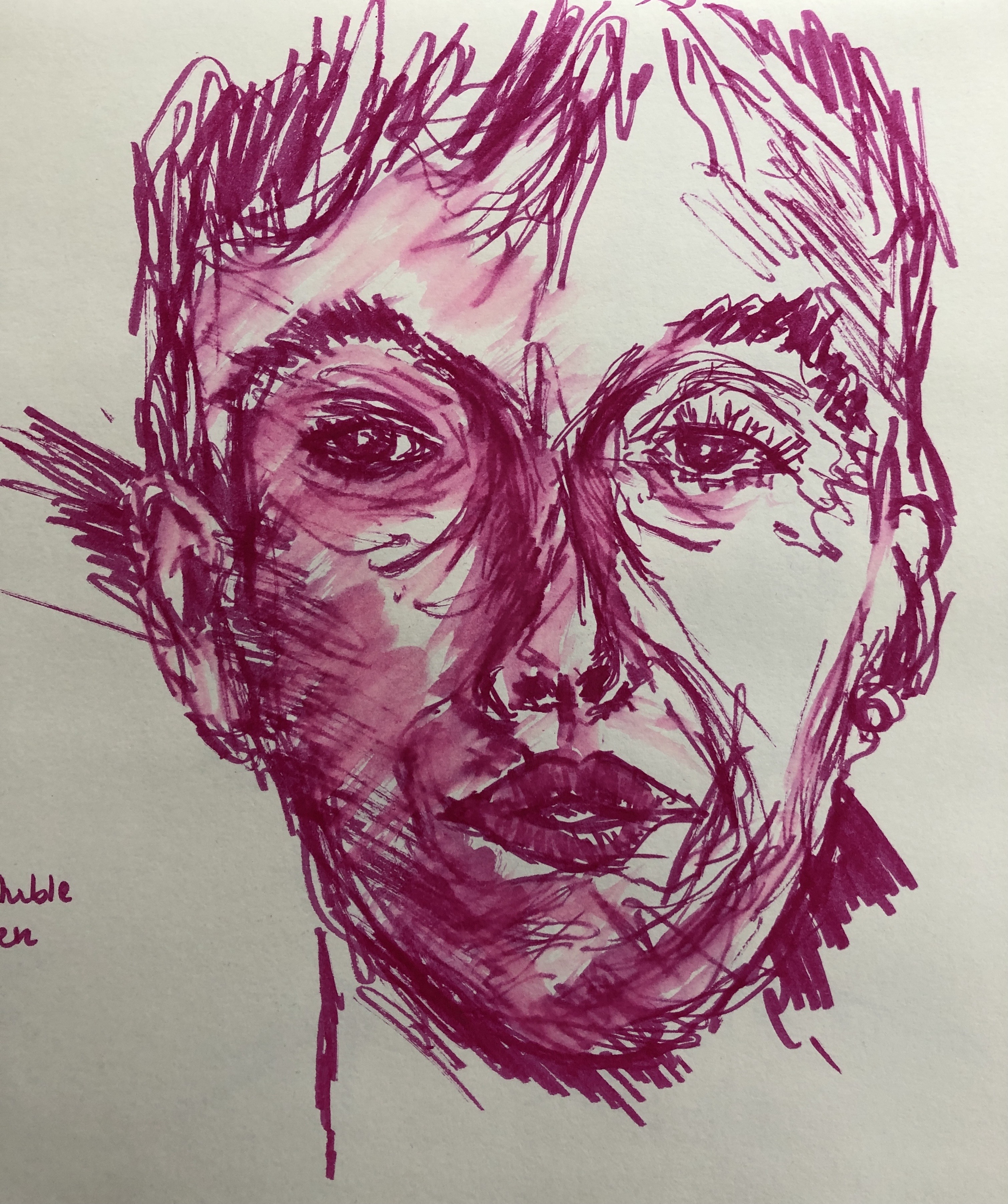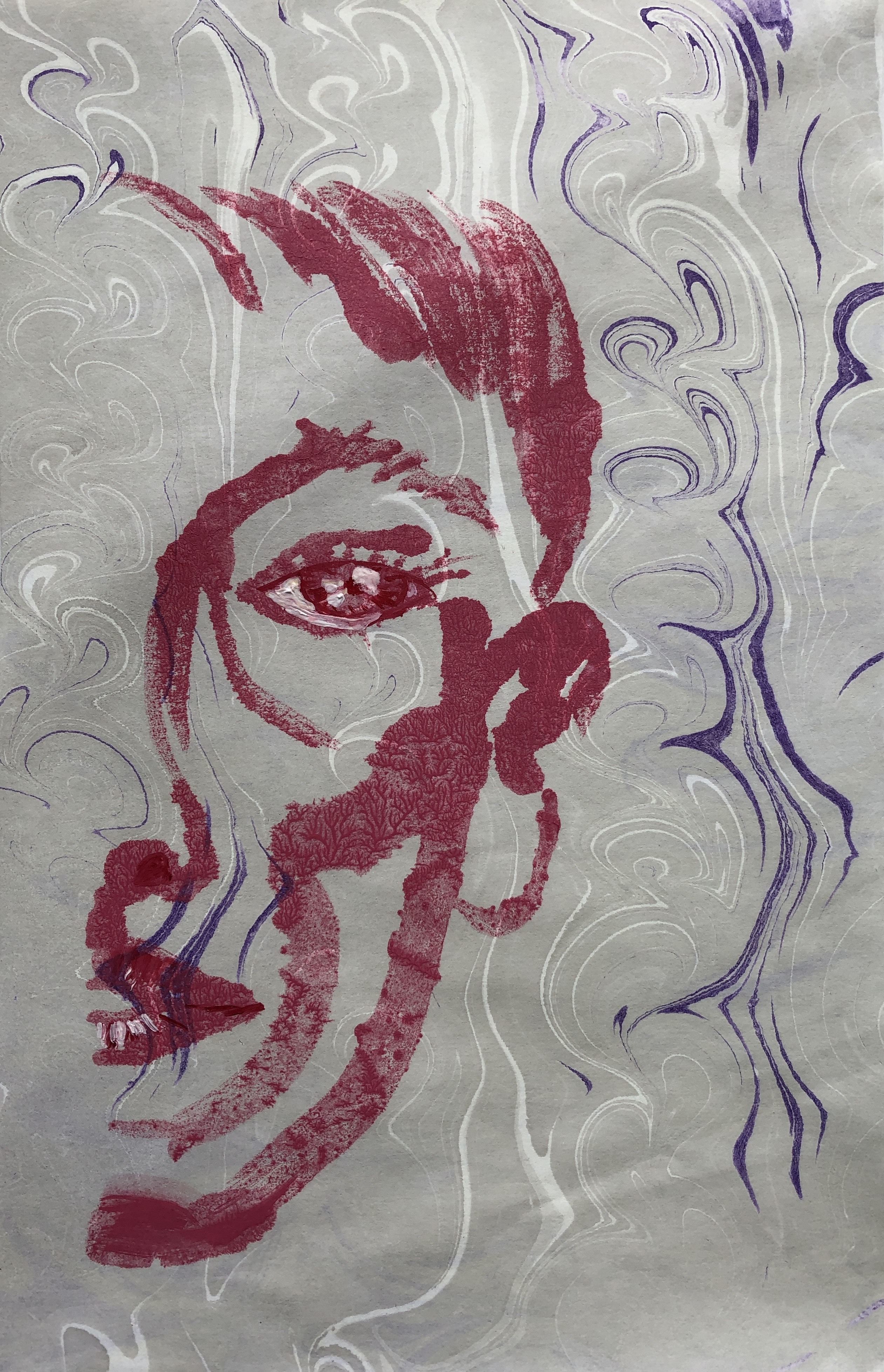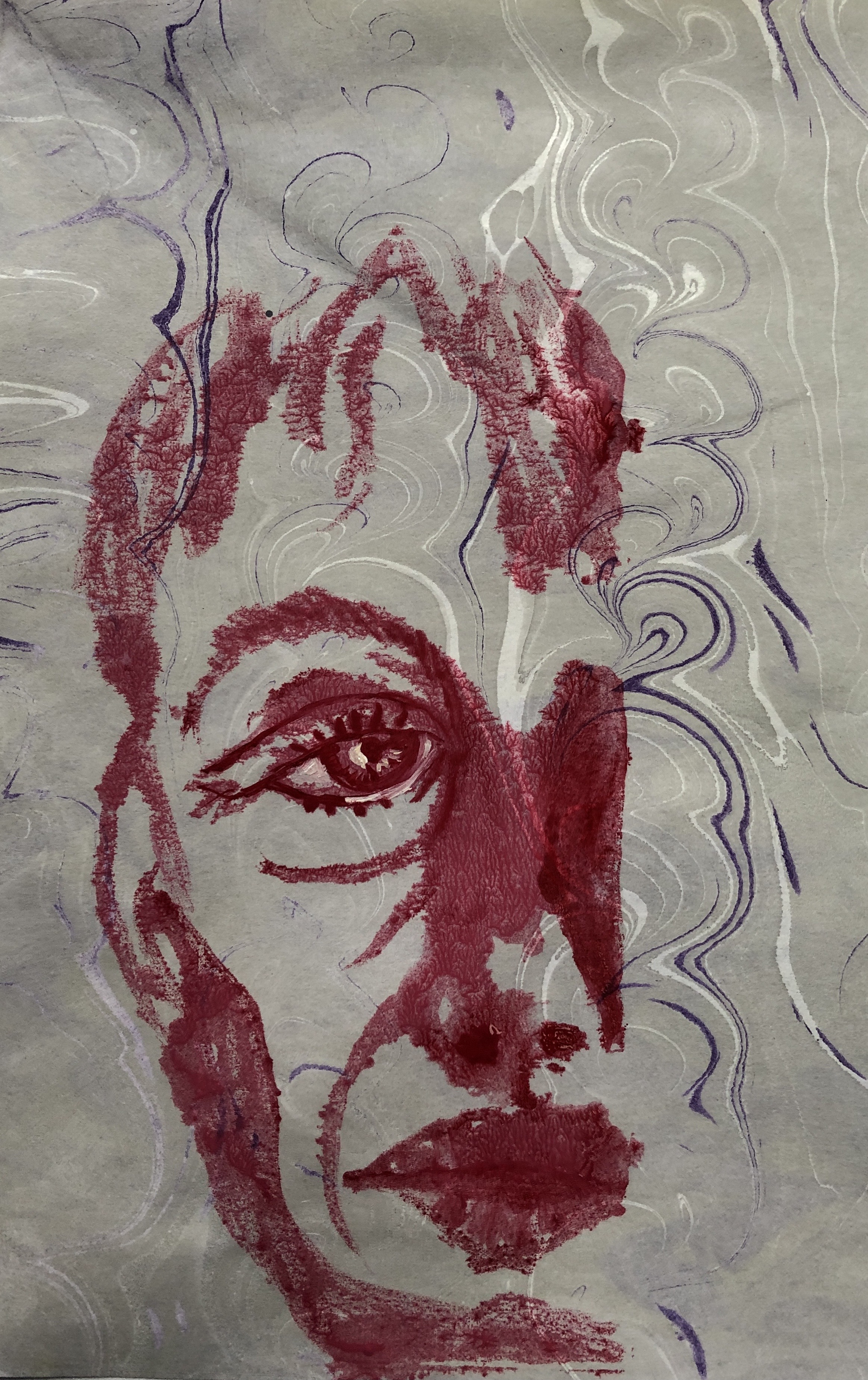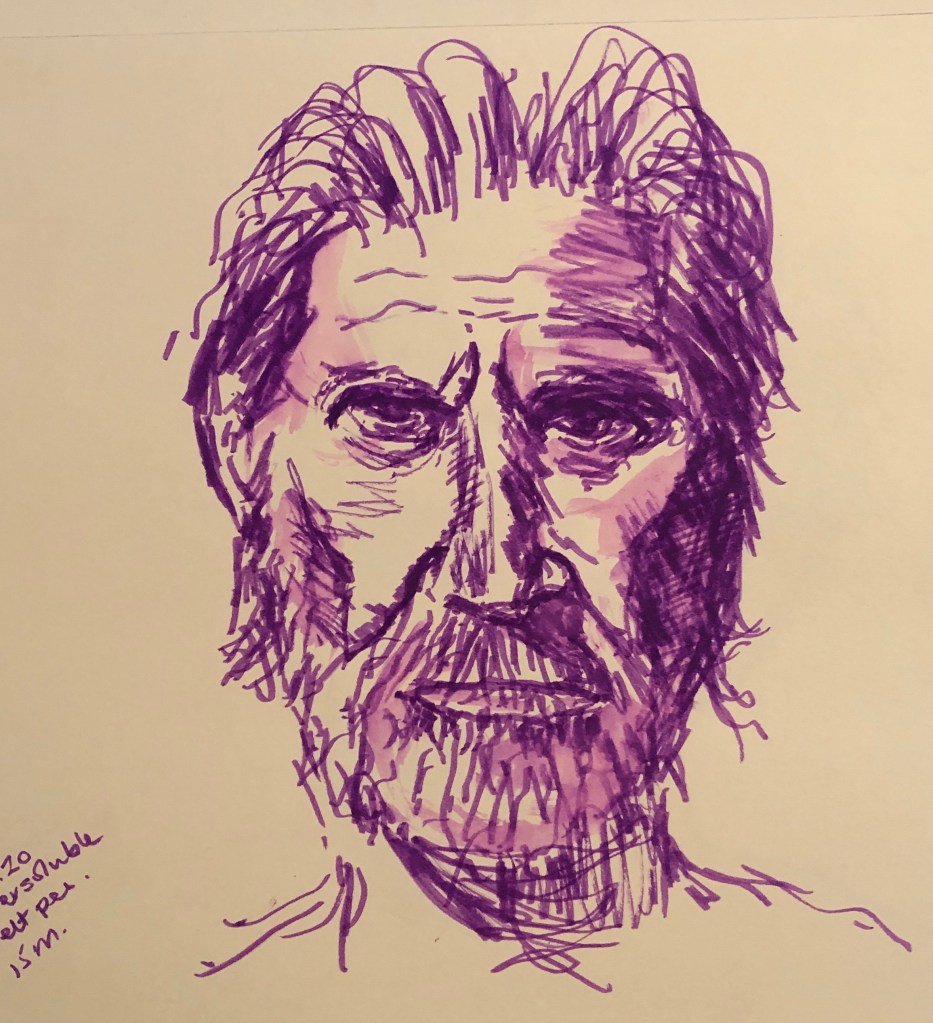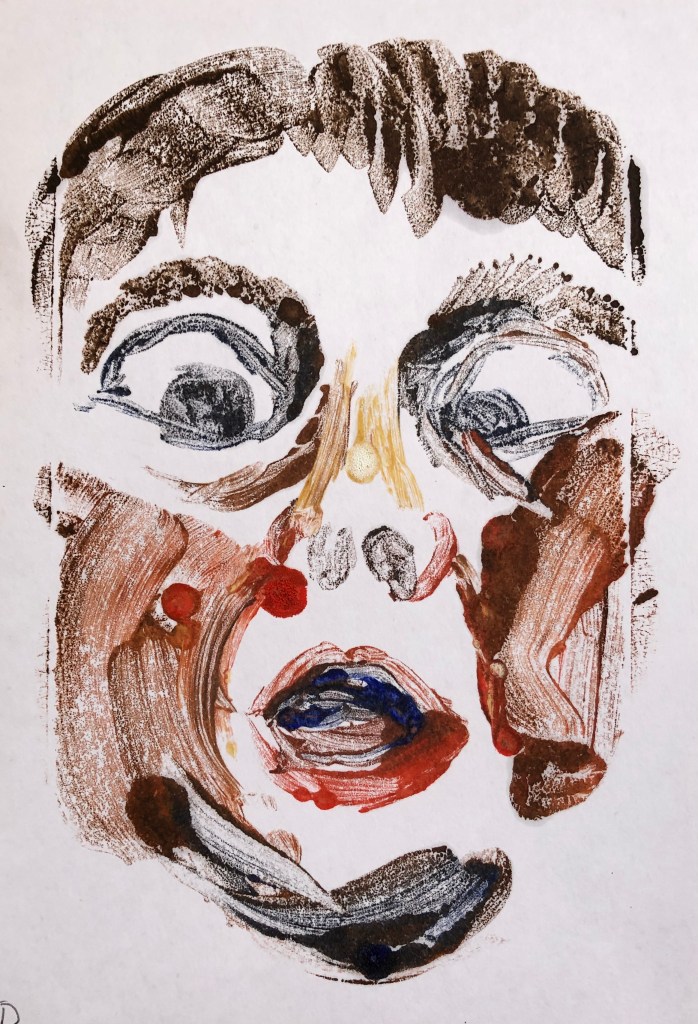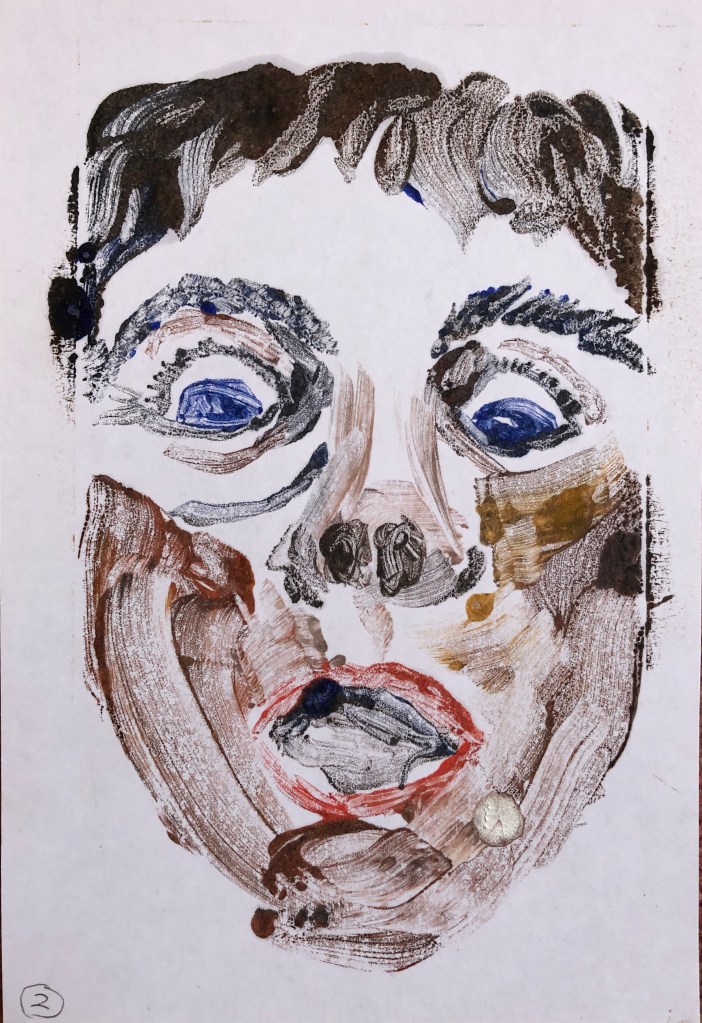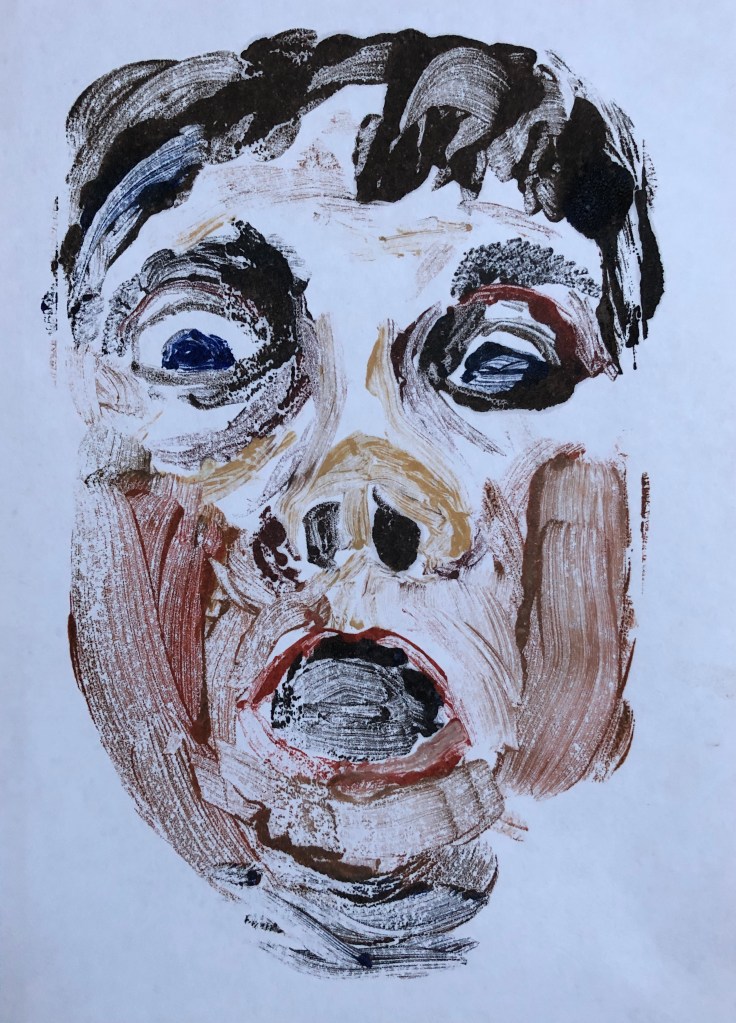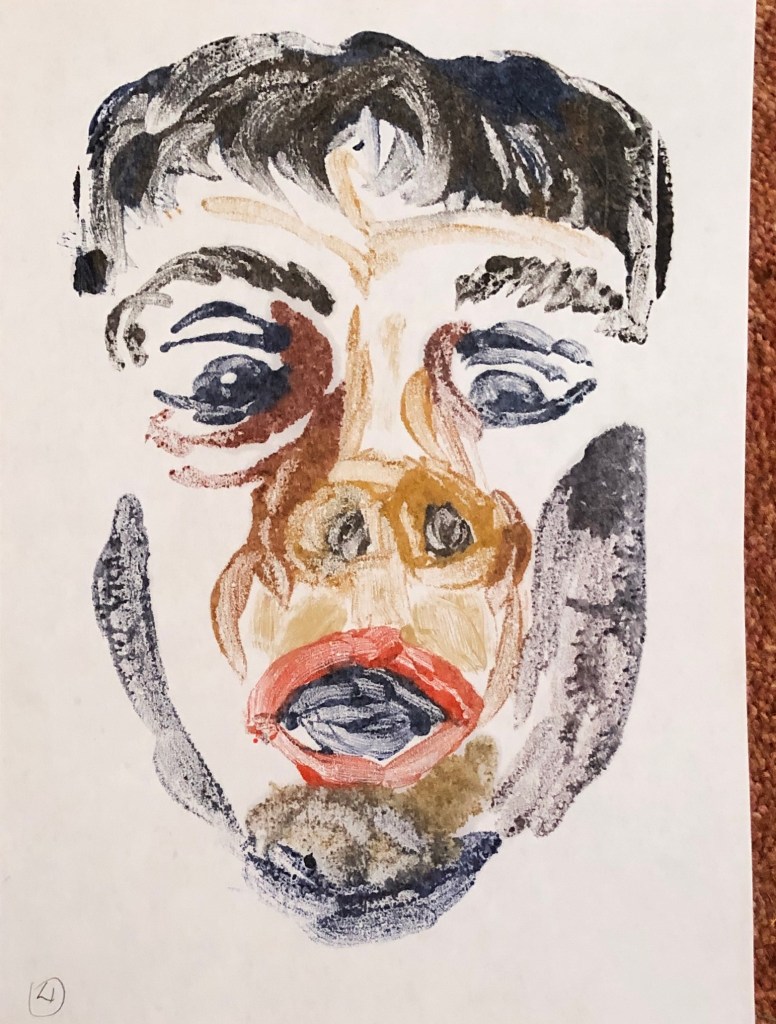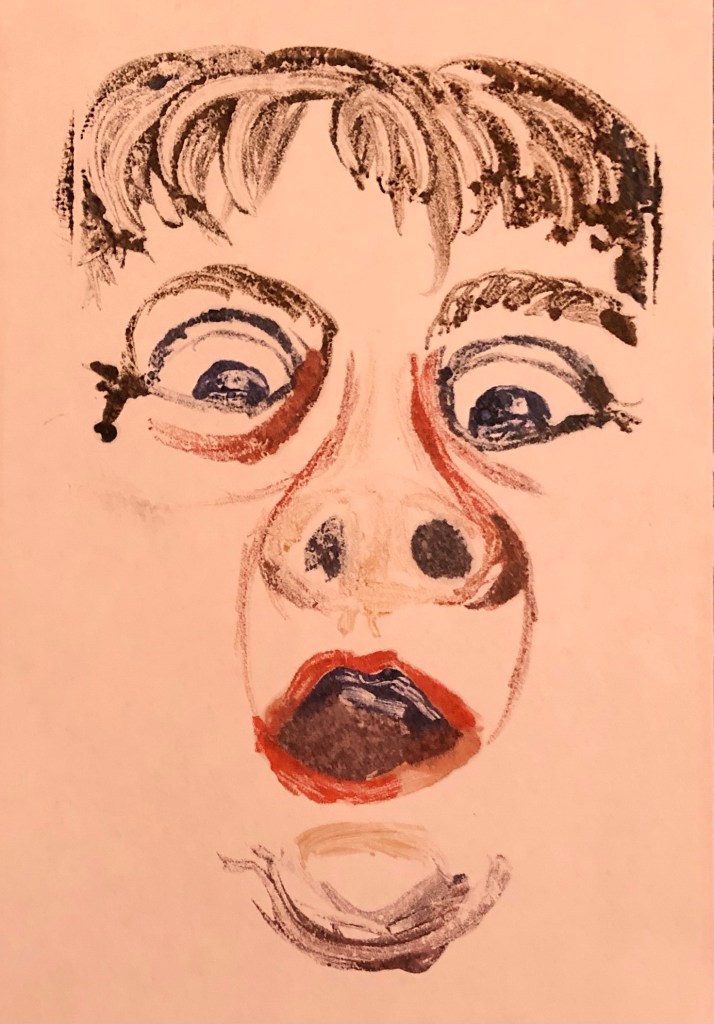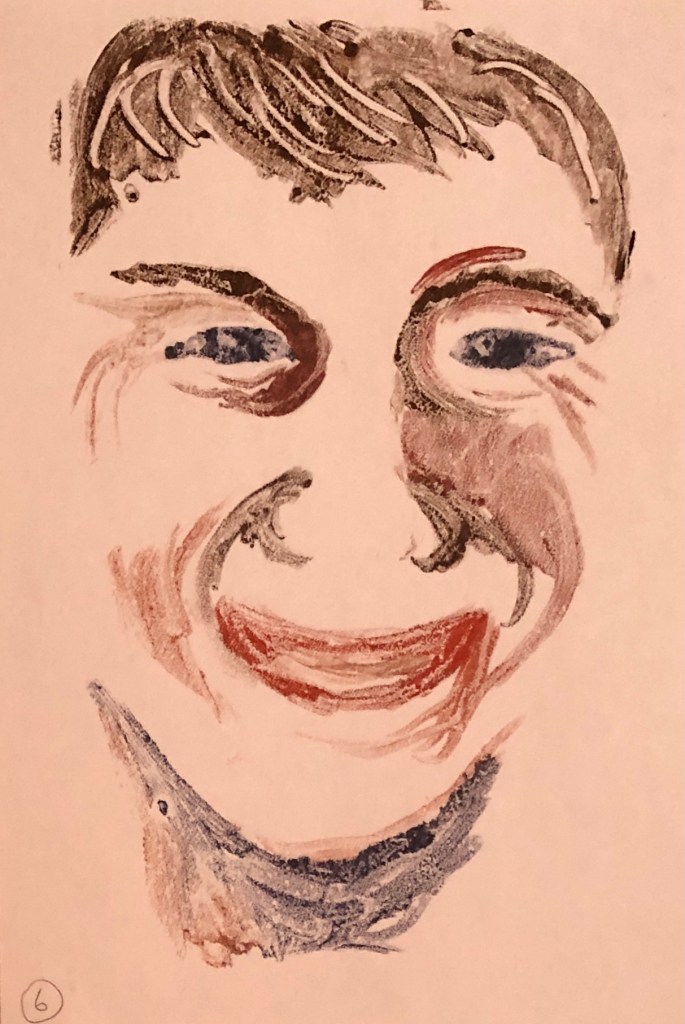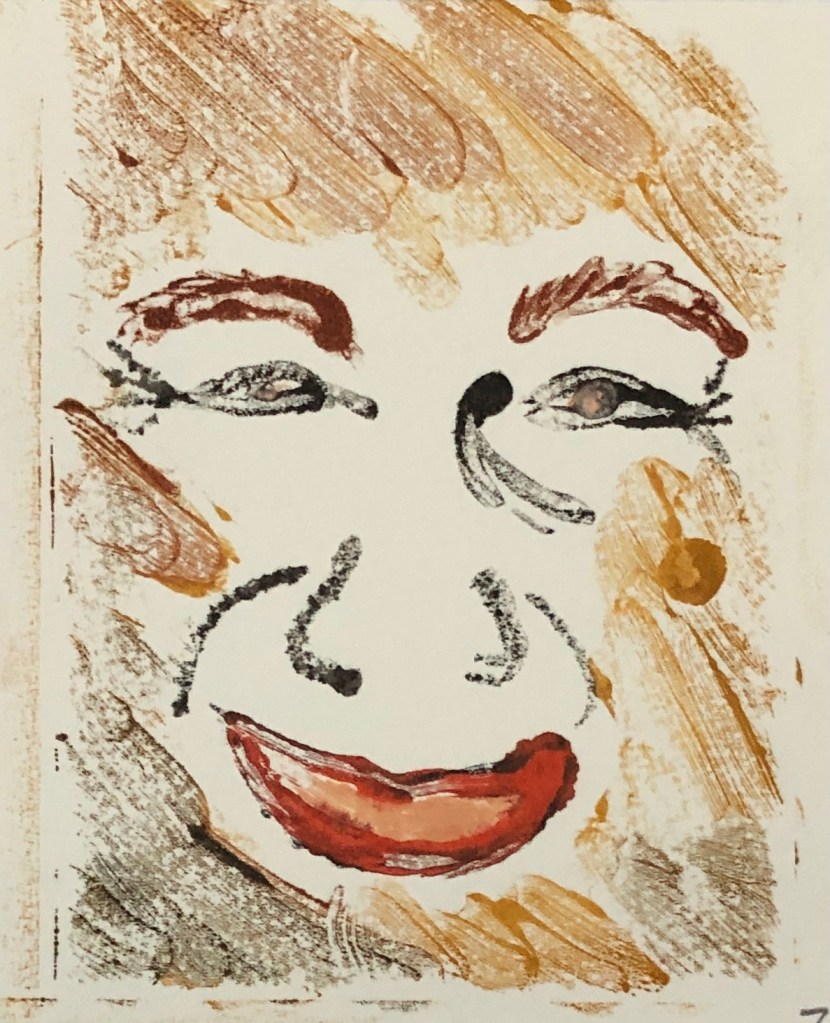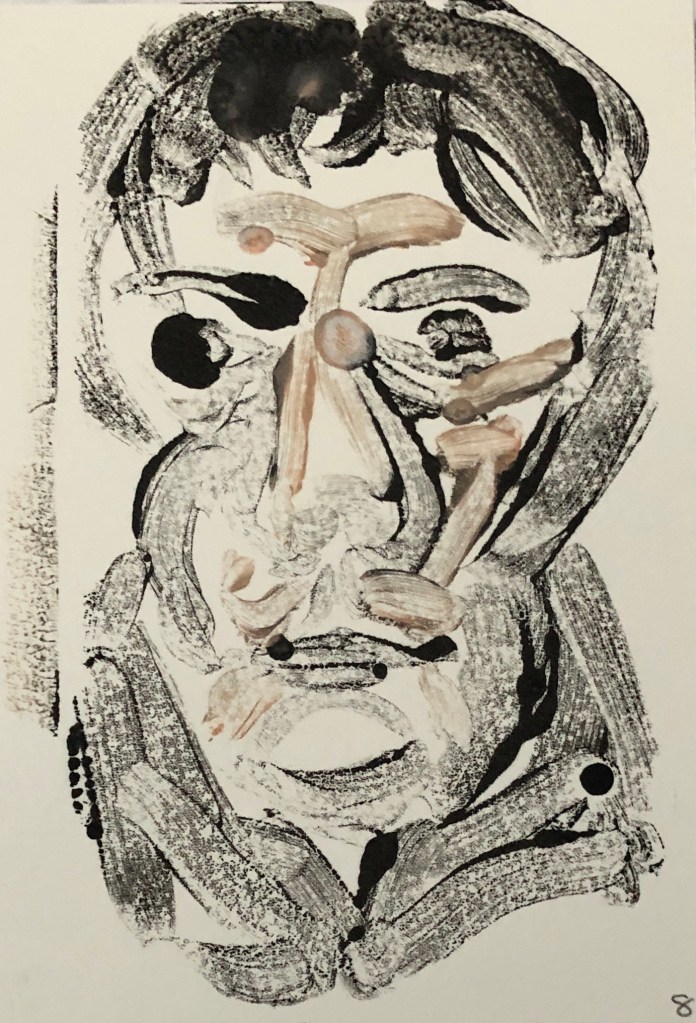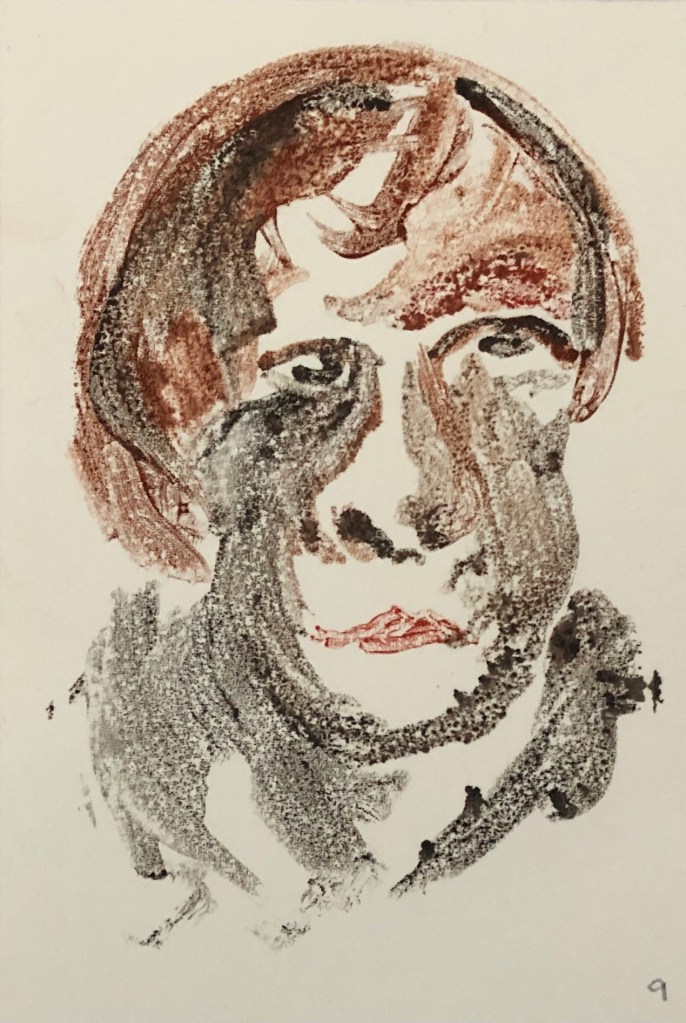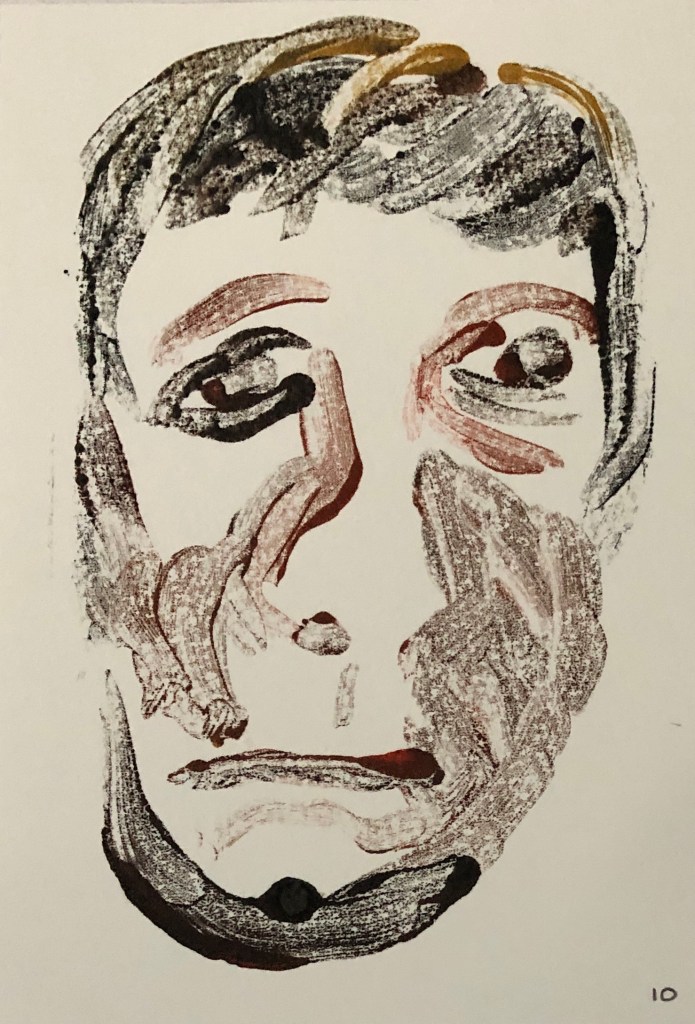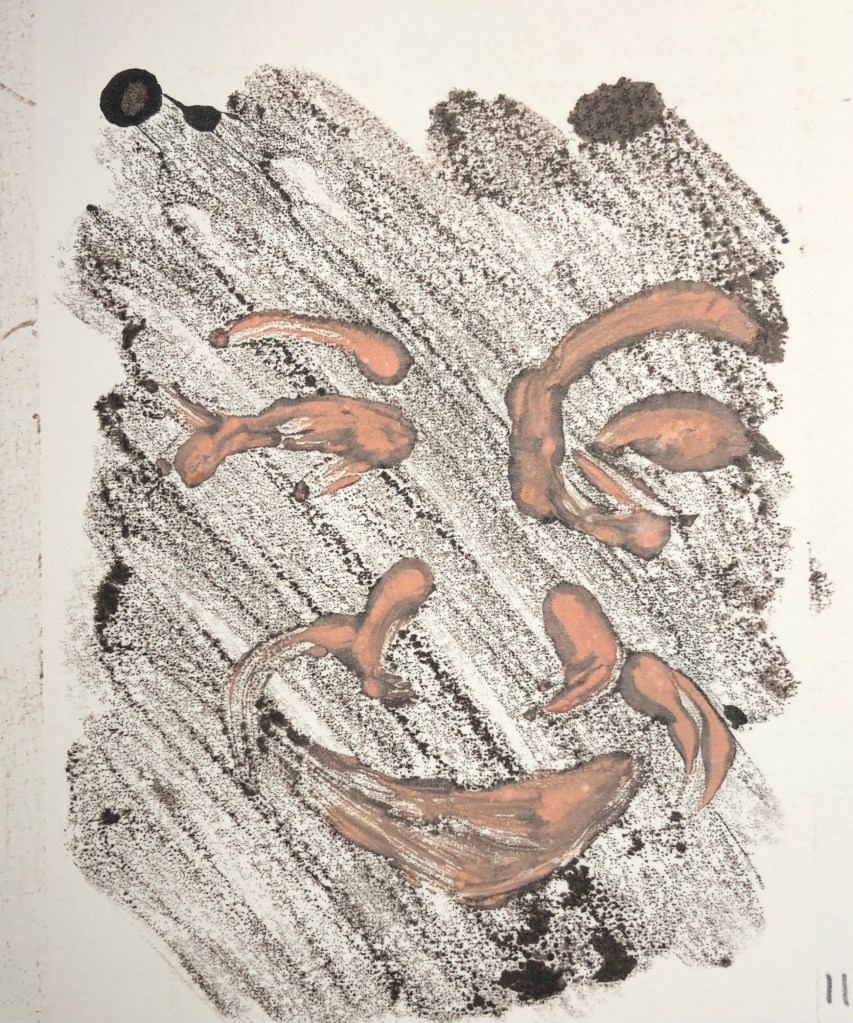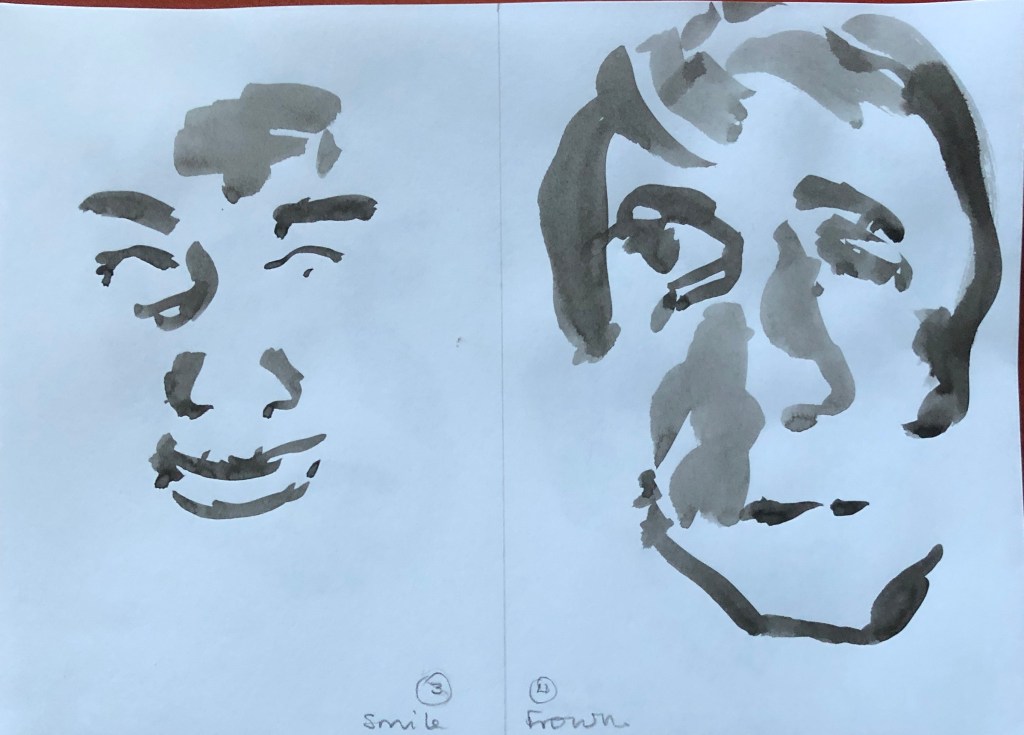
Painting 1 (UPM); Part 3: Looking back at the assessment criteria (and forward to Part 5)

REVIEW OF PART 3

Demonstration of visual skills: Materials, techniques, observational skills, visual awareness, design and compositional skills:

I have done quite a bit of drawing, both whole body and portraiture (particularly the latter) in this section of work. I have mainly worked with a sharpened 2B pencil and putty rubber in sketch books, and have tried to improve my understanding of the use of blocks of tone and shape.

It was helpful to have a demonstration of the process of printing with oil paint in the course material as a lot of the instruction I found online or in books relates to a similar- yet-different process of rolling out printers’ ink and drawing into it. Learning was therefore a matter of trial and error, mixed with a bit of frustration, but I gradually began to appreciate the versatility of printing in this way, and the range of possibilities for developing the work. I eventually worked my way towards a method of combining two separate prints into one picture in a meaningful composition.

Quality of outcome: Content, application of knowledge, presentation of work in a coherent manner, discernment, conceptualisation of thoughts, communication of ideas:

I loved the free gloopiness of the oil paint on the glass, but my initial experiments in adding paint to the print on paper resulted in images that were very clunky and solid. I found these unsatisfactory as, to me, the whole virtue of making a monoprint using oil paint in this way was the fact that the marks often were incomplete and the image rather fugitive, and I wanted to find a way of working that used these qualities, rather than just filling and blocking everything in which then made it more into something you could just have painted without the printing stage. The transparency of the print felt very suited to portraiture as a way of capturing mind rather than body, a quality I think Annie Kevans achieves in her paintings. 

Demonstration of creativity: Imagination, experimentation, invention, development of a personal voice:

Before undertaking this review I collected all my prints together, put them in chronological order, and arranged them in an A3 folder. My final assignment pieces, when I had got to that stage, seemed to have materialised from nowhere – but going back to the start revealed a very clear path of trial, likes and dislikes, experimentation and development as I looked at different artists’ work and tried to incorporate bits of what they had done into my own process; I hope this is reflected in my learning log.

Context: Reflection, research, critical thinking (learning logs and essay):

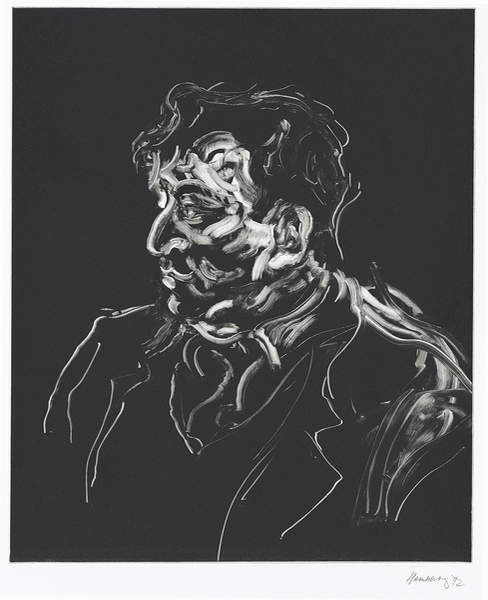
A number of artists set me thinking and working in particular ways. Looking at Maggi Hambling’s monotypes, which were just a few strokes in a void and yet were enough to depict a recognisable person, started me off thinking about painting a person “in essence”. Paul Wright’s gestural marks offered me a way to think about doing that. Marlene Dumas’ and Annie Kevans’ paintings both made me consider what you have to include and what can be safely excluded to make a clear portrait which also had an “otherness” to it. And Milton Avery’s penchant for making simple, calm prints in pleasing colour combinations really crystallised what I hoped to achieve by the time I reached my Assignment pieces. The current situation, living in a Covid lockdown, with so many people feeling that their mental health is deteriorating, made me think about minds in general, and how they often aren’t doing what we mean them to. I hope my Assignment work is a culmination of all that…..with a hint of a way to develop the process further in the future.

LOOKING FORWARD TO PART 5

This is not a decision set in stone;  I am interested to see what Part 4 will have to offer, as I suspect that this might change my mind. However, I really enjoyed working in egg tempera back in Part 1 and should like to experiment with this further. I recently read an article about the work of Mary Anne Aytoun Ellis who paints in egg tempera, although in a very different way from the “classic” method, so I would choose her as a current artist. For an historic artist I might look at Leonora Carrington, who was very attracted to the medium, although I know she didn’t use it all the time. Another possibility is Piero della Francesca – we always have to go and look at his 1442 “The Baptism of Christ” whenever we go to the National Gallery, it is my husband’s all-time favourite painting.

As a backup alternative there would always be painting in enamels (a medium I also really enjoyed in Part 1), with Raqib Shaw as my current artist and Jackson Pollock as my historic artist.
Painting 1 (UPM); Part 3; Investigations into supports

WHAT?

Having lit on the idea of having “floating” heads, or parts of heads, on a background which might be blank or coloured or patterned, I need to look at the right support for this. I have tried marbled paper, which does not hold the paint terribly well. I have hitherto mainly worked on plain basic sketchbook-weight cartridge paper which has taken prints well, but I don’t feel it will be robust enough to take a background and then a print on top; hence the need for an investigation into alternative supports.

SO WHAT?

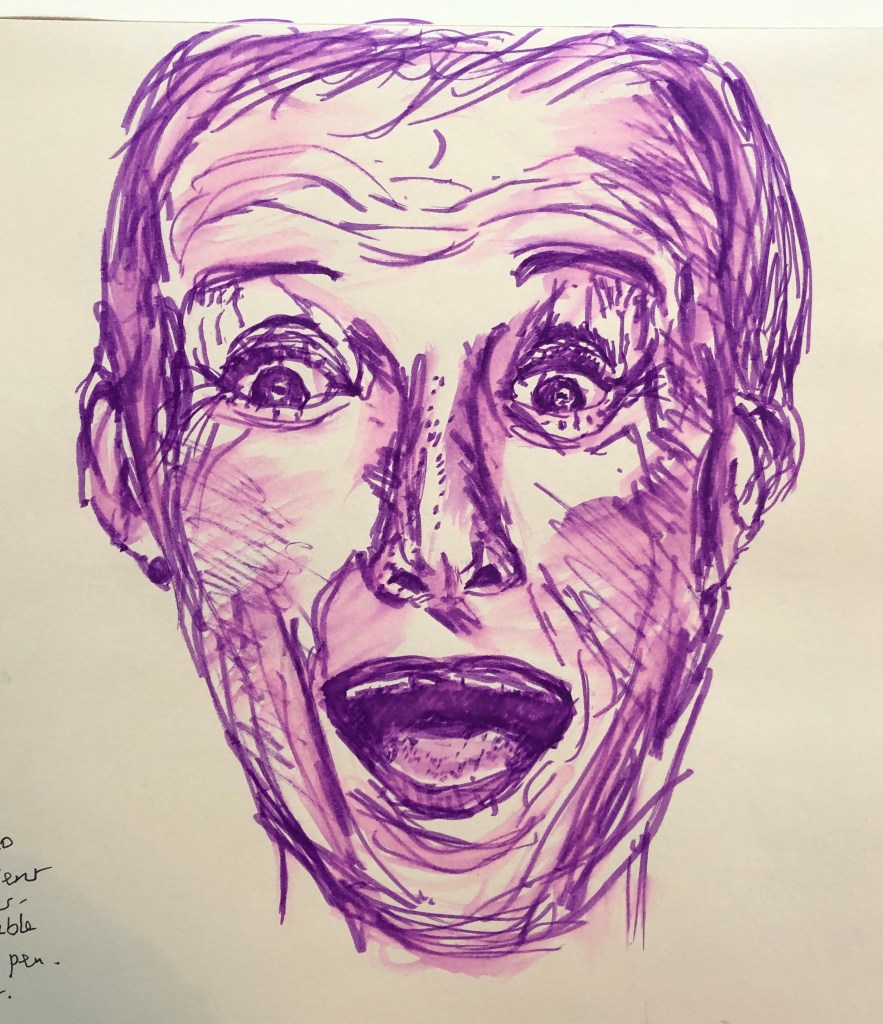
I took another felt-tip pen sketch from Drawing 1 as my “base” drawing – this again is too large for my glass printing plate so I have to select part of the image to work with in each print.

First up was some thicker cream-coloured cartridge loose paper. I laid down a thin watercolour wash, rough sky-and-cloud images, as background to test the uptake of oil paint over the watercolour. Then I mentally divided the base image into three parts and made three prints onto my test sheet. Each time I tidied the image on the glass with my cotton bud (having done all the painting onto the glass with a rigger), printed it, and then painted into the print on the paper, adding definition to eyes, sometimes nose, and mouth.

I found the oil paint sometimes skidded slightly on the places where the watercolour was thicker, but generally the print “took” well.

The trickiest part was working out where on the page to place it down on the glass, and I found that the easiest way was to work it out by looking through the glass from the back.

Next up was some thick paper, almost card, which I had bought in Part 2 under the guise of a vegan leather substitute (I had been thinking of trying to paint on leather).

This is a mid-tone tan colour, so this time I tried taking the blank paper as my mid-tone and just making the print with some darker brown (made by mixing crimson and emerald green) for key dark tones, and white for a few important light tones.

The paper took the print very accurately and I rather liked this dark-mid-light tone clarity. Again, I worked into the eye a little to make this a focal point.

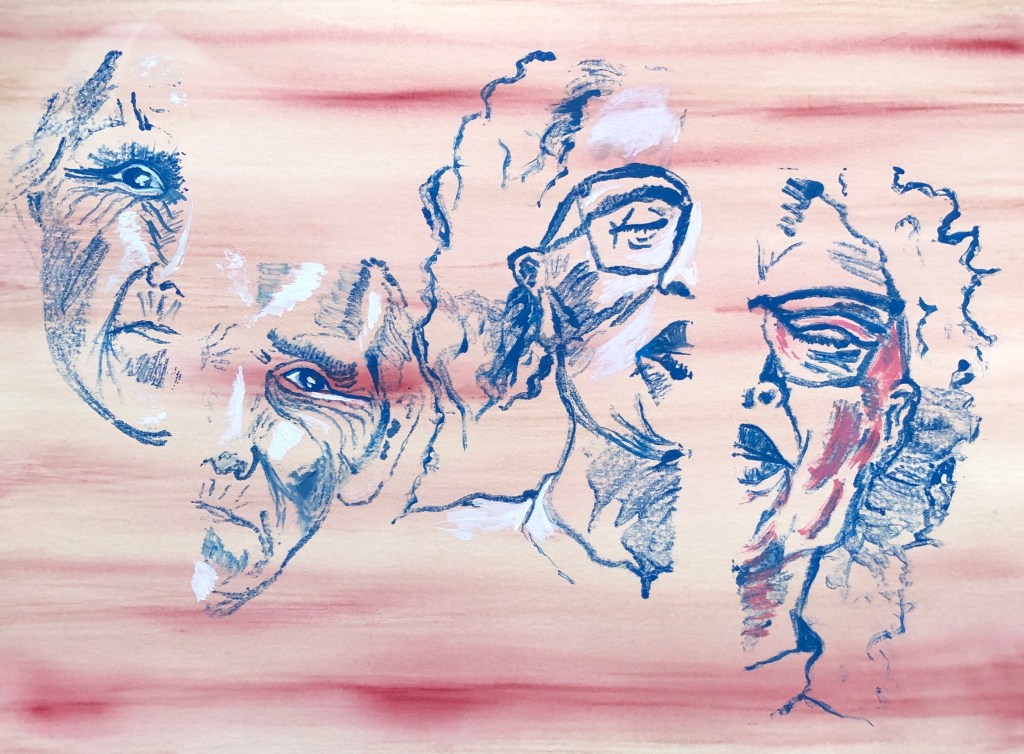
My third support to try was HP watercolour paper. I stretched an A3 sheet and then gave it a light mid-tone background, aiming for somewhere between the slightly busy sky of my first experiment and the plain brown of my second; so I gave it several coats of a dilute watercolour wash of raw sienna and a dash of warm sepia, applied with a fan brush, and enlivened with a few horizontal streaks of perylene maroon into the wet washes. I wanted to pick a “harmonious” oil colour for the print and decided on cerulean blue, with some white highlights and pink (crimson/white) shading.

For my reference images I also chose a different couple of sketches from Drawing 1 by way of variety.

I repeated my design of split, separated halves of each face. I started with my very old lady. Each time I went through my process of painting onto the glass, tidying any wayward or over-thick marks which might splodge with my cotton bud on the glass, printing the image and then working into it on paper with a rigger to add definition to specific parts, especially the eyes.

This paper seems to soak up the paint like a sponge in an instant, particularly where I had it diluted with quite a bit of solvent. Interestingly, the blue printed much better than the bits of white – almost none of the white seemed to transfer over, and I had to add it in on the paper. The fact that the paper was already covered by a layer of watercolour wash did not seem to affect its absorbency; something which I had found to be a bit of a limiting factor on the thick cartridge paper.

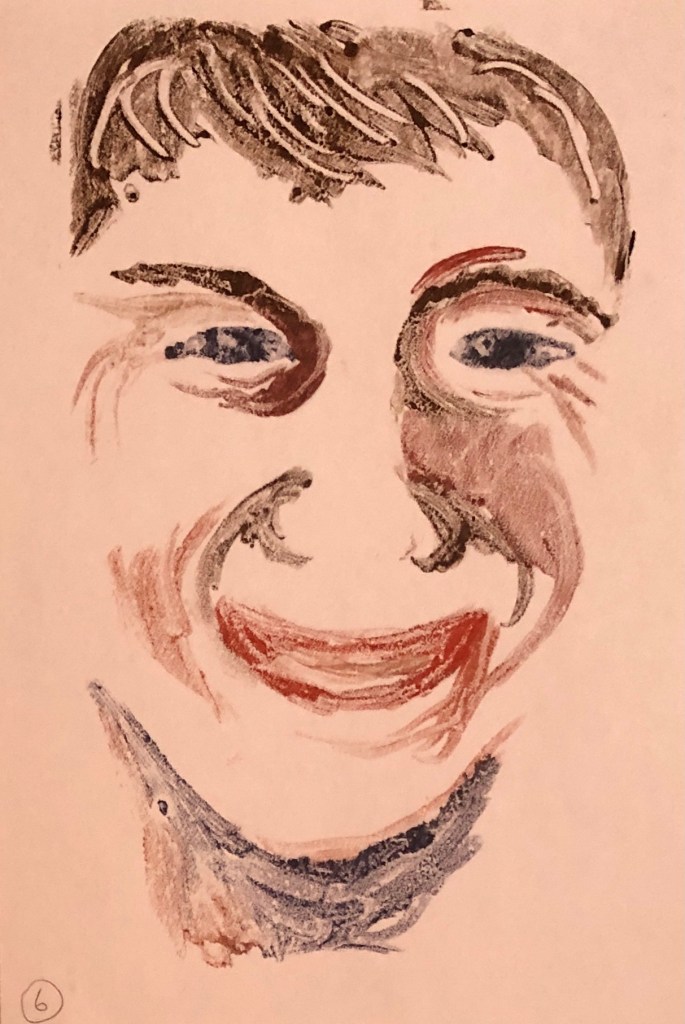
Next was my smiling lady – chose her because of the challenge of her glasses, her big hair, and her closed eyes. This time I only printed the blue, deciding to add the white direct onto the print on one side, and experimenting with a pinkish wash for shading on the other. The closed eyes made me look for other features to work into and define on the print – I tried to clarify what was glasses, shadow and nose around the eye area, and also made the structure of her collar stand out a little.

NOW WHAT?

  • I have happened on this method of working, printing only part of a face and then working into it, rather serendipitously, but I like it and want to pursue it as I move into my Assignment
  • HP watercolour paper with a watercolour wash is the way forward as a support for my prints

Painting 1 (UPM); Part 3; Research – Milton Avery

WHAT?

I became interested in Milton Avery’s monotypes as a result of finding this image on the front cover of a book from the Metropolitan Museum of Art (Milton Avery, “Myself in a Blue Beret”, 1950).

A biography on the Smithsonian American Art Museum site (www.americanart.si.edu) described his strength in life drawing and portraiture (as well as his friendship with Barnett Newman, whose work we saw at the Pallant House Gallery in Chichester last year – see separate blog post). It went on to explain how, after a heart attack which restricted his ability to work, he turned to monotypes which affected his painting style and caused him to eliminate extraneous detail from his work and he began focusing on the harmony of the overall picture. The article suggests that his poor health meant that “…the harmonious colours and perfect clam of his painting reflect his wish to eliminate everything in his art – as in his life – that was not absolutely necessary.”

SO WHAT?

I was attracted by the idea of simplicity (as in Annie Kevans work, see separate blog post) and calm, and also wanted to explore the “harmonious colour” side of Avery’s work.

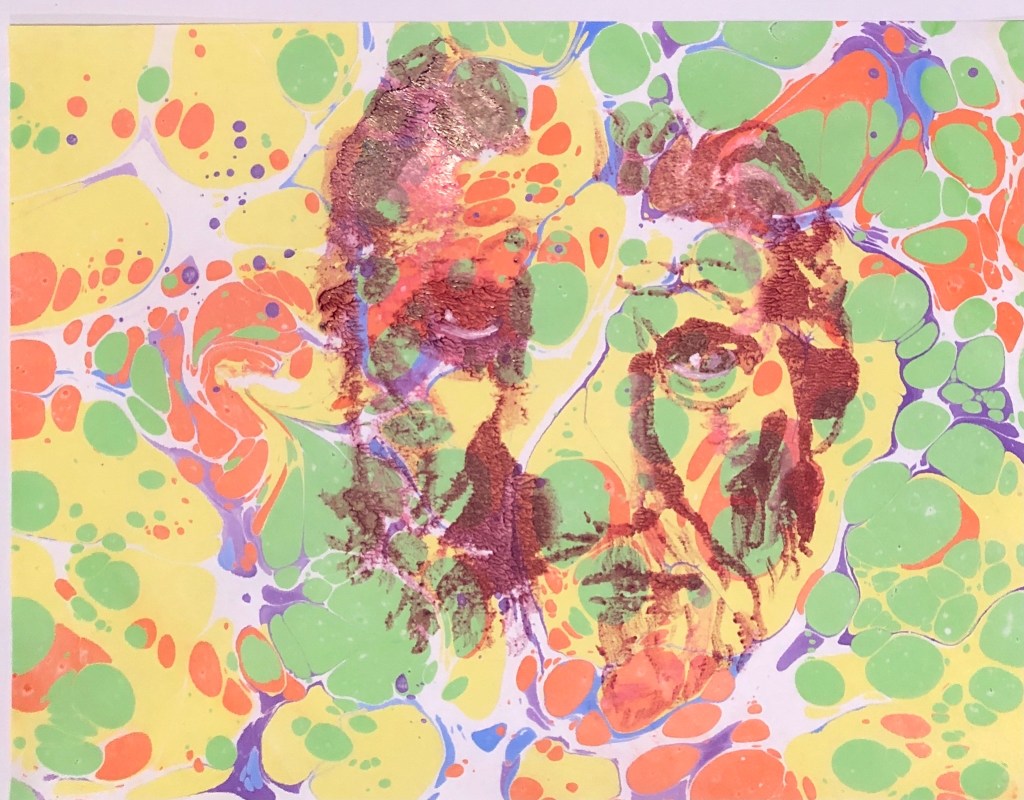
I decided to try to print onto some of my “freestyle” marbling sheets (see earlier blog post) which were not too busy.

This was my marbled paper, and I decided to work from this quick sketch which I had done in felt pen back in Drawing 1. The sketch was quite big, too big for my glass plate, so I cut my marbled paper in half and printed half of the face on each piece:

I focused on main darks, major bone structures, eyes and mouth, and I painted into each eye and mouth to give them more definition. When I put them to dry, serendipitously side-by-side, it occurred to me that I could make an image of the whole face, but floatingly disjointed, one one sheet.

I therefore chose another of my more random marbled sheets, and another felt pen sketch from Drawing 1, to have a go at this.

I made the image in two halves as before, tidying them up before printing with the cotton bud on the glass, and then, once they were printed I painted into the eyes to give them more definition.

I really liked this effect, I find it makes one’s eyes move back and forth to match up parts of the face.

However, the marbling paper has had to be treated with alum as a mordant, and then has a layer of acrylic paint printed onto it to make the marbled effect, so the oil paint of the print image can slide about a bit (as seen in this close-up). It makes a sort of seaweed-y mark, which is interesting, but makes it difficult to get a clearly printed image.

NOW WHAT?

  • I really like this “floating head” idea, which fits with the ethereal quality I was attracted to in the work of Marlene Dumas and Annie Kevans, and I should like to explore it more
  • However, I am not sure that marbled paper is the right support as it does not absorb the oil paint well, so I am going to explore some other options.

Painting 1(UPM); Part 3; Exercise 4

WHAT?

I decided to build some of my research into this exercise. For each print from Ex 2 and 3 which I choose to paint into, I will try and work in the style of one of the artists whose work I have been studying.

SO WHAT?

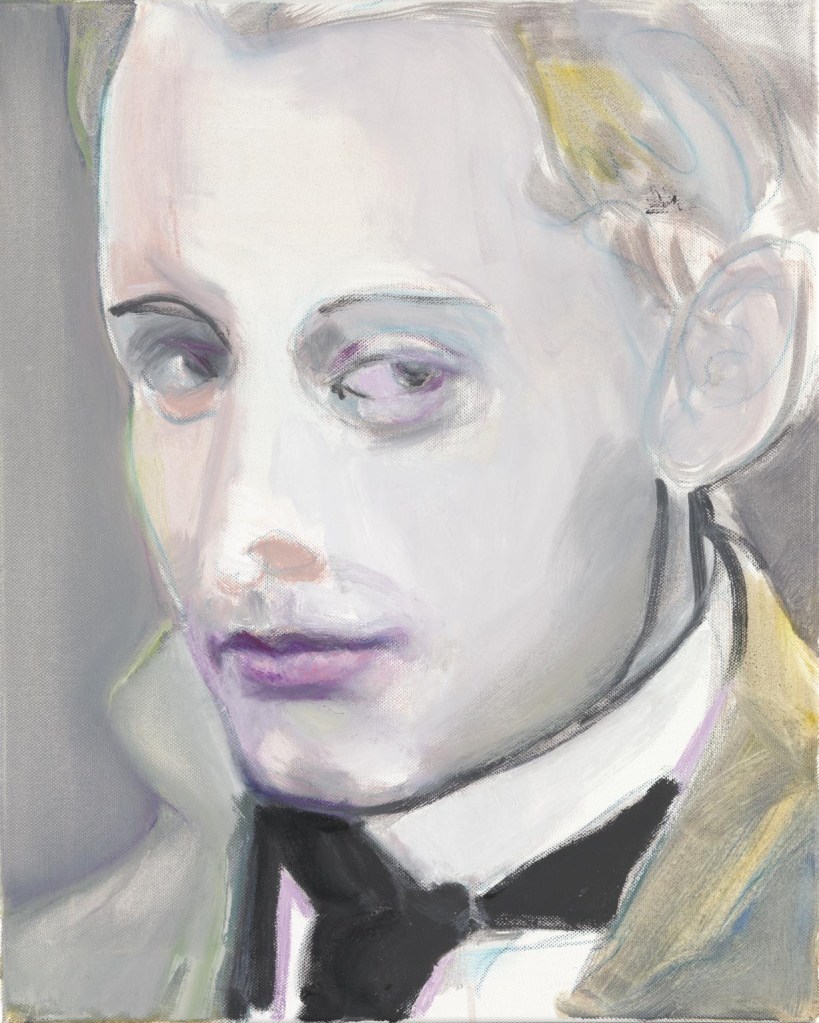
Lord Alfred Douglas (Bosie) 2016 Marlene Dumas born 1953 Presented by an anonymous donor 2018 http://www.tate.org.uk/art/work/T14922

I began with the work of Marlene Dumas. Her paintings have a ghostly effect; one that I particularly liked was her 2016 oil painting, Lord Alfred Douglas (Bosie), which to me has caught the character of the man (that I’d formed an impression of from previous reading, at least) with some judicious use of dark and light and her pastel-y choice of colours along with black and white.

I chose to work into this print; it felt a little undefined but with clear lights and darks.

 I mixed the few colours I used with quite a bit of white to achieve that pastel-y effect, apart from the dark brown for the hair and darkest shadows. I had also made the print on ordinary cartridge paper, which has been my preferred support for these prints as far as maximum paint transference goes, so I mixed the paint with quite a bit of Zest-It solvent to add to the slightly blurry effect. 

I think I have partially succeeded in the colour scheme, but my work is not quite a shimmery and loosely defined as Marlene’s. I think I was partly led by the original model here, who appeared a rather definite and “strong” personality. I did try to go for some of the “echo-y” shadow type marks that she uses (e.g. hers round the cheek, mine round the mouth), but don’t think I have quite pulled it off.

Next I went back to Paul Wright and had another look at his 2015 monotype “Colour blind”.

I chose this monotype to work into:

and used for a bit of extra reference this photo which roughly replicates my expression when I did my Ex 1 painting from which the monotype was made.

After having a good look at Paul’s painting, noticing his variety of colours and line direction (predominantly going down, but by no means exclusively), I had a go. I mentally adopted his title to mine and just let rip wherever I thought the photo gave me even half a chance of interpreting a shadow as bright green, etc. Having had a bit of a frenzy of painting, I stepped back and looked, then tried to modify and adapt colour to make the tones a bit more believable – but when it all started to go to mud, I stopped.

Unusual but clunky and overworked is I think the best that can be said.

However, I do like the idea of being free in the interpretation of colour…something to experiment with more, maybe.

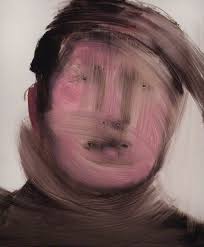
Next I turned to the work of Annie Kevans. She has the amazing ability to capture a likeness and convey a mood in just a few brushstrokes and without a background to give clues – which I envy – she must be so good at looking as many of her brushstrokes are quite wide, just perfectly placed. This example, a portrait of “Louise Elisabeth Vigee Le Brun”, found on her website, www.anniekevans.com, is taken from her body of work for her 2014 exhibition about women artists entitled The History of Art.

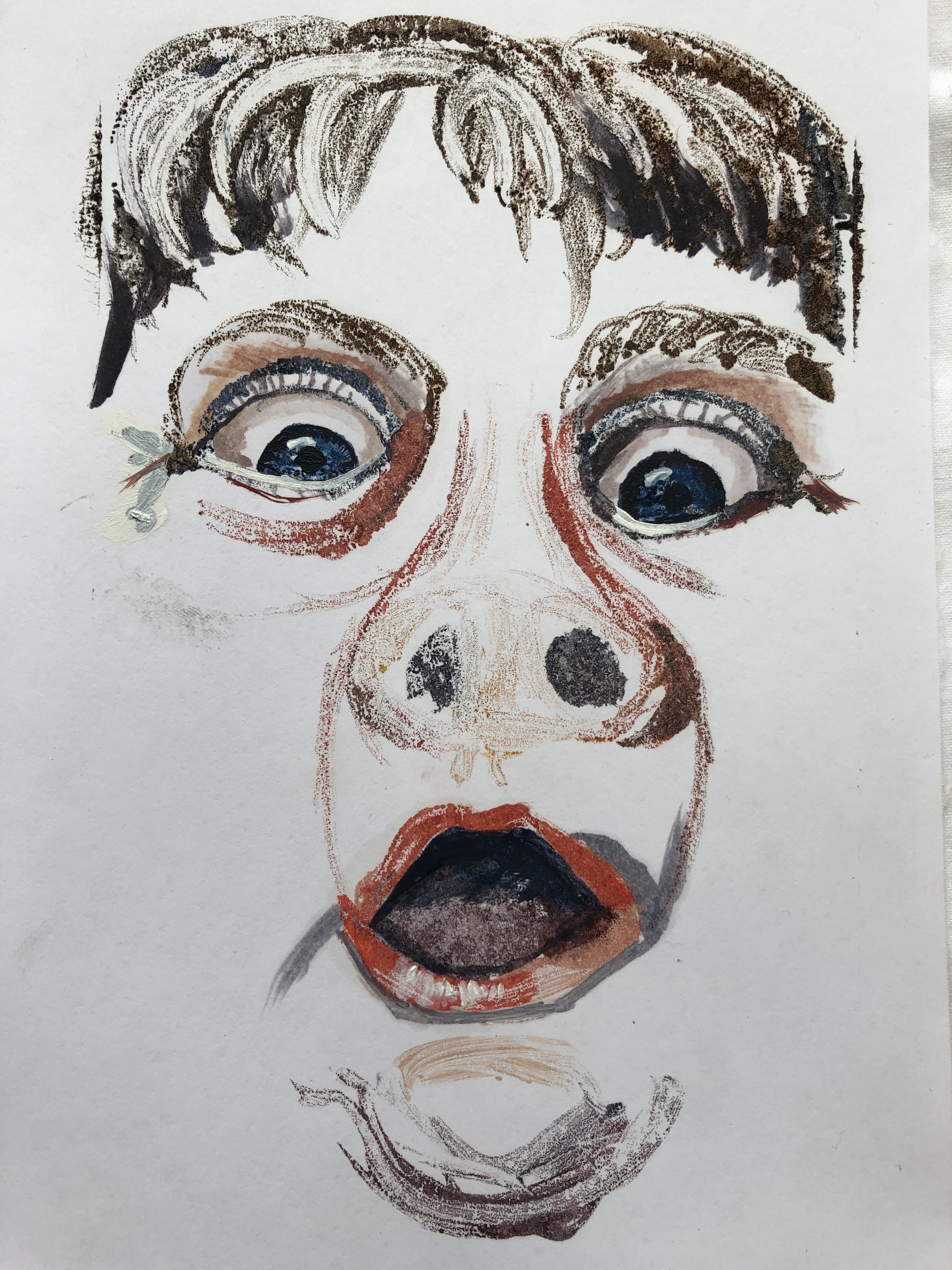
Looking carefully at her work, she pays particular attention to the eyes and, to a lesser extent the mouth, to catch a likeness. I chose one of my “surprised, viewed from beneath” prints from Ex 1 & 2, and decided to work just into these features, using a rigger. I noticed that Annie also does simple single light shadow lines in places around a feature to give it form (a bit like Marlene Dumas, above), so I added a couple of these around the eyes and mouth. Also, because I couldn’t resist fiddling, I worked a few dark lines into the underside of the hair; but otherwise I left the print as it was.

This was more of a success, although some of my “added shadow” lines are too dark and so lack Annie’s subtlety.

NOW WHAT?

Looking back, I found it interesting that the work of the three artists I chose to consider in this exercise all demonstrate some similar qualities:

  • Subtlety
  • Careful observation, so that key elements (eyes, mouth, proportion and bone structure) are correct and these underpin the image
  • A certain elusive “here and yet not here” quality

I think my own work currently is rather different, very solid, but I should like to work towards developing this more subtle and elusive style.

Painting 1 (UPM); Part 3; Exercise 3

WHAT?

  1. This blog post follows on from the previous post relating to Henry Tonks and Yuko Nasu, where I began making experiments into drawing into the image on the plate using cotton buds.
  2. Here I wanted to continue this by using a range of other tools for drawing into the image, as well as refining my cotton bud technique. I also want to move on from using my Ex 1 paintings as base images as I don’t feel they are giving me enough information to allow me to progress.
  3. I also looked at some monotype prints on the Bridgeman Education site, and was drawn to some by Maggie Hambling, for example her “​Norman Rosenthal”​, 1992 (monotype), Private Collection. I want to try some prints in this style.

SO WHAT?
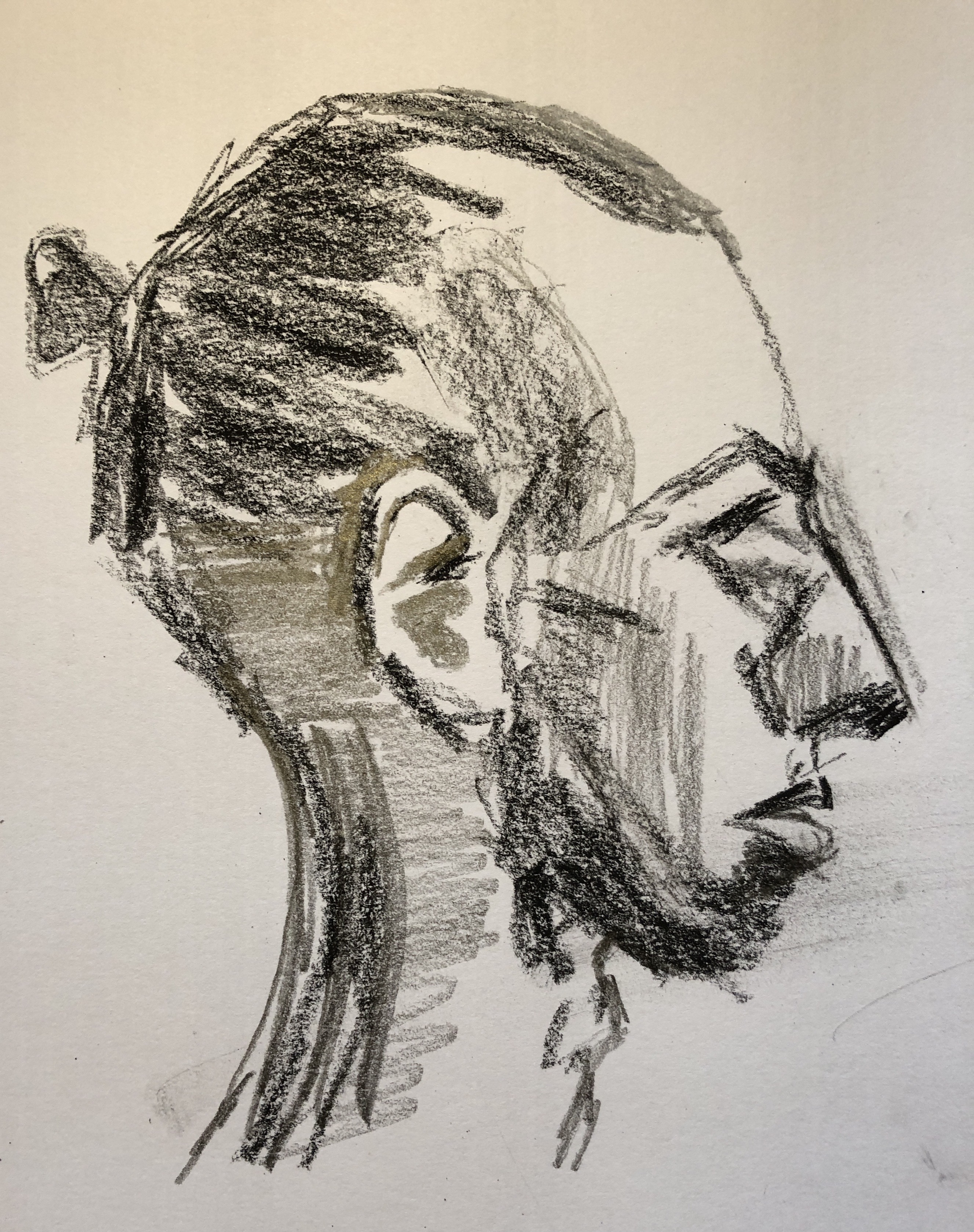
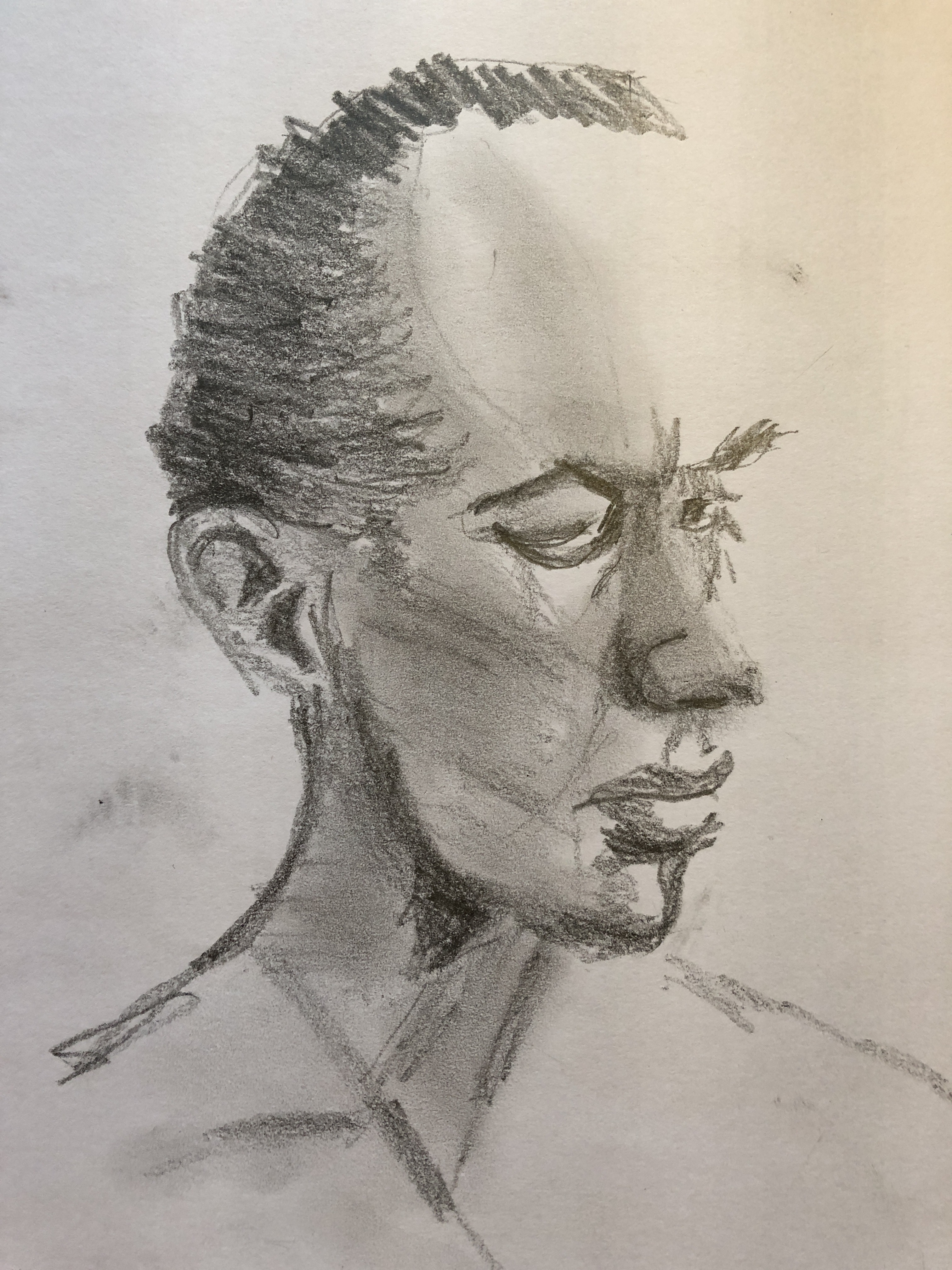
1 & 2. Having signed up for membership to ​Raw Umber​, which makes available images and videos for life drawing, I chose to try one of the techniques suggested there. I made quick sketches of a model’s head and shoulders in two different poses using charcoal 3B pencil and a thick 2B pencil, trying to look just at shapes and tone, blocking in the biggest dark shapes first, and trying not to think of them as eyes, hair, etc. It was hard not to add lines but the artist commentating gave some helpful tips, including the fact that not every shape needs to be a “geometrical” shape (triangle, rectangle, etc) but can be completely irregular – just a splodge shape, or the “shape of a fish-hook” – she recommended giving the shapes these names to distract oneself from thinking of it as an eye, an ear, etc. I found this really helpful advice.

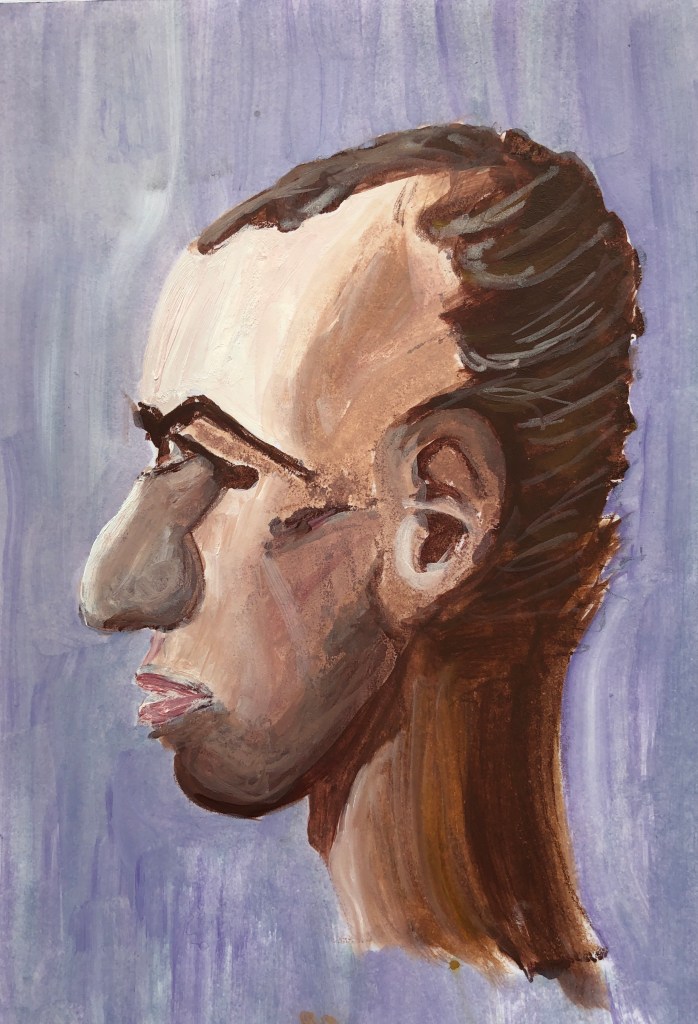
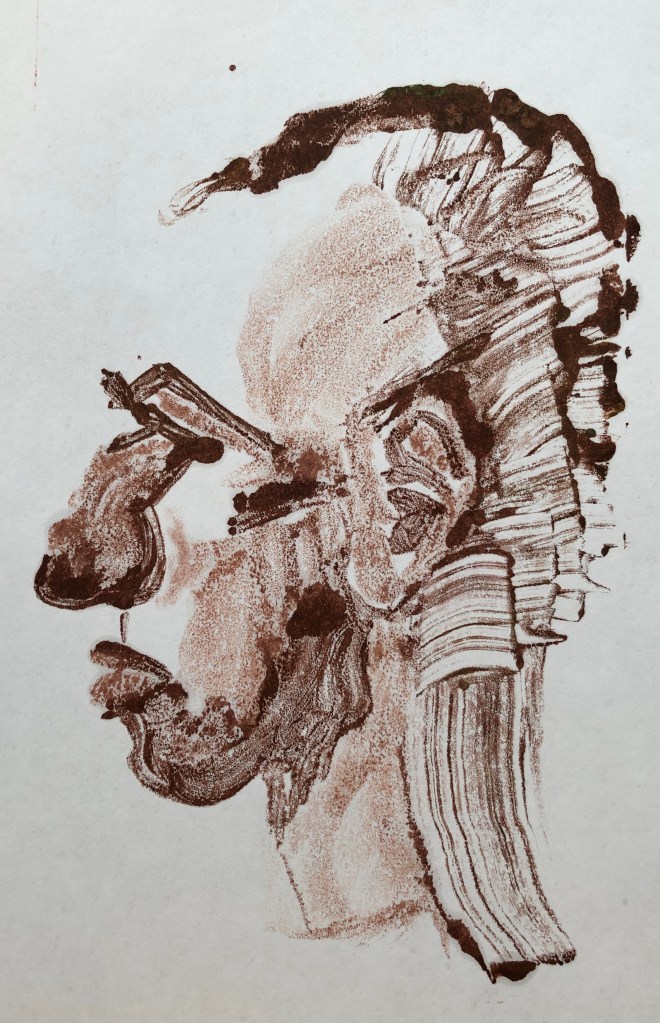
I worked on the first image as a base to experiment with tools. The brown colour was generated by a combination of emerald green, crimson and yellow ochre, and the paint was initially applied with a half-inch soft flat and a rigger. First, I used the cotton bud (with my dip-wipe-apply) technique to tidy and define lighter areas. Then I experimented with part of an old cut-up credit card to drag the paint of the neck to make it look more like a curved surface. This was fun but a little hard to control.

Next I tried actually applying some of the paint (hair and neck) with the card, and tidying it up with the cotton bud. Makes some interesting effects in the contrast between the card-applied versus brush-applied paint.

I particularly wanted to get his top-knot in, so in the last of this trio of prints I moved the plate over. I also added some pure crimson and yellow ochre to define the facial shadows and the ear, drawing into the ear in particular with my cotton bud and using the crimson very dilute, applied with big sweeps of the side of the rigger. Finally, the hair; I left the paint quite thick just behind the ear where it is really dark, to utilise the blobby effect you get when printing with thick paint, and I used the corner of a piece of kitchen roll dipped in solvent to try and get a more controlled moulding of the hair as it is pulled back into the topknot.

3. My Maggi Hambling-style monoprints.
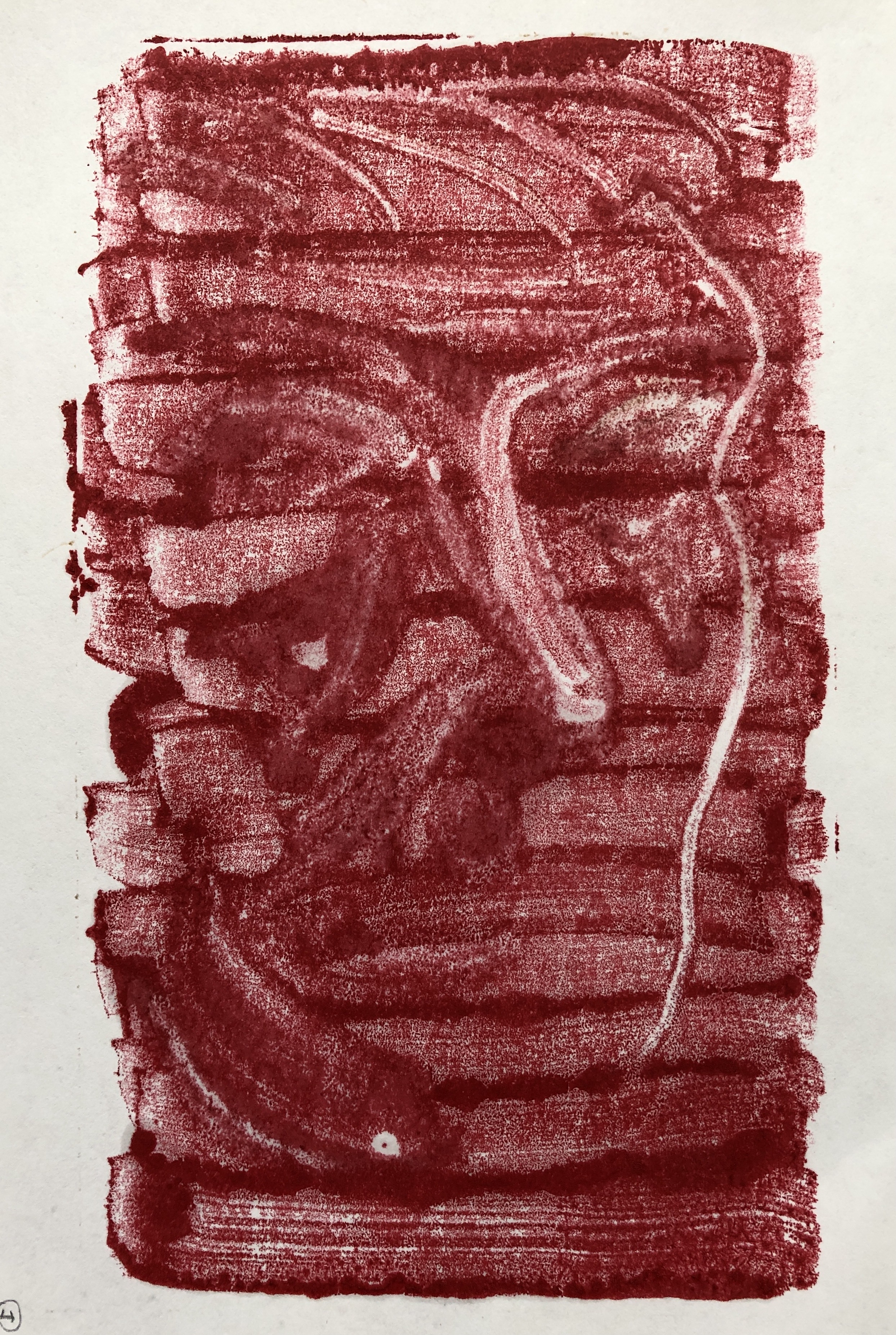
First attempts revealed two things: first, it is really hard to get an even background to work into and, second, I couldn’t really see the image I was using for reference through the paint layer; so, you are basically into free mark making.


I drew a generic facial outline with a cotton bud; first attempt was before I had perfected my cotton bud rule, second was clearer, but still the background dominated the image.

I didn’t want to let this technique go quite yet – am guessing that MH used printer’s ink with a roller, neither of which I had. I tried applying the paint with a size 6 soft flat and then stroking it back and forth and up and down with the flat side of the brush, which gave a slightly less dominant striped background, and then worked into it with a cotton pad dipped in solvent to make the image. Again, some interesting directional marks possible, though detail unclear.

Finally a bit of inspiration struck, and I tried smoothing out the paint surface on the glass with the soft edge of a feather – best yet. I then tried lifting out paint using the quill end of the feather dipped in solvent to make the image and really liked the delicate quality of the outcome.

NOW WHAT?

  • I feel I have grown in confidence with my portrait drawing by focusing on tone and shape – much more practice needed, though
  • I have found some useful tools for working into the paint while it is on the glass before printing – favourites are:
    • Cotton bud in solvent
    • Small piece of card
    • Quill end of a feather

Painting 1 (UPM); Part 3; Research – Henry Tonks and Yuko Nasu

WHAT?

Read an interesting article on the Science Museum blog on 23rd June 2016 by

Stephanie Millard entitled “Exposing the Face of War”, which described how the artist Henry Tonks worked alongside an ENT surgeon called Harold Gillies in carrying out (Gillies) and documenting (Tonks) pioneering plastic surgery on WW1 soldiers who had suffered devastating facial injuries. An example of that work is shown here, taken from the Museum’s Wounded exhibition; the sketch was done in pastel, and is © The Royal College of Surgeons of England.

Several others can be seen on www.gilliesarchives.org.uk under “The Tonks Pastels”.

Having looked at these images, I went on to look at the work of Yuko Nasu, particularly on her website, www.imaginaryportrait.com; here is “Lucas” from her Imaginary Portrait series, shown at the ZiZi Gallery in London in 2007.

Her pulling of the paint to distort an image is very characteristic of her work, and she often does this around the eyes, the hair and the face edges.

SO WHAT?

Leading up to Exercise 3, I chose one of the 1-minute portraits from Ex 1 and, using some new Jackson’s oil paints which arrived over Christmas, played around with images painted on the glass.

For the first attempt I was just getting used to the paint and the way it diluted with the Zest-It, trying to gauge how much to put in, etc, so I just tried removing paint with a cotton bud. Limited success – but I learned that, once some paint has been removed with the cotton bud, unless you do something about it, it will go straight back down on the glass wherever you next touch the cotton bud. Also, dragging paint with the bud works up to a point, but then some of the dragged paint gets deposited where you might not want it – so direction of drag is important.

For my second attempt, to try to deal with the problems encountered above, I tried dipping the cotton bud in solvent. Much learning went on here about dropping too much solvent onto the glass as it makes the paint go in lots of directions you don’t necessarily want (see e.g. the mouth).

For my third attempt I wanted to try some directional wiping with a bit of kitchen roll dipped in a little bit of solvent, as I understand Yuko Nasu does to obtain her distorted images.  This went OK inasmuch as I did manage to pull the paint around directionally – however, my dragging was a little wild and the actual shape of the face is quite distorted; I suppose I should have seen this and wiped that part off the plate before printing, but it didn’t look quite so weird on the plate as it did on the print.

NOW WHAT?

Lots of learning here:

  • Cotton bud technique: dip the bud in solvent – wipe excess solvent/paint off – apply to plate. Repeat!
  • Wiping with a bit of rag/kitchen roll:
    • If it has solvent on, be aware that it can take quite a bit of paint off the plate and leave your image faint in places
    • It”s fun, but you can’t quite see what you’re doing in the same way as you can removing paint with a bud or brush, so be prepared to adjust
  • I’m realising that the reversal of the image is making the outcome rather unpredictable for me; I hadn’t realised that reversing an image would make it “look” quite so different. Something to get used to with practice, I suppose. Might try looking at the plate from the back before printing to see if this helps me decide what needs adjusting.

Painting 1 (UPM); Part 3; Marbling!

WHAT?

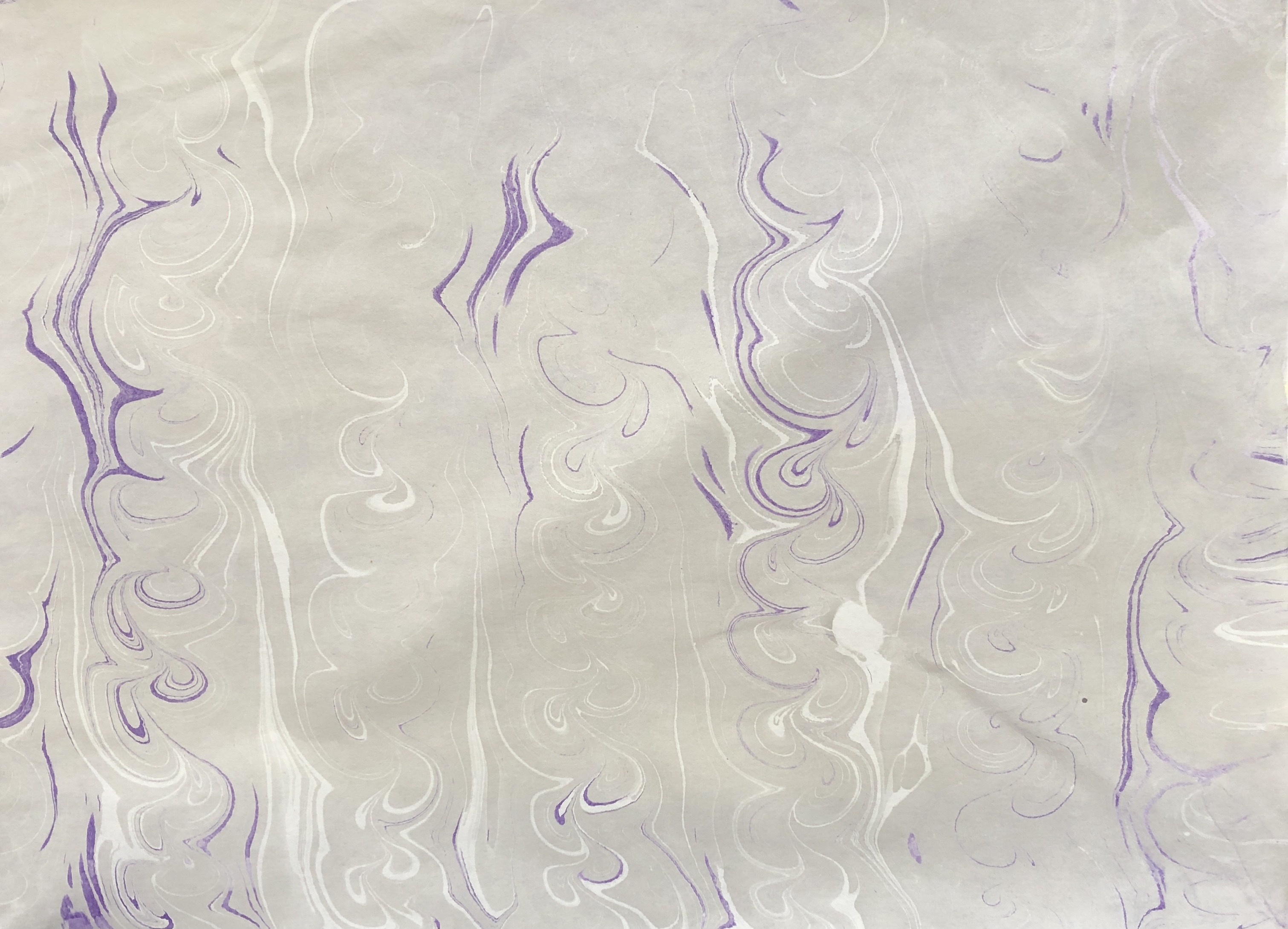
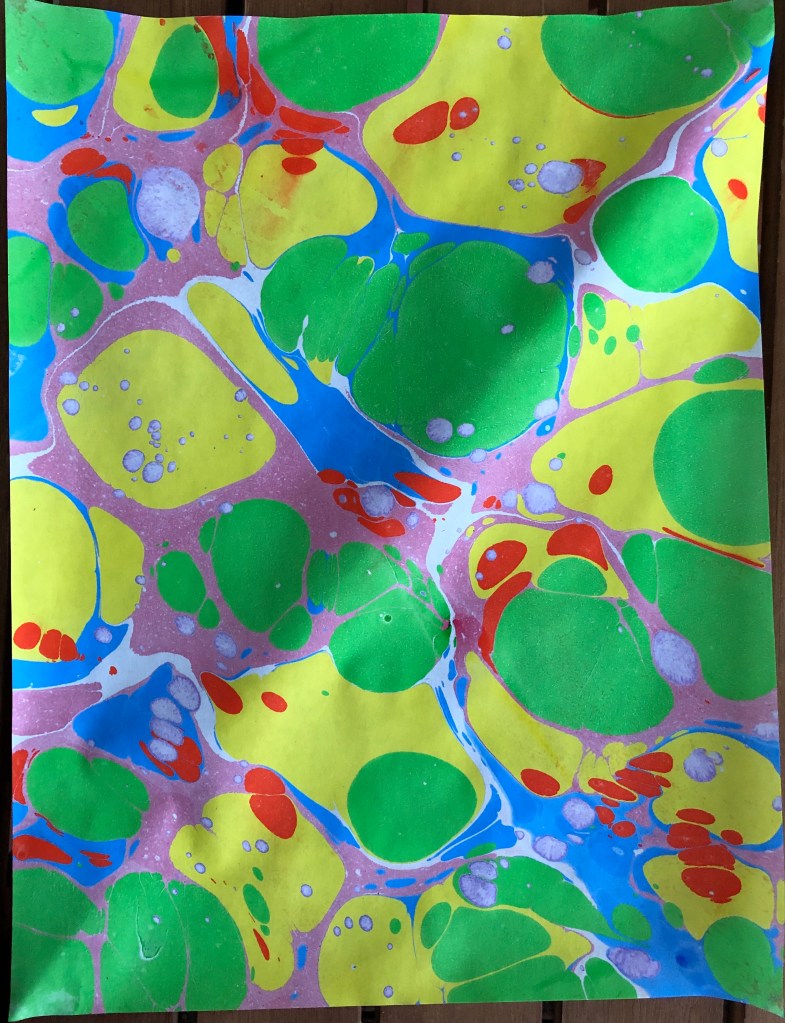
For Christmas I was given a marbling kit by my publisher daughter. It is a serious kit and needed the study of the entire instruction manual and several YouTube videos, followed by a preparation day constructing the brushes, making the size and coating the paper with alum as a mordant before I could even start in with some paint!

I’m recording it here because the instructor describes each outcome as “a unique contact print” – sounds very like a monoprint to me.

SO WHAT?

The paint supplied was acrylic-based, and I started by working through the instructions to find out the types of outcomes possible – there are several classic named designs. Here are a few basic ones:

I went on to try more classic designs and also played about experimenting with some free marks, swirls and squiggles. The designs always look so faint on the surface of the size as very little paint is needed, and it’s always a moment of wonder to peel back the paper and see what’s revealed!

NOW WHAT?

  • Need to generate a bit more of that sense of excitement in peeling back the paper with my oil monotypes – so far have been a bit underwhelmed with my outcomes
  • Am going to try to use some of my free, less bright and busy marbling outcomes to print my oil monotypes onto so they form backgrounds – a monoprint on a monoprint, as it were

Painting 1 (UPM); Part 3; Exercise 2

WHAT?

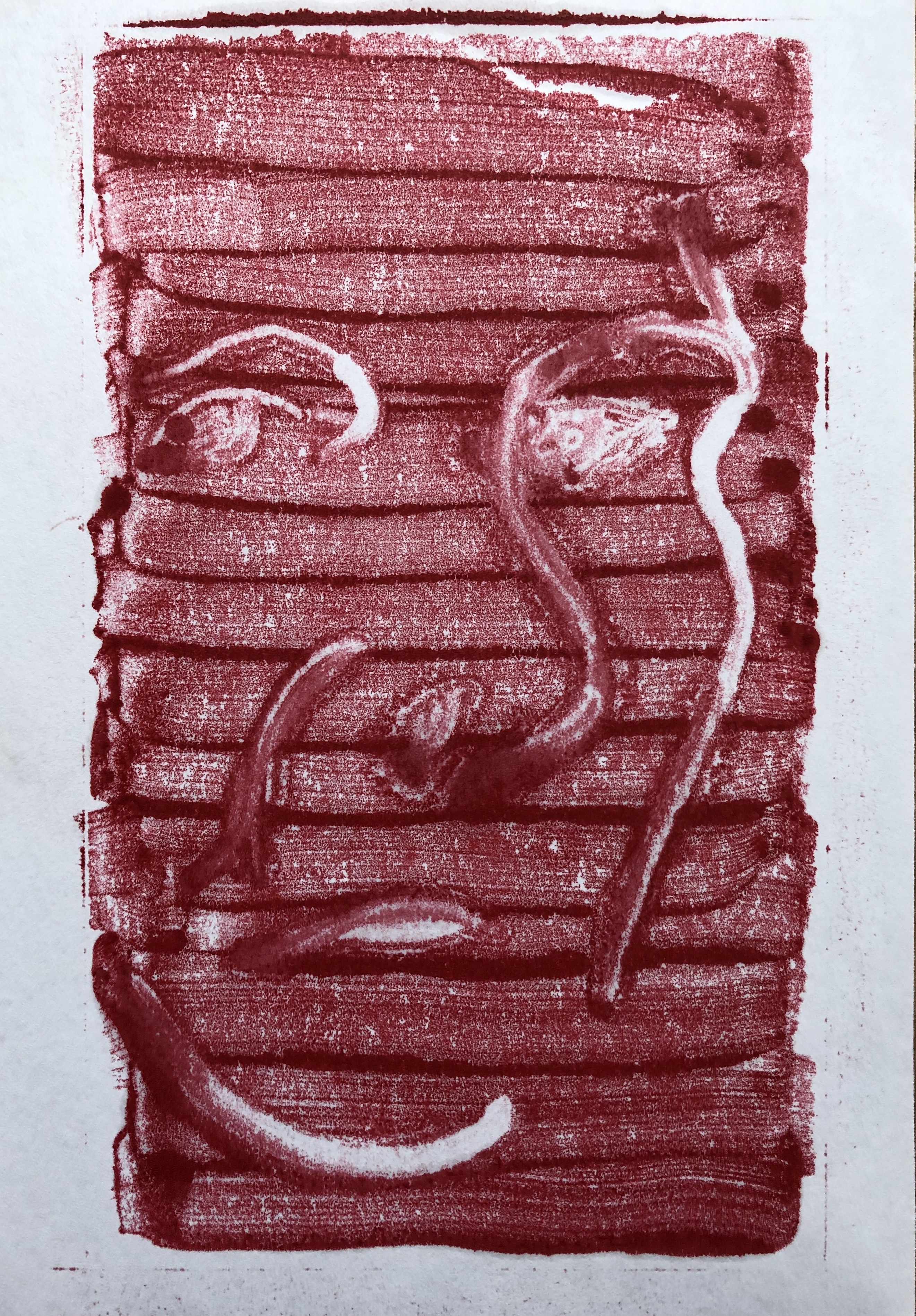
Using a selection of the ink drawings made in Exercise 1, oil paint with Zest-It solvent and a glass plate, I had a go at making some monoprint portraits. I had already had a go at making a few monoprints as part of the workshops led by Hayley Lock (see separate blog post), although these were slightly abstract plant designs. 

SO WHAT?

I began printing onto cartridge paper and experimenting with different brushes, marks and thicknesses of paint. The first few were of the same image, before I moved on to another.

All the backgrounds were white, differences here being because of my working in a dark studio lit only by a skylight and a daylight lamp. I found I liked a combination of the size 2 soft filbert with a rigger best.
As part of my research I found a very useful article on the Jackson’s blog: “PAUL WRIGHT ON MONOTYPES”:

18th February 2016 by Lisa Takahashi 

I really liked the energy of his pieces, for example:

Paul Wright: ‘Dealbreaker’ (3rd version) Monotype 40cm x 30cm 2015

and…..

Paul Wright: ‘Colour blind’ Monotype 40cm x 30cm 2015

His style of strong gestural marks is I think the way my work might want to go; he comments in the blog “Monotypes allow me to work fluidly and quickly, which very much suits my temperament”, which strikes a chord with me.

Having looked at this work I continued working on some of my other Ex. 1 drawings, experimenting with HP watercolour paper and continuing to play with paint thickness.

NOW WHAT?

I can’t say that I’ve worked my way to 5 images I am satisfied with, as I don’t feel satisfied with any of them; but I wanted to move on to working into the images so am going on to Exercise 3.

So far I’ve learned that:

  • Thinner paint shows up the brushstrokes well but too thin makes the image vague and unclear
  • Thick paint goes blobby, which can have a place, but generally looks like a mistake
  • Tone is going to be really key to using this process effectively – I have to get better at seeing a face as areas of tone rather than eyes, nose etc……

Painting 1 (UPM); Part 3; Exercise 1

WHAT?

The brief was to paint 20 self-portraits, using ink, not more than 1 minute per painting.

SO WHAT?

I worked in Indian ink using a long-handled soft round brush (size 4), fitting two paintings onto a sheet of cartridge paper (so each being A5 – roughly the size of my glass plate for monoprinting). In the first two paintings the timer didn’t work so they are slightly over a minute; after that I stayed strictly to time. I varied the lighting (both level and direction), the position of the mirror, my facial expressions, and the painting hand, and therefore accuracy (depending on which hand was holding the mirror).

I found the exercise very challenging and tied myself in knots rather – by the time I’d got in position, set the timer, looked, got my brush loaded and made a mark I was already halfway through my time! I ended up trying to pick out one or two features, mainly the darkest ones, and tried to get those down.

NOW WHAT?

To be honest, my main takeaway from this exercise would be to organise myself better physically for a process so time-dependent and containing so many elements which needed to be in the right place to work effectively and never were – there was just too much arm-crossing, reaching, panicking, losing my place, and the long handled brush was a serious mistake, it was in the way of everything.

Drawing 1; Part 3 – Expanse Tavistock Group of Artists demonstration – 12.11.19 – Emma Carter

Emma Carter-Bromfield is a South Devon artist working in acrylics and oils – see her website, www.emmasisland.com.

I took notes on her demonstration (see hardback A4 sketchbook) and don’t propose to regurgitate them here. What struck me about her painting was her freedom alongside her apparent enjoyment, almost need, to do it. As with several other painters I have experienced recently (e.g. Rob Dudley, John Virtue, see blog posts) she is aiming to capture the spirit and essence of a part of the world she loves, rather than trying to represent a particular fixed view.
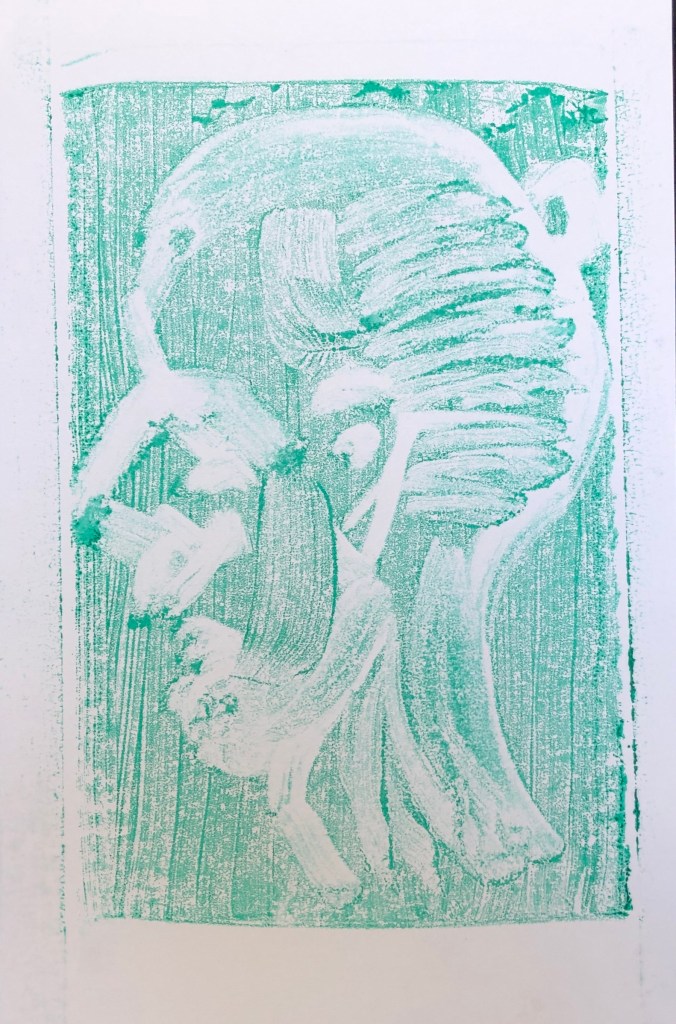
This was as far as she got in the time available – quite something given the size of the canvas – enough to provide real inspiration.