
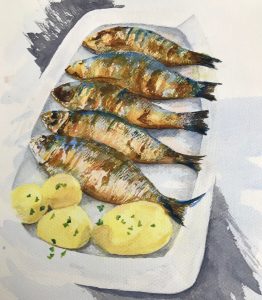
WHAT?
A helpful feedback session and a wide-ranging discussion online. Key points noted below, in no particular order except as they arose.
SO WHAT?
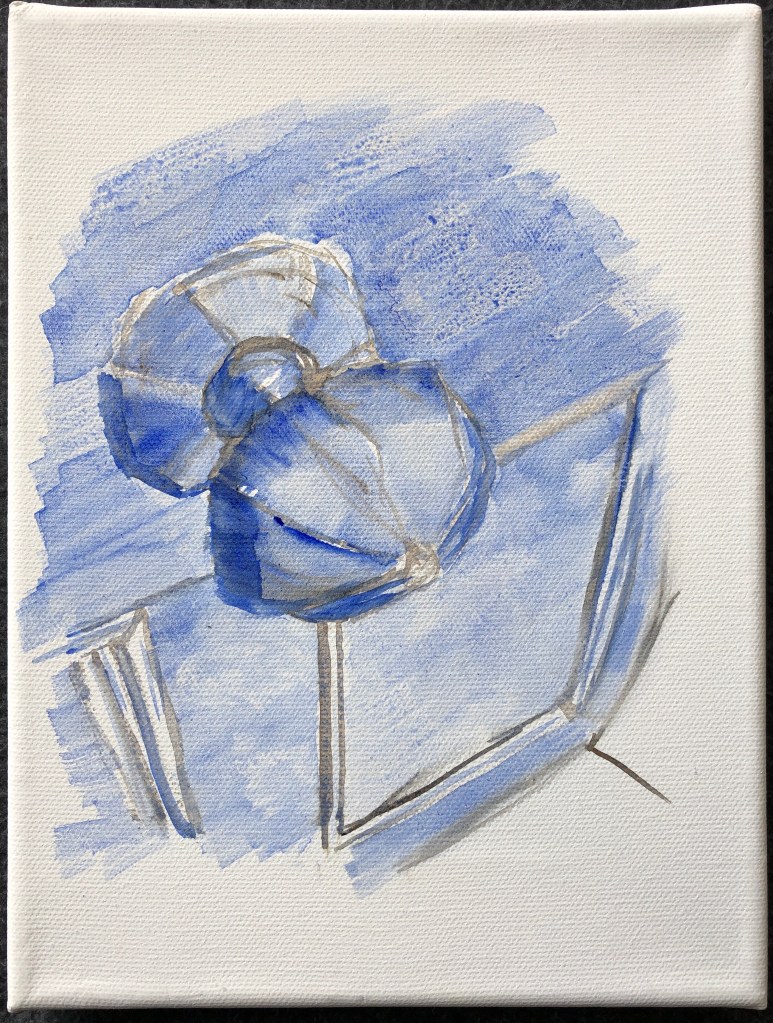
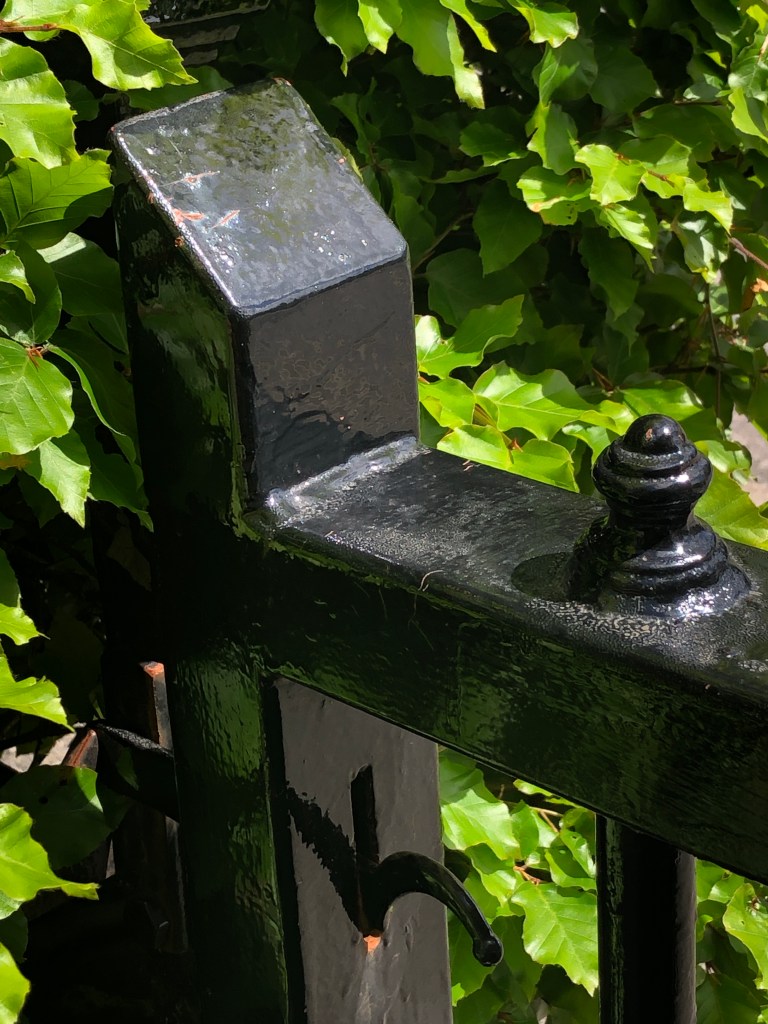
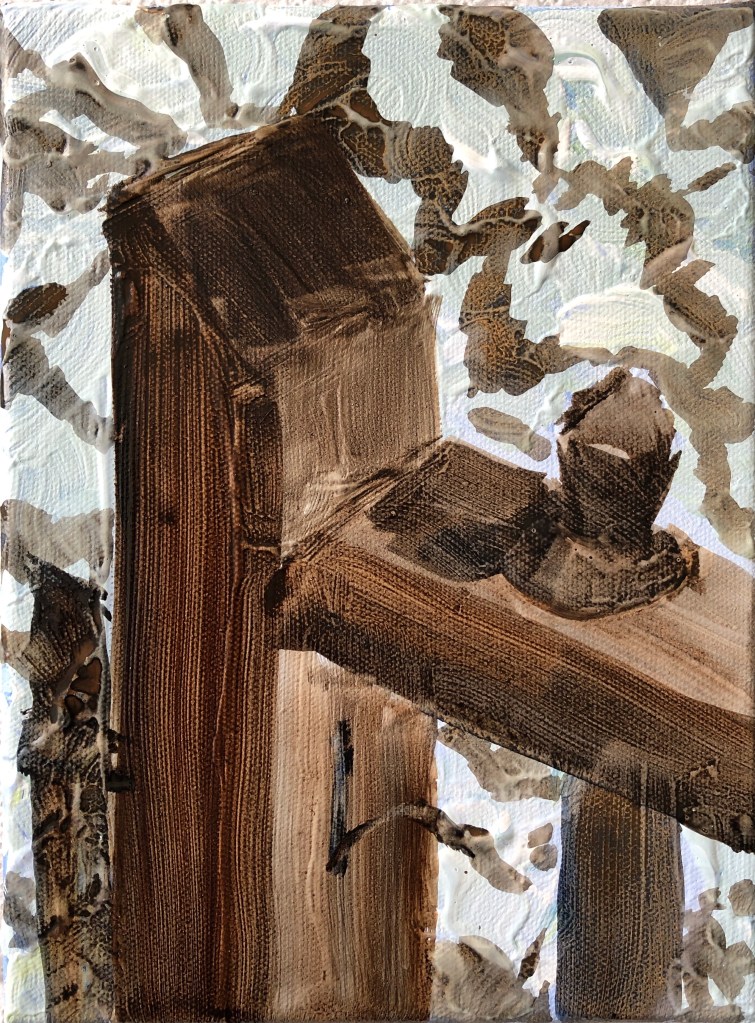
- “Gate” painting is really exciting – gives the impression that I enjoyed painting it. However, the light green final layer is spatially confusing.
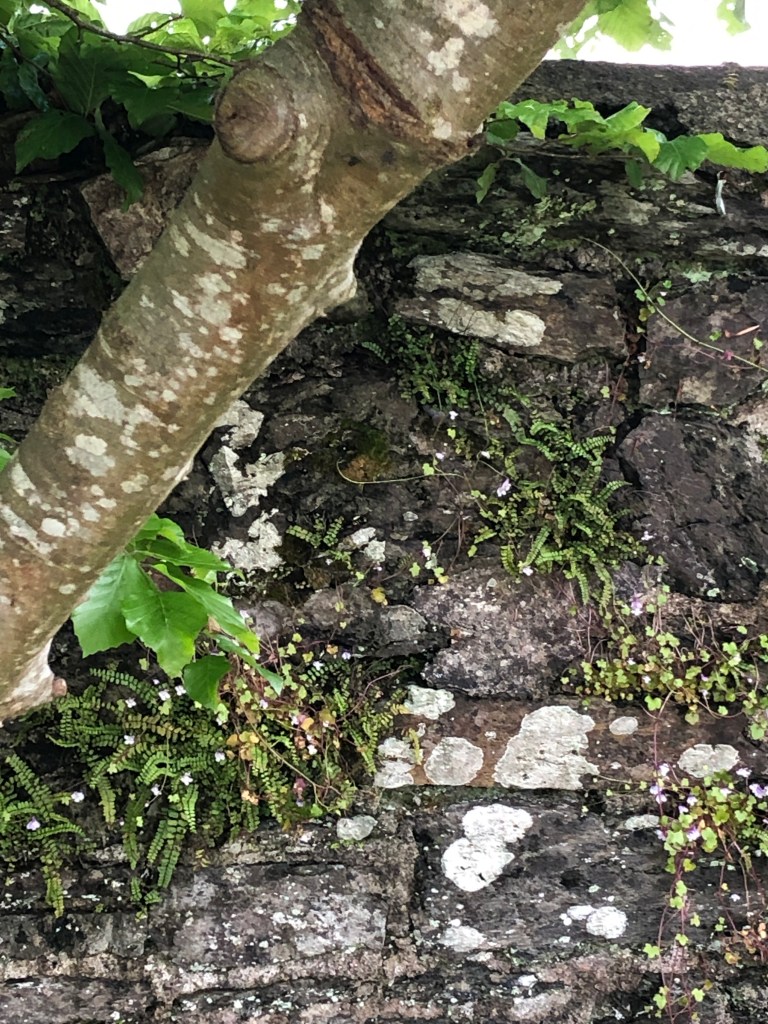
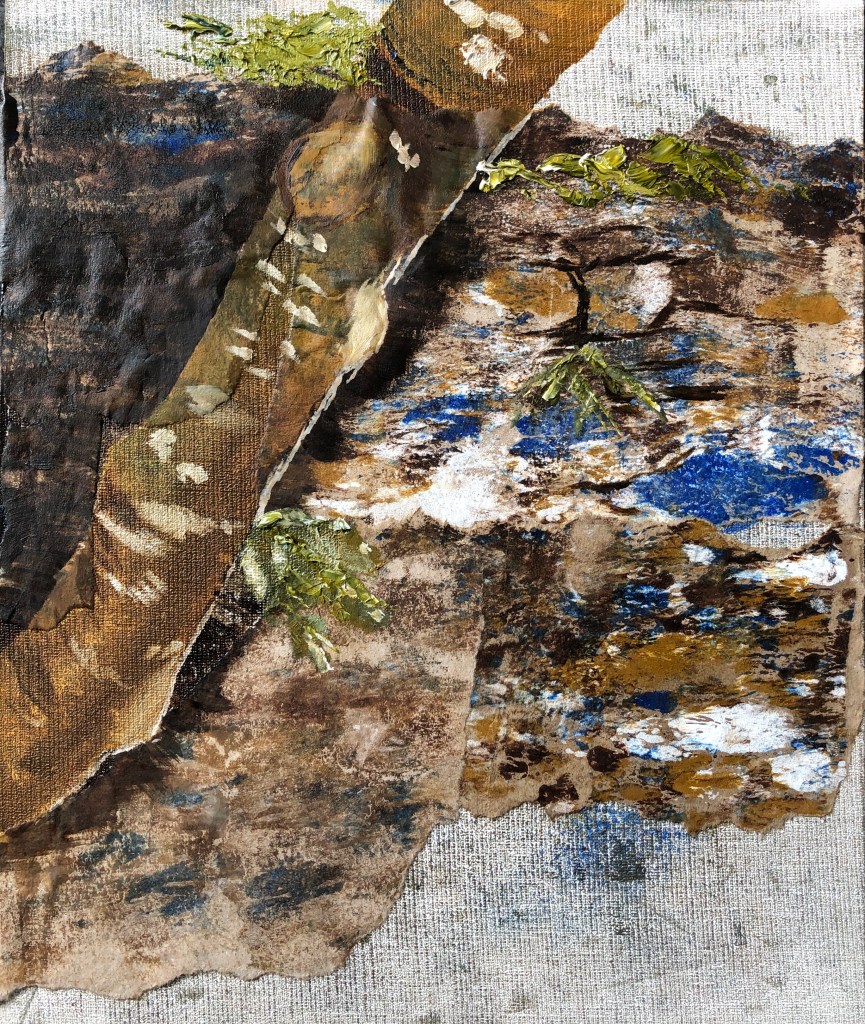
- “Tree on the wall” painting – light in the photo was very even, so quite impressive that I managed something not a flat mess. Very experimental.
- “Purple flowers” – add a blue to take the darks to a near black
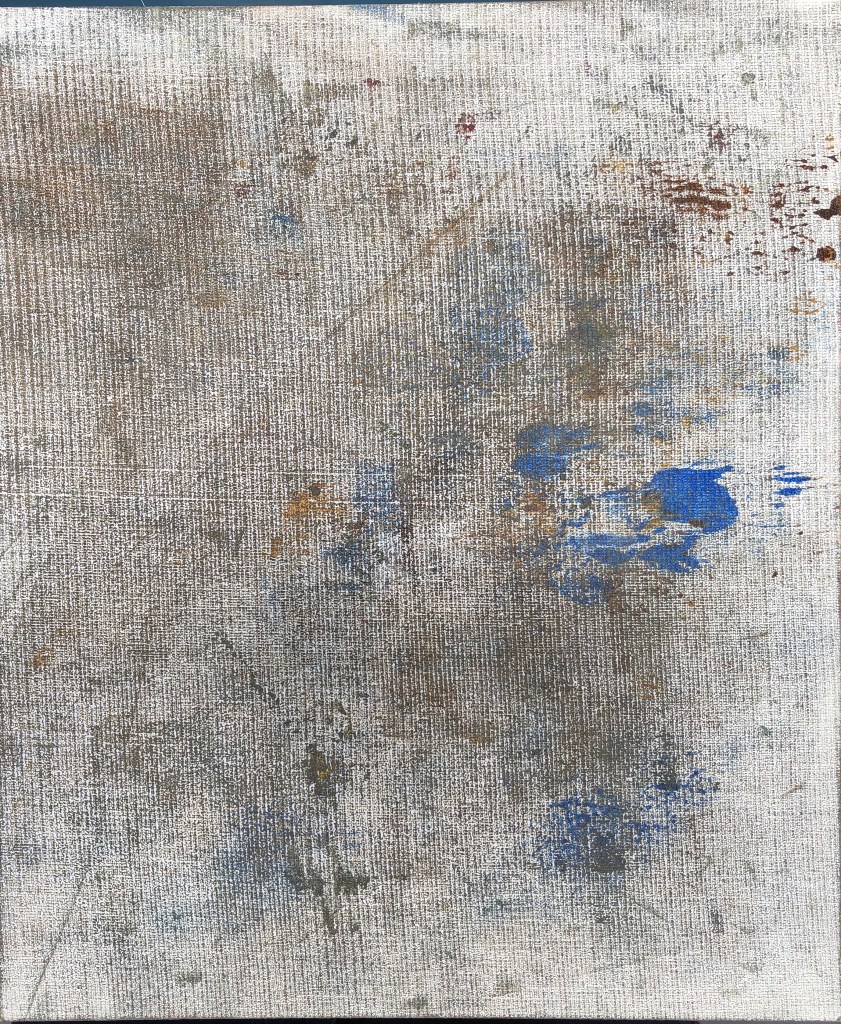
- Priming – a moveable feast, not everyone does it. Need to find a canvas to suit me – ranges from rough fabric right through to fine linen, and this determines how the paint flows across the canvas, e.g. linen feels very silky, bit like a non-stick frying pan, plus you can see the weave; consider investing in some test samples. Also consider the weight of a big canvas. Sizing (with rabbit or fish skin glue) doesn’t make the canvas impermeable, but will stiffen and tighten it. Some people then prime in white, e.g. with gesso or acrylic, others use colour. My tutor doesn’t prime, but uses an underpainting – consider asking other tutors how they prime their canvases? Good canvas suppliers are Atlantis and Cornelisson, also worth checking out Jackson’s; also need pairs of stretcher bars and a staple gun. Canvas is expensive though, so consider using boards and linen. Working large on canvas has a particular quality that connects with history. However, if you choose to use a lot of gesso, it’s not worth using canvas, might as well use board.
- Trust your own instincts – let the goal guide you.
- National Gallery technical bulletin is good for methods and materials.
- Essay – NEEDS WORK!! Referencing (Author, date) needs to go directly after any quotations, facts, etc – it’s not enough to just put a list at the end. The list at the end is then a referencing list – a bibliography is different and includes all the things you have read around the subject, even if you don’t actually use them in the essay. I will fail a plagiarism test without these references within the text – so BEWARE!
- Book recommendation: “On not knowing how artists think”.
- Paint handling – I suddenly go very thick, and this would be better if I was working much bigger. Oil paint dries from the back, so a canvas without primer will dry quicker (so goodness knows how long mine will take!). A brush mark has a beginning, a middle and an end, and painting as thickly as I have means I am not leaving the stroke with any elegance. If I want to do this, consider using a clean brush to carve in. Could also put a blob of paint down and then draw it out with a clean brush. Blue paper rolls are good for cleaning, and mix with a palette knife. Have more paint on your brush than you need so your brush doesn’t leave a mark.
- In Exercise 2, the ink paintings were lovely and tonally varied, but the watercolours lost the drama and precision of the darker colours. I did have a go at taking one of the ink paintings and rendering it in a different combination of watercolours (burnt umber, ultramarine, light red and cadmium yellow) to try and get those darks:

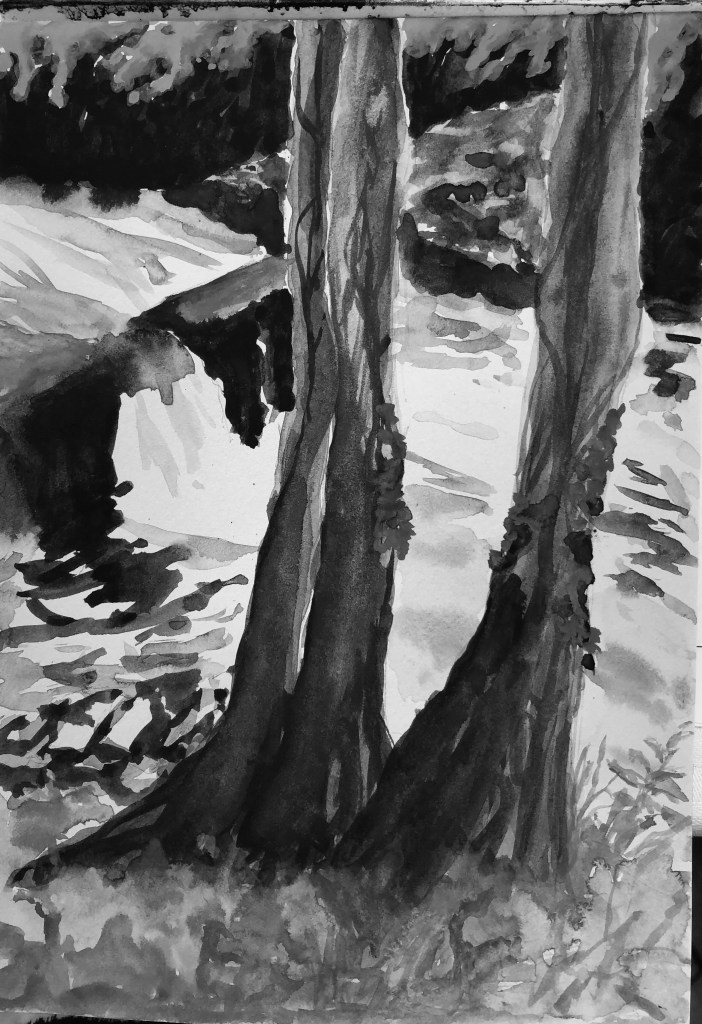

(watercolour; watercolour saved as monochrome; original ink painting).
I think I have got my darks darker, but in focusing on that I have inadvertently lost some of my lights. Having painted in oils for a while, I found myself treating the watercolour paints in the same manner and have lost some of their translucency as a result – hence the rather “solid” finish. So much to think about!
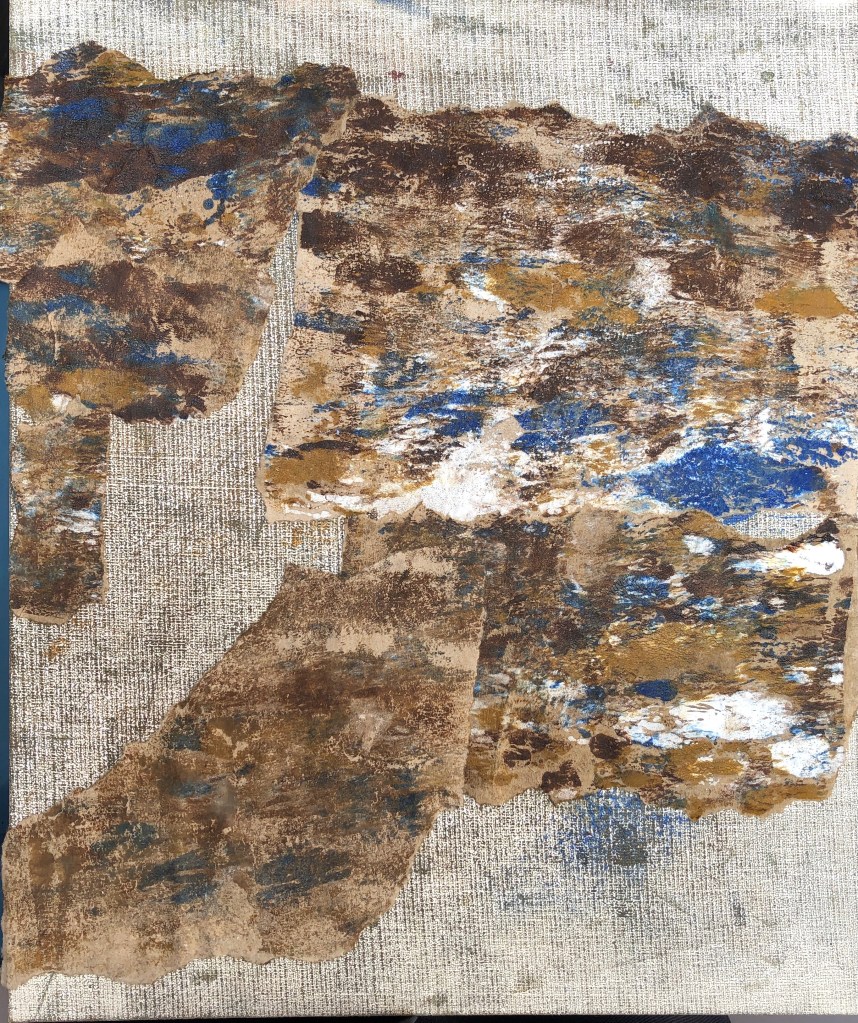
- Curation – this was fine, a nice idea, says something about me. Thinking about unusual curation is definitely something to take forward.
NOW WHAT?
I feel as though I’ve learned loads about painting, especially using water mixable oils, but still am at the very beginning of my learning journey. It’s easy to get overwhelmed, but my way forward is to
- do my research
- pick people’s brains
- don’t drown
- choose a thing and work through it so at the end I can say “I know about…x…and I have ways to use it” and then move on to the next thing.












 Sue J's blog