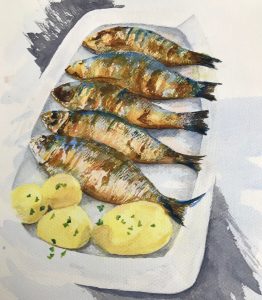
“How tone is made is determined by what the tone is for in the drawing, what materials are being used, and…what the artist wants to communicate. What tone communicates is different from what line communicates. Line indicates the shape of something, the edge between form and space, the movement of a form, or even movement itself. Tone tells us about lightness or darkness, weightlessness or heaviness, and dullness or shine. It can tell us depth in space or it can be space itself. Line and tone are often worked together in drawing, but each can also stand alone…” – Davidson, M. Contemporary Drawing – Key Concepts and techniques.(2011) Watson-Guptill Publications.
Odilon Redon is obviously a master at the use of tone for so much more than just an indication of solidity, texture and properties as described above; he draws you into a picture and makes you wonder, particularly, about his darks and what might be concealed within – usually unsettlingly- see blog article on Redon.
Other artists use tone for a range of atmospheric effects. Honore Daumier, in his pen drawing Four Lawyers, circa 1867-70, The Art Institute of Chicago, could presumably have left it at a plain drawing, but has chosen to add tone via washes; obviously this adds solidity and 3D-ness to the figures, but to me it also imparts a certain air of weighty pomposity to the gentlemen, almost as if Daumier is having a bit of a laugh at their expense.

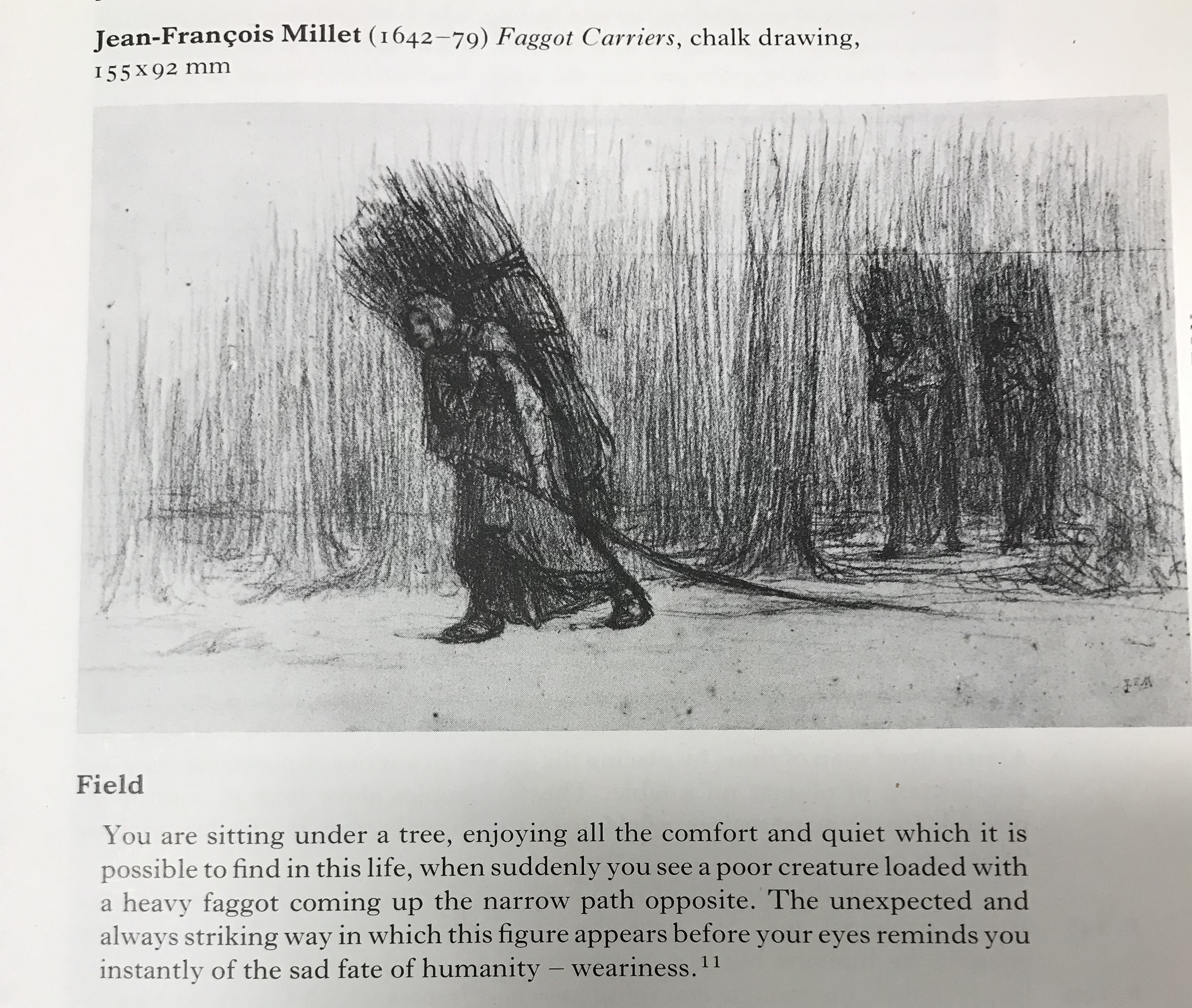
The quote below from Millet (taken from Rawson, P. (1979) Seeing through Drawing, BBC) sums up the feeling about the figures which is generated by their dark tone against their surroundings:
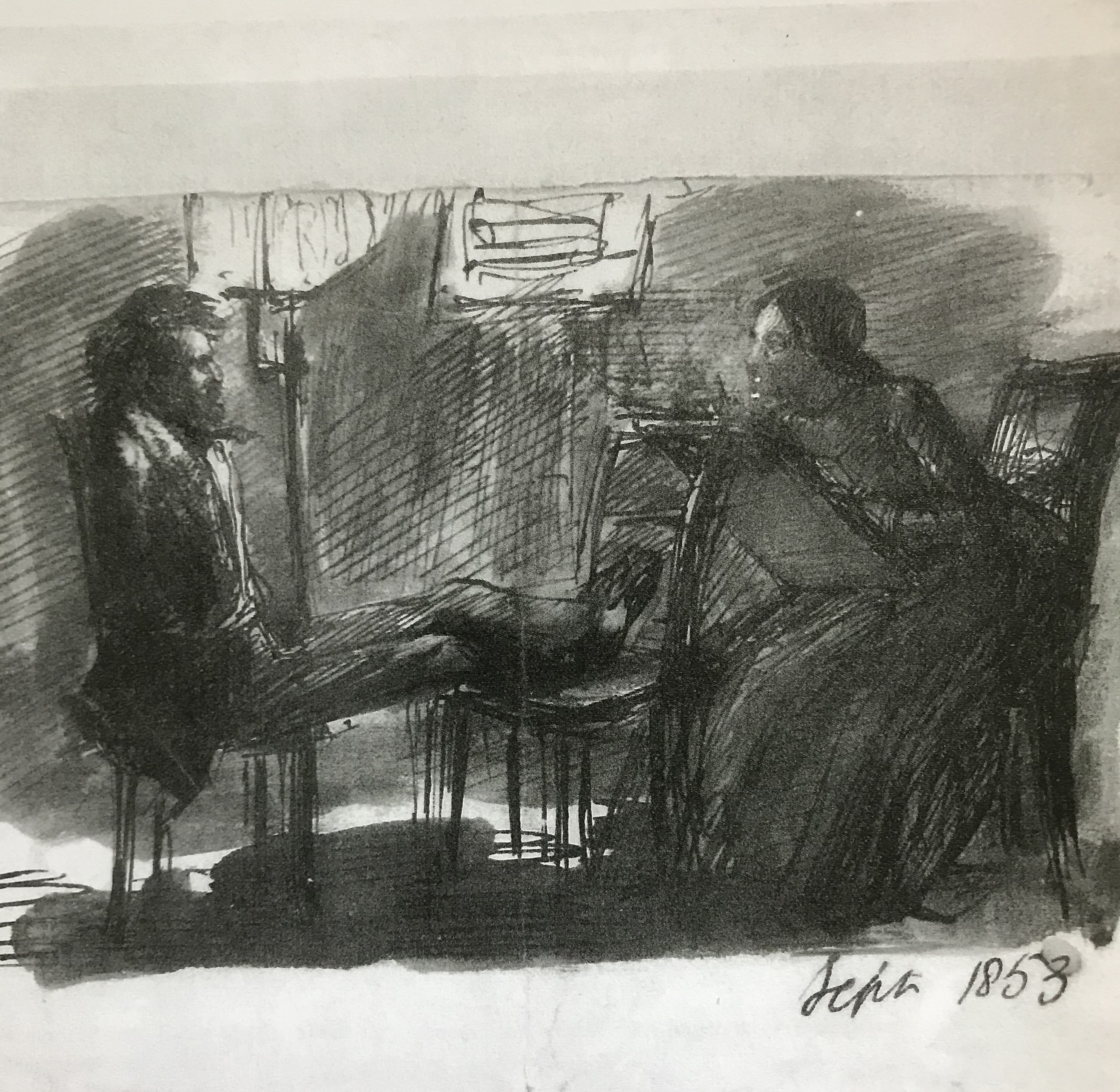
Dante Gabriel Rossetti’s Rossetti Sitting to Miss Siddal, 1853, Birmingham Museum and Art Gallery, a pen and ink drawing apparently shaded with his finger, depicts Rossetti sitting whilst Lizzie Siddal draws him. The darkness of the drawing, along with the energy of the lines, suggests to me an intense and slightly controlling relationship between the two.
There are also numerous paintings using chiaroscuro, meaning light-dark, which throw the figures almost into your lap with dramatic and often emotional effect – for examples,Leonardo da Vinci’s The Virgin of the Rocks, 1491-2&9 and 1506-8,S. Francesco Altarpiece, Milan…

…and Caravaggio’s Salome Receives the Head of John the Baptist, 1609-10, National Gallery

What does this all mean for me and my art? At the moment I am struggling enough with the use of tone to simply depict a fairly realistic 3D image of an object – but I do see the potential for its use to convey so much more as my style emerges. I need to learn to start thinking about what I mean my picture to convey APART from just the image of an object which is in front of me – as has been suggested to me in the very first exercise in the course, about using gesture to convey feeling – tone of course can do this too.

 Sue J's blog