
WHAT?
In one of my new favourite books, Royal Drawing School (int. Julian Bell), 2019, Ways of Drawing, Thames & Hudson, London, there is a suggestion for an exercise from Tyga Helme. I decided to give it a go for three reasons:
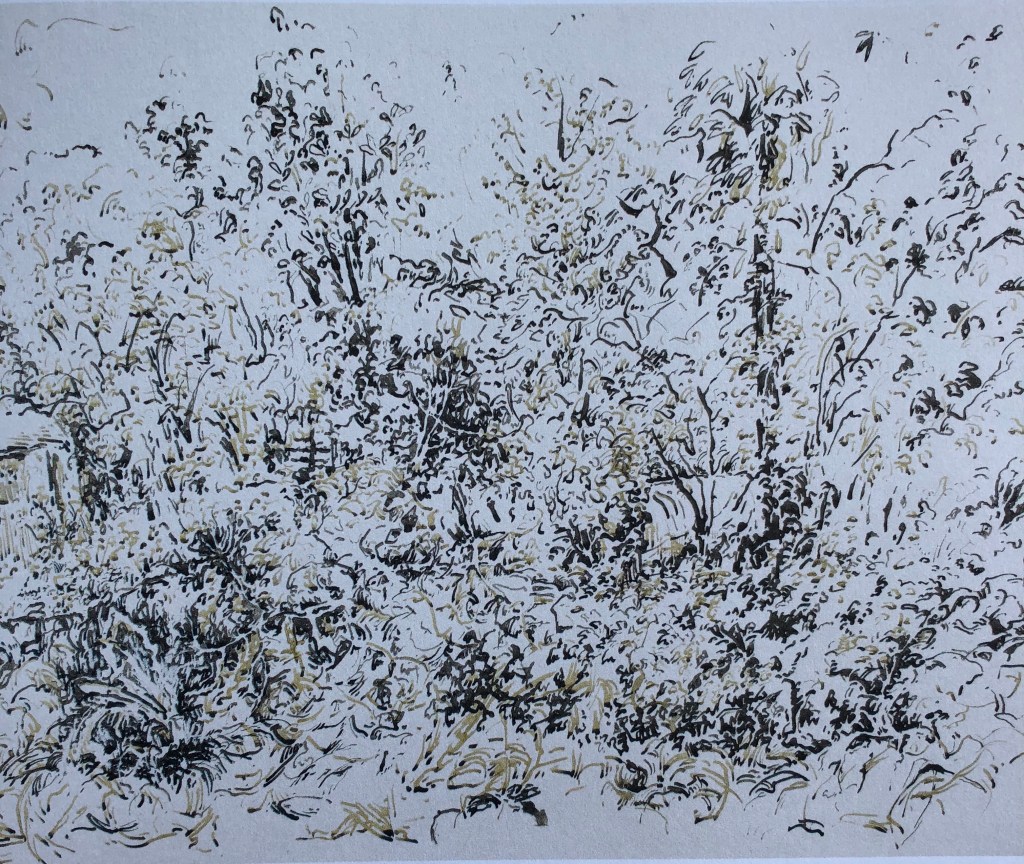
- I was drawn to her style, which is a bit scrappy and scribbly, rather like mine – see this example, Behind Knole, 2015, ink on paper
- The exercise sounded as if it would get me past the problem of being slightly overwhelmed by the amount of stuff in a view that there is to draw
- It had the potential to generate drawings which I could tessellate (as per John Virtue and Lydia Halcrow)
She suggests that you take a stack of 8 x 8cm squares of paper to a scene you would like to draw from. You take the first square, look at one thing in the view which catches your eye, draw it (she suggests for 3 min, but I wanted to really make myself home in on key features so I only allowed myself 90 sec), then turn over to the next page, draw the next thing that catches your eye, and so on. She says that, at the end you can put them together and be able to see “..where your eye naturally travelled and what you reacted to.” Her example in the book looks thus: (Tyga Helme, untitled, 2014, ink on paper).

The idea is just to be present and totally focused on your looking and mark making without worrying about what the finished piece will be.
SO WHAT?
I had a go on the little shingle beach in the river, looking along the facing bank which has quite dramatic trees with exposed roots down to the water, and looked in a clockwise sweep past a shoal of rocks in the middle of the river and up the nearer bank. Here are my rapid sketches in order:

A couple are very sketchy and I had to look twice to work out what they were when I got them home!!
However, John Virtue used to make really scrappy sketches on location and then come home and draw into them with ink, and so I emulated his method, drawing into my sketches with a dip pen and black Indian ink with shellac from photo references which I had made to back up my drawings, but always keeping my focus on the landscape feature which had originally caught my eye.
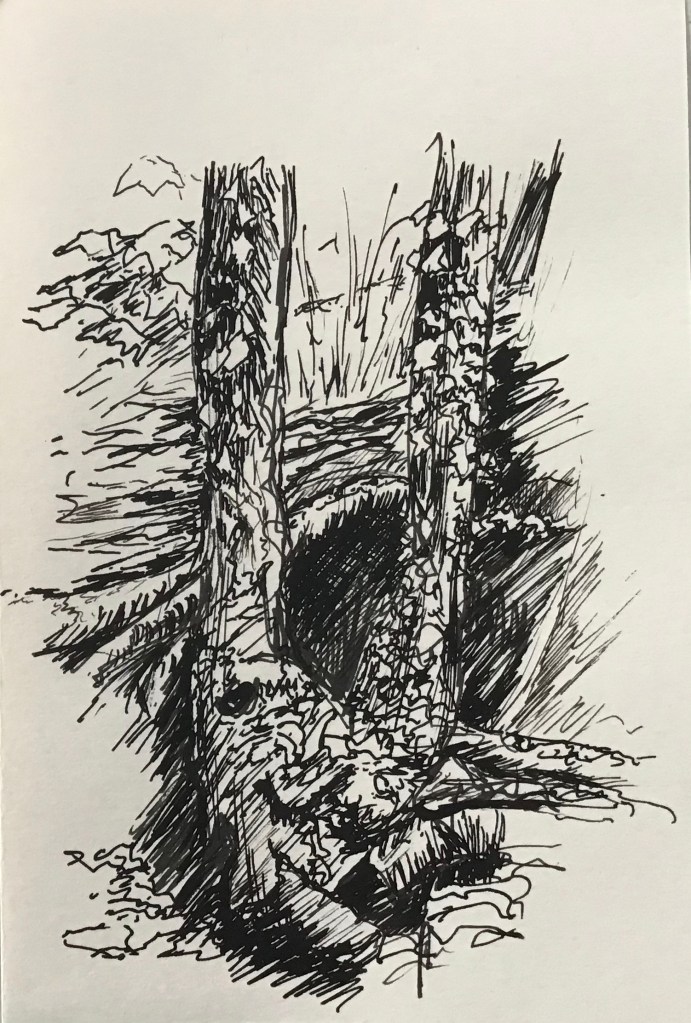
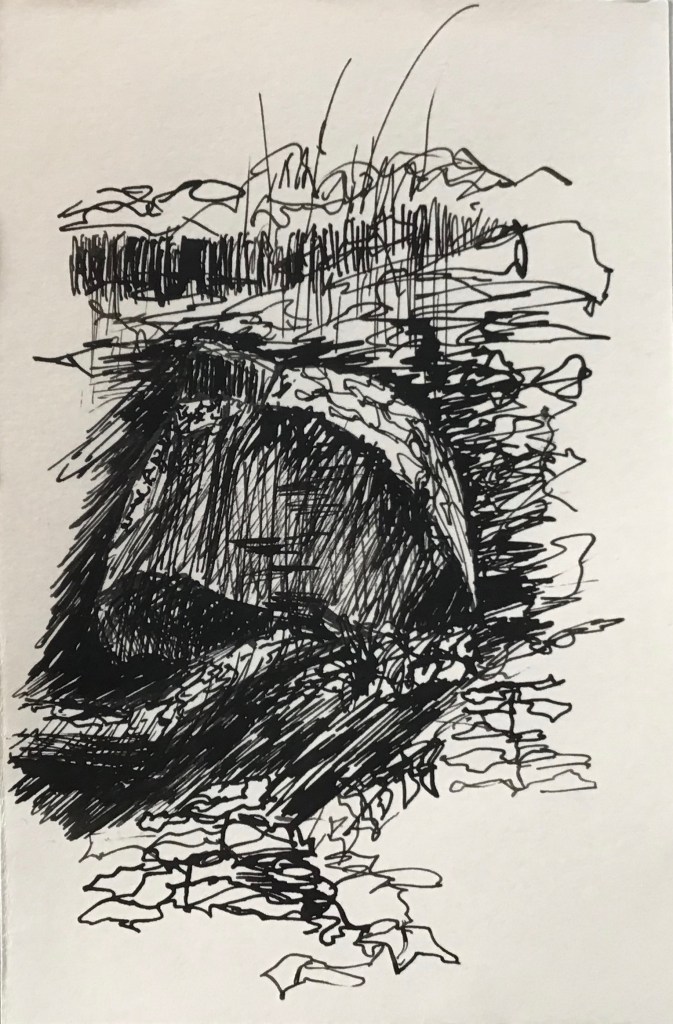
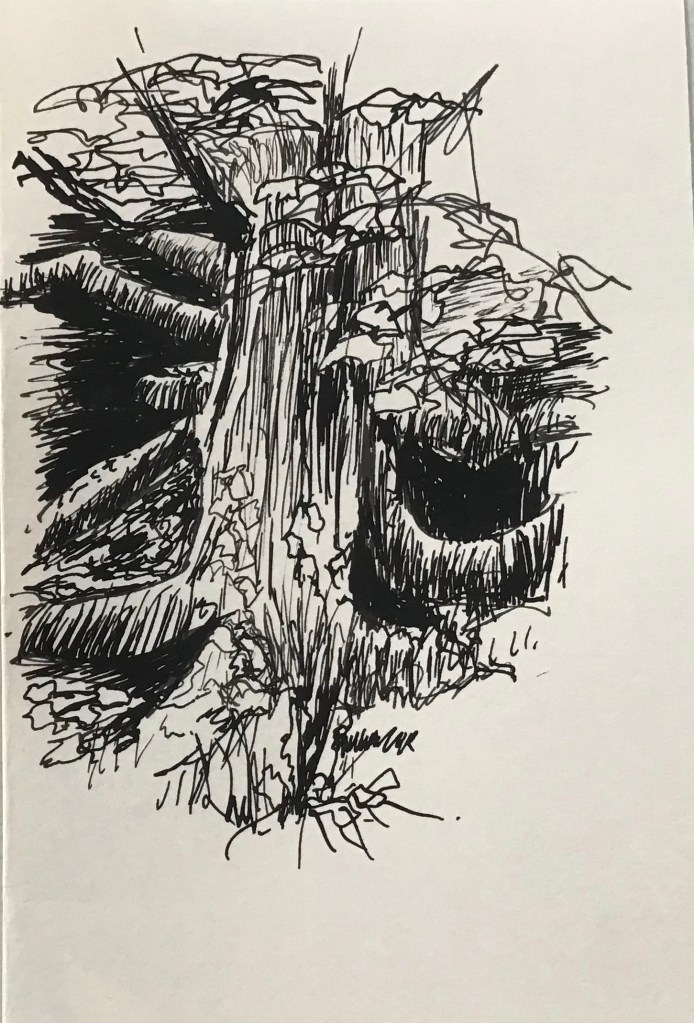
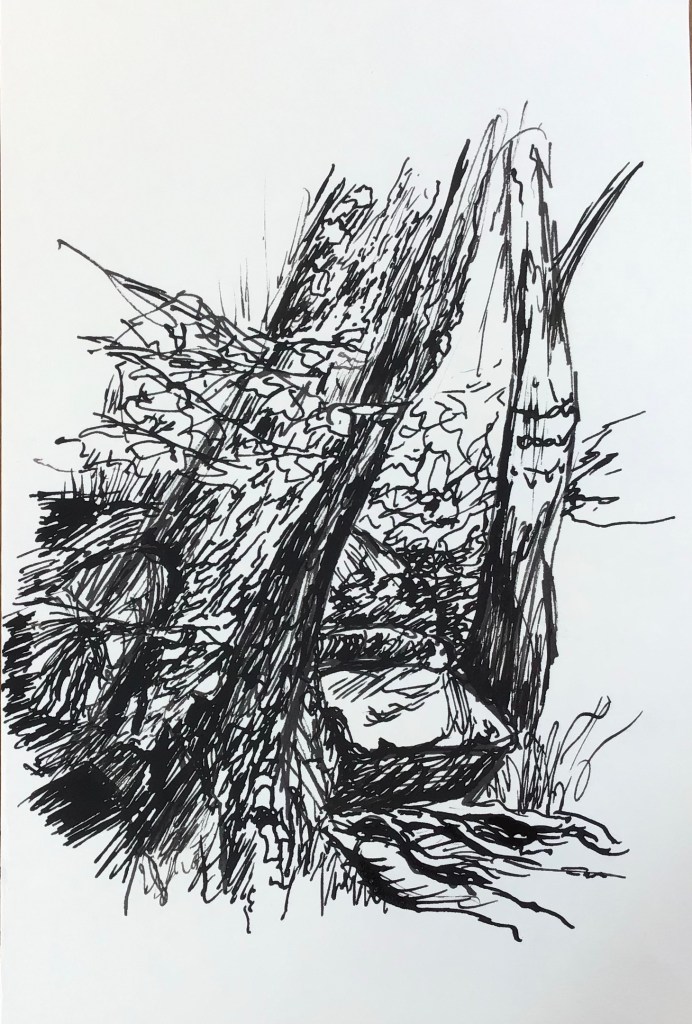
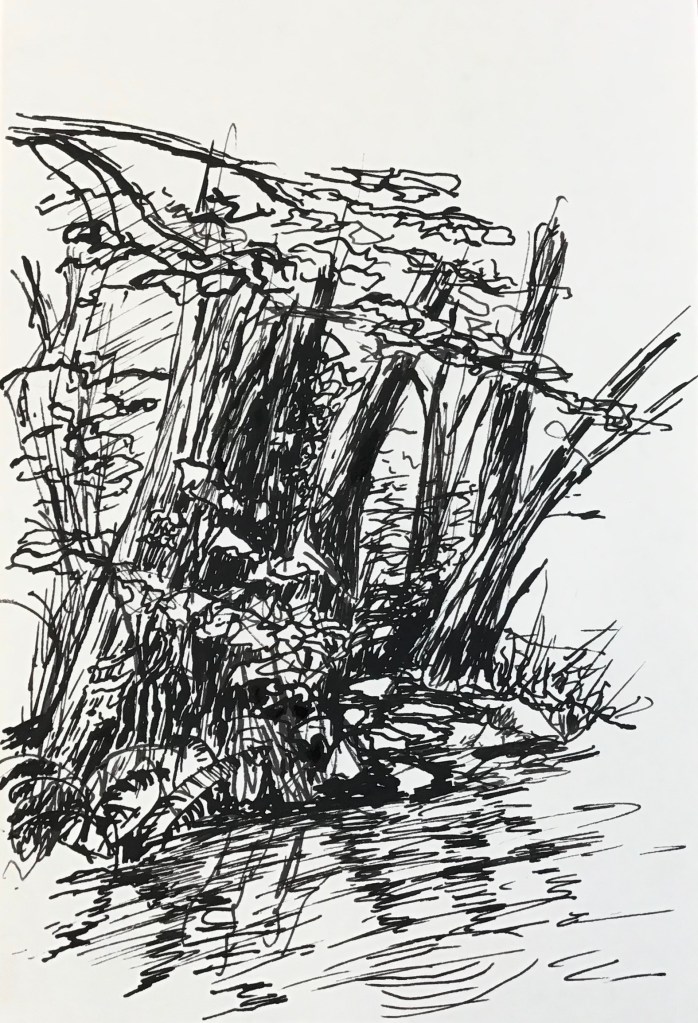
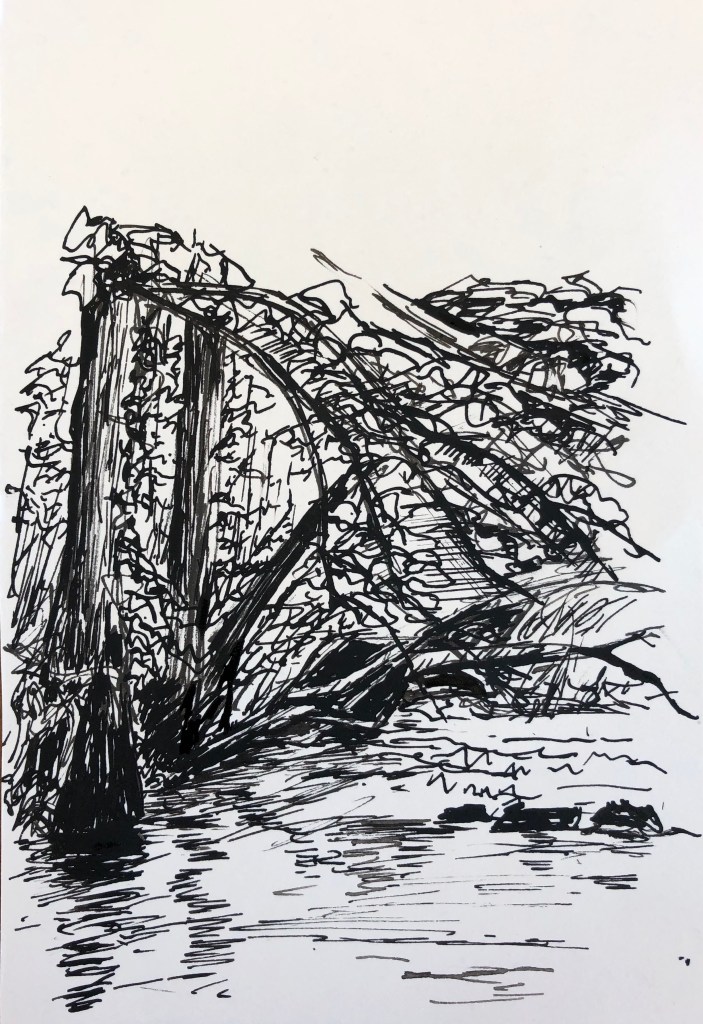
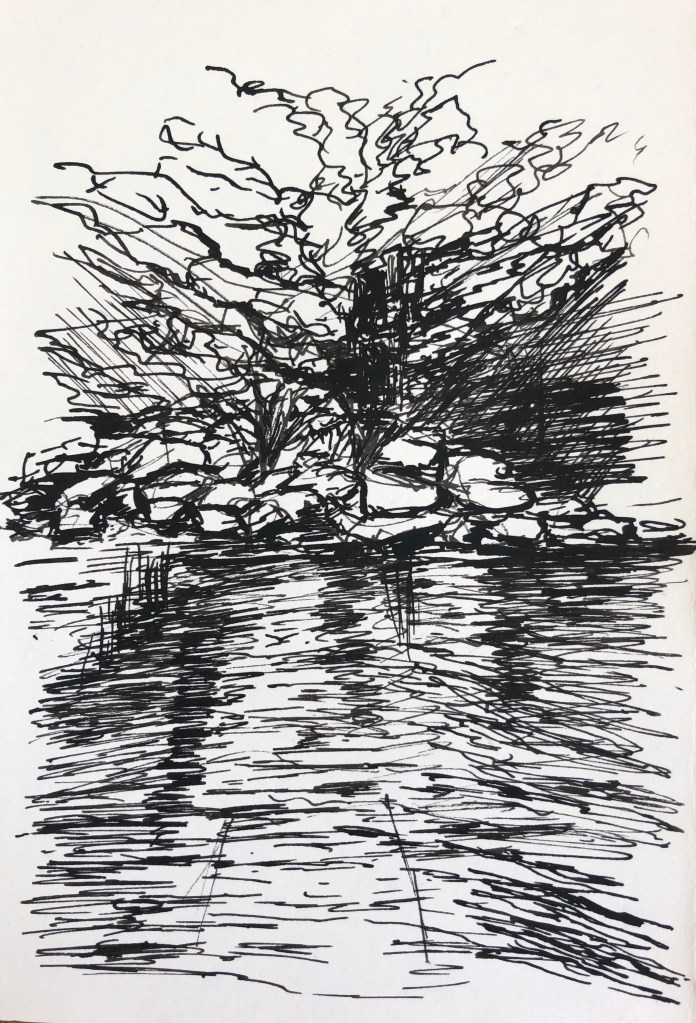
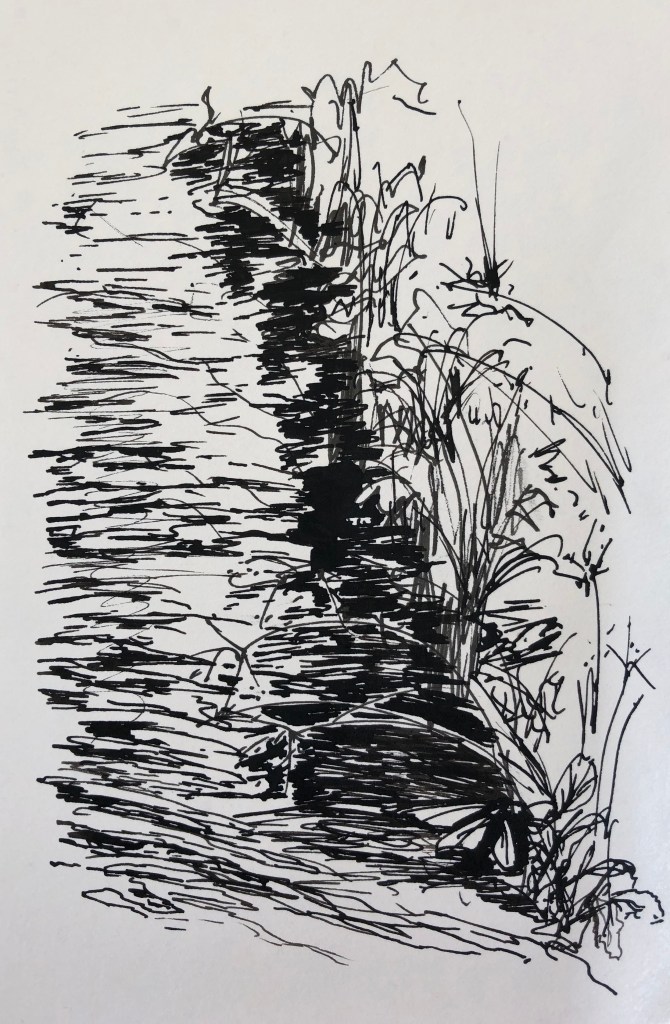
I have enjoyed doing these drawings, trying to look with a forensic eye as demonstrated by Albrecht Durer (see separate blog post) and to use different types and weights of mark to convey tone and a sense of depth.
Also this is an excellent exercise for those like me who need a bit of structure in order to decide what to draw first! – it gives me permission to pick something without worrying that I might be leaving all the other stuff out.
NOW WHAT?
- I feel much more confident about going out and drawing in the landscape without dithering – just pick the first thing which catches my eye – there is a reason why this is so, and I need to respond to that.
- I now have a series of drawings which I can consider tessellating (see John Virtue blog) into a coherent composition; I should like to incorporate this if possible within a larger, more abstract drawing of the river water in order to contrast this controlled range of marks with more fluid and gestural marks.

 Sue J's blog