WHAT?
I decided to build some of my research into this exercise. For each print from Ex 2 and 3 which I choose to paint into, I will try and work in the style of one of the artists whose work I have been studying.
SO WHAT?
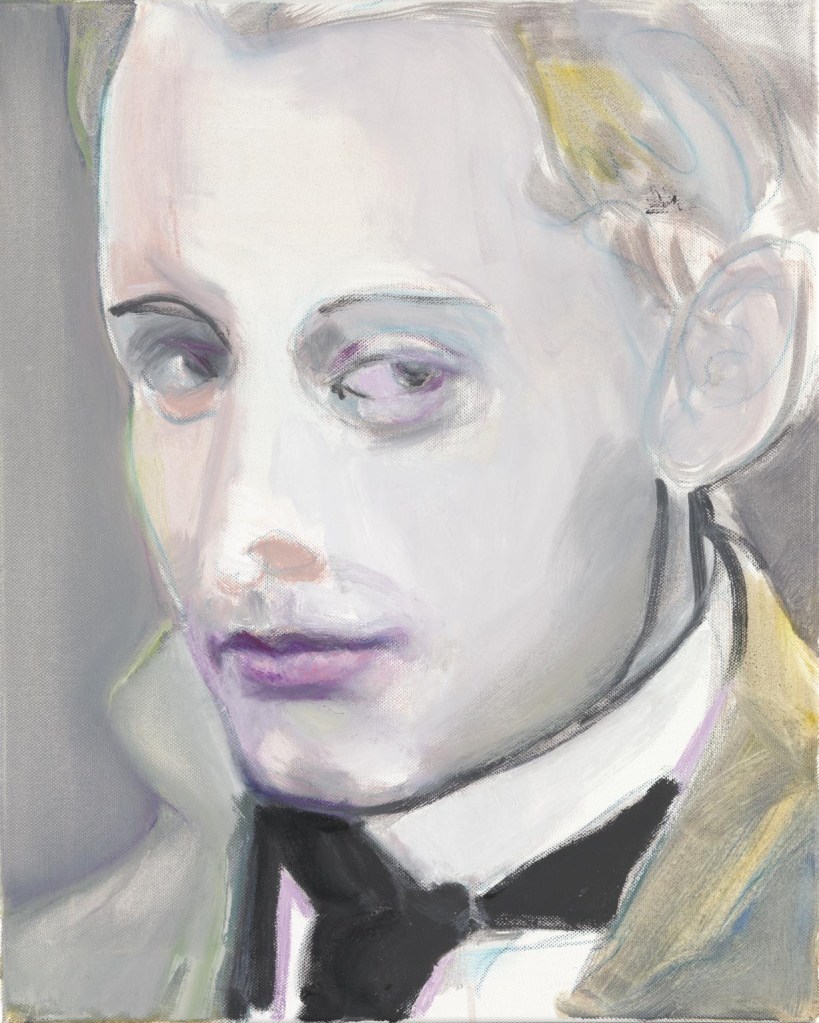
I began with the work of Marlene Dumas. Her paintings have a ghostly effect; one that I particularly liked was her 2016 oil painting, Lord Alfred Douglas (Bosie), which to me has caught the character of the man (that I’d formed an impression of from previous reading, at least) with some judicious use of dark and light and her pastel-y choice of colours along with black and white.

I chose to work into this print; it felt a little undefined but with clear lights and darks.
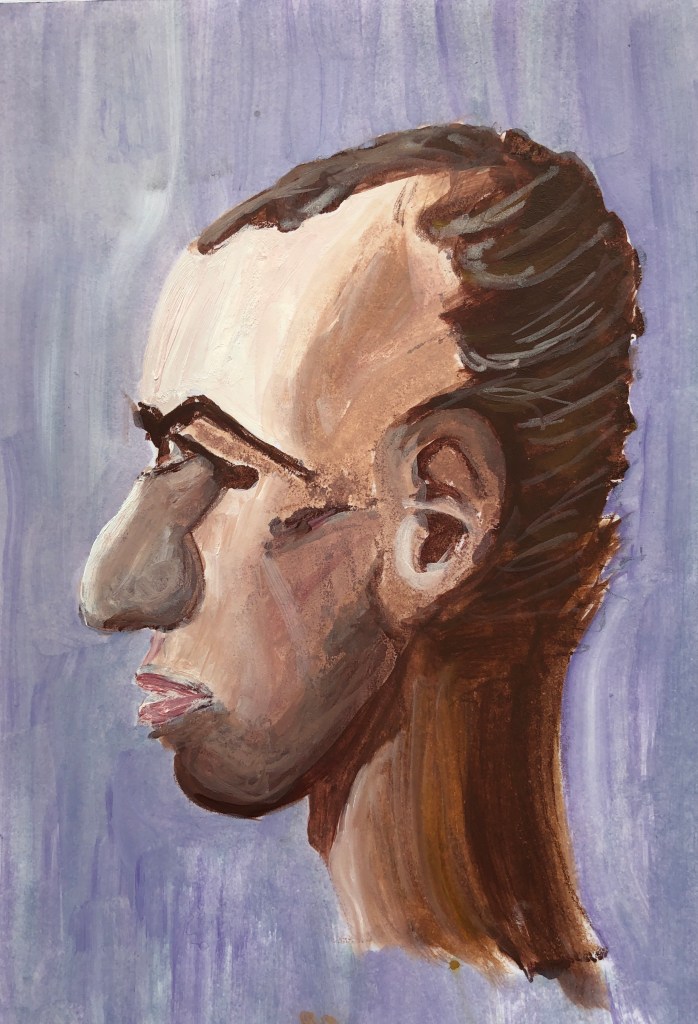
I mixed the few colours I used with quite a bit of white to achieve that pastel-y effect, apart from the dark brown for the hair and darkest shadows. I had also made the print on ordinary cartridge paper, which has been my preferred support for these prints as far as maximum paint transference goes, so I mixed the paint with quite a bit of Zest-It solvent to add to the slightly blurry effect.
I think I have partially succeeded in the colour scheme, but my work is not quite a shimmery and loosely defined as Marlene’s. I think I was partly led by the original model here, who appeared a rather definite and “strong” personality. I did try to go for some of the “echo-y” shadow type marks that she uses (e.g. hers round the cheek, mine round the mouth), but don’t think I have quite pulled it off.

Next I went back to Paul Wright and had another look at his 2015 monotype “Colour blind”.
I chose this monotype to work into:
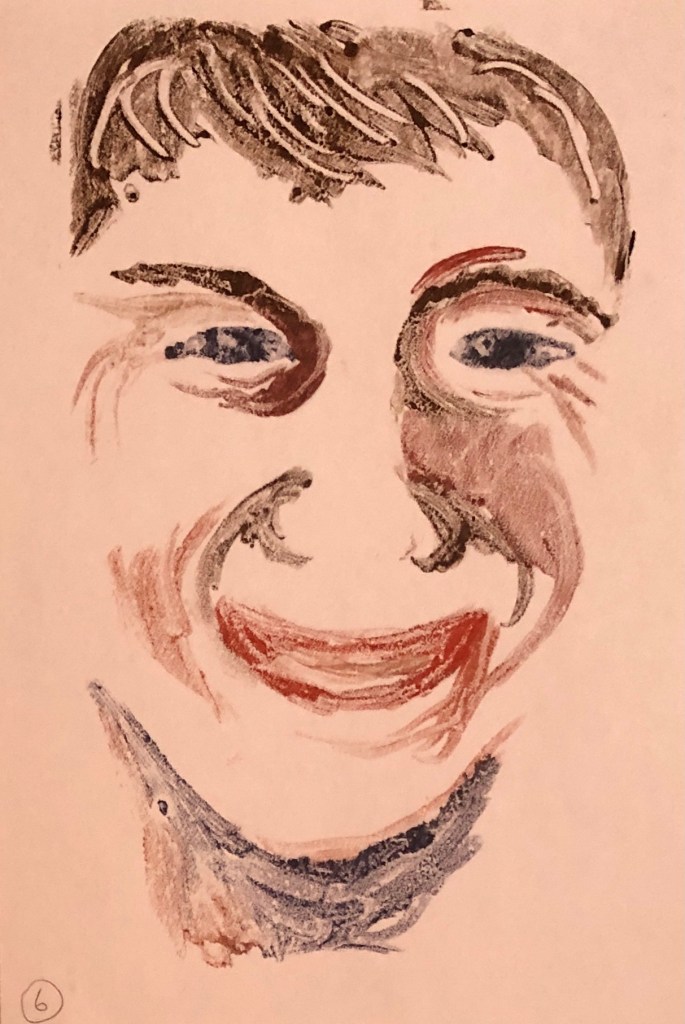
and used for a bit of extra reference this photo which roughly replicates my expression when I did my Ex 1 painting from which the monotype was made.
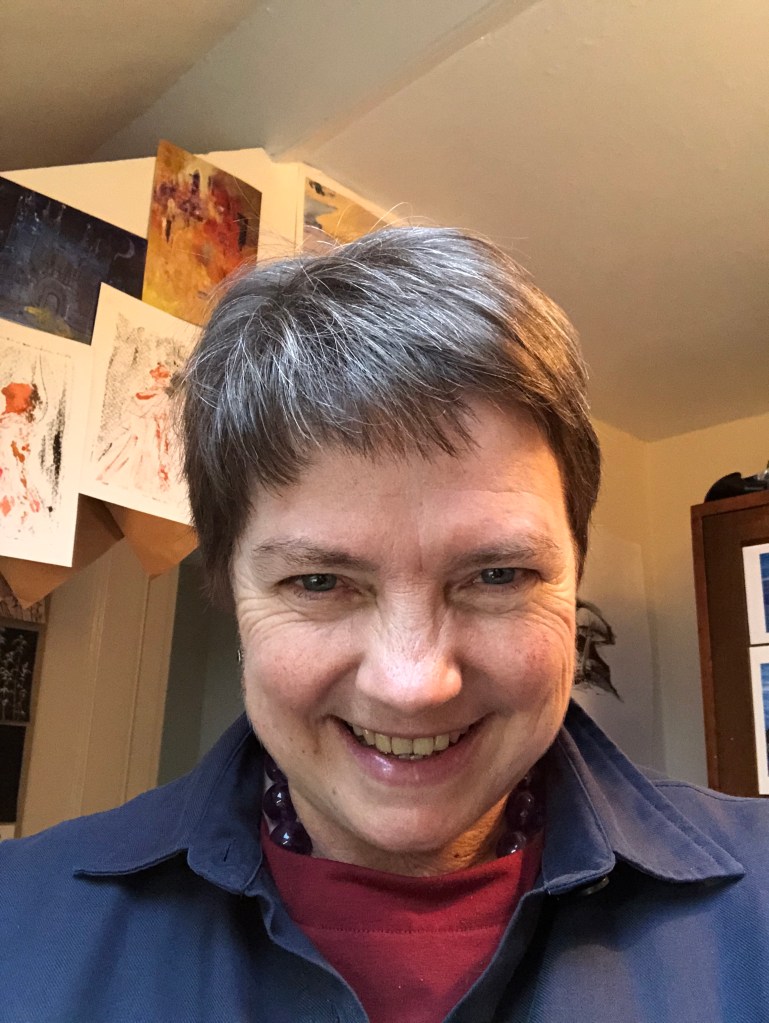
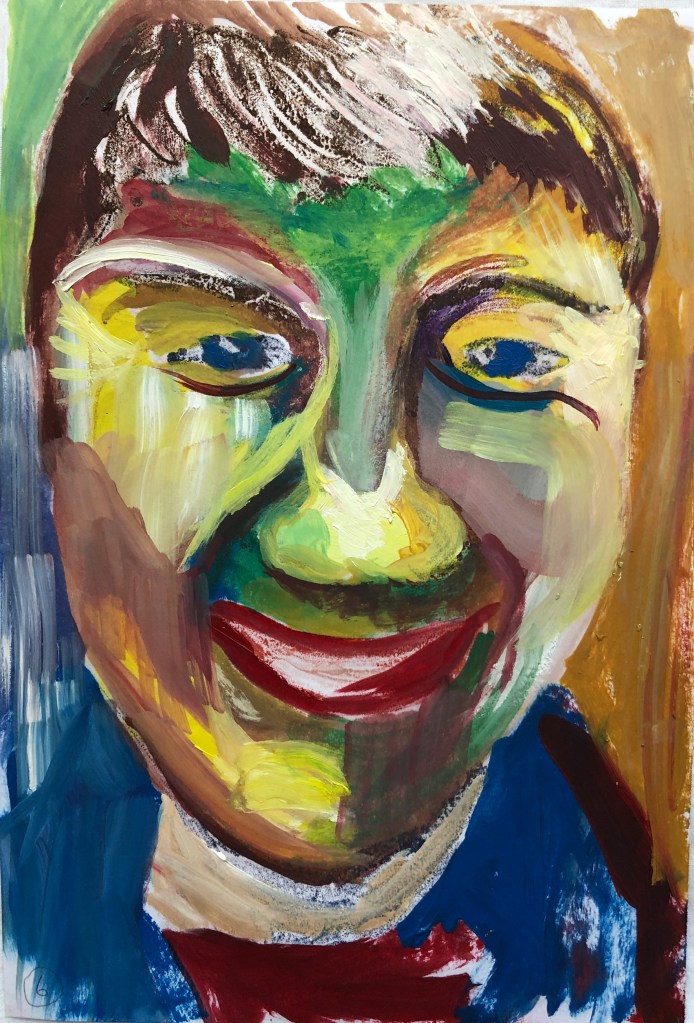
After having a good look at Paul’s painting, noticing his variety of colours and line direction (predominantly going down, but by no means exclusively), I had a go. I mentally adopted his title to mine and just let rip wherever I thought the photo gave me even half a chance of interpreting a shadow as bright green, etc. Having had a bit of a frenzy of painting, I stepped back and looked, then tried to modify and adapt colour to make the tones a bit more believable – but when it all started to go to mud, I stopped.
Unusual but clunky and overworked is I think the best that can be said.
However, I do like the idea of being free in the interpretation of colour…something to experiment with more, maybe.
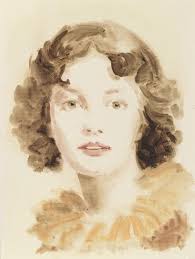
Next I turned to the work of Annie Kevans. She has the amazing ability to capture a likeness and convey a mood in just a few brushstrokes and without a background to give clues – which I envy – she must be so good at looking as many of her brushstrokes are quite wide, just perfectly placed. This example, a portrait of “Louise Elisabeth Vigee Le Brun”, found on her website, www.anniekevans.com, is taken from her body of work for her 2014 exhibition about women artists entitled The History of Art.
Looking carefully at her work, she pays particular attention to the eyes and, to a lesser extent the mouth, to catch a likeness. I chose one of my “surprised, viewed from beneath” prints from Ex 1 & 2, and decided to work just into these features, using a rigger. I noticed that Annie also does simple single light shadow lines in places around a feature to give it form (a bit like Marlene Dumas, above), so I added a couple of these around the eyes and mouth. Also, because I couldn’t resist fiddling, I worked a few dark lines into the underside of the hair; but otherwise I left the print as it was.
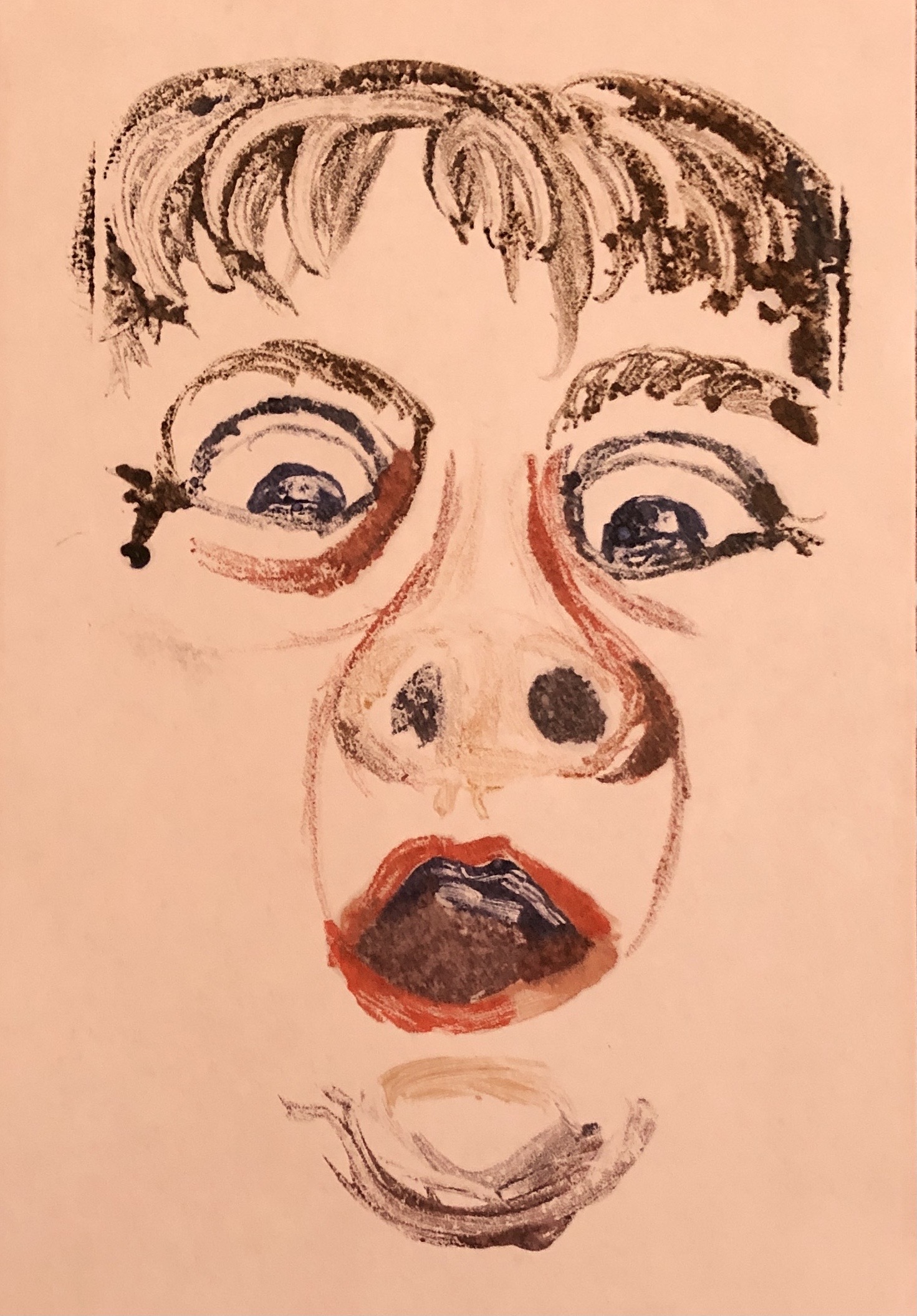
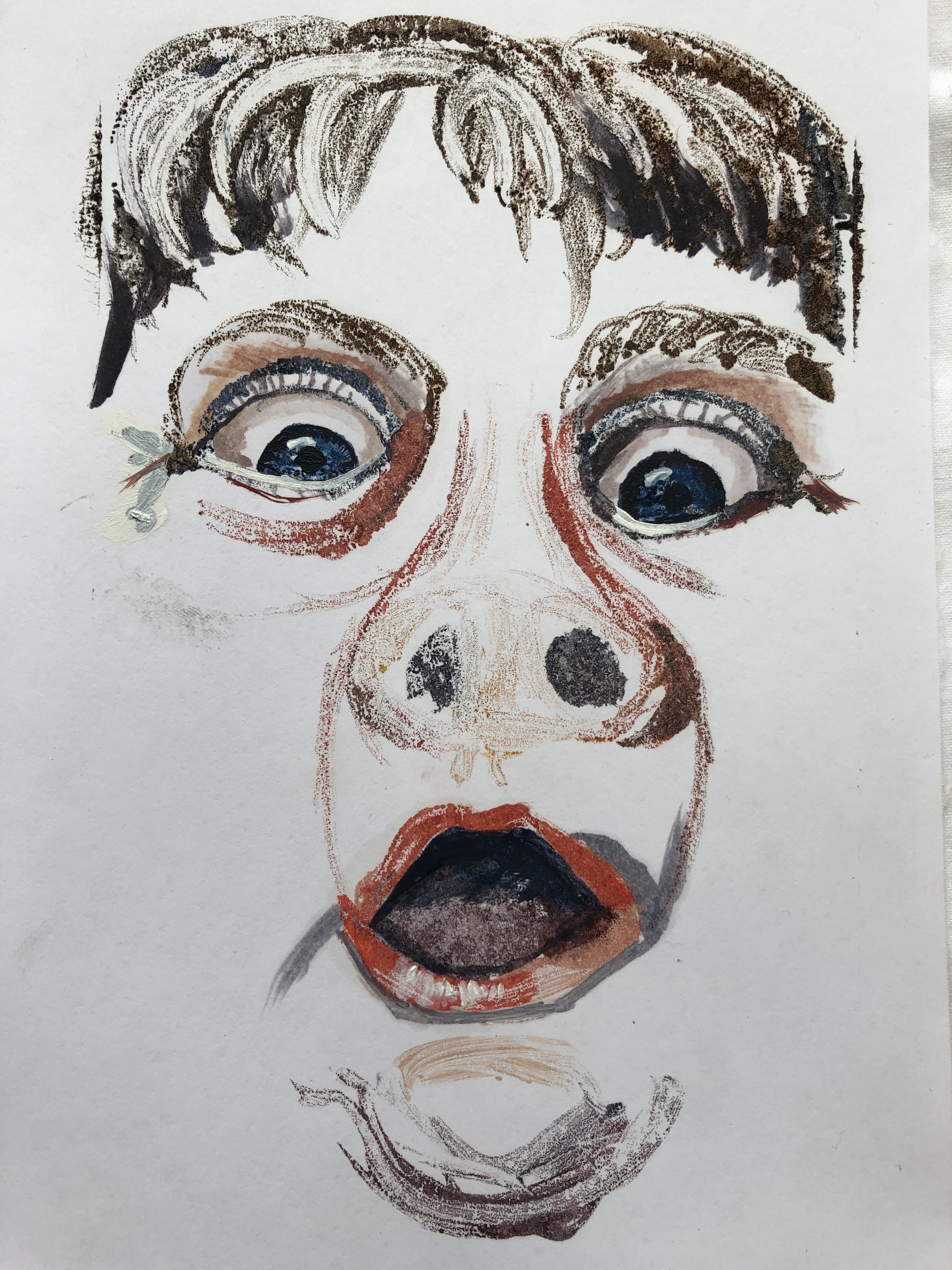
This was more of a success, although some of my “added shadow” lines are too dark and so lack Annie’s subtlety.
NOW WHAT?
Looking back, I found it interesting that the work of the three artists I chose to consider in this exercise all demonstrate some similar qualities:
- Subtlety
- Careful observation, so that key elements (eyes, mouth, proportion and bone structure) are correct and these underpin the image
- A certain elusive “here and yet not here” quality
I think my own work currently is rather different, very solid, but I should like to work towards developing this more subtle and elusive style.

 Sue J's blog