WHAT?
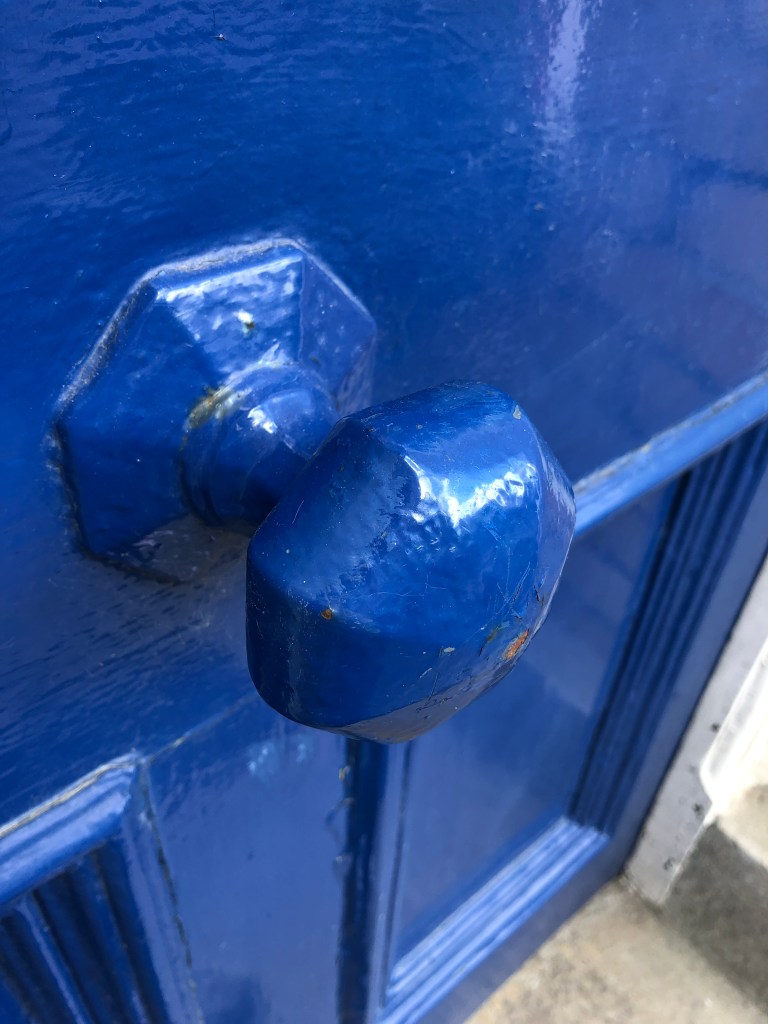
I wanted to try another painting on a white background, building up very dilute layers of oil as if it were watercolour – as I had tried with some tulips from my garden in one of the Exercises. Having enjoyed painting my front gate most recently, I thought I’d have a go at my front doorknob:
SO WHAT?
The perspective, as well as the construction of the doorknob, were going to cause me some issues here; I began with a blind continuous line drawing as is my practice, and this was a real mess, so I made a detailed pencil drawing to nail perspective, construction and tone.
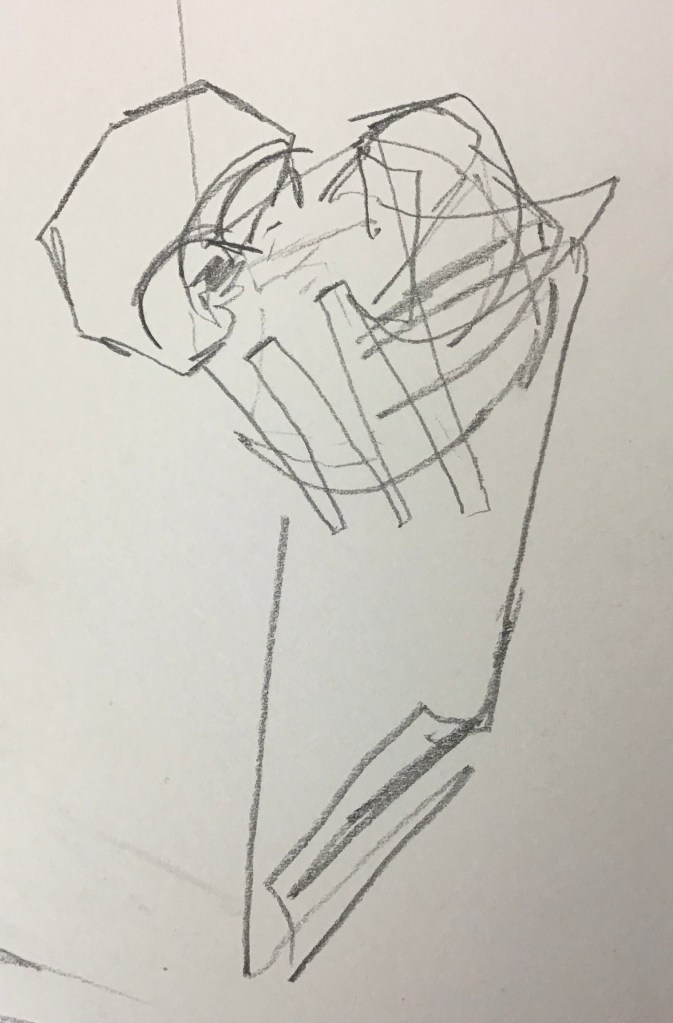

I decided to work from my pencil drawing without further reference to my photo or the doorknob itself. I laid myself out a simple palette of ultramarine blue, burnt umber and titanium white (although in the end I didn’t use the latter at all).
Working on an 18 x 24cm canvas again, I made the decision to divert from my drawing slightly by leaving the edges of the painting undefined. I mixed a very watery dilution of burnt umber and lightly marked in some structural lines and edges to guide me with a large flat brush, and put in some blue washes to define some key tones, then left it overnight to dry.
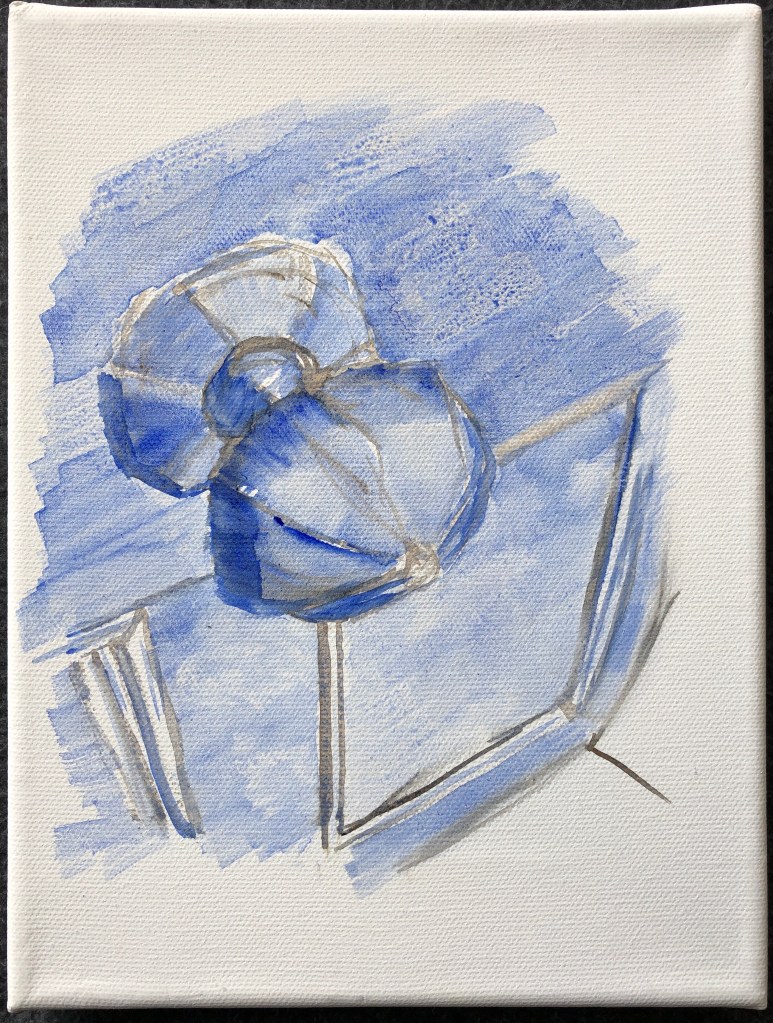
The next time I swapped to my large filbert and began to add more dilute oil washes to build up the image. I reached a point where I felt I was losing the definition of the structure of the knob, and here I stood back and took stock. The painting still retained its watercolour-y feel, and my burnt umber underpainting still showed through. I had hit a problem which doesn’t often happen to me – to decide whether to stop here or go on; usually it’s either obvious to me that more is needed, or I feel the picture is enough (or I’ve lost the will to live with it) and so I stop. Here though, a clear decision was needed:
to leave the painting as it is, like a watercolour, or
- to let it dry for a few hours and work on it more so it became more clearly an oil painting.
I chose the former, partly because I liked the watercolour effect, and also because I was afraid I would start to blur the structure further unless I abandoned my big filbert.

NOW WHAT?
- Despite loving the free-gesso-sploshing style I enjoyed in my last painting of the garden gate, I feel there is also space in my practice for this sort of carefully constructed work which is built up over time using dilute layers.
- I am beginning to really appreciate the possibilities for mark-making of a filbert.
- A tonal drawing remains so valuable, especially in this type of image, which is to all intents and purposes monochrome.

 Sue J's blog
thank you so much for sharing your artistic journey like this. It is inspiring (and makes me get off my butt and paint too!).
LikeLike