WHAT?
I hunted around my studio to find some objects/materials with which to apply paint. I worked in water-mixable oils on oil-prepared paper, using mainly lemon yellow and cobalt blue (a combination which I thought would be helpful to me in distinguishing layering from blending), with just the end of some burnt umber which was already on my palette.
SO WHAT?
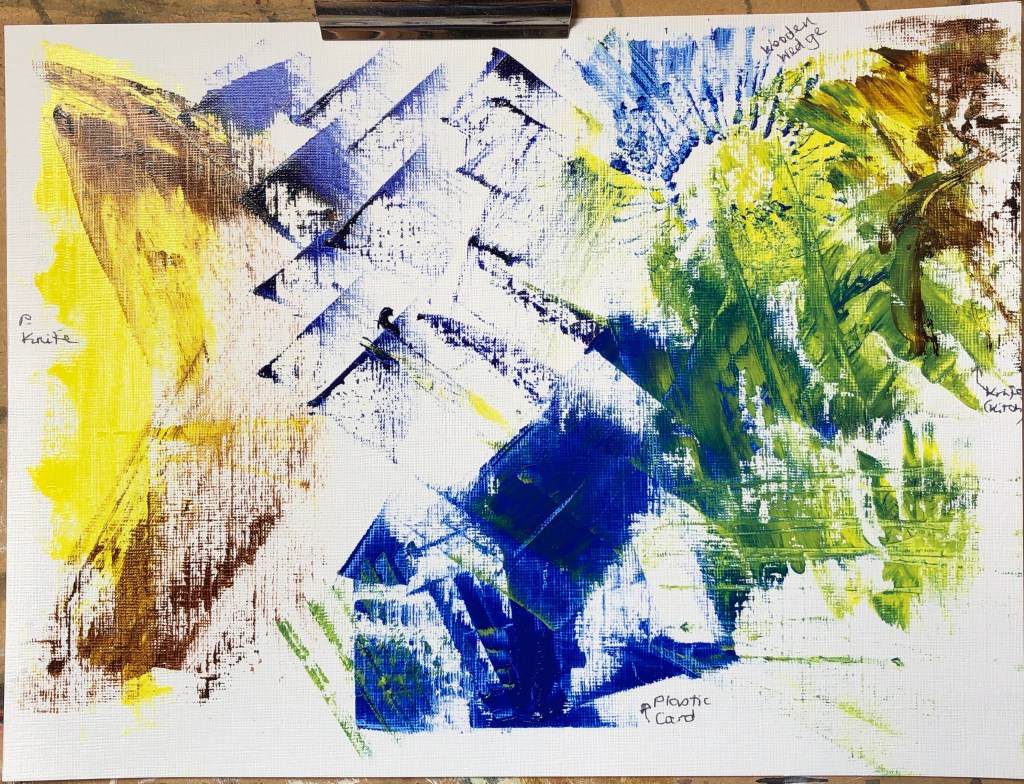
On this first sheet I experimented with a painting knife, a credit card, a wooden wedge and an ordinary rounded kitchen knife. I had previously thought of knives as a way of applying paint quite thickly, and was surprised by just how thin a paint layer can actually be achieved. I looked at layering and blending – I did find the painting knife the best for laying flat layers on top of each other, although I had fun making marks with the wooden wedge.
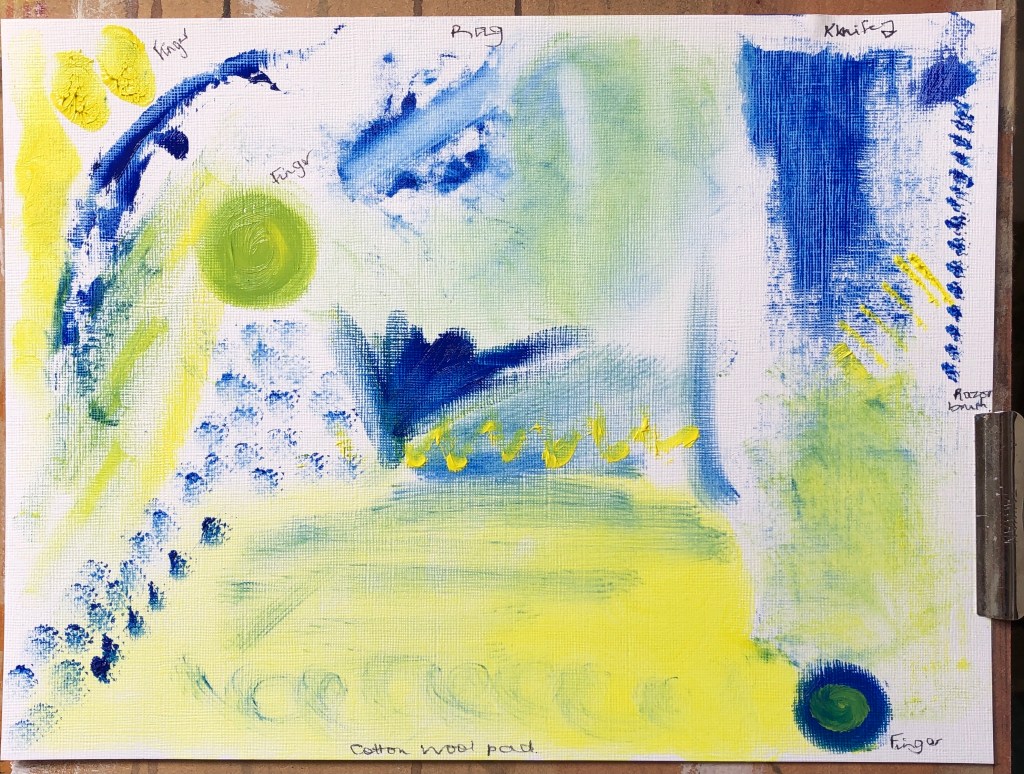
Next I used a combination of a rag, my fingers, a cotton wool pad and an old shaver cleaning brush. The latter was useful for mark-making on top of an existing paint layer, but the other three were more effective at blending. The rag and pad really allowed for some thin initial layers of paint, but adding further layers on top was tricky without blending occurring. It was hard to get accurate edges – the best for this was a finger, although you’ve got to be careful how much paint you use; too much and it stands up from the paper when you take your finger away – great if you want texture, but not otherwise.
NOW WHAT?
The most useful learning I did here was finding out about applying really thin layers – up to now, if I wanted a thin layer, I’ve been using dilute paint, whereas now I see that a rag with undiluted paint will do as well for a first layer, and dragged knives are good for subsequent layers with minimal blending.

 Sue J's blog