WHAT?
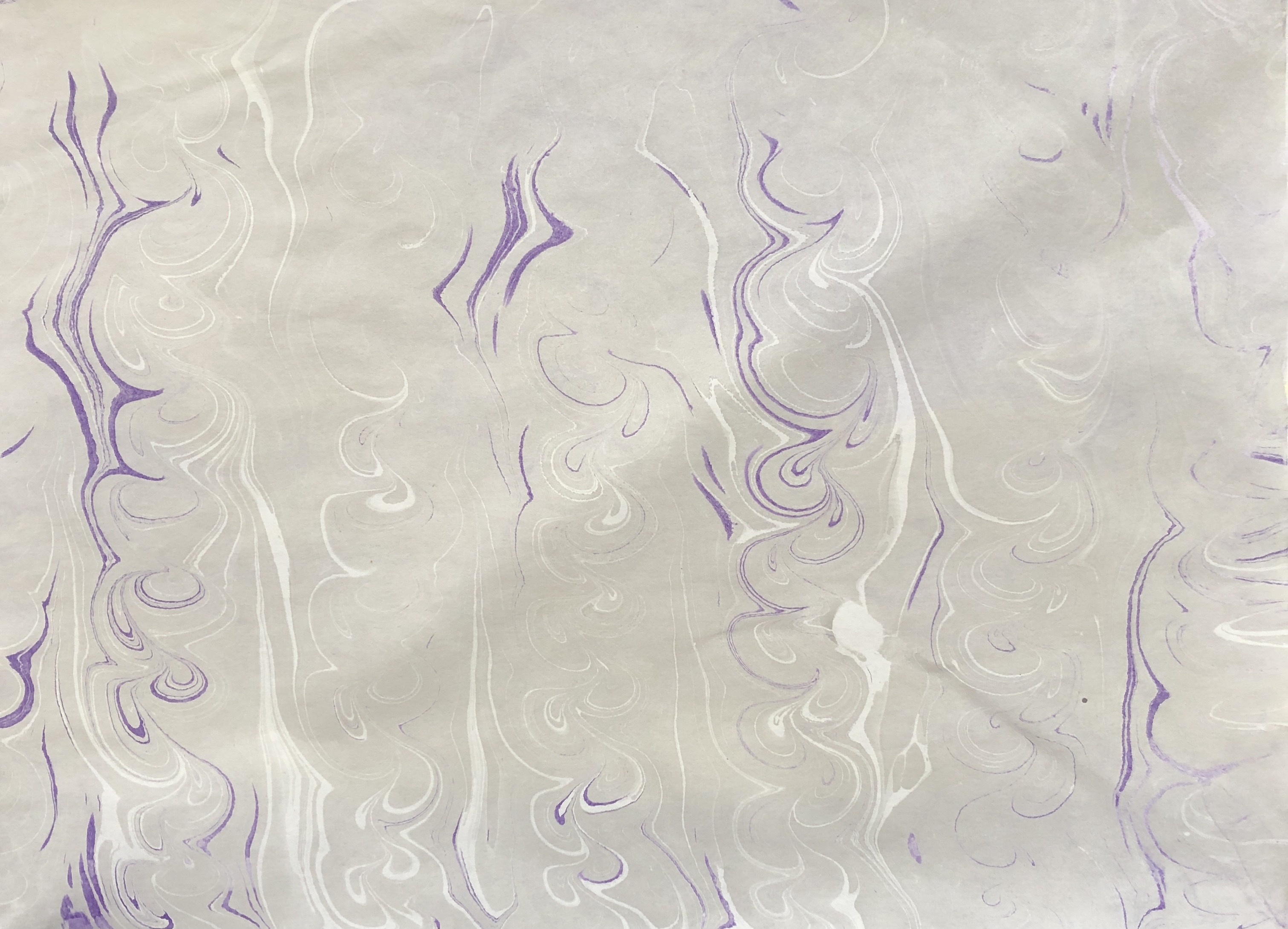
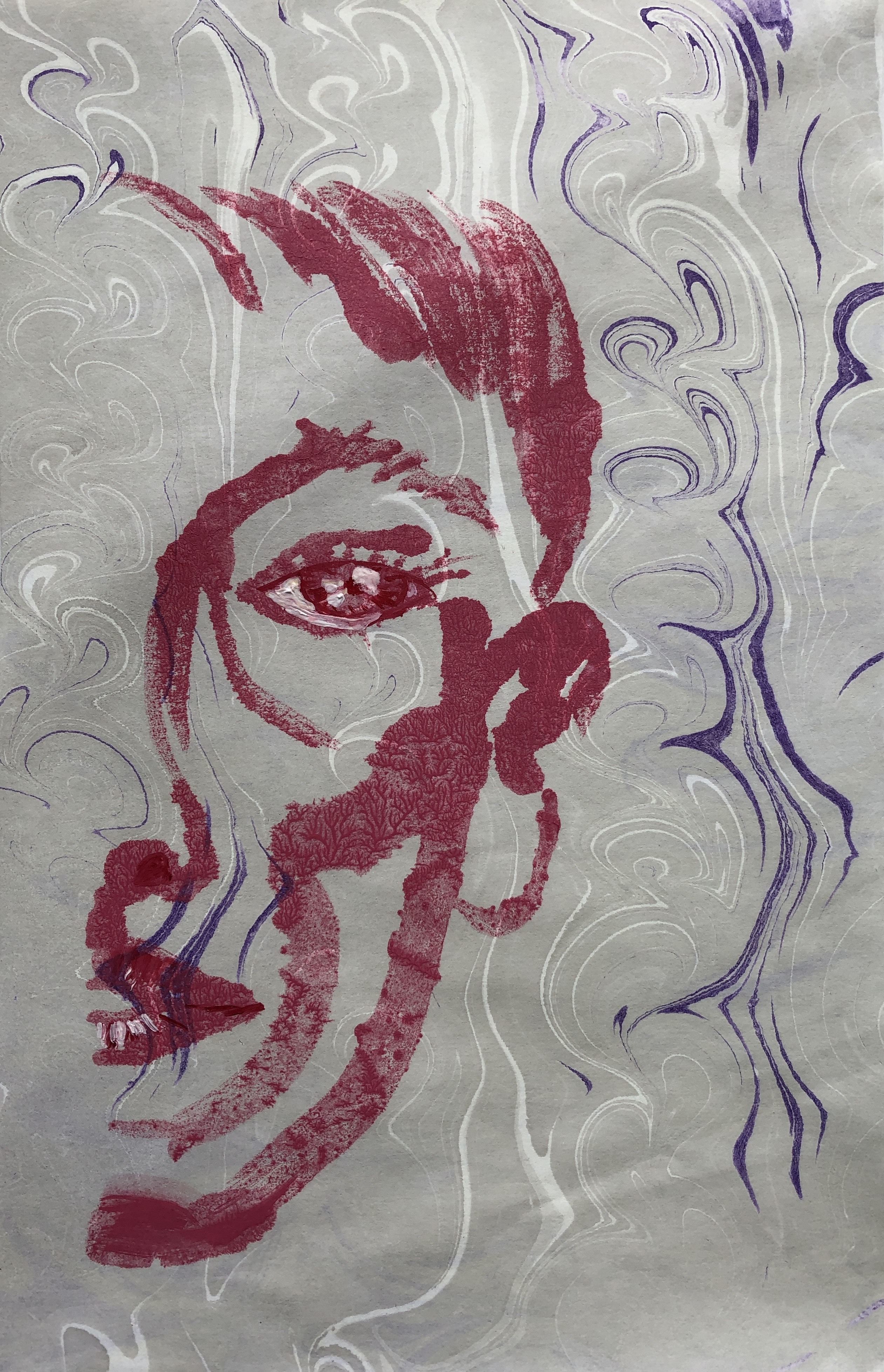
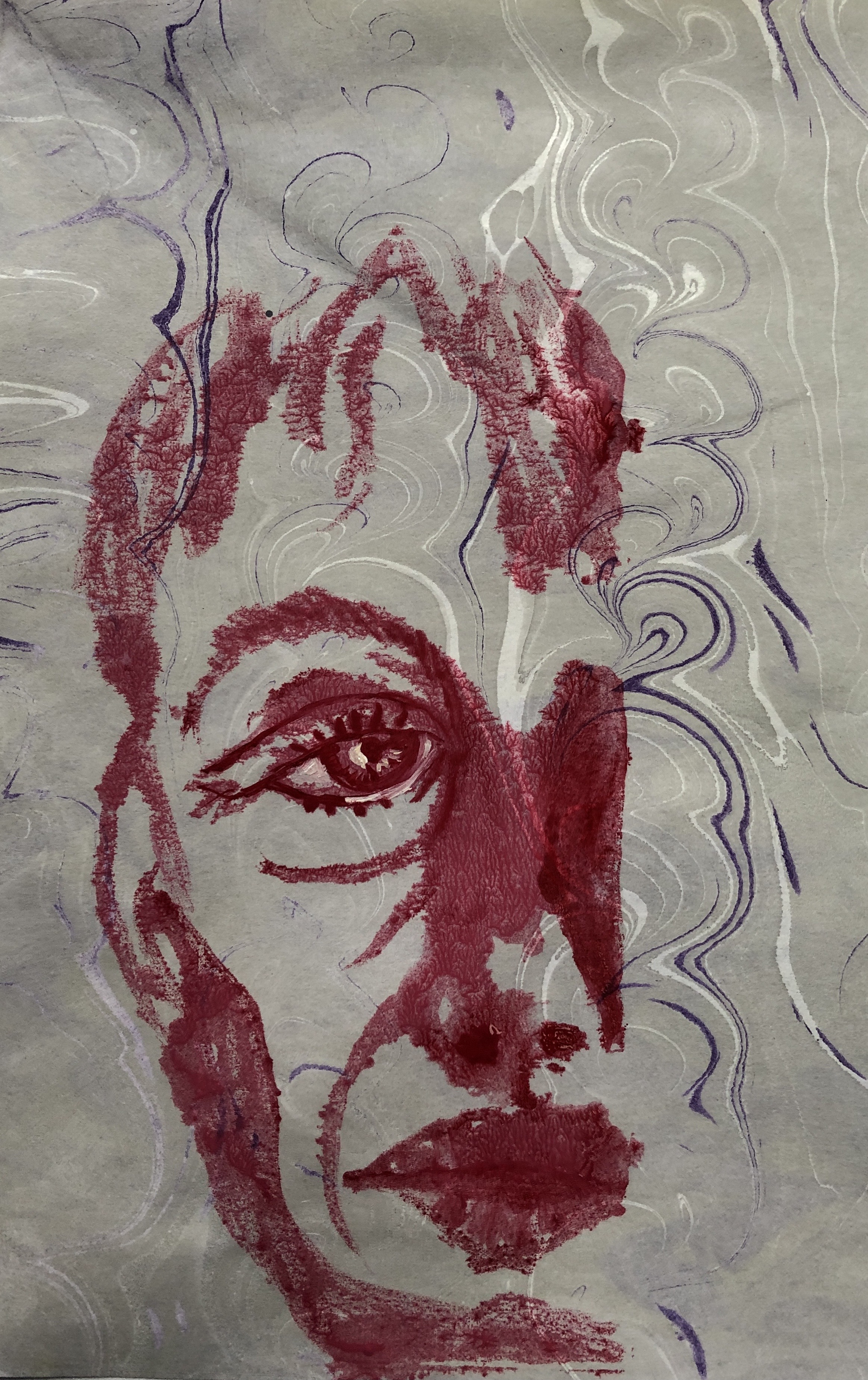
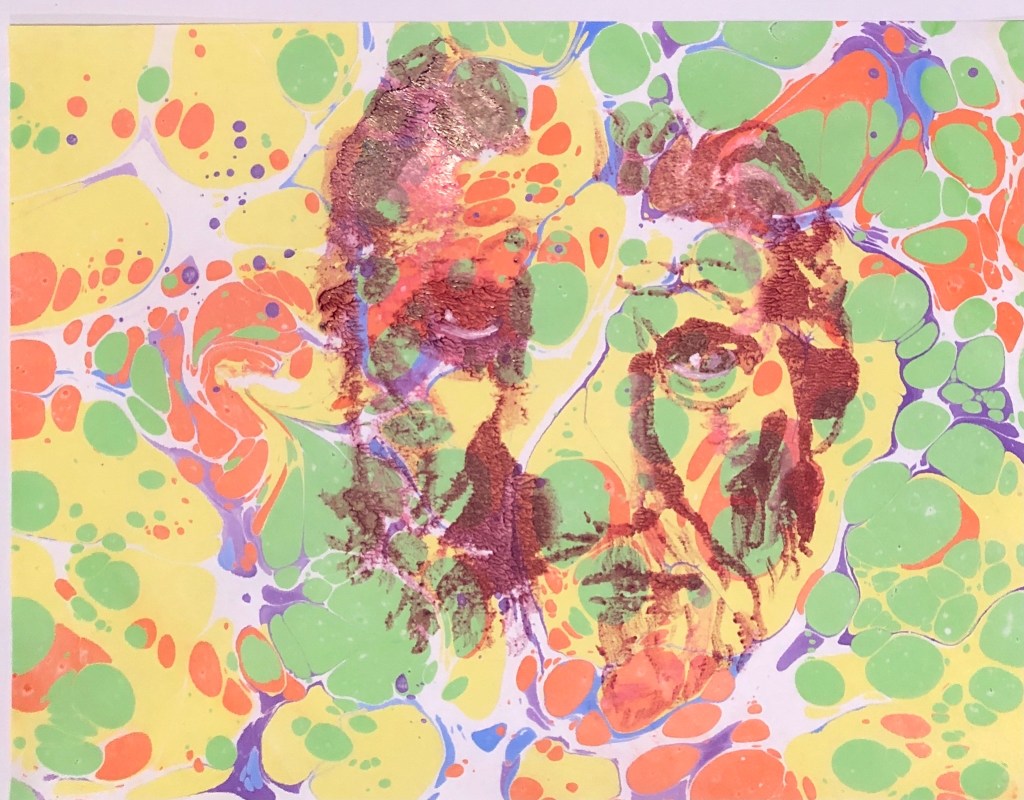
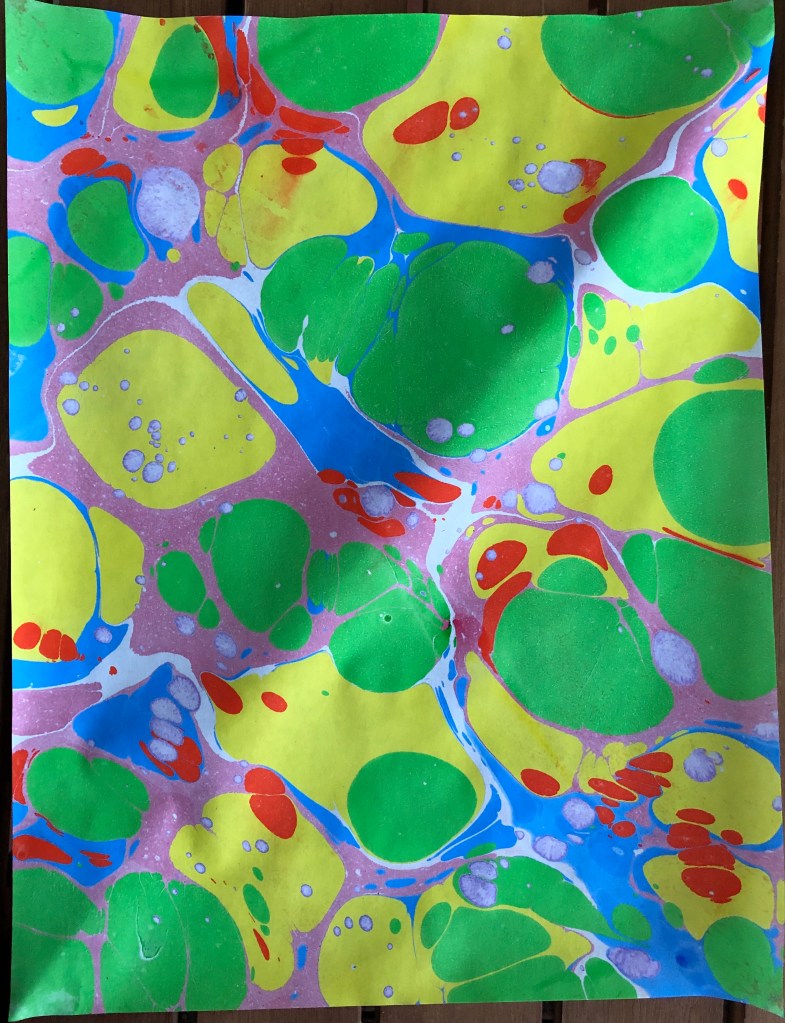
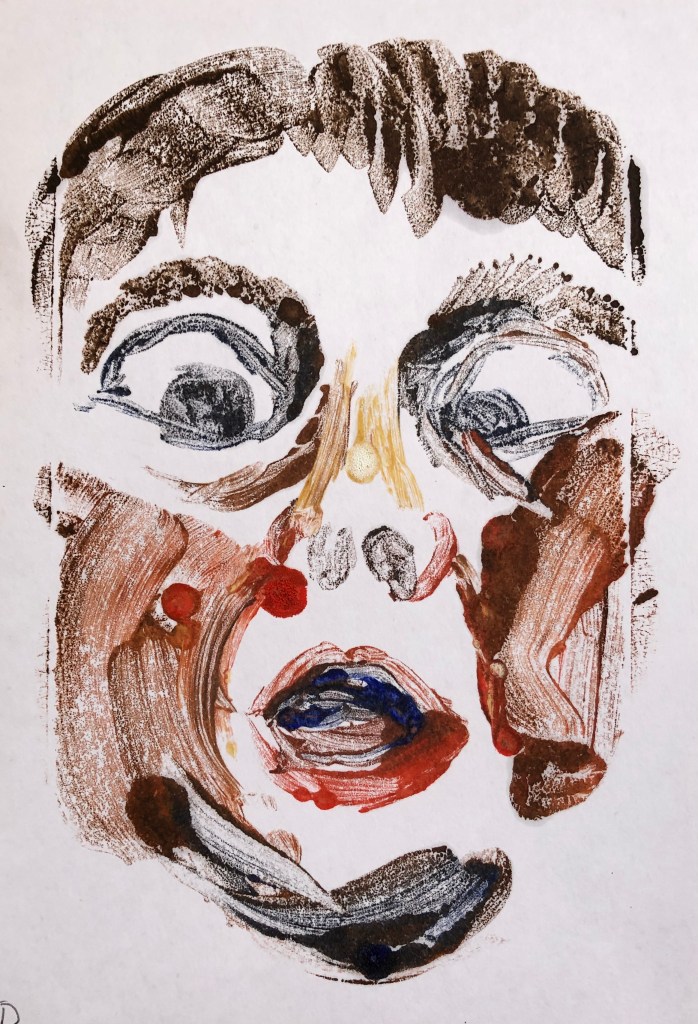
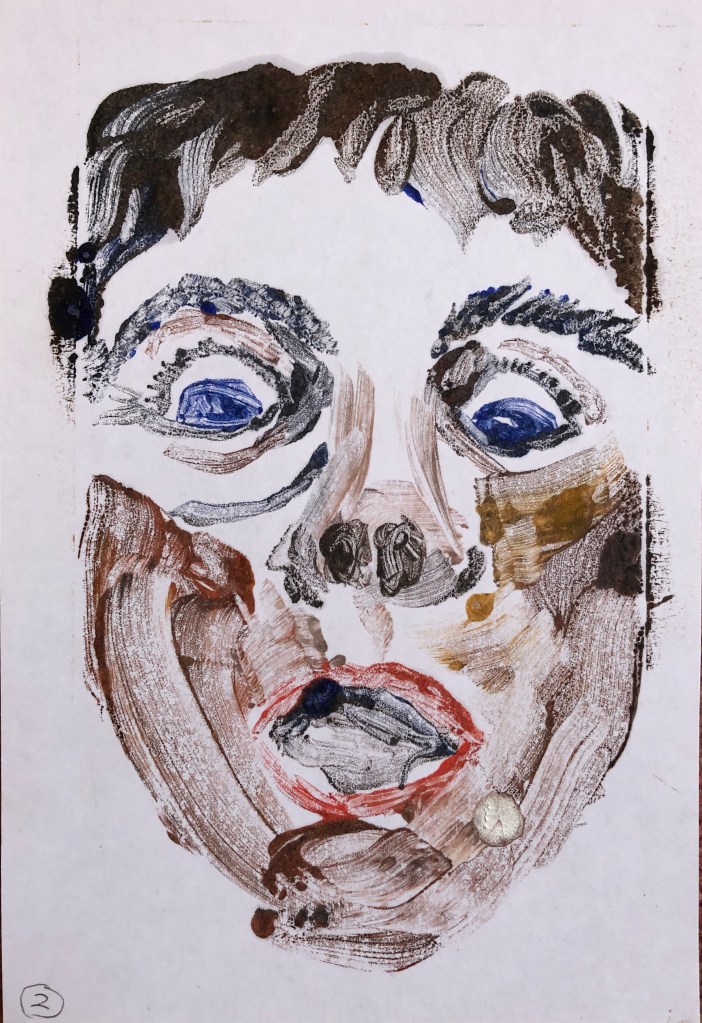
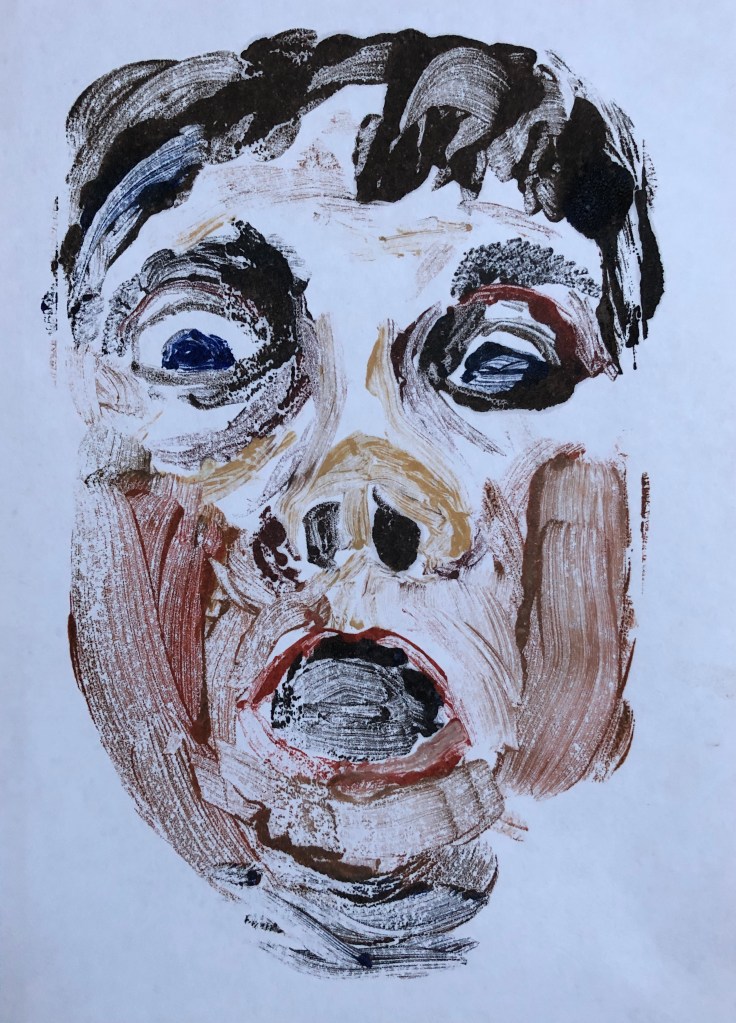
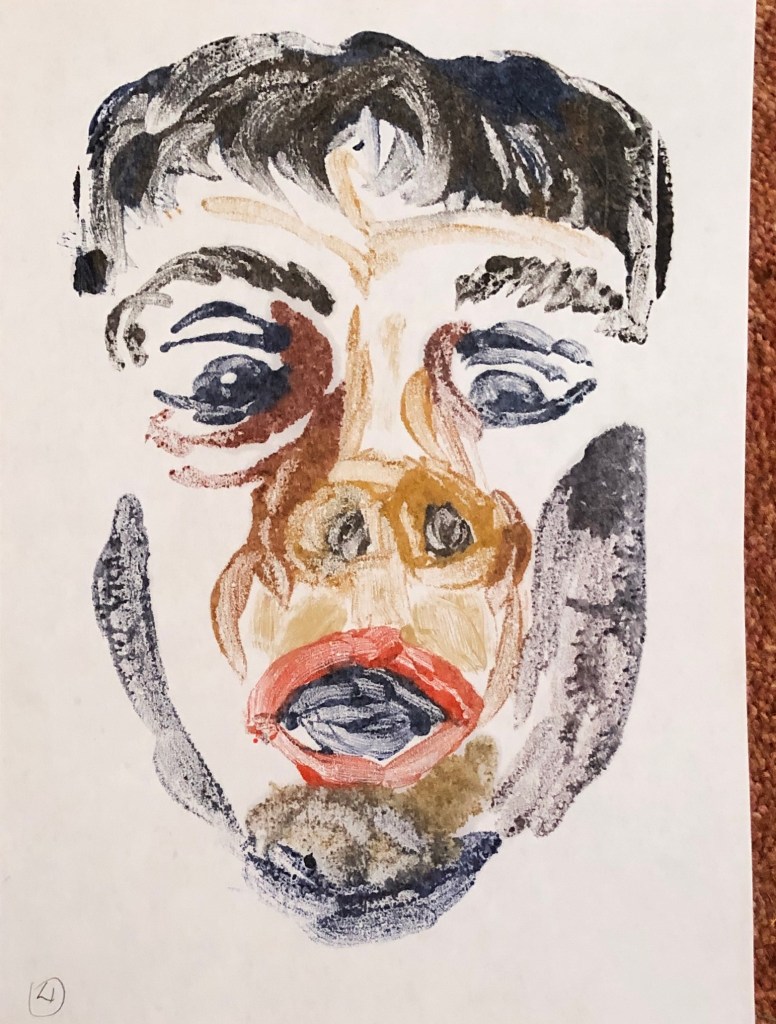
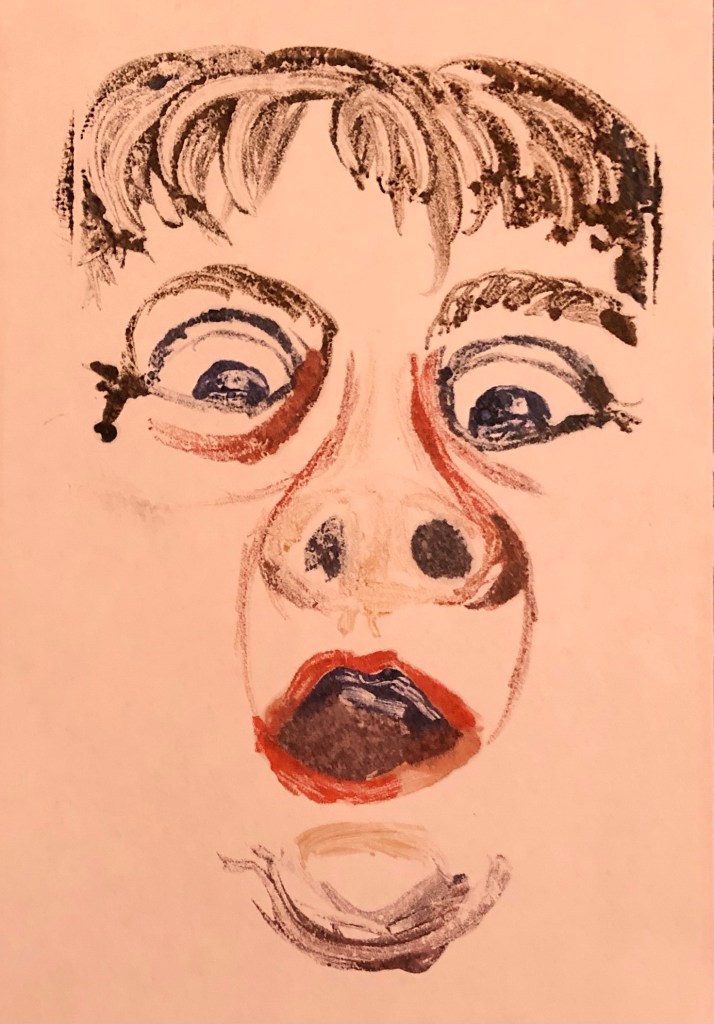
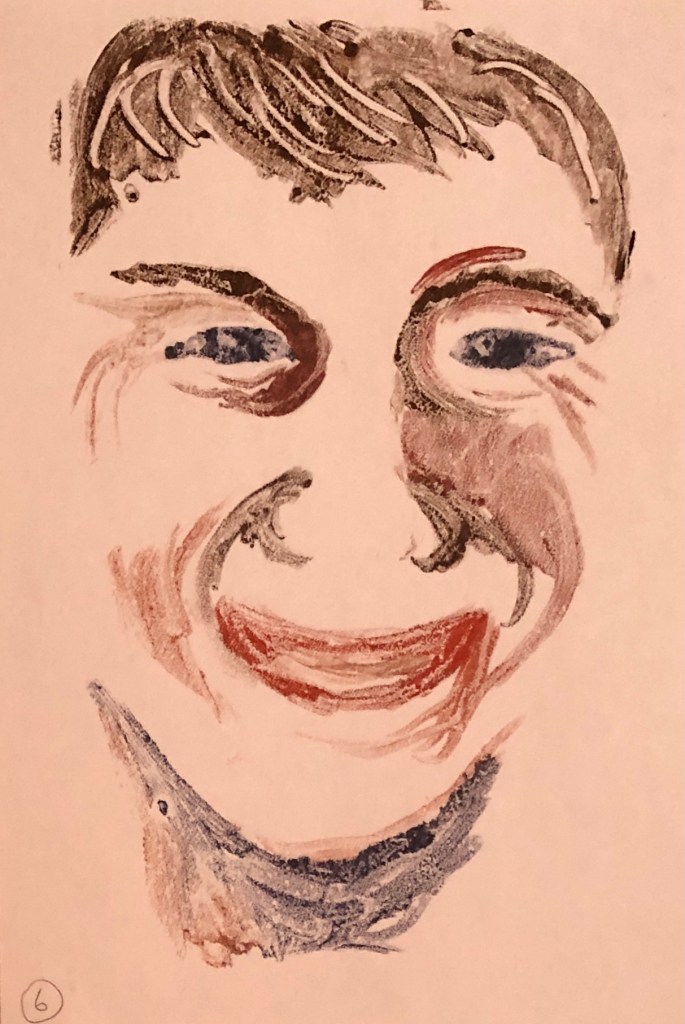
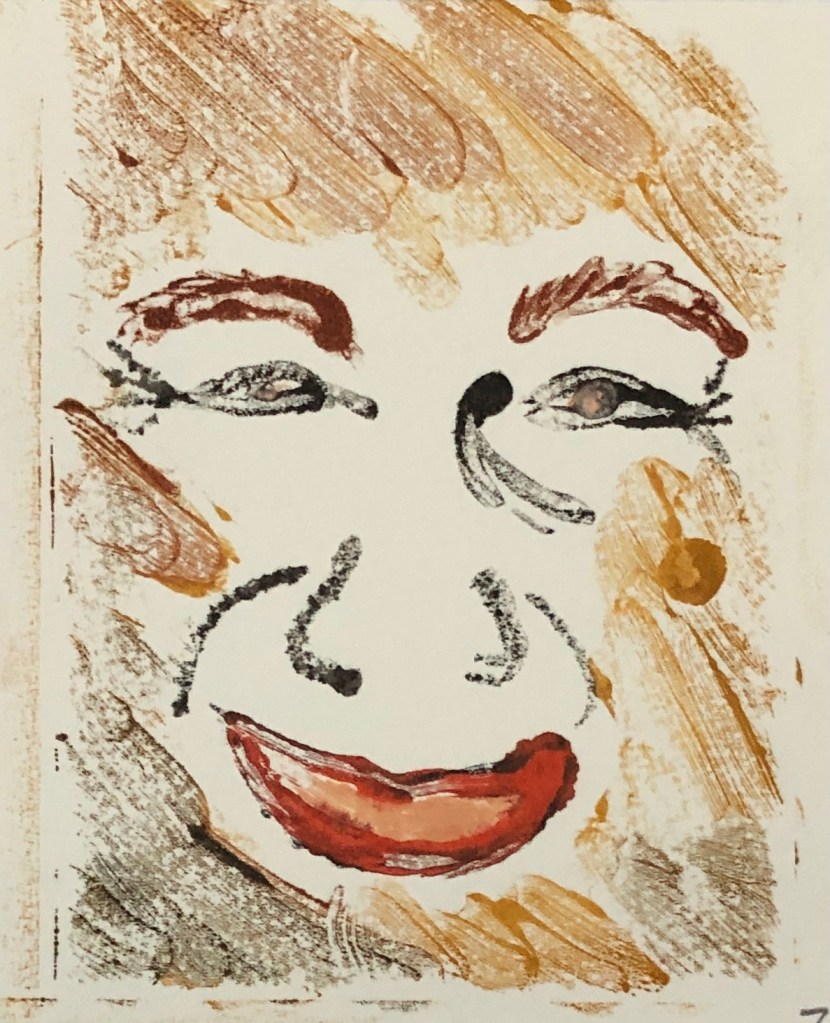
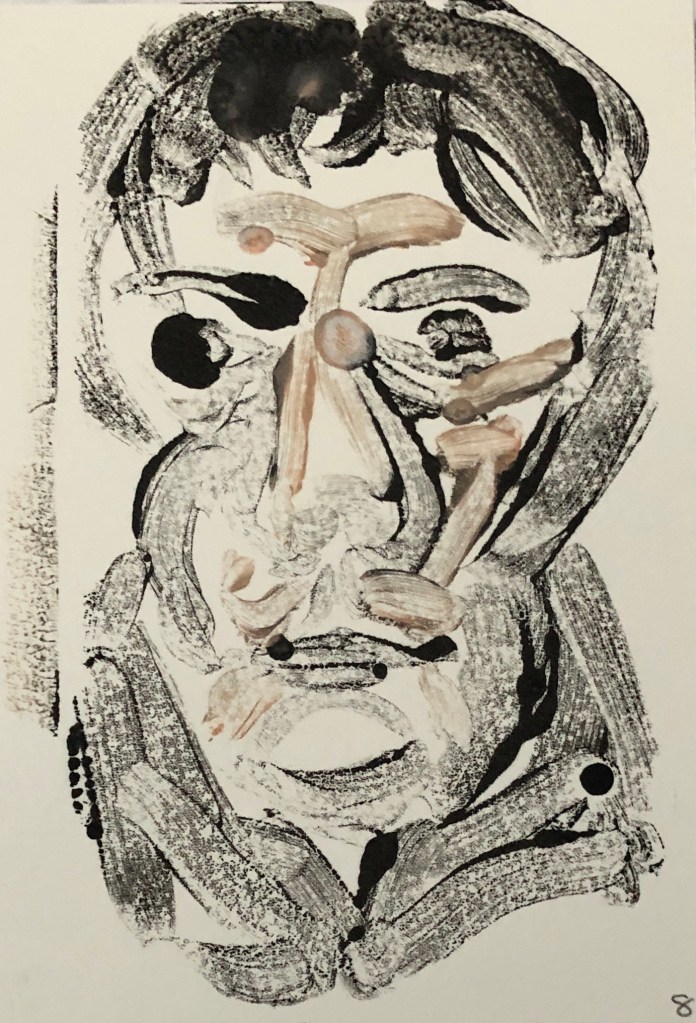
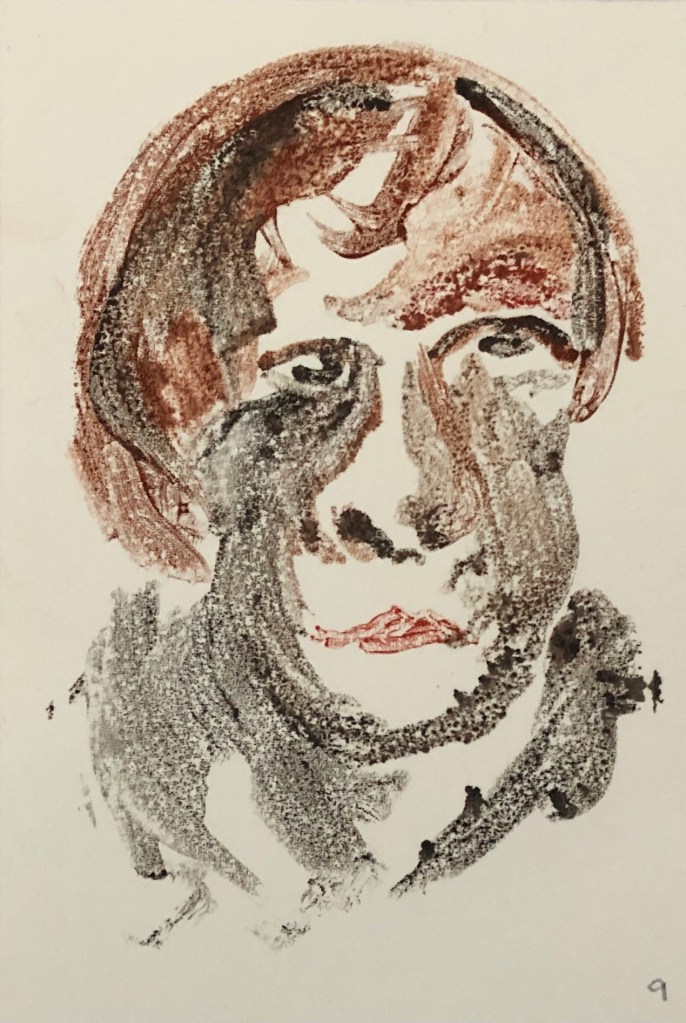
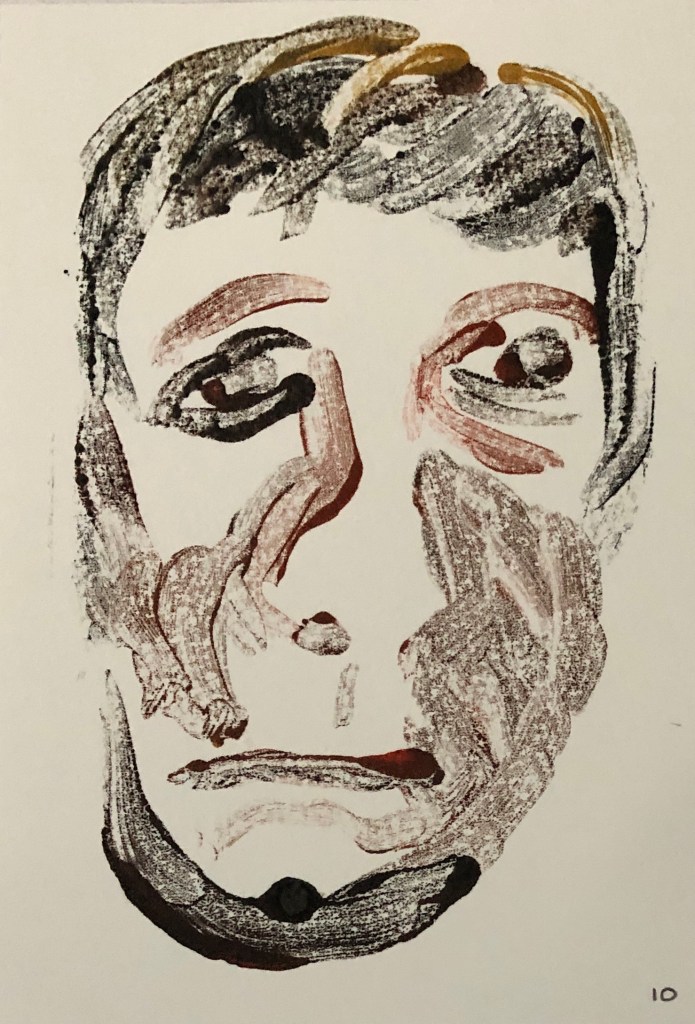
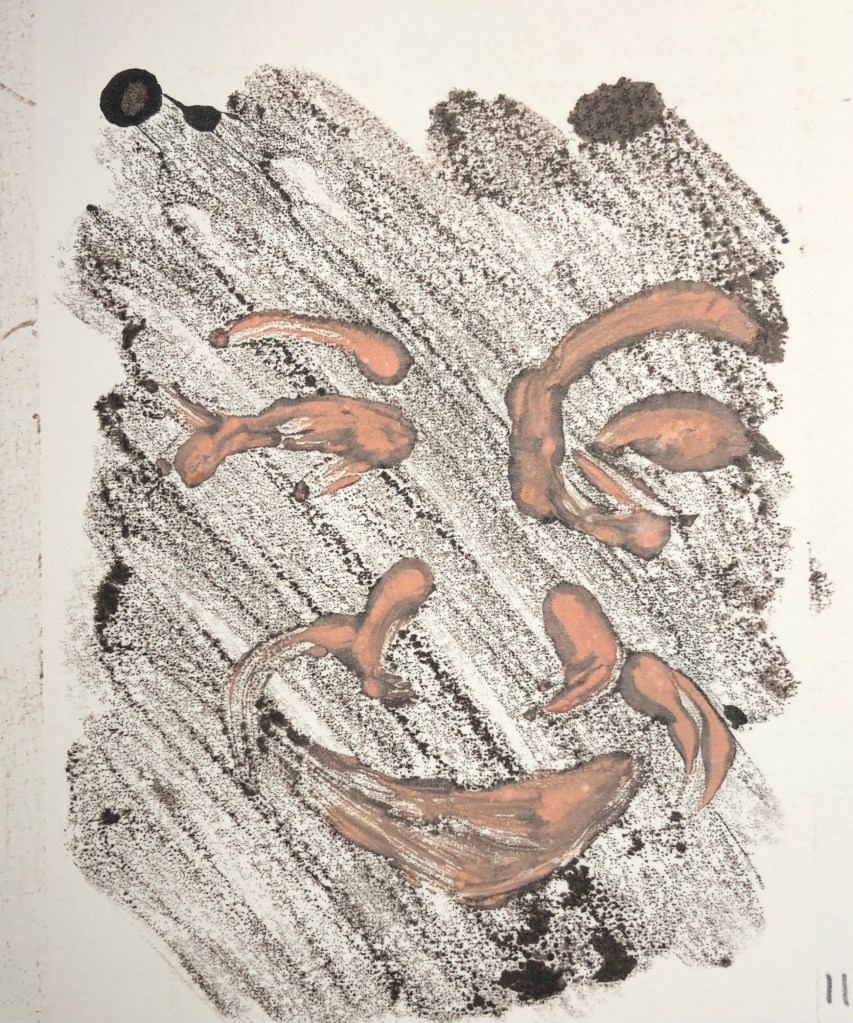
Having lit on the idea of having “floating” heads, or parts of heads, on a background which might be blank or coloured or patterned, I need to look at the right support for this. I have tried marbled paper, which does not hold the paint terribly well. I have hitherto mainly worked on plain basic sketchbook-weight cartridge paper which has taken prints well, but I don’t feel it will be robust enough to take a background and then a print on top; hence the need for an investigation into alternative supports.
SO WHAT?
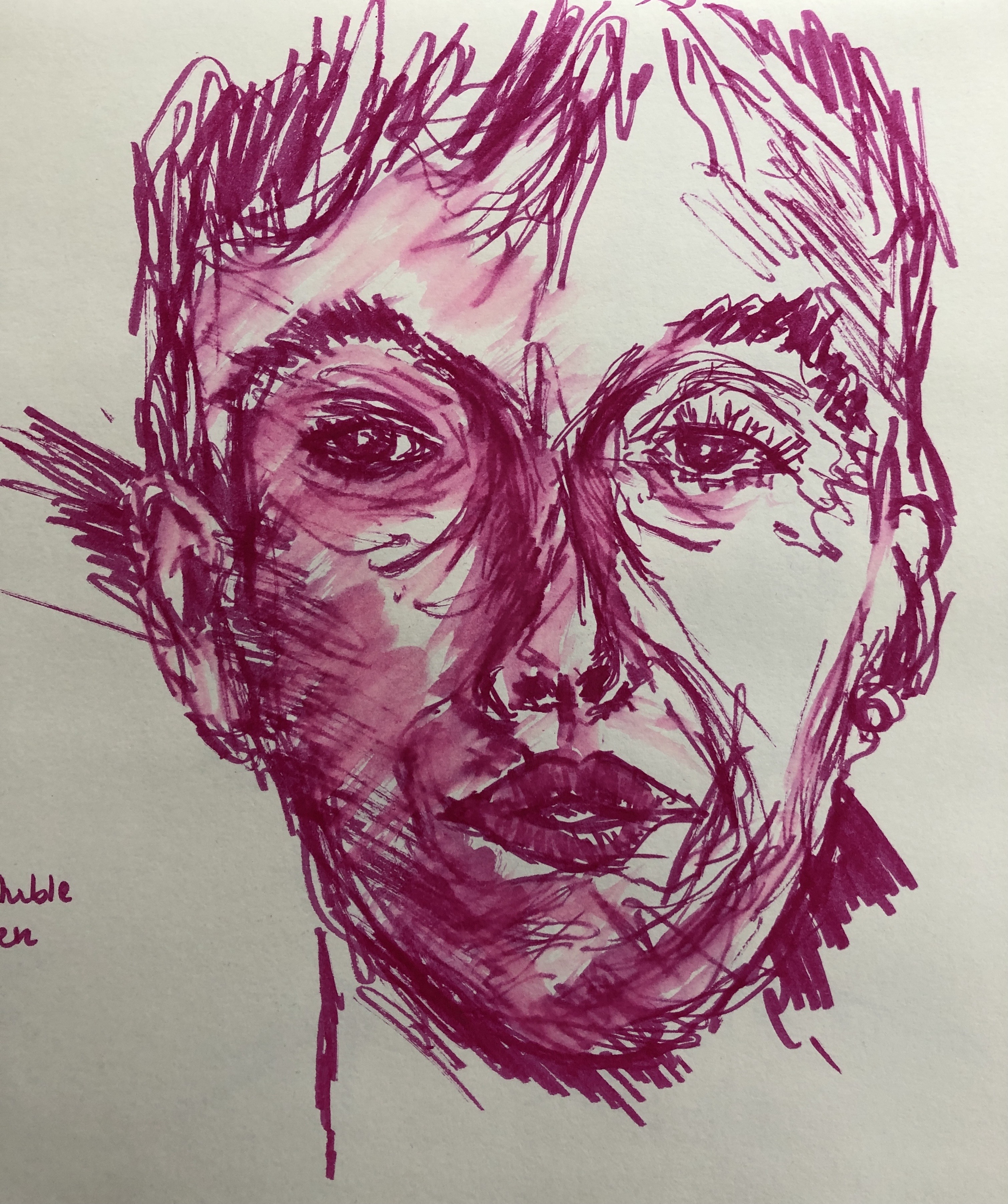
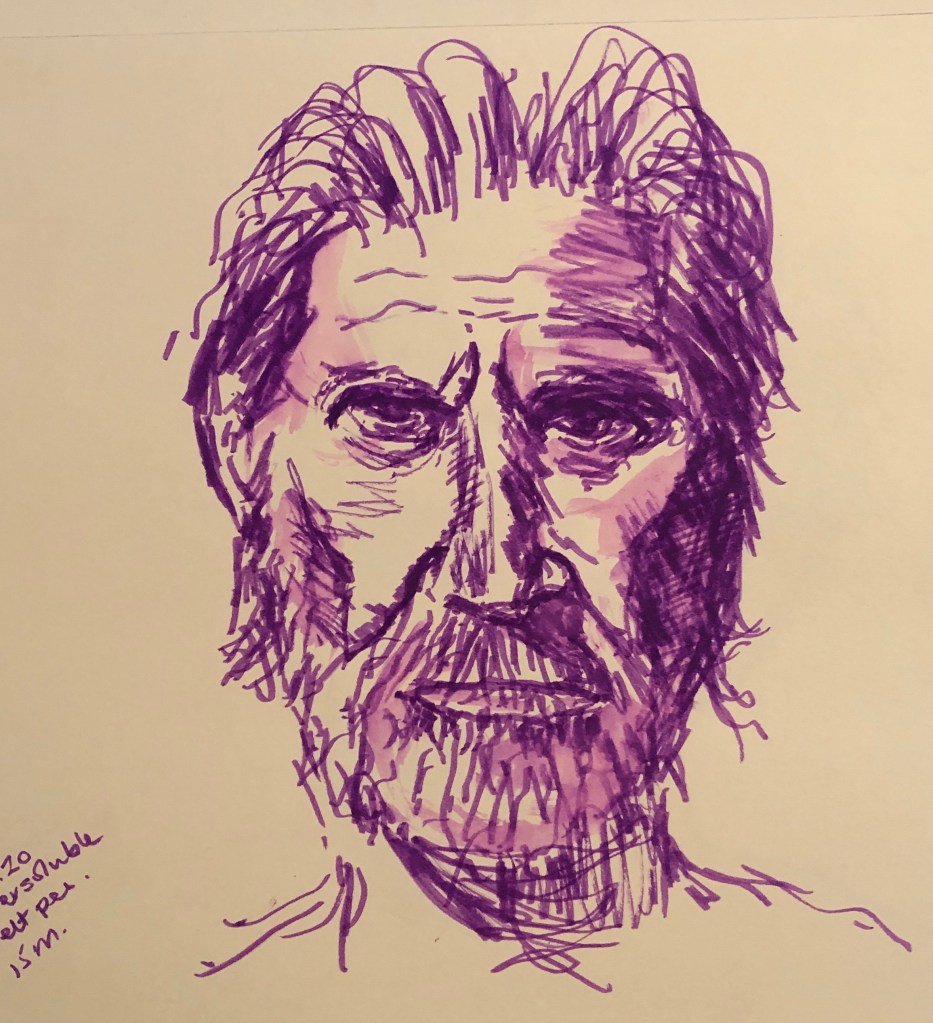
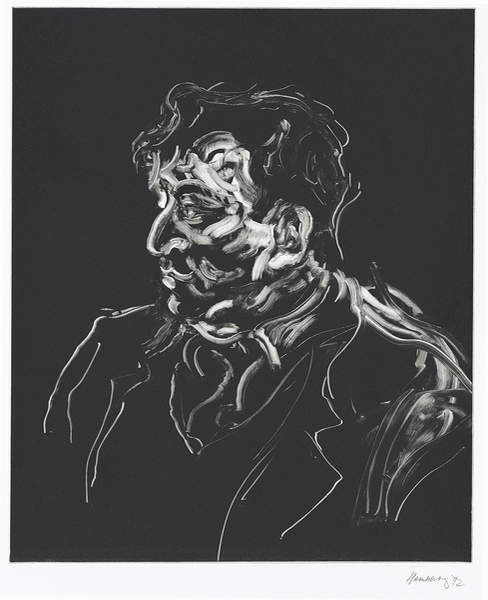
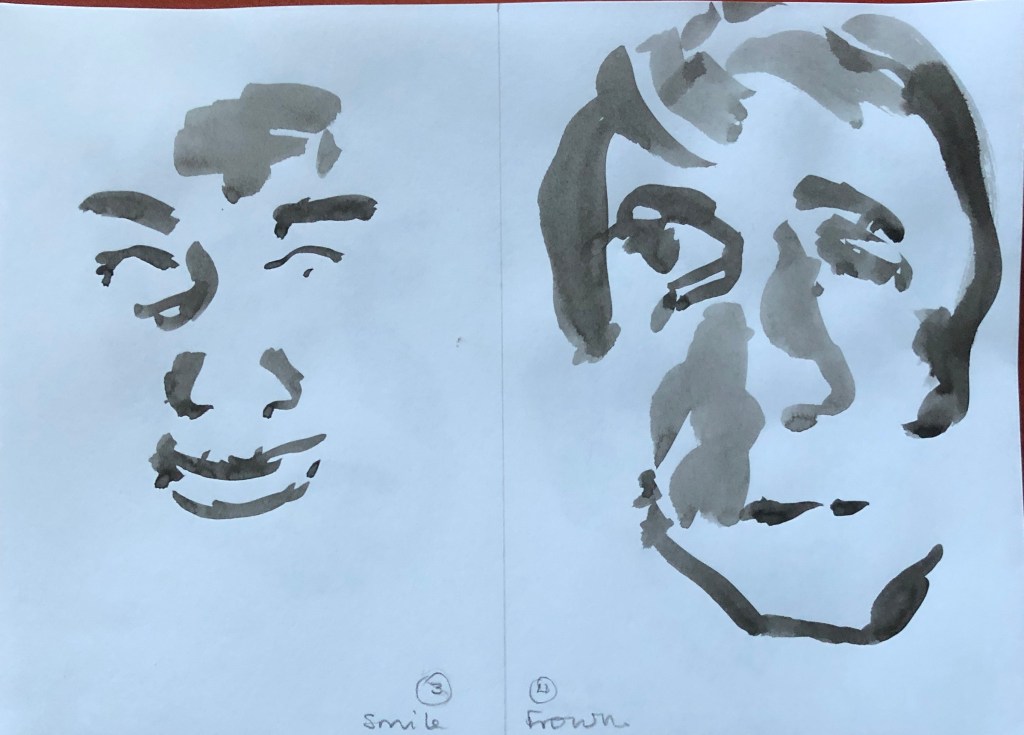
I took another felt-tip pen sketch from Drawing 1 as my “base” drawing – this again is too large for my glass printing plate so I have to select part of the image to work with in each print.
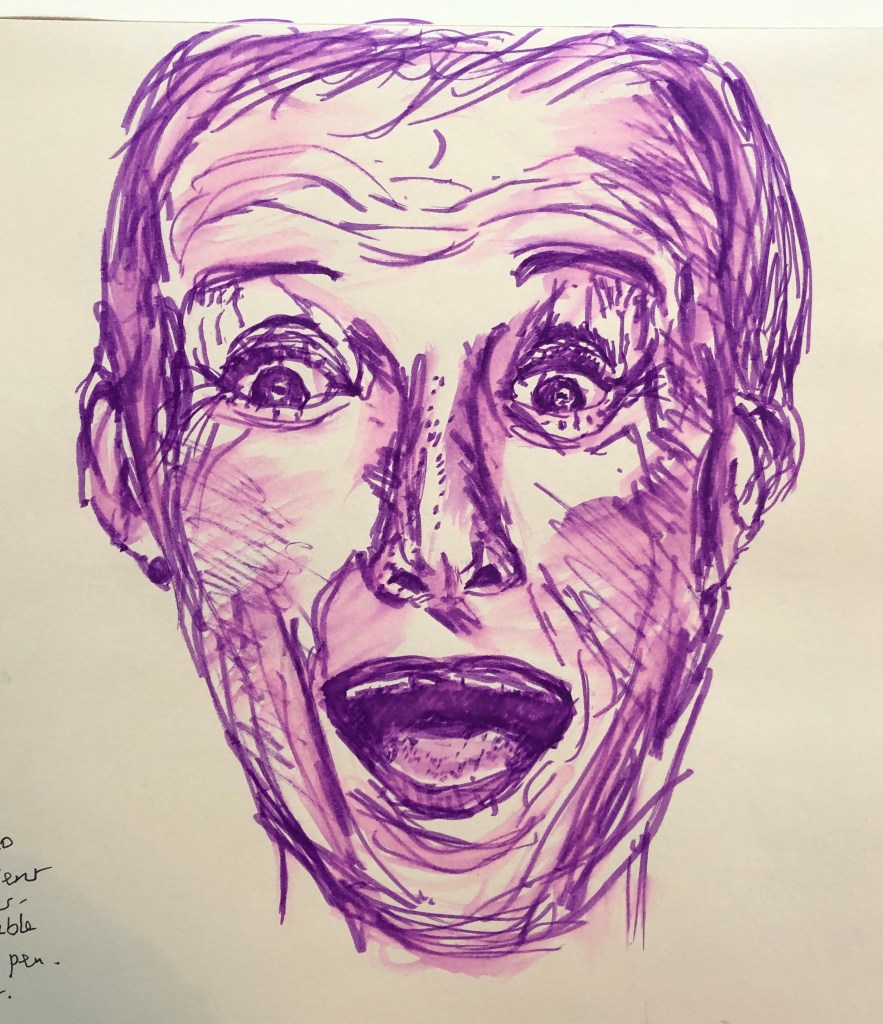
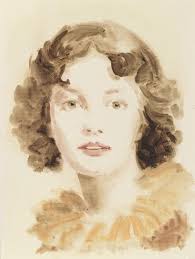
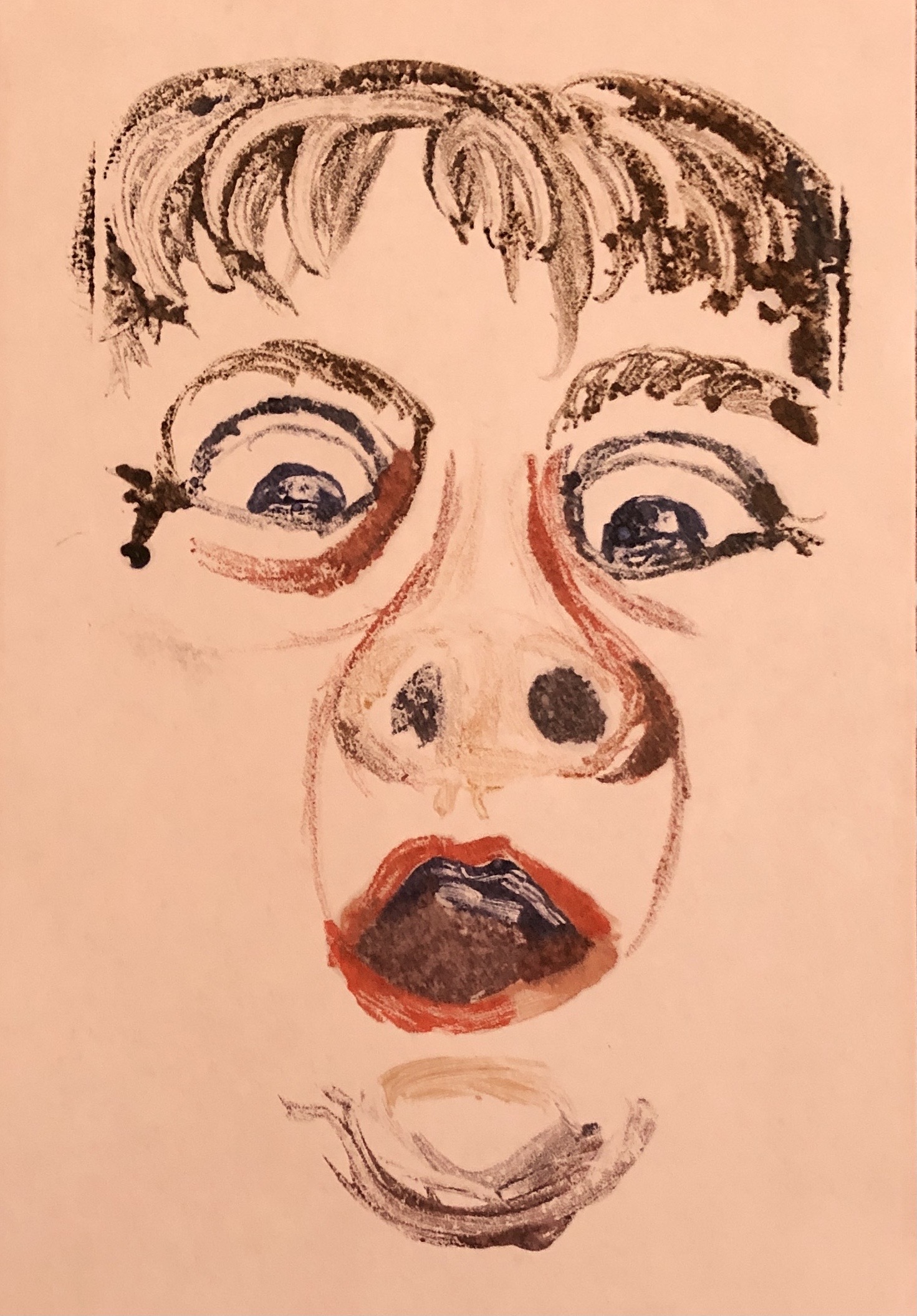
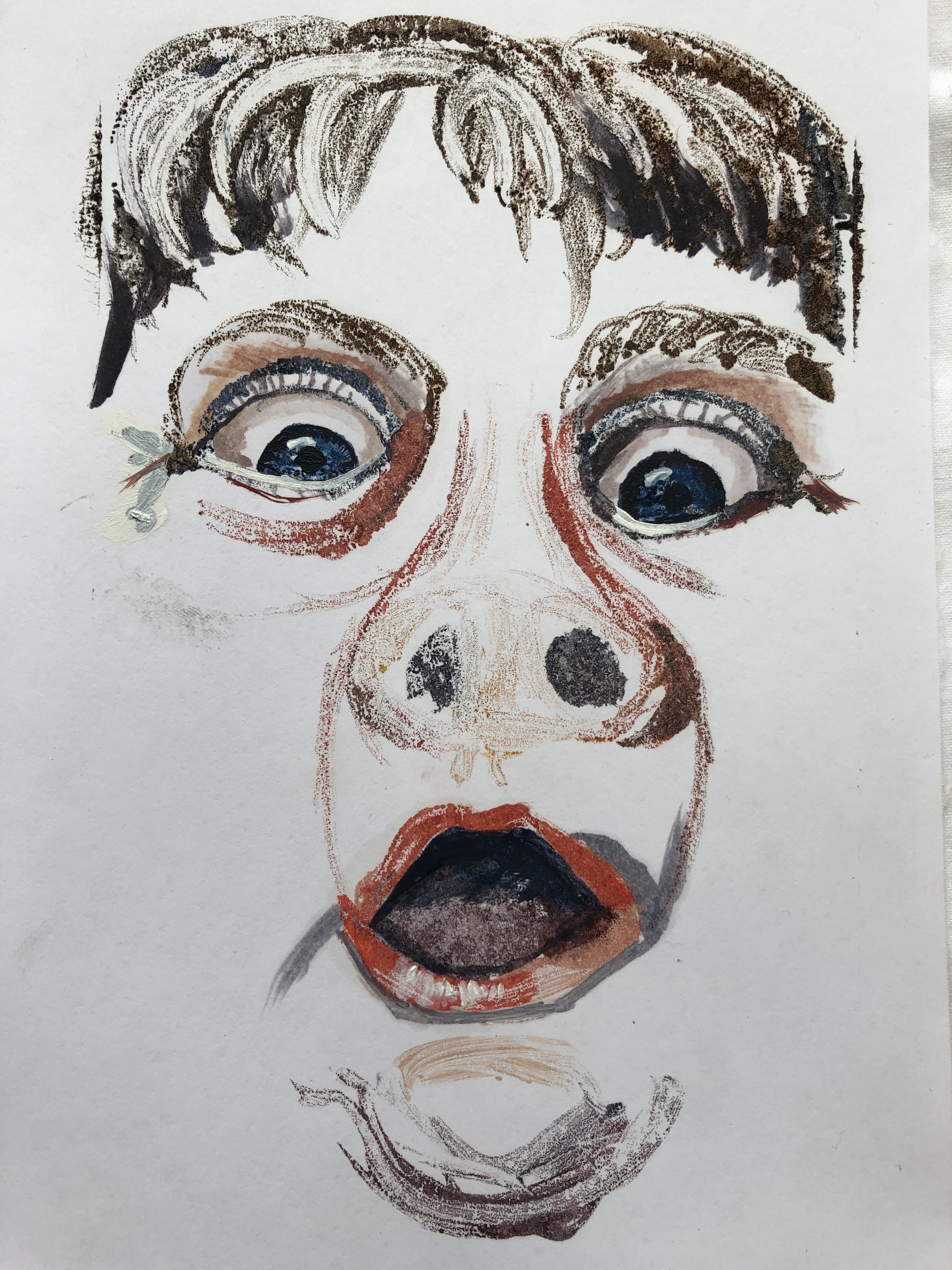
First up was some thicker cream-coloured cartridge loose paper. I laid down a thin watercolour wash, rough sky-and-cloud images, as background to test the uptake of oil paint over the watercolour. Then I mentally divided the base image into three parts and made three prints onto my test sheet. Each time I tidied the image on the glass with my cotton bud (having done all the painting onto the glass with a rigger), printed it, and then painted into the print on the paper, adding definition to eyes, sometimes nose, and mouth.
I found the oil paint sometimes skidded slightly on the places where the watercolour was thicker, but generally the print “took” well.


The trickiest part was working out where on the page to place it down on the glass, and I found that the easiest way was to work it out by looking through the glass from the back.
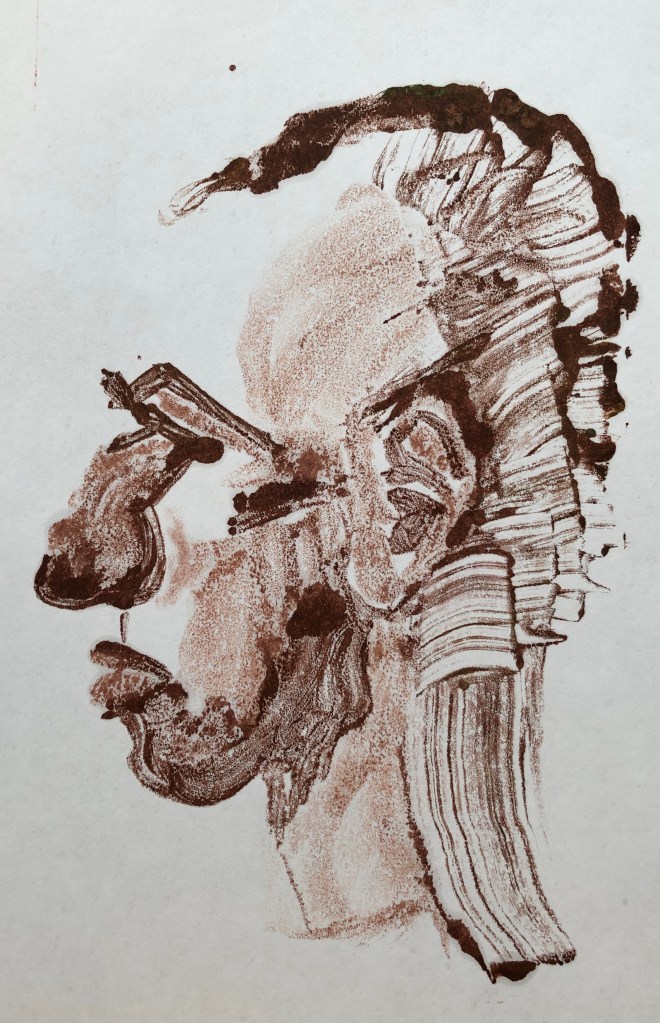
Next up was some thick paper, almost card, which I had bought in Part 2 under the guise of a vegan leather substitute (I had been thinking of trying to paint on leather).
This is a mid-tone tan colour, so this time I tried taking the blank paper as my mid-tone and just making the print with some darker brown (made by mixing crimson and emerald green) for key dark tones, and white for a few important light tones.

The paper took the print very accurately and I rather liked this dark-mid-light tone clarity. Again, I worked into the eye a little to make this a focal point.
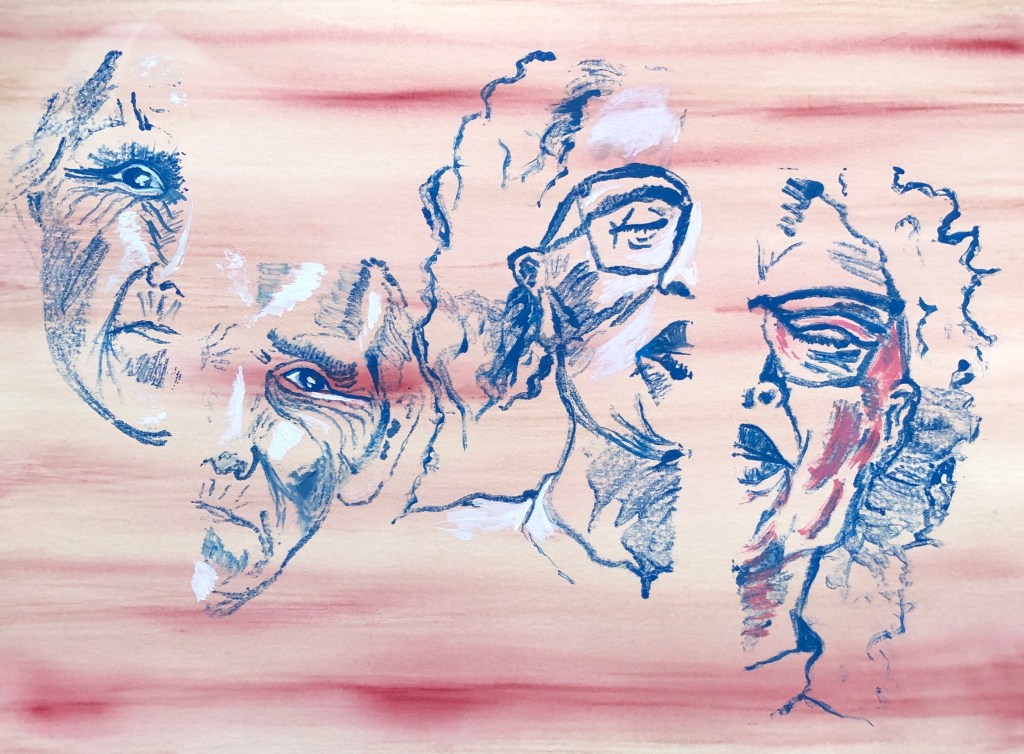
My third support to try was HP watercolour paper. I stretched an A3 sheet and then gave it a light mid-tone background, aiming for somewhere between the slightly busy sky of my first experiment and the plain brown of my second; so I gave it several coats of a dilute watercolour wash of raw sienna and a dash of warm sepia, applied with a fan brush, and enlivened with a few horizontal streaks of perylene maroon into the wet washes. I wanted to pick a “harmonious” oil colour for the print and decided on cerulean blue, with some white highlights and pink (crimson/white) shading.
For my reference images I also chose a different couple of sketches from Drawing 1 by way of variety.
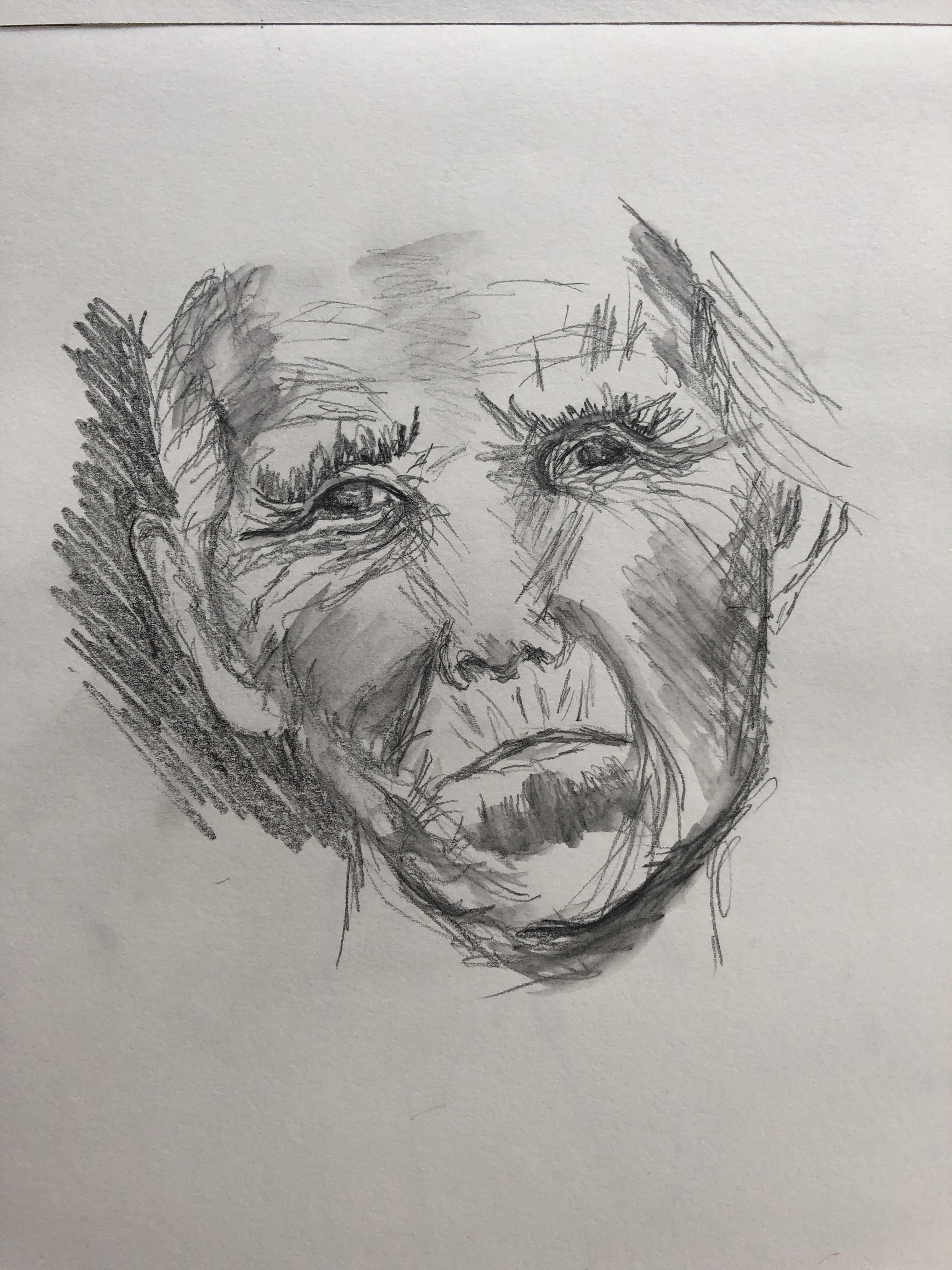
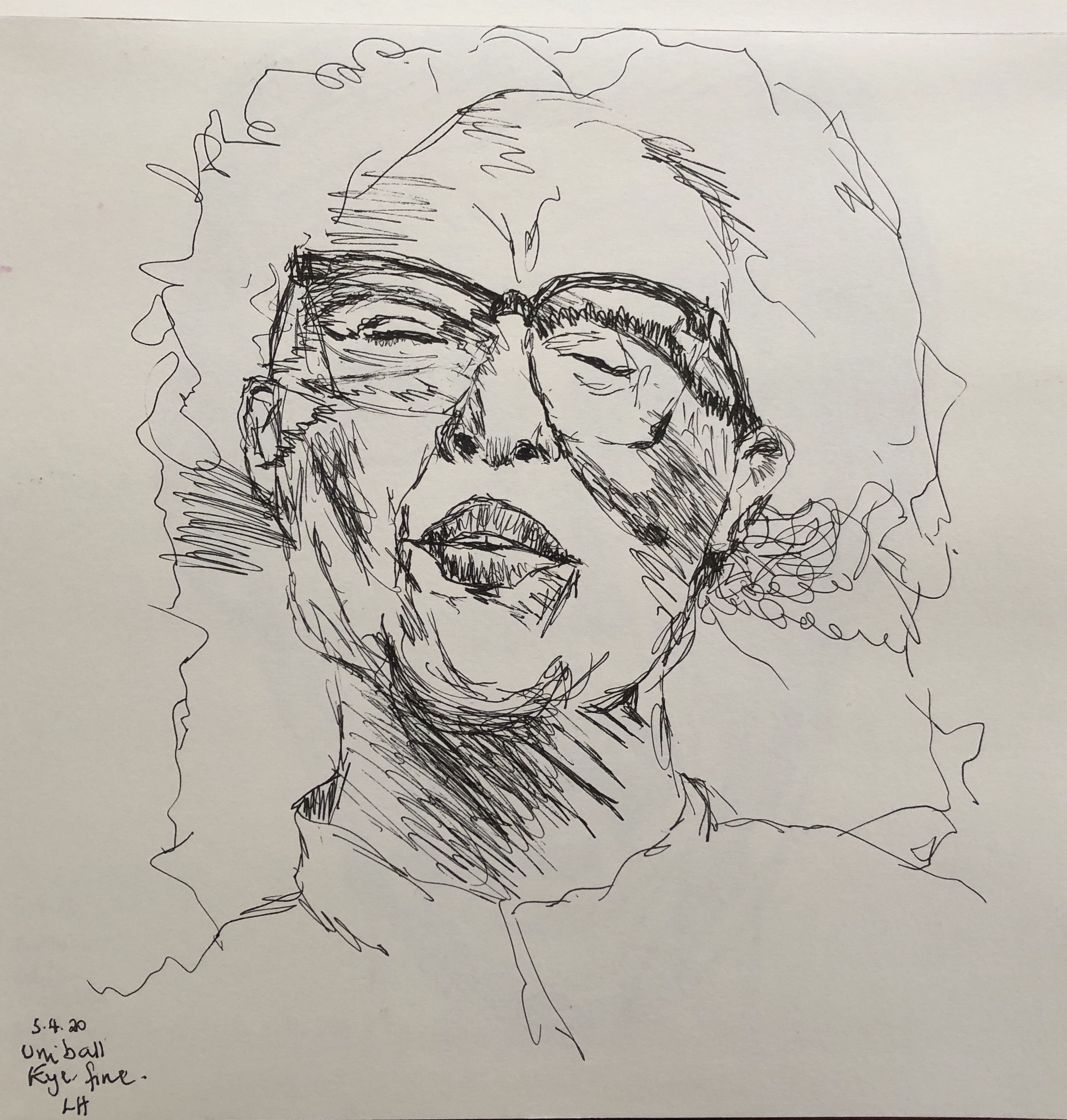
I repeated my design of split, separated halves of each face. I started with my very old lady. Each time I went through my process of painting onto the glass, tidying any wayward or over-thick marks which might splodge with my cotton bud on the glass, printing the image and then working into it on paper with a rigger to add definition to specific parts, especially the eyes.
This paper seems to soak up the paint like a sponge in an instant, particularly where I had it diluted with quite a bit of solvent. Interestingly, the blue printed much better than the bits of white – almost none of the white seemed to transfer over, and I had to add it in on the paper. The fact that the paper was already covered by a layer of watercolour wash did not seem to affect its absorbency; something which I had found to be a bit of a limiting factor on the thick cartridge paper.
Next was my smiling lady – chose her because of the challenge of her glasses, her big hair, and her closed eyes. This time I only printed the blue, deciding to add the white direct onto the print on one side, and experimenting with a pinkish wash for shading on the other. The closed eyes made me look for other features to work into and define on the print – I tried to clarify what was glasses, shadow and nose around the eye area, and also made the structure of her collar stand out a little.


NOW WHAT?
- I have happened on this method of working, printing only part of a face and then working into it, rather serendipitously, but I like it and want to pursue it as I move into my Assignment
- HP watercolour paper with a watercolour wash is the way forward as a support for my prints

















 Sue J's blog