WHAT?
Two hour session with artist Tom Rickman focusing on drawing in the style of Degas to capture movement and dance poses. Model Kerry was a professional dancer and was excellent in her execution of and knowledge of poses often captured by Degas. It was recommended that we work in willow charcoal with a putty rubber and work on cartridge paper, with a suggestion that we also try brown paper. Tom drew alongside us and we could follow the progress of his drawings in split screen.
SO WHAT?
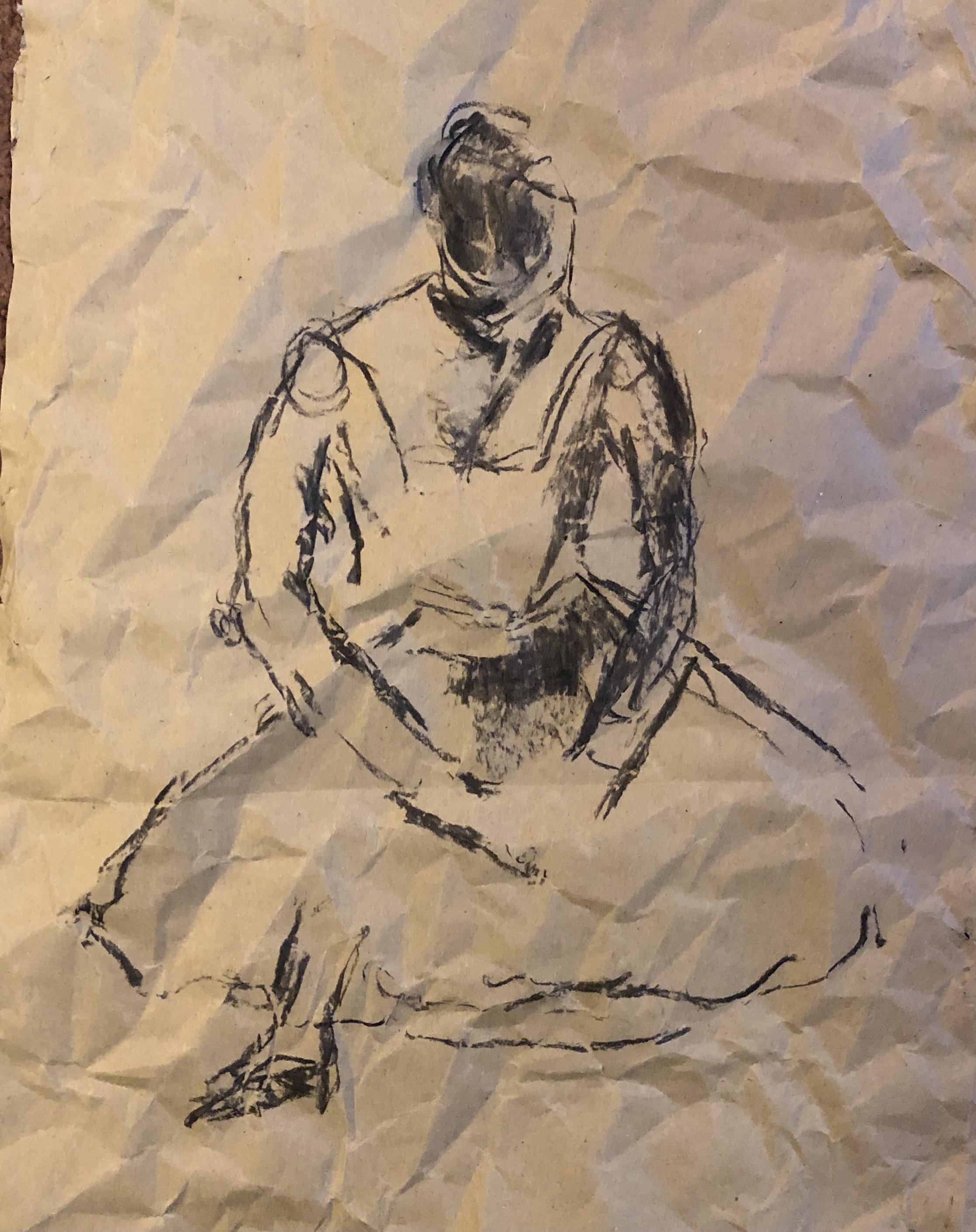
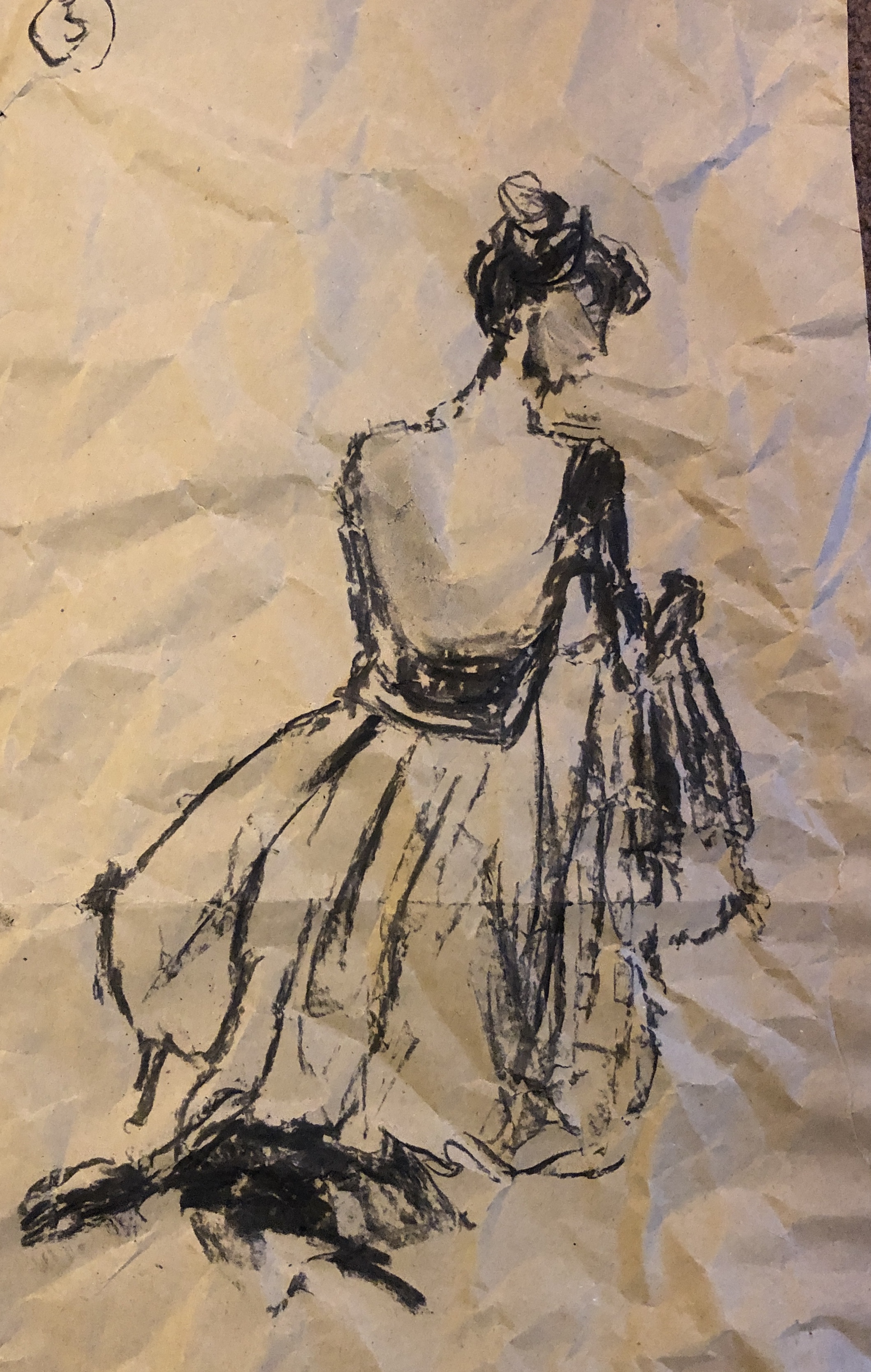
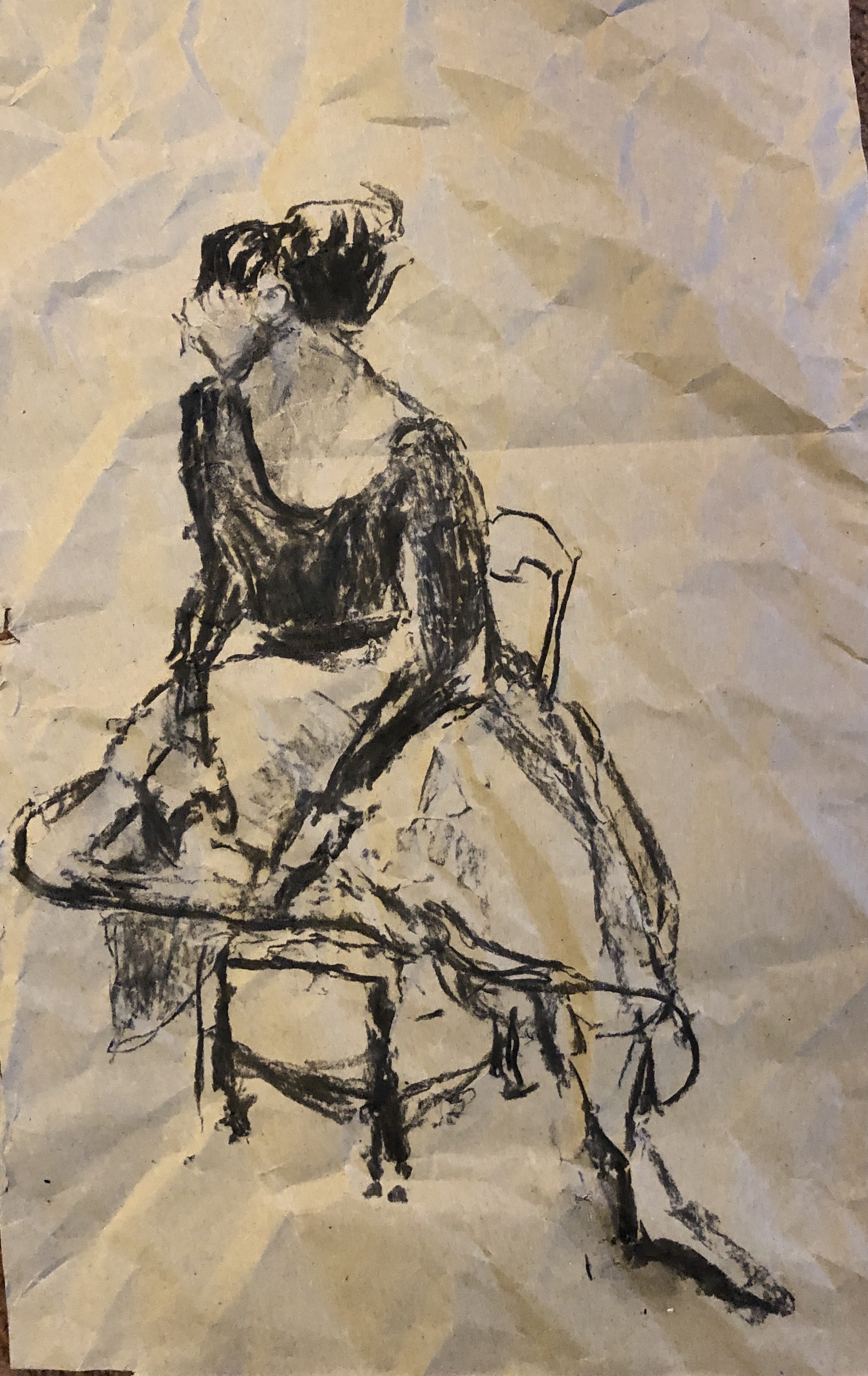
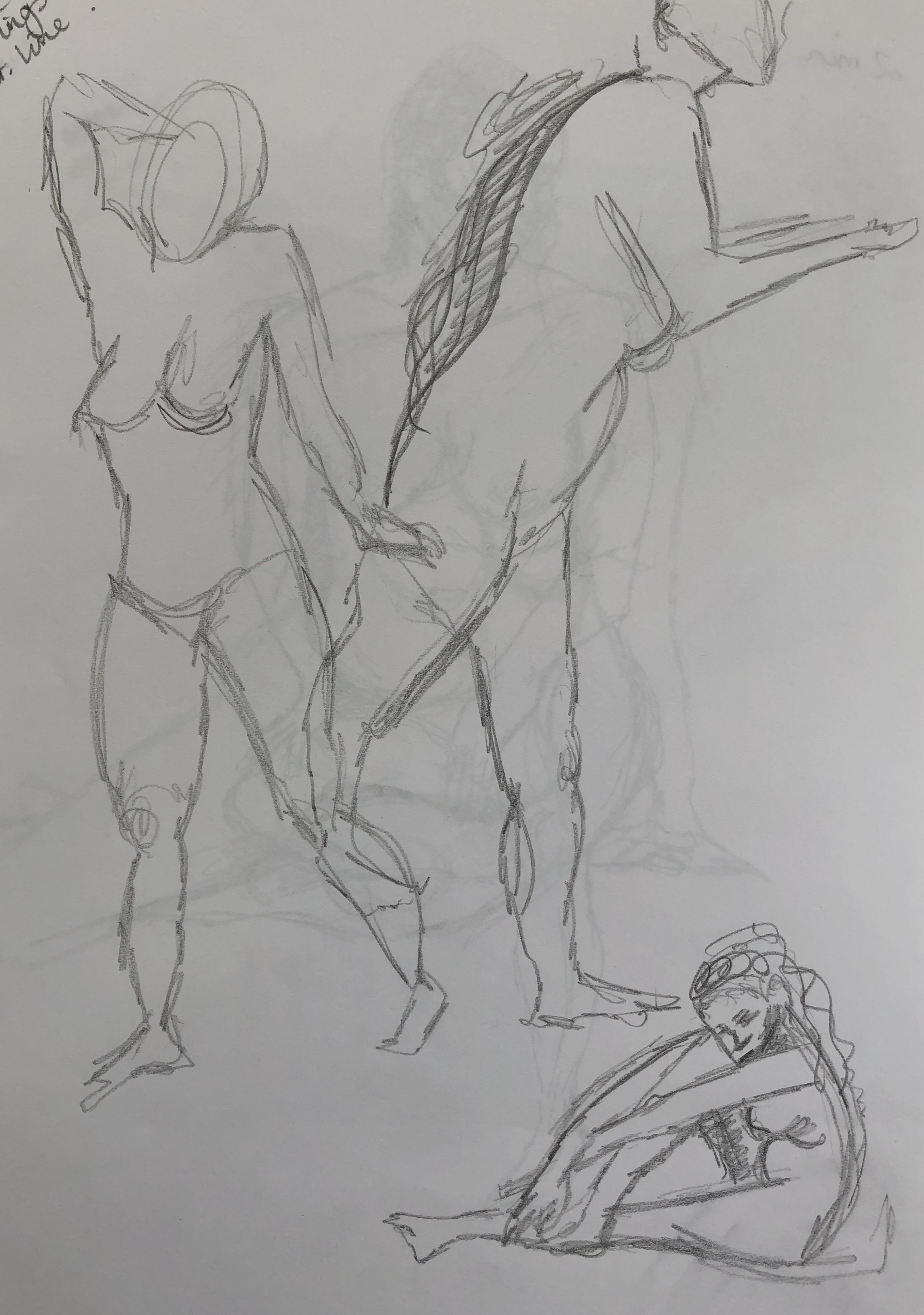
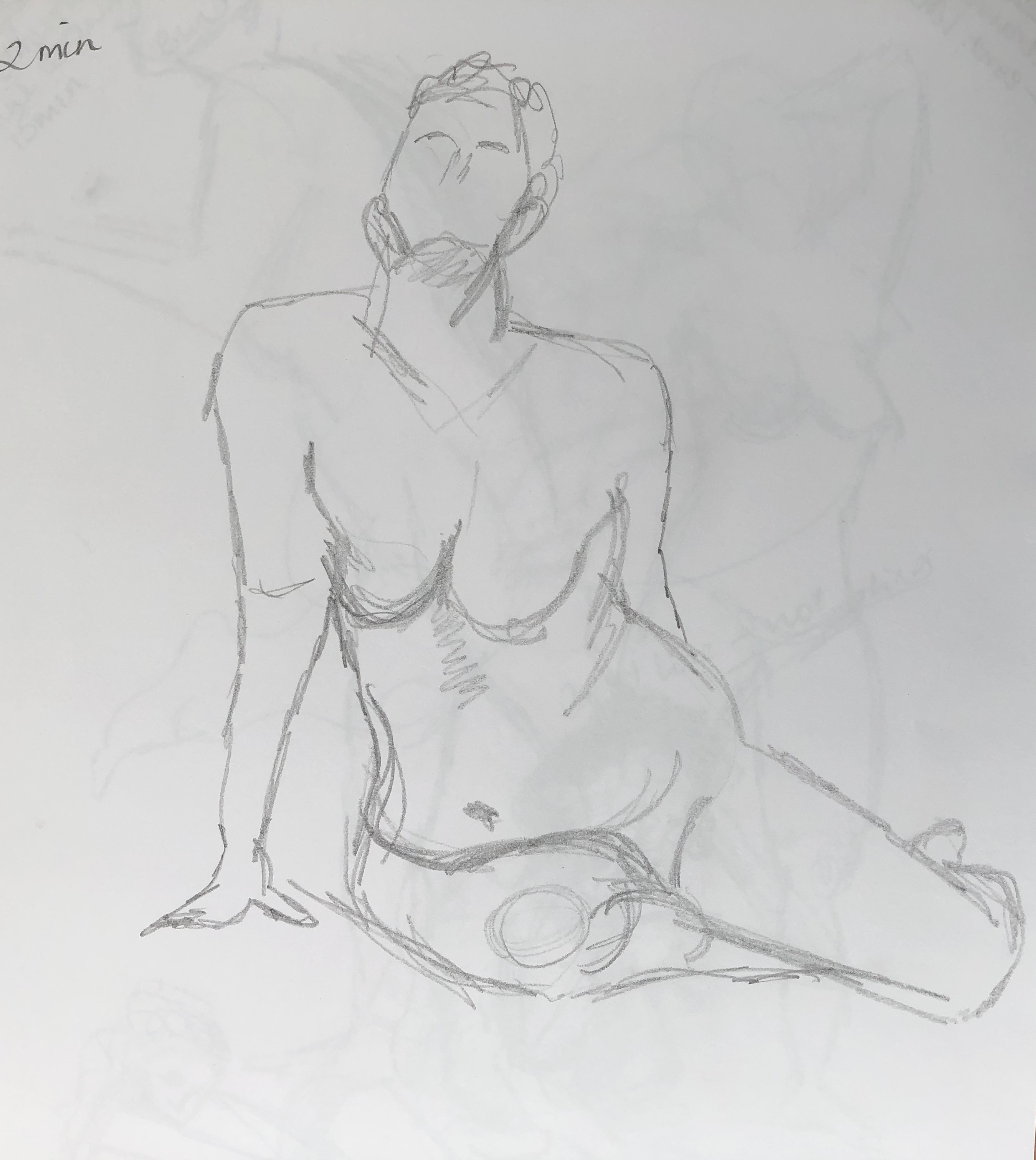
First session was a group of 5 minute poses to allow us to warm up and get our “eye” in. We were urged to just try and get the main structure in and add little bits of tone.
I tried these on brown packing paper from an Amazon package; however, this was a bit too creased up for me to be accurate, so I decided to move on to cartridge paper for the next exercise.
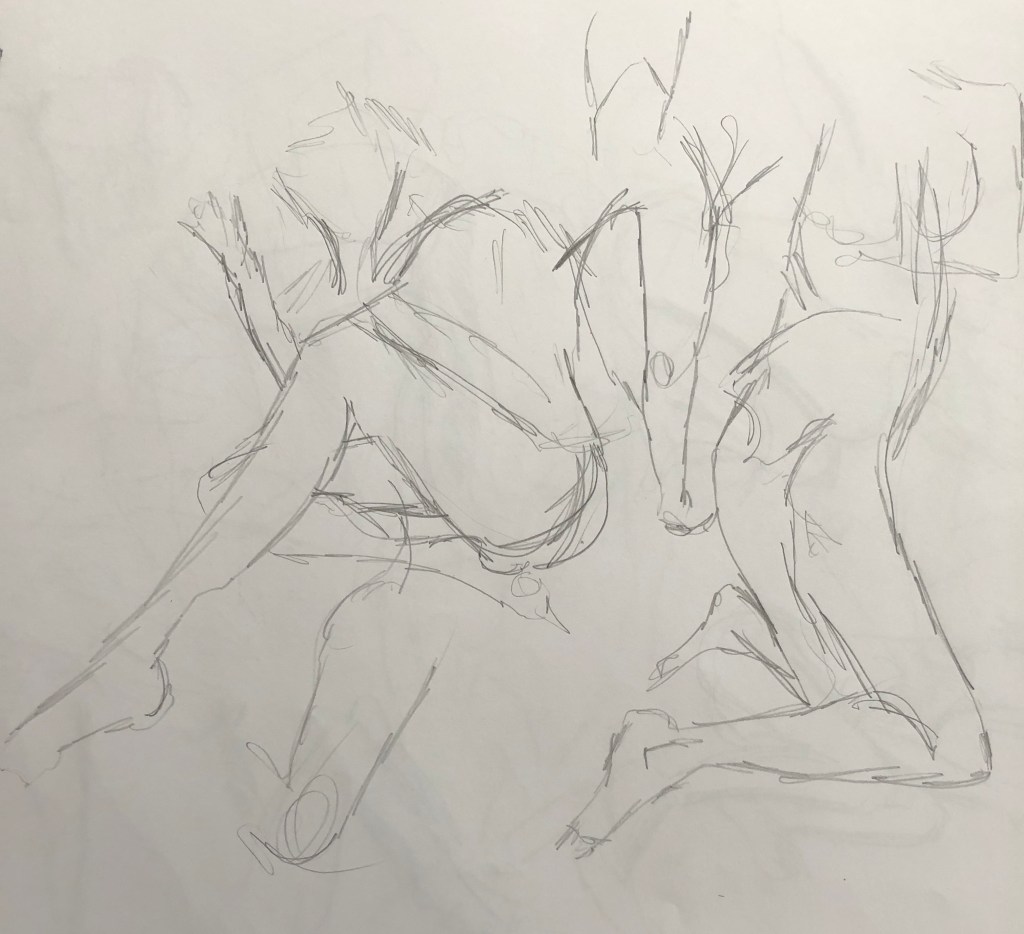
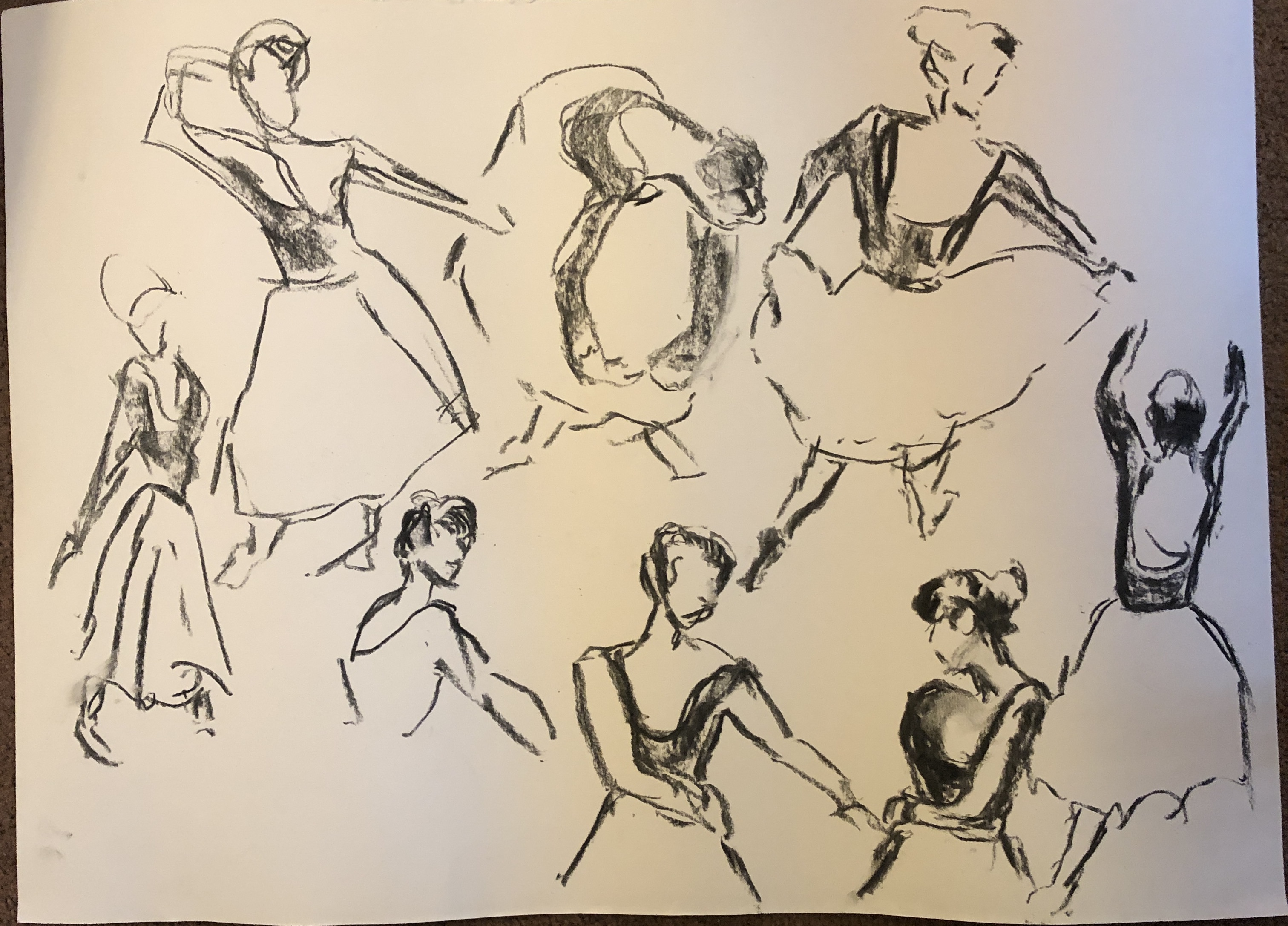
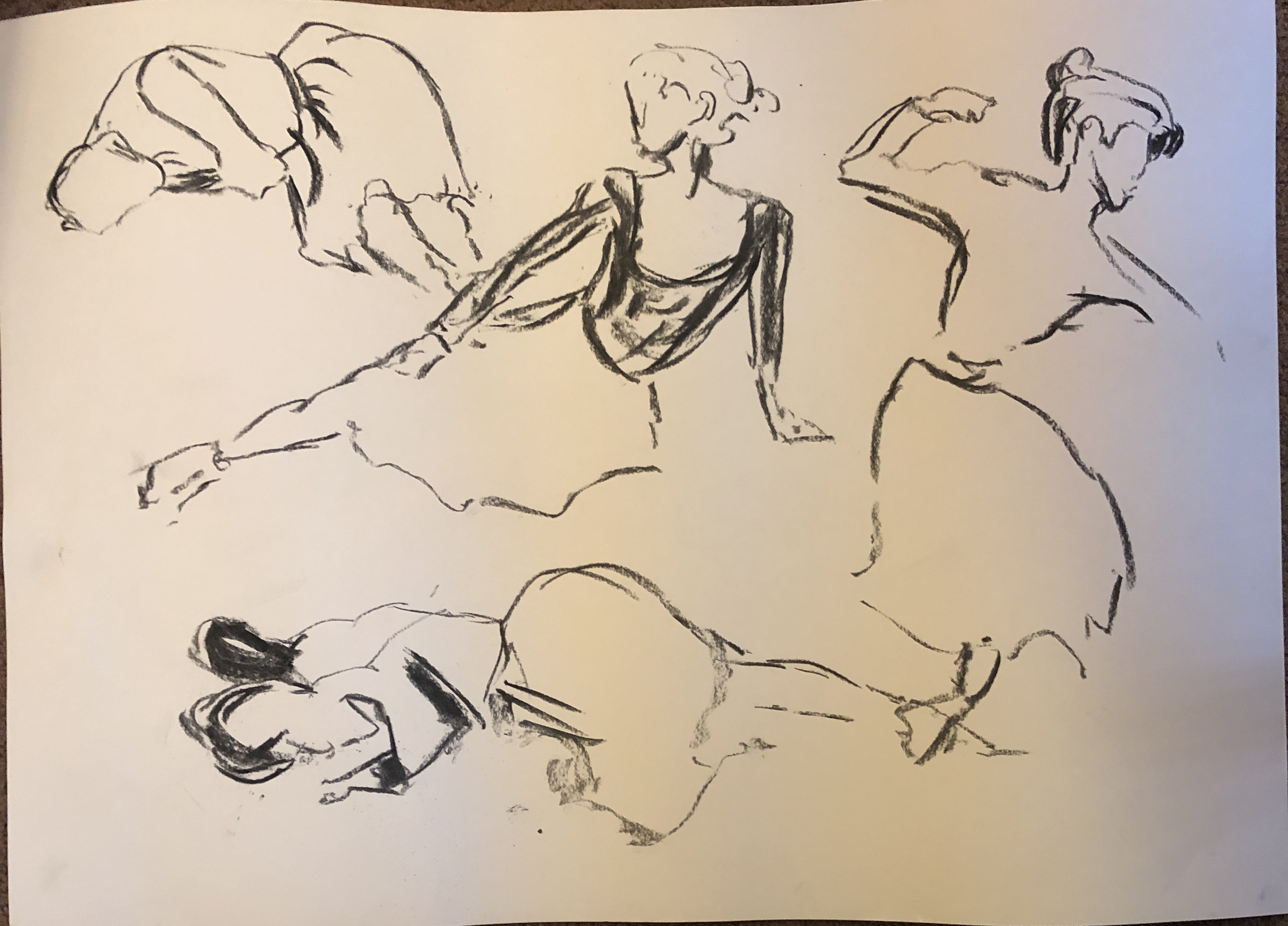
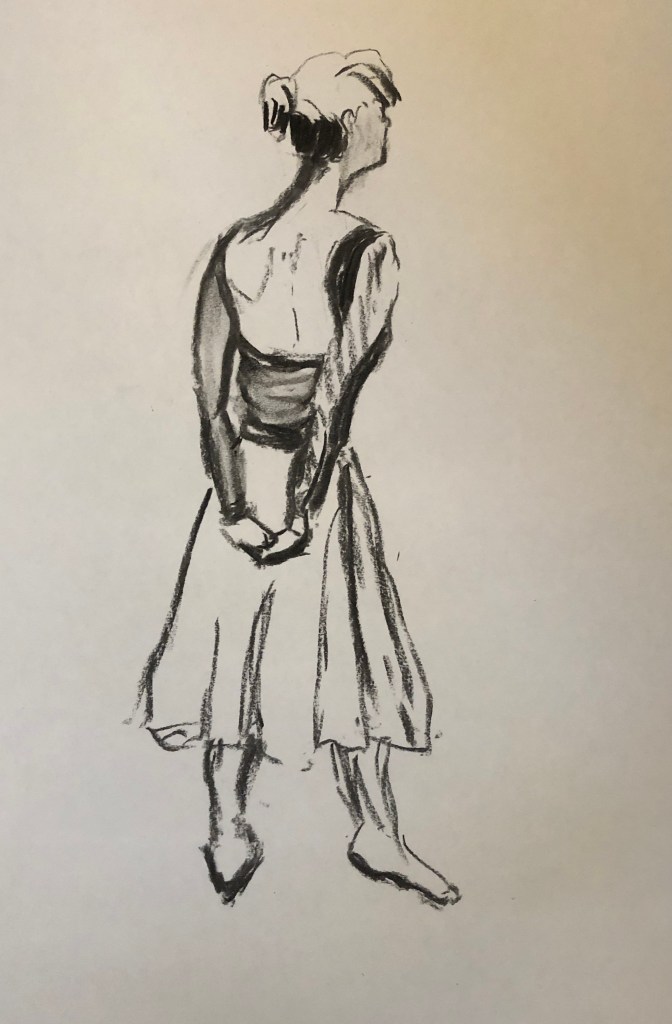
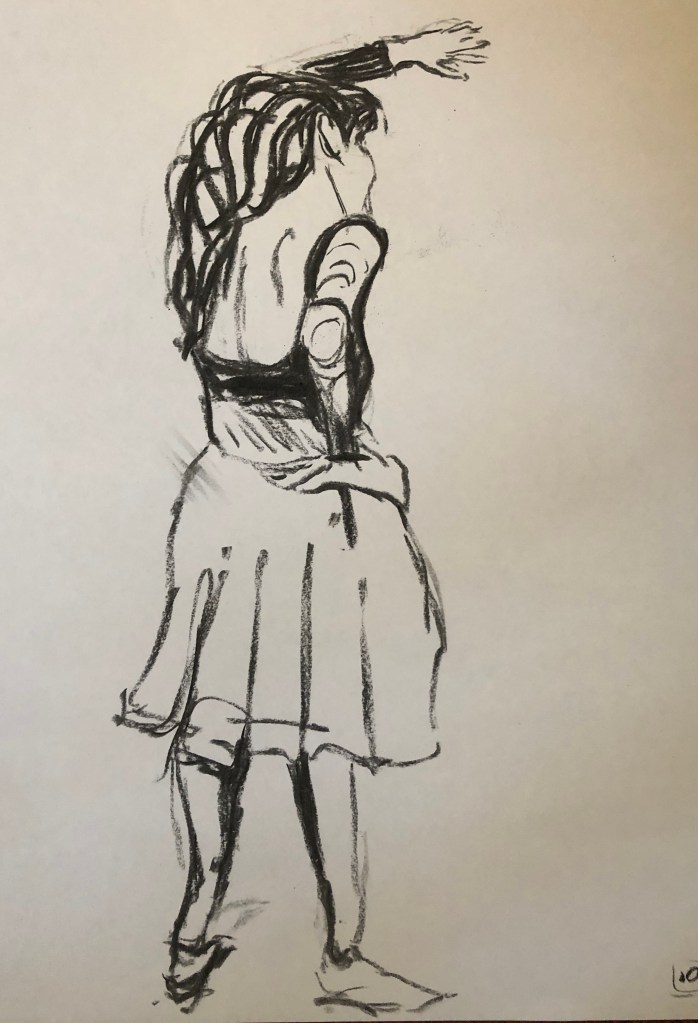
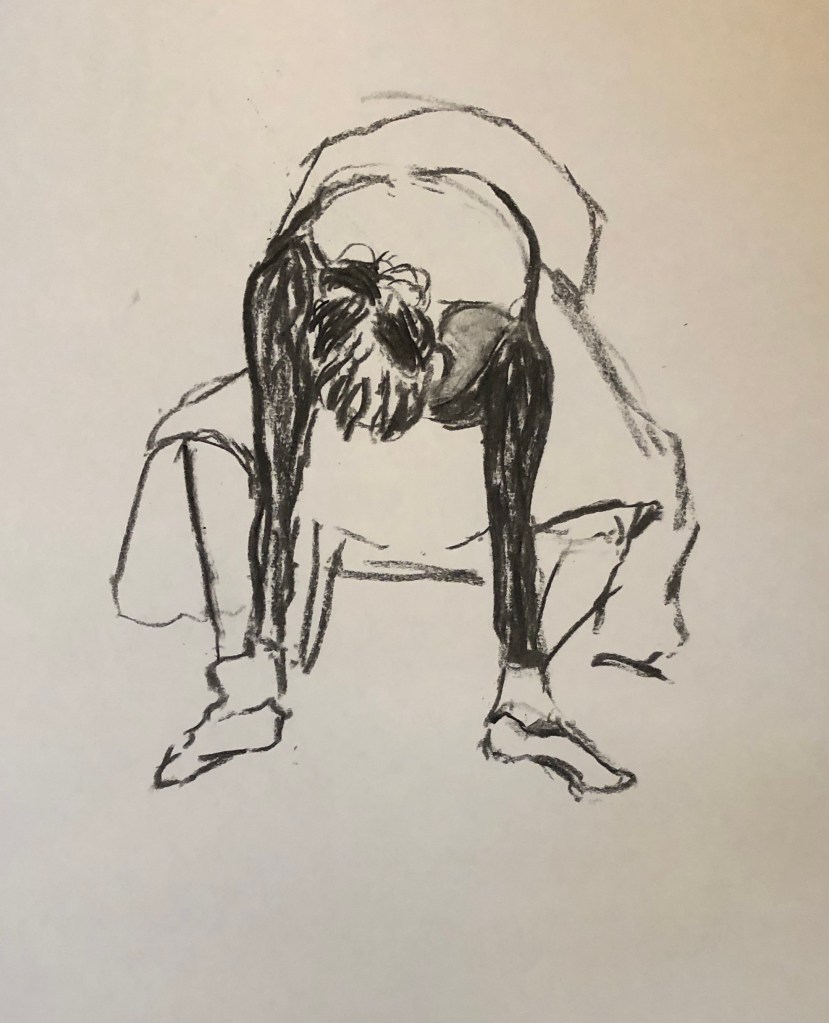
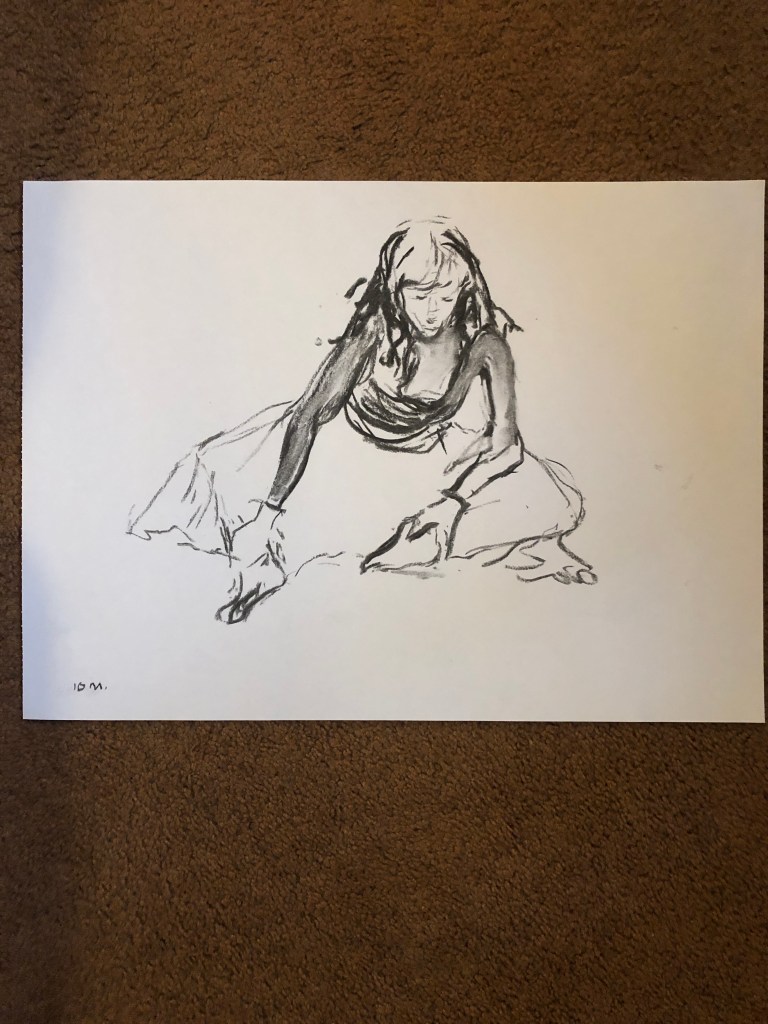
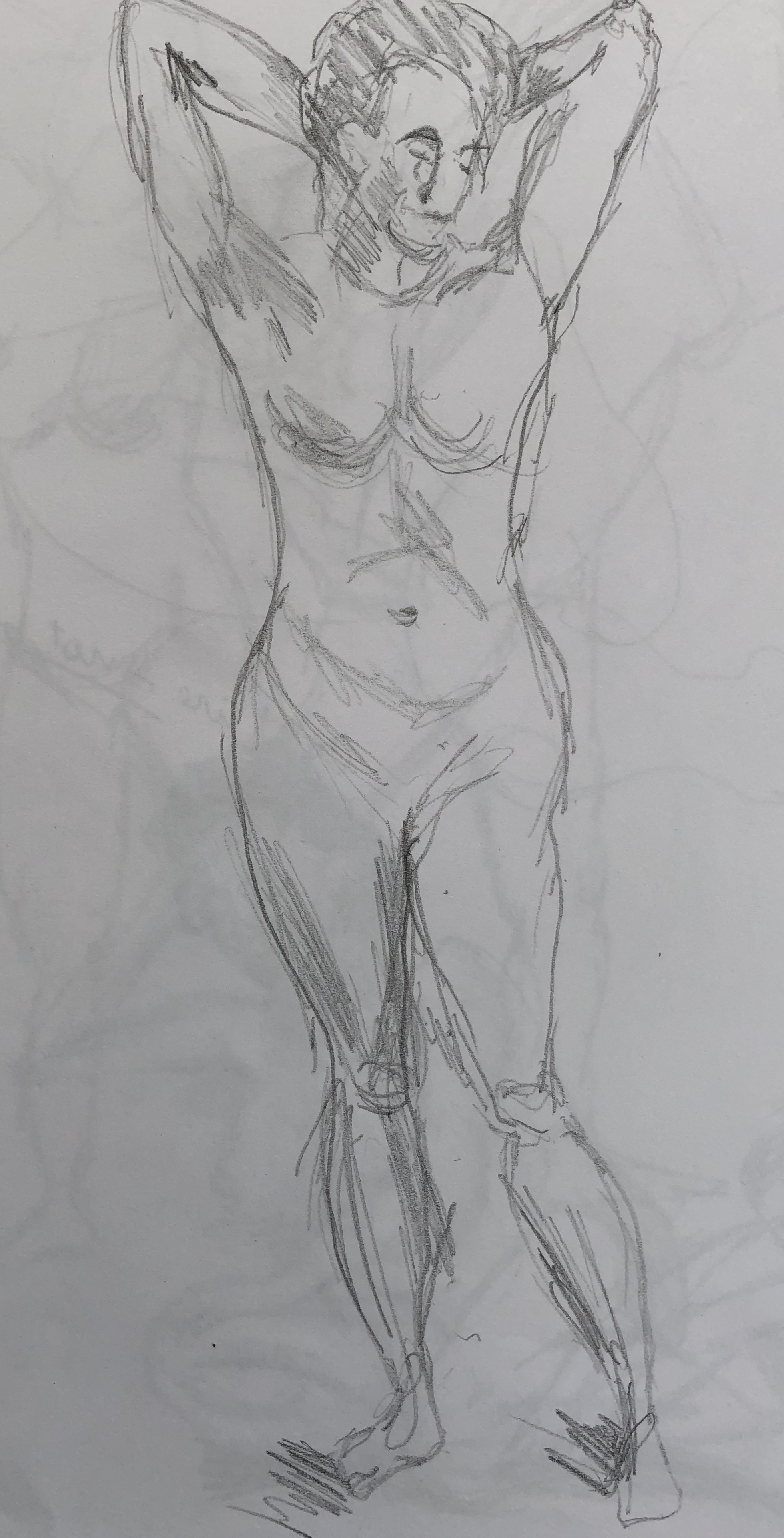
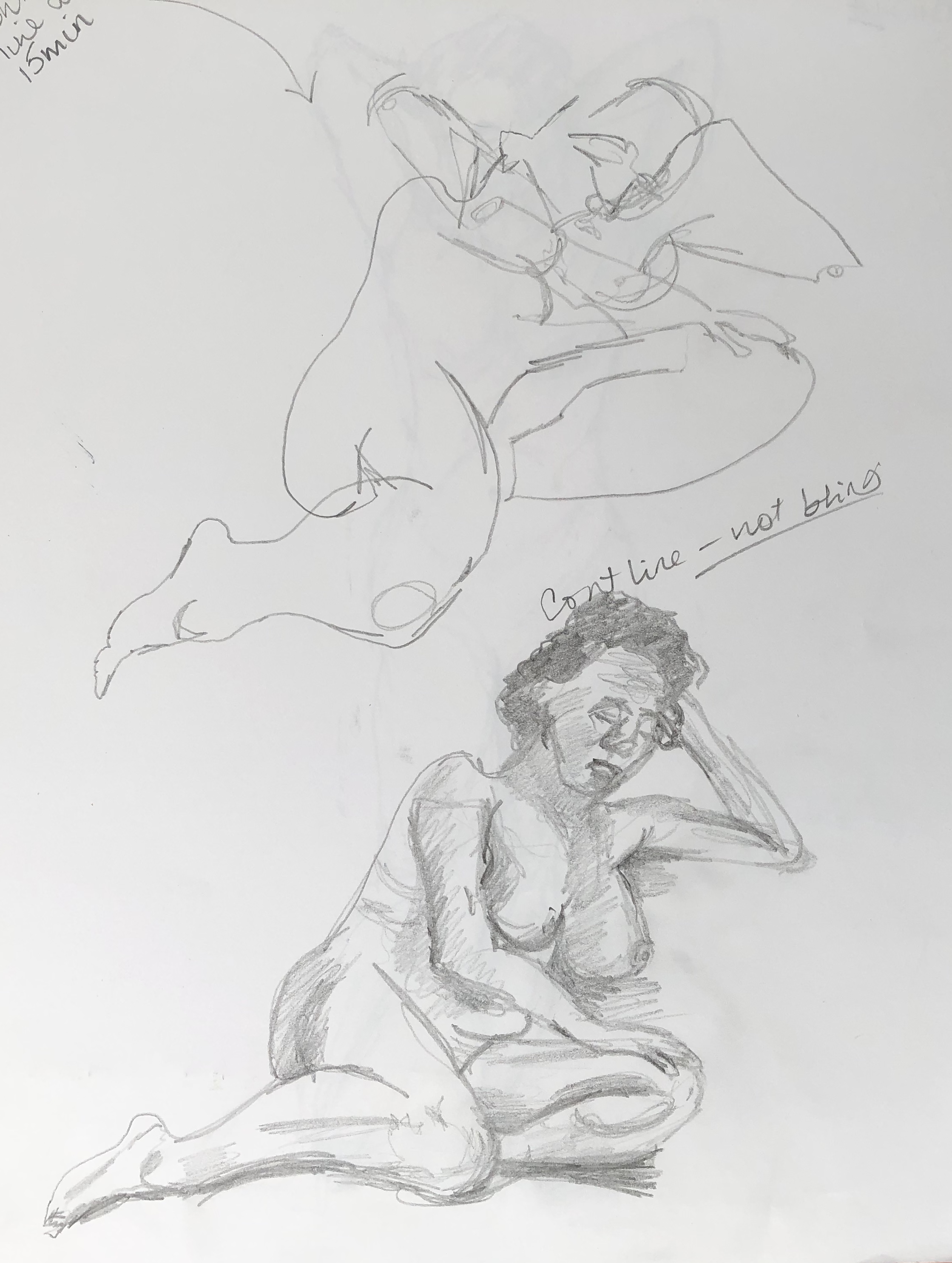
For the next exercise I used two A2 sheets of off-white cartridge paper. Music was put on and the model was invited to dance, periodically pausing when she felt she was in a position which she could hold for a minute or two at most before continuing the dance. Our challenge was to try and capture the moving (practically speaking, the temporarily posed) figure. It was indeed a challenging task, I caught some gestures better than others – I found that getting the spatial relationship between an ear (where I could see it) and its nearer shoulder right seemed to help enormously.
We had a break then for a group look at some Degas drawings which Tom talked us through, and a Q&A session. Some comments of Tom’s which resonated:
- these sketches are just frozen moments but show incredible movement
- It is vital to think about the dynamics and weight distribution of the model
- Think about the personality of the model and the narrative of the drawing (what story does the viewer tell themselves as they look?)
- Life drawing is a good exercise to make you confront your demons as it can’t be fudged
- Grids and other devices have their place, but you can’t beat getting stuck in making marks, then seeing things in the marks you make, developing them, looking hard and correcting mistakes (which you can do if you start off light and loose)
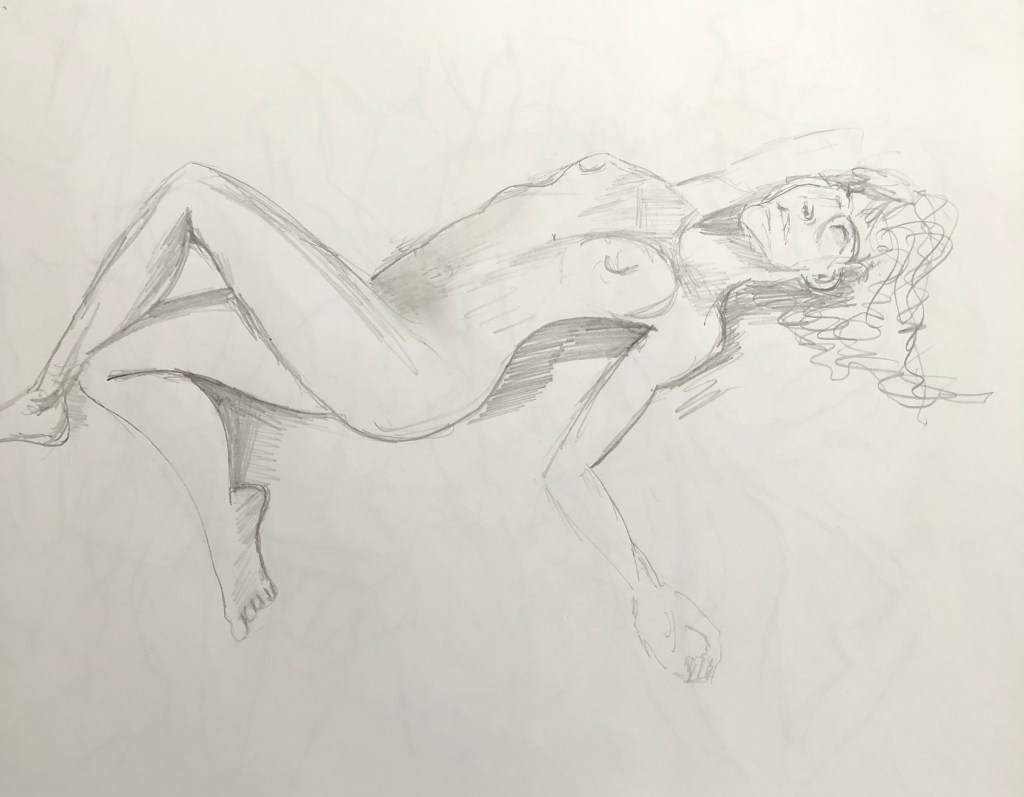
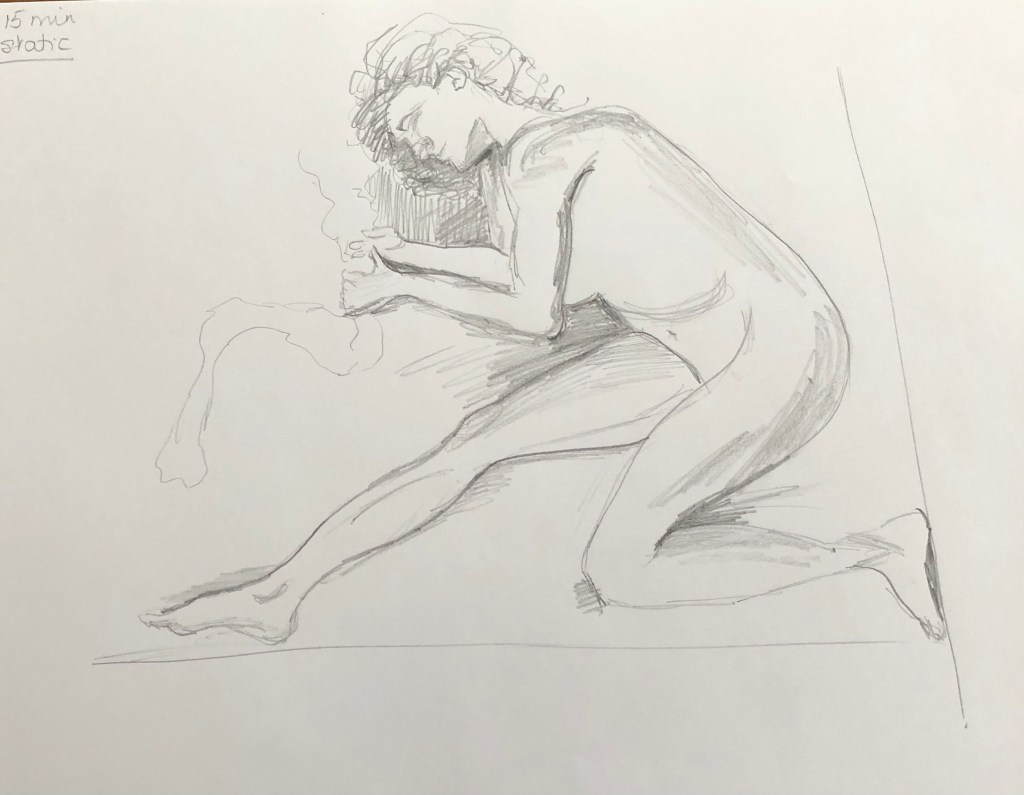
Our final session was 4 x 10-minute drawings of the model holding poses specifically drawn by Degas. I did these on cartridge paper, one each on its own sheet of A3. As we had slightly longer for these drawings, we were encouraged to look carefully and think a little more about measuring and making sure we had body parts in the right place by dropping a line.
NOW WHAT?
Takeaways for me:
- Remember the ear/shoulder relationship which I found helpful in defining the pose
- Think about what is happening with the body under the clothes and where the model’s weight is being taken
- Tom made a comment about “treating charcoal like paint and pushing it around” – not something I’d thought about before, but I think maybe I should






 Sue J's blog