Painting 1; Part 2; Research into collections and unusual materials

WHAT?

Having looked up and read the suggested essays by Benjamin and Freud (see course materials for reference), I came across details of an exhibition at the Barbican Centre, London, 12th Feb – 25th May 2015: “​Magnificent Obsessions – The Artist as Collector”​, curated by Lydia Lee.

SO WHAT?

Lilias Wigan, reviewing the exhibition for the 3rd March, 2015 edition of ​Country Life magazine, said it looked at three questions:

  • –  “how has the practice of collecting aided artists’ researches
  • –  How has it inspired artistic progression
  • –  How have artists assimilated their collecting into their own work?”The exhibition ranged from carefully assembled presentations, such as Edmund de Waal’s netsuke, made into artworks in their own right, through to Andy Warhol’s obsessive collections of unappreciated objects; apparently he shopped every day. The reviewer says “…each room has its own character as an opening into the psychology of a particular artist’s collecting obsession.”Reviewer Iranzu Baker (​www.iranzubaker.com​) was struck by Sol Lewitt’s 1980 work Autobiography​, in which the artist documented his entire flat in black and white photographs, even down to the plugs. Baker remarks on the unbounded curiosity about the world around them which is revealed by these collections.Reading the articles and the reviews about this exhibition has made me reflect on my own collecting habits. Books are my main one – in my view, no house is complete without floor to ceiling books, dating back I think to my bookish only-childhood spent in the library, and maybe also to my Mum’s gradual blindness – books were her passion too, and the biggest loss that she mourned as her sight went. So, writing implements and notebooks, also. So I may not have to shop every day like Andy Warhol, but I cannot pass a bookshop, stationers or art shop without going in and buying something.I’m also a sucker for natural objects – sticks, shells, leaves, acorns – which sit around in plates and bowls until they disintegrate; and I can’t pass by a feather without harvesting it. People talk about feathers as gifts from angels etc, which really doesn’t chime with me – I think I collect them because my best friend at school (now a historian) would always turn any feather she acquired into a quill and used it to write with (she still does), so I suppose I have thought from childhood that feathers, despite their fragility, were useful and should be hoarded against a future need to write something down.
  • NOW WHAT?

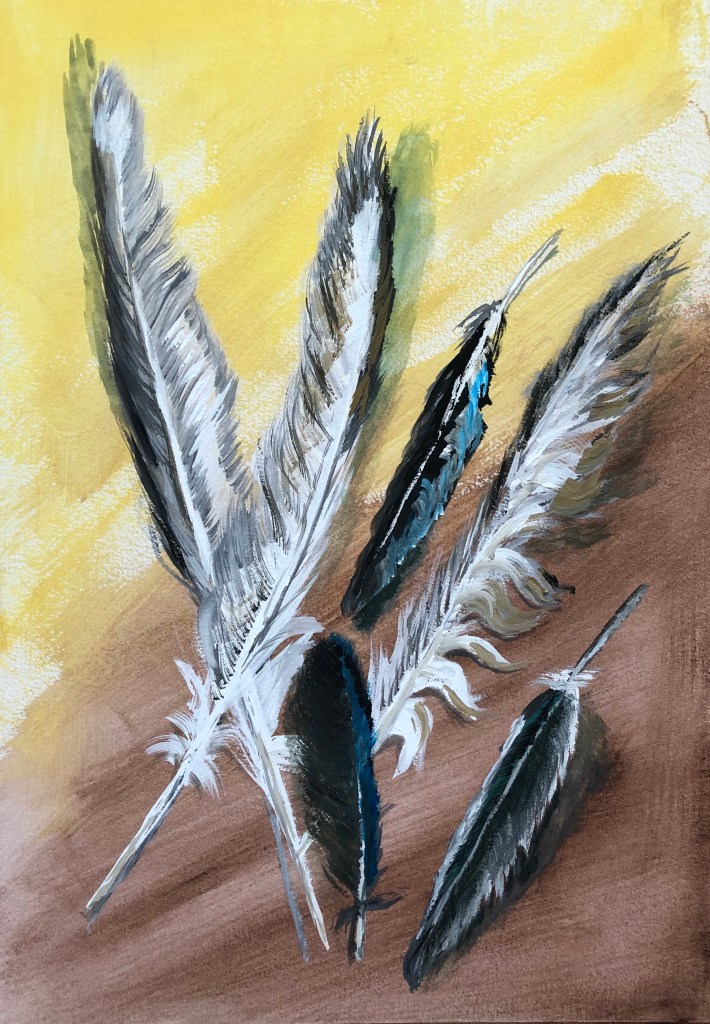
All this made me dig out my vase of feathers and paint some of them. I had a stretched A3 sheet with an egg tempera ground (Naples yellow and Vandyke brown – recently acquired and wanted to see what they were like) sitting around. I chose to work in gouache – limited palette of permanent white, lamp black, neutral grey, raw umber and cyan. I started with size 2 rigger and fan brush, but they were too small for what I wanted – so did the vast majority of the painting in a half-inch soft flat.

Light coming from all ways – picture windows beside and behind, big skylights above – so shadow position a bit random, depending on the way the feathers were leaning on the table.

Tried to keep loose but directional marks and overlaid layers – gouache is really good for letting you do this quickly.

Likes:
– Some of the brushmarks, especially where I’ve managed to get the right weight and feathery-ness (usually brush quite dry, but not always)

To improve:
– Also some of the brushstrokes! – where I’ve got the brush too wet and then picked up too much paint, marks rather clunky.

********************************************************

WHAT?

Lisa Milroy
I found some of her paintings of collections. Objects like shoes didn’t interest me so I wasn’t immediately pulled in to those paintings, but I liked her grid layouts, the way she introduces very slight variations in placing to “make you look” – almost like those “spot the difference” puzzles – and especially this one:
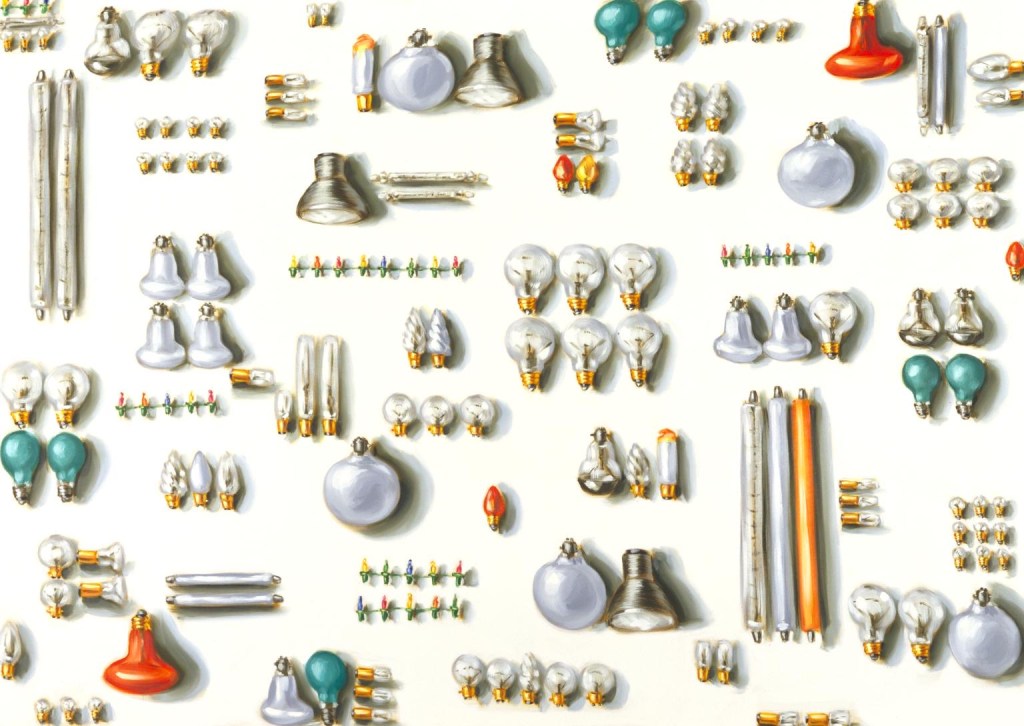
Light Bulbs 1988 Lisa Milroy born 1959 Purchased 1988 http://www.tate.org.uk/art/work/T05217

“Light Bulbs”,​ 1988 Oil on canvas
203 x 285 cm
Tate collection

Light bulbs don’t really interest me either…so I think I was drawn to this because:

  • –  I do like round things.
  • –  The variety of orientationsand groupings made the image something you had to decode, presenting the viewer with a challenge to get their teeth into.
  • SO WHAT?
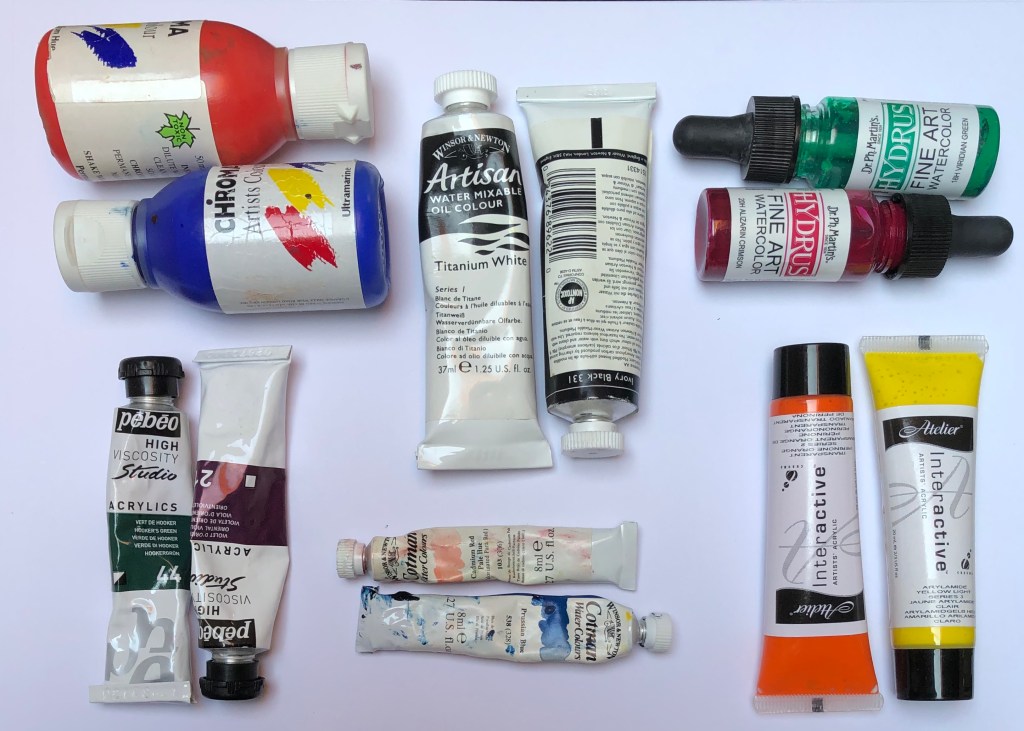
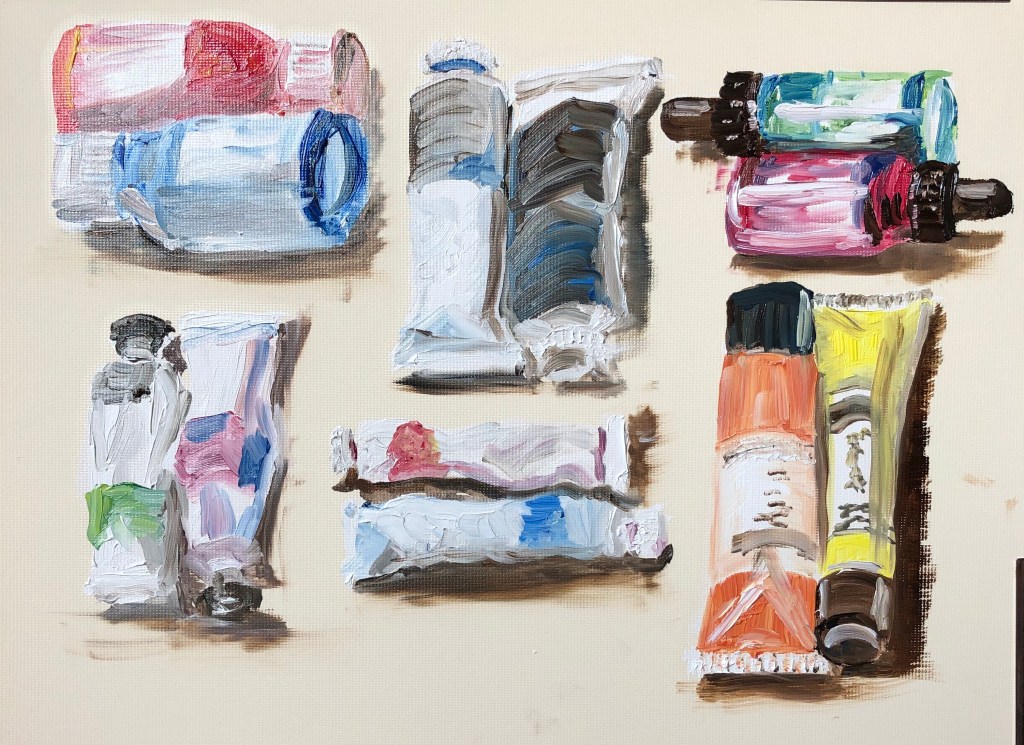
  • Having recently acquired a set of
    long handled oil brushes, I made
    myself a small grid of paints,
    varying the shape of container
    and the orientation, as Lisa had,
    yet keeping the neatness and control of the organisation. I broke out some Cobra water-mixable oils (white, lemon yellow, burnt umber, cobalt blue and pyrrole red), and set off, painting on A4 oil paper so that my images were roughly life size (as Lisa sometimes paints).
  • NOW WHAT?I have learned that:
  • –  Painting with long-handled brushes is something I am going to have to work hard to get good at – my right arm (because of my previously broken shoulder) doesn’t have the freedom of movement, and my left hand/arm is just not used to wielding paintbrushes (although fine with charcoal!) and will need some training up.
  • –  I enjoyed the loose mark-making possible with the oils, got really into the zone, and this is something I want to do more of.
  • ****************************************************************************
    WHAT?
  • Lisa’s grid arrangements (see above) reminded me of a Zoom workshop through one of the OCA’s regional groups which I attended, led by OCA tutor ​Neil Musson “Building the unfamiliar with the unfamiliar in unfamiliar times”,​ 13.6.20. He talked about ​KNOLLING​ – sorting and arranging like objects in a grid, and gave us some examples from his own work and that of other artists – Motoi Yamamoto’s salt patterns, Cornelia Parker’s ​“Thirty Pieces ofSilver”,​ 1988-9, silver and copper wire, Tate Collection, and the sculptures of Tony Cragg, e.g.“Cumulus”​ , 1998 Glass
    265 x 120 x 120 cm Tate collection
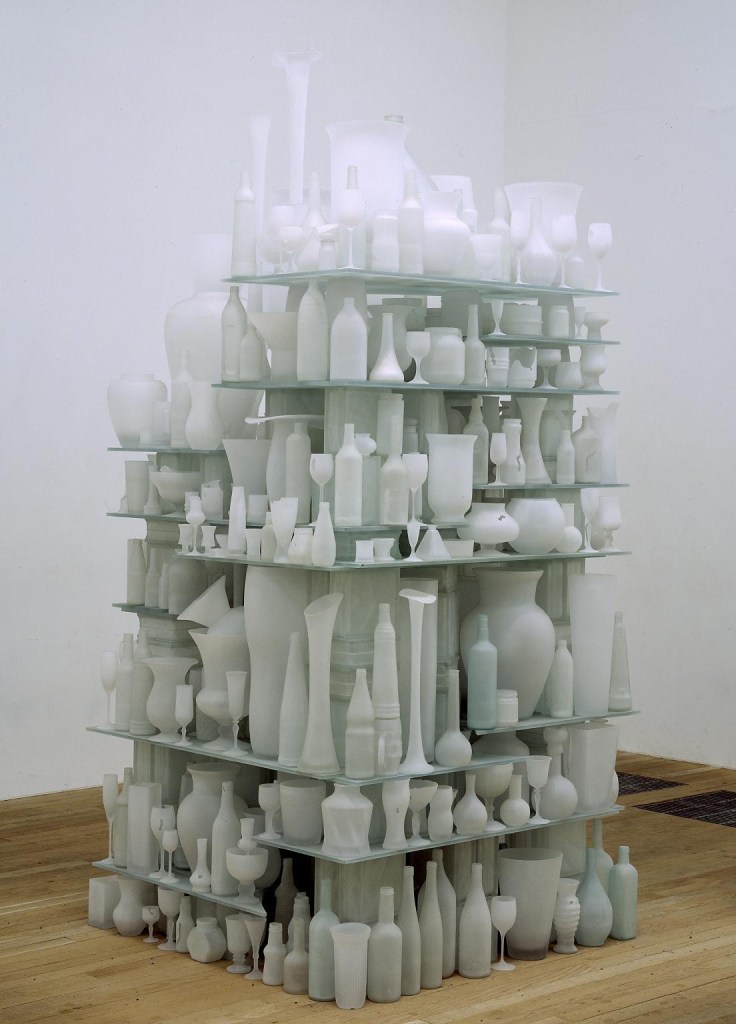
Cumulus 1998 Tony Cragg born 1949 Presented anonymously 2001 http://www.tate.org.uk/art/work/T07792

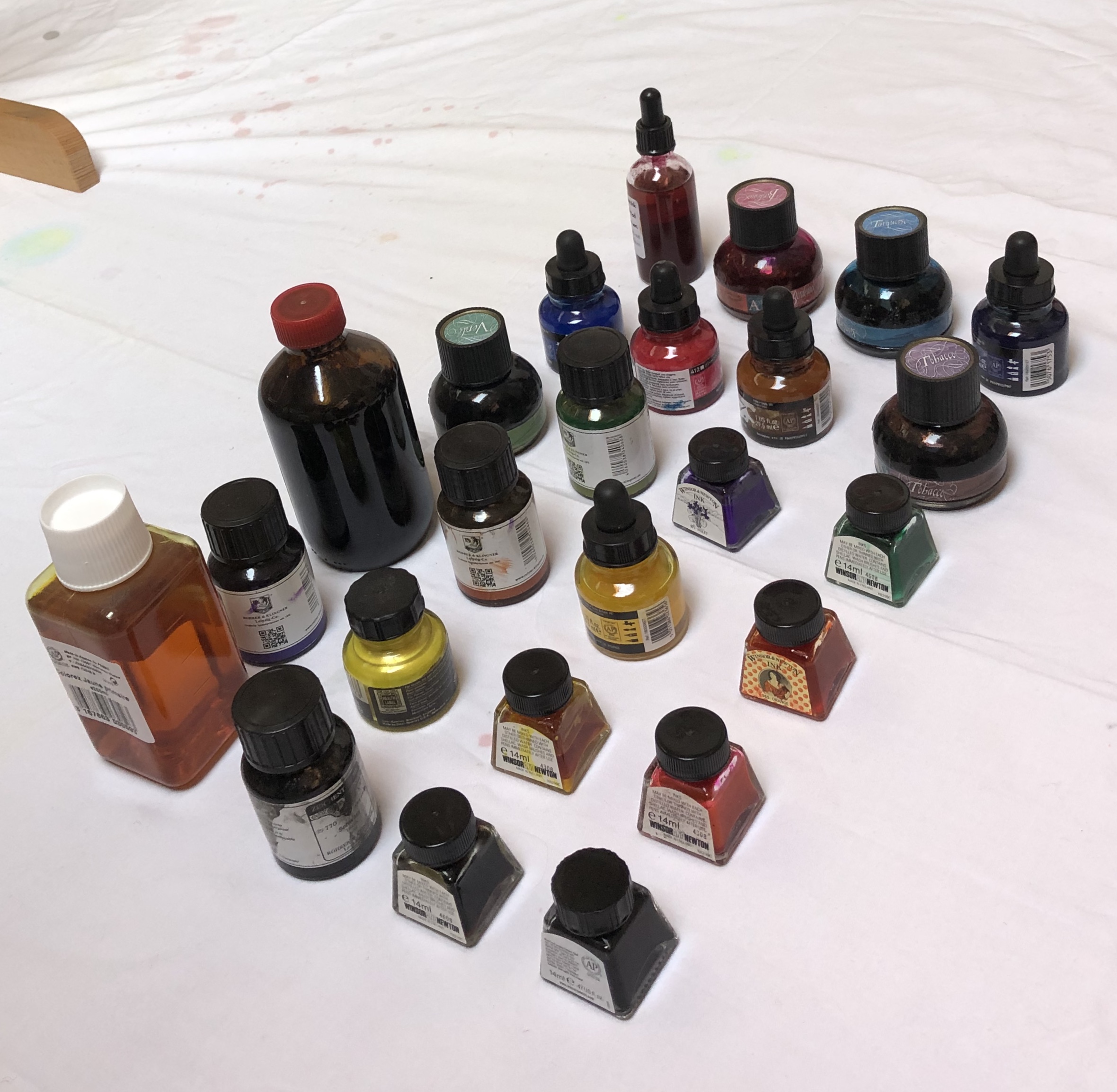
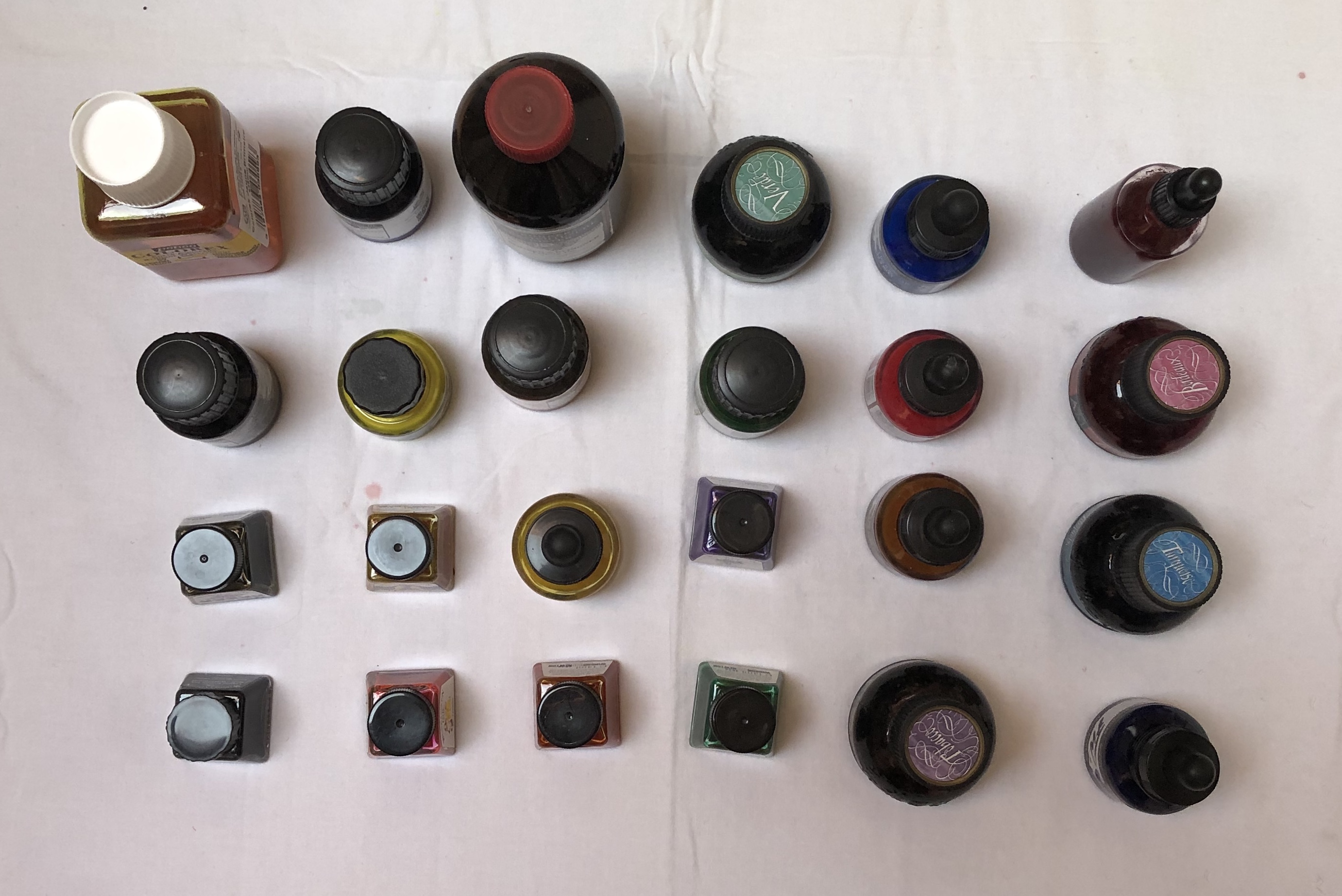
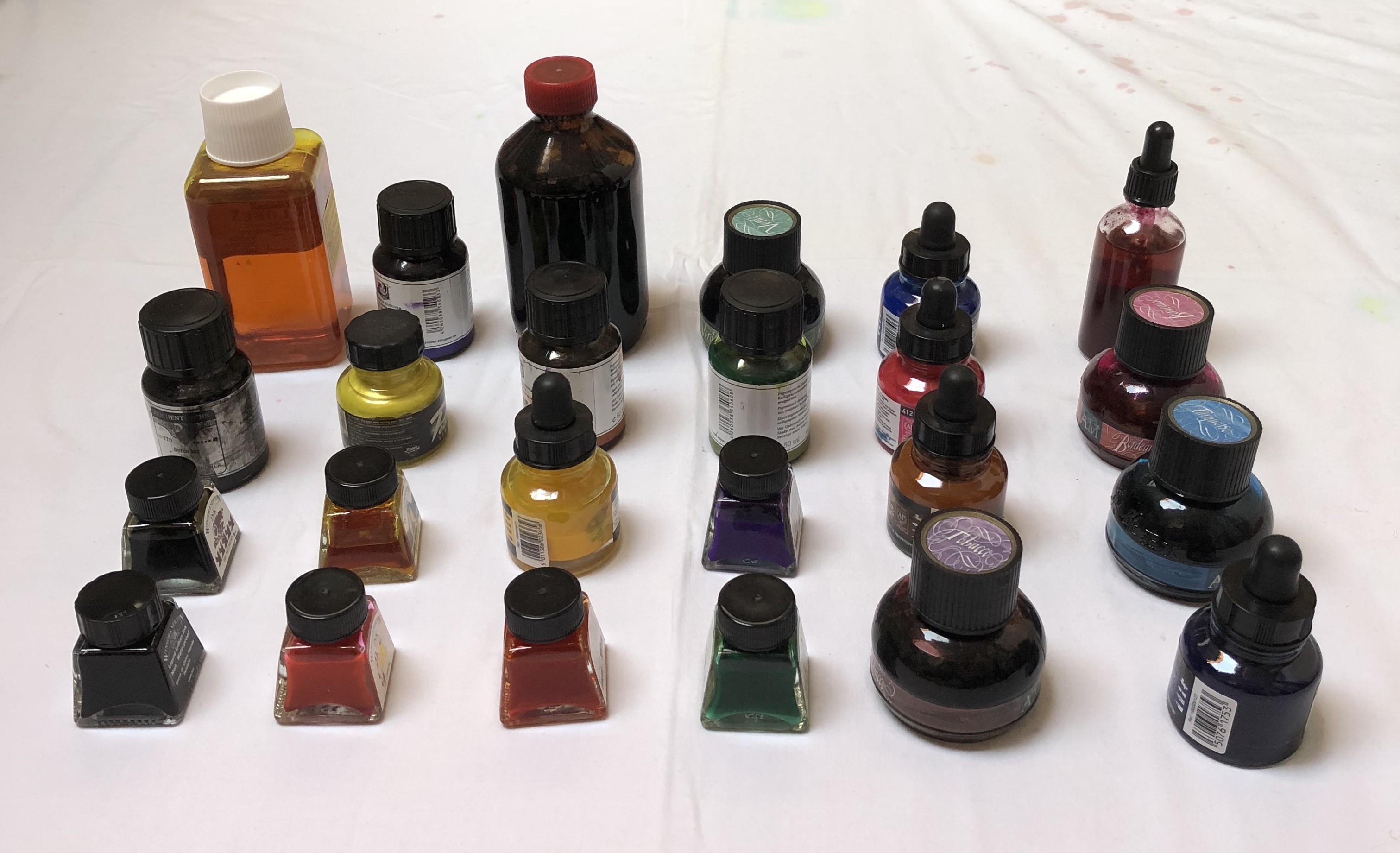
  • SO WHAT?I made a grid arrangement of bottles of ink on a white surface and photographed them from different angles:
page4image46358784

NOW WHAT?

I intend to use these images as part of my reference material for the Exercises in Part 2.

****************************************************************************************
WHAT?
I looked at the work of Tabitha Moses, particularly on her own website, www.tabithamoses.co.uk​. Her collections are of sometimes unusual objects – article by Alex Michon (quoted on the above website) describes her as “a rag and bone archivist of the peripheral.” Her work often relates to her own experiences, either personal or her professional research.

SO WHAT?

Having been for a rather painful blood test this morning resulting in several punctures of the skin, I was interested in her section of work looking at the skin as a threshold, which derived from her discussions with eczema and psoriasis sufferers.


After studying “​itchy
and prickly painful”,
2012, calico, sawdust,
blackout fabric, plastic,
thread, entomology
pins from her
Threshold: The
sublime skin 
​series
(see website), I
decided to use a piece
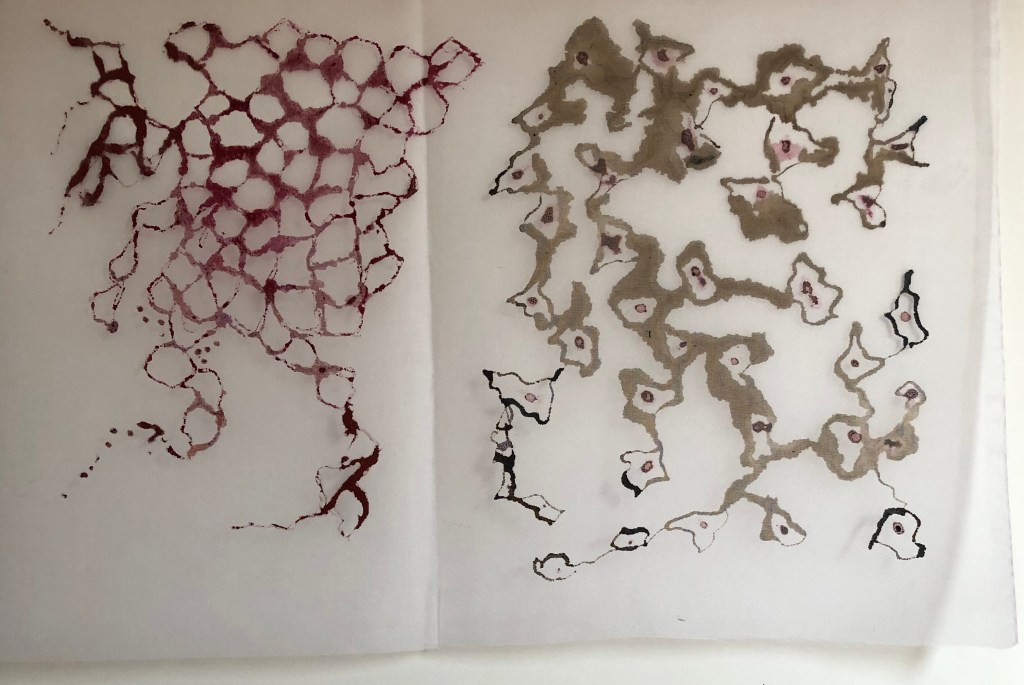
of silk as a threshold and explore painting on to it with various media. The silk was loosely taped onto a glass table.

– Dr Ph Martin’s liquid watercolour, Indian Red, applied with the bottle stopper, gave a lovely blood-like gloopy appearance when applied – very satisfying. It sat on the surface for a while, gradually seeping in and spreading and eventually drying looking disappointingly less dramatic

  • –  FW acrylic ink, sepia, again applied with the dropper, began to penetrate the surface straight away, quickly spreading – it only “blobbed” and retained clear lines where the silk was not touching the table
  • –  Handmade natural dye pigment ink (Cochineal Red), dropped into the shapes drawn with the sepia acrylic, above, behaved very differently – it seemed repelled by the silk surface, I couldn’t draw with it, it just sat on the surface in droplets. Ithas only soaked in in a couple of places (where I think the acrylic solvent has undermined it), and has dried to an unappealing yet very convincing resemblance to clots of dried blood. Nice.
  • NOW WHAT?I have learned that:
    – a collection can be of quotes around an idea or situation – it doesn’t have tobe of actual objects
    – there is huge scope for investigation of a concept, eg. the effectiveness of asupport as a threshold

***************************************************************

WHAT?

I looked at the work of Paul Westcombe on ​www.paulwestcombe.com​ and also on www.saatchigallery.com​. His ideas are inventive – to create a work of art on something usually considered “throwaway” like a paper cup or a ticket, i.e. to give a value to something otherwise valueless (although the saatchi gallery suggests that this is actually not the significance and his work is simply a demonstration of his compulsive need to draw) – and the pieces are colourful and inviting to the initial glance, although his subject matter did not appeal to me close up.

SO WHAT?

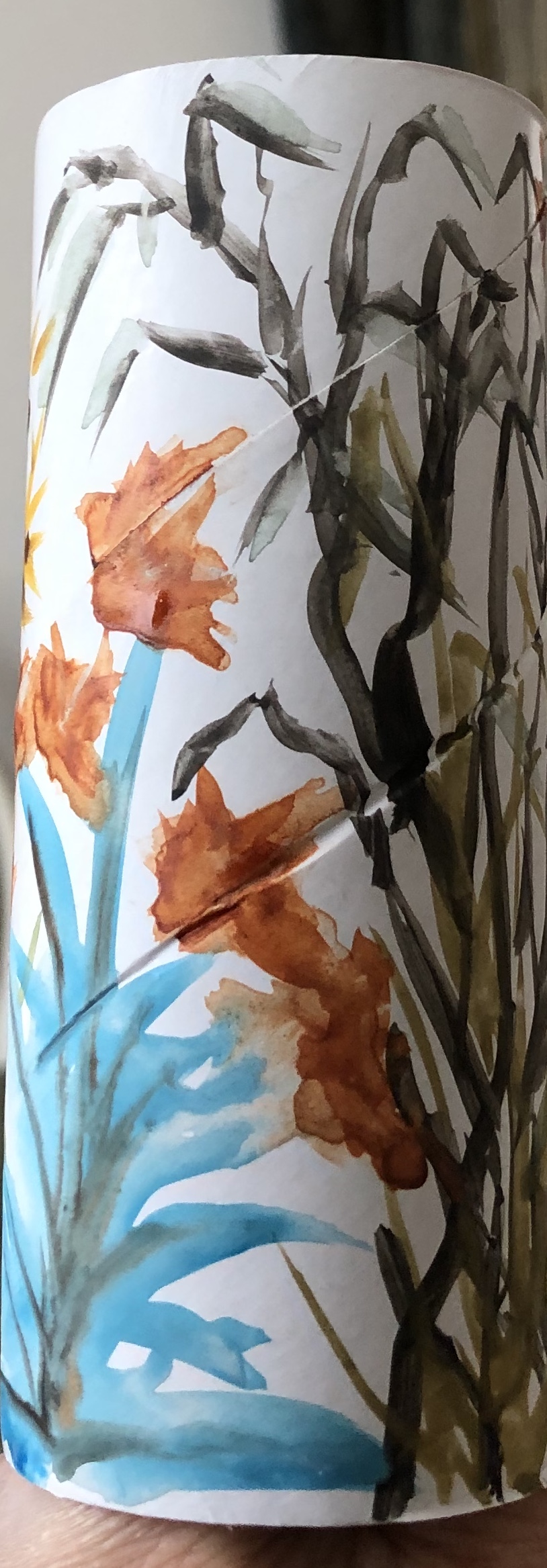
Wasn’t quite sure how to respond to this apart from the obvious – only had a cardboard roll to hand, so tried a quick design on that of plants in the garden with leftover gouache paint in my palette plus raw sienna and burnt sienna watercolour.
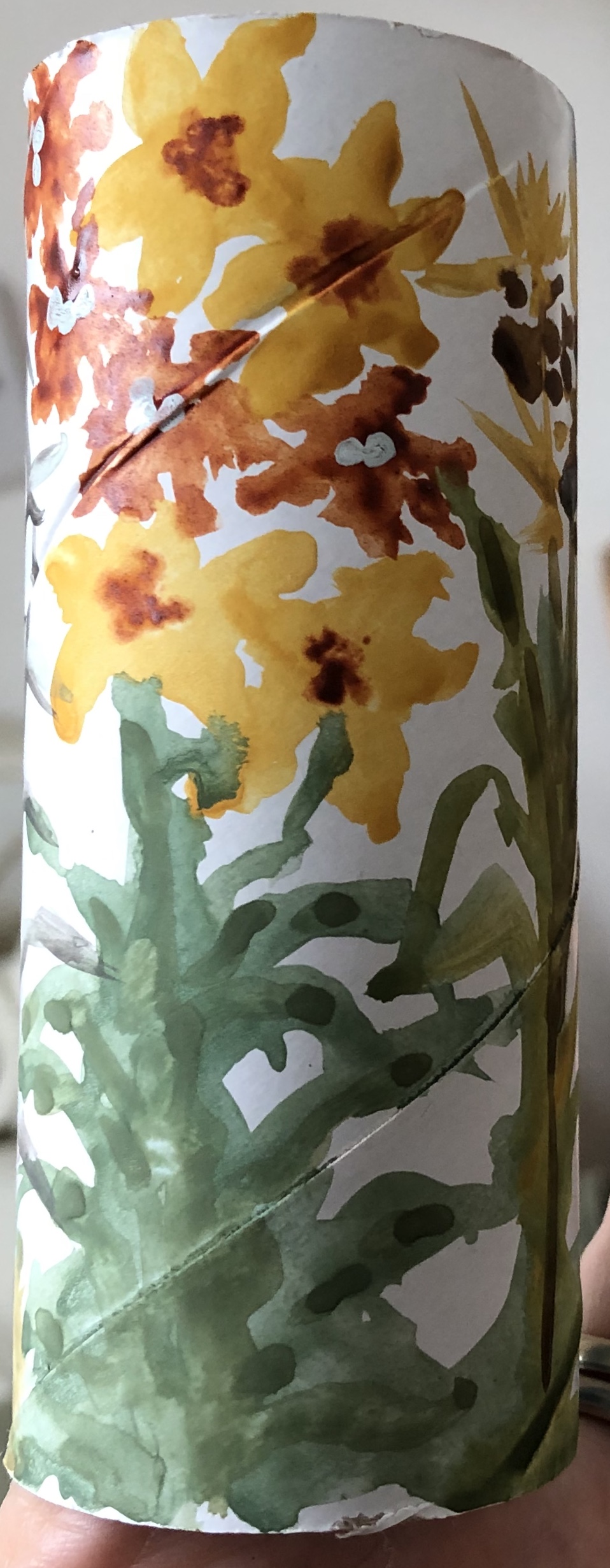
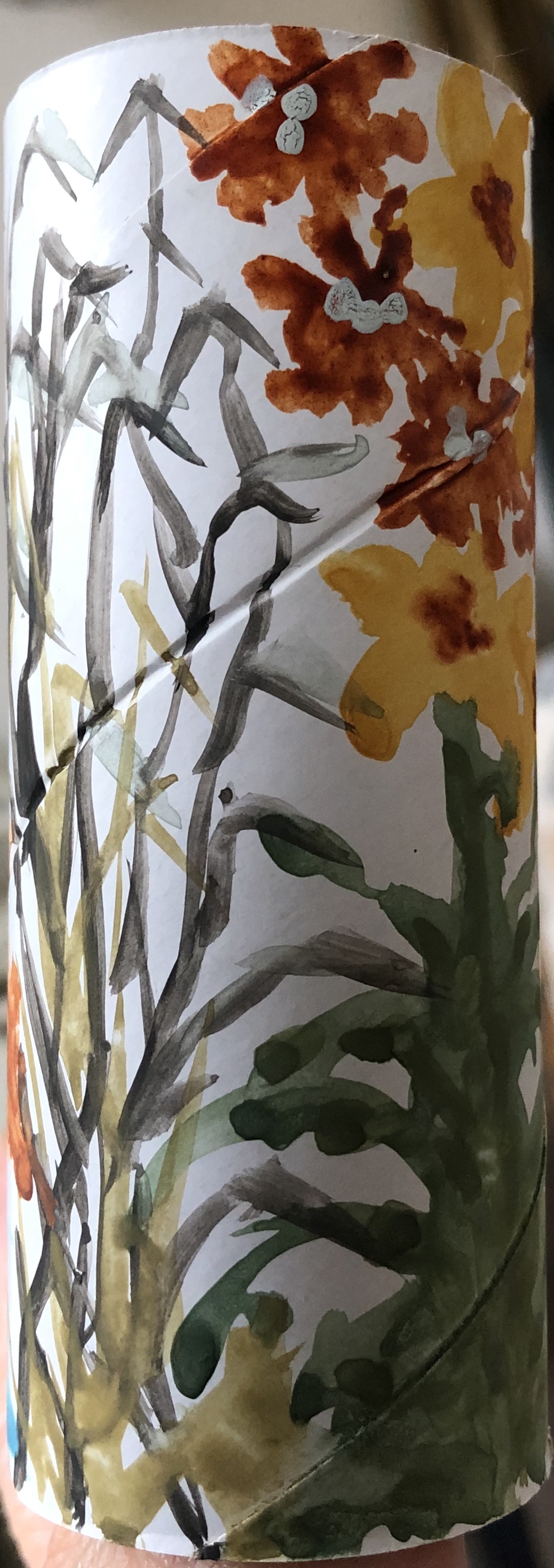
My design was very adaptable to that tricky part of painting round a cylinder, i.e. meeting up with where you started – and hats off to Paul W, he was doing figures telling a story of sorts on a truncated cone, so he must have developed a technique for dealing with that.
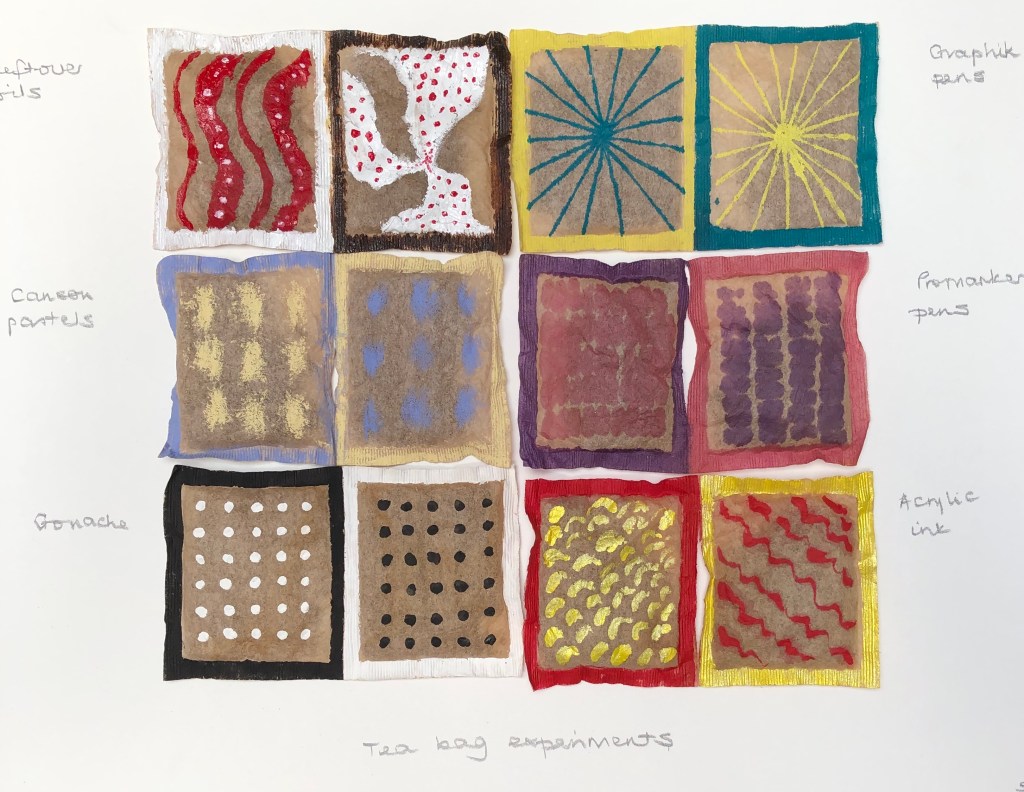
Also had some old dried used teabags (still containing tea) so tried a design on those (using various media – oil paint, Promarkers, Graphix pens, soft pastels, gouache and acrylic ink)….but felt I was playing around with random detritus because I had to.

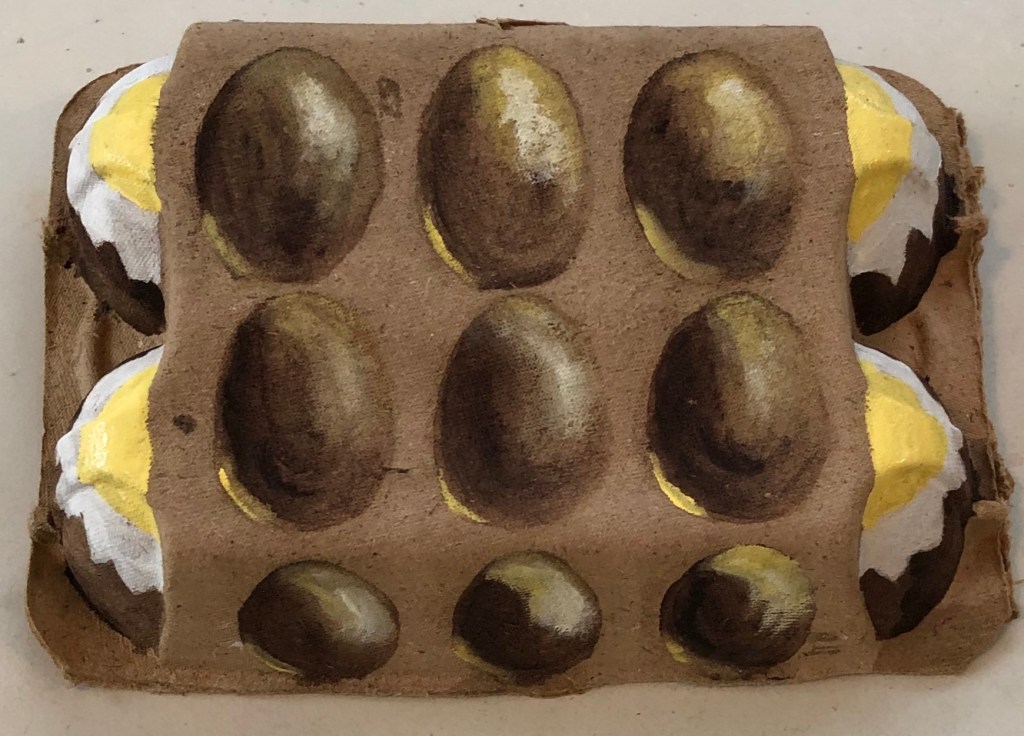
Had a bit of a breakthrough with an empty eggbox though which I was just about to put out for recycling – decided to paint eggs on it – using egg tempera (what else?!) using white, Naples yellow and Vandyke Brown. It is rather surreal (my husband says it’s “a bit Dali”…not sure if that’s good or not), but I was pleased with my eggs which are reasonably 3D – it is displayed on my shelf.
NOW WHAT?

I have learned….
– I’m potentially going to struggle with the “off-piste” aspects of this Part – it’s not apparently in my nature…or rather, it feels a bit like the sort of thing I would have done with the children back when I was teaching, and therefore not proper “Art”. Guess I need to loosen up a bit and let go – I did enjoy the eggs, so it can be done.

******************************************************************************************
WHAT?

I looked up the ​Ornament​ exhibition held at the Transition Gallery in Huntergather, London, Oct-Nov 2013, and found examples of painting on handbags by various artists, including ​Cathy Lomax​ and ​Alli Sharma.

They have all painted to the theme of handbags as part of female adornment, whereas I decided just to experiment to see if I could actually physically paint on a handbag, and how this might be done.

SO WHAT?

After a recent sort-out we had a few bags which were designated for Oxfam – including one small leather/leather effect handbag (not sure which) – so this was my experimental support. The surface had a kind of raised floral chasing, so I decided to try and create some fantastical and shiny flora, in the style of Raqib Shaw (not following the existing chasing). I picked acrylics for robustness when dry, choosing some old Chroma acrylics as they were fairly liquid – this way I thought I would be able to apply them easily undiluted. I wasn’t sure if I needed to prepare the surface with gesso or something beforehand, so just went straight in and tried applying the paint so see if it would stick; and it did. It sunk into the surface a little but not too badly, retaining most of its wet colour.

Pleased with this, I thought I would go the whole Raqib-Shaw-hog and add sparkle – the gold acrylic ink stood out much better than the silver watercolour silk ink I tried, but even that showed up reasonably, although better when applied over the top of the dried acrylic paint.

NOW WHAT?

I have learned:

  • –  Making up doodly out-of-my-head images is not a strength, I am better at painting “something” defined – my foliage and flowers are more folk art than fantastical Raqib Shaw.
  • –  I should not dismiss supports other than paper/board/canvas as too difficult to try painting on.
  • ******************************************************************************************* WHAT?
  • Julian Walker​ has made some interesting collections. I thought his:
    Detail from Collection: Acts of Faith​​ by Julian Walker(Series: Living with medical science)​, 2003object, Hand-carved pills, glass and board Medicine Now (Permanent exhibition) 2015-16
    Wellcome Collection, Londonwas fascinating – he has taken all sorts of
    pills and carved into them the part of the body they are intended to fix (based on a

medieval doctrine that the efficiency of a medicine depended on how closely its shape resembled that of the ailing body part). Appealed to me, as the taker of many pills!

I also enjoyed his site-specific collections, such as this example:
Collection: Norwich Street
A site-specific installation for the offices of Macfarlanes,

10, Norwich Street, London EC4
Joint First Prize-winner in the 2002 Art & Work Awards
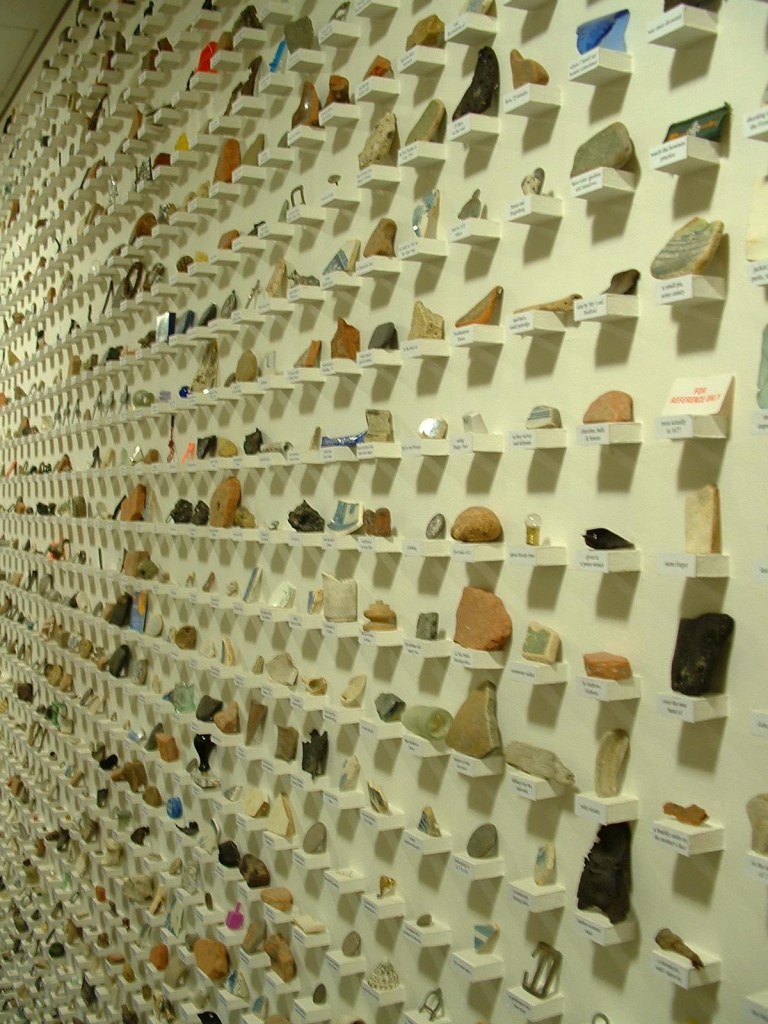
He has taken ordinary everyday objects and turned them into a work of art by his meticulous

arrangement.

SO WHAT?

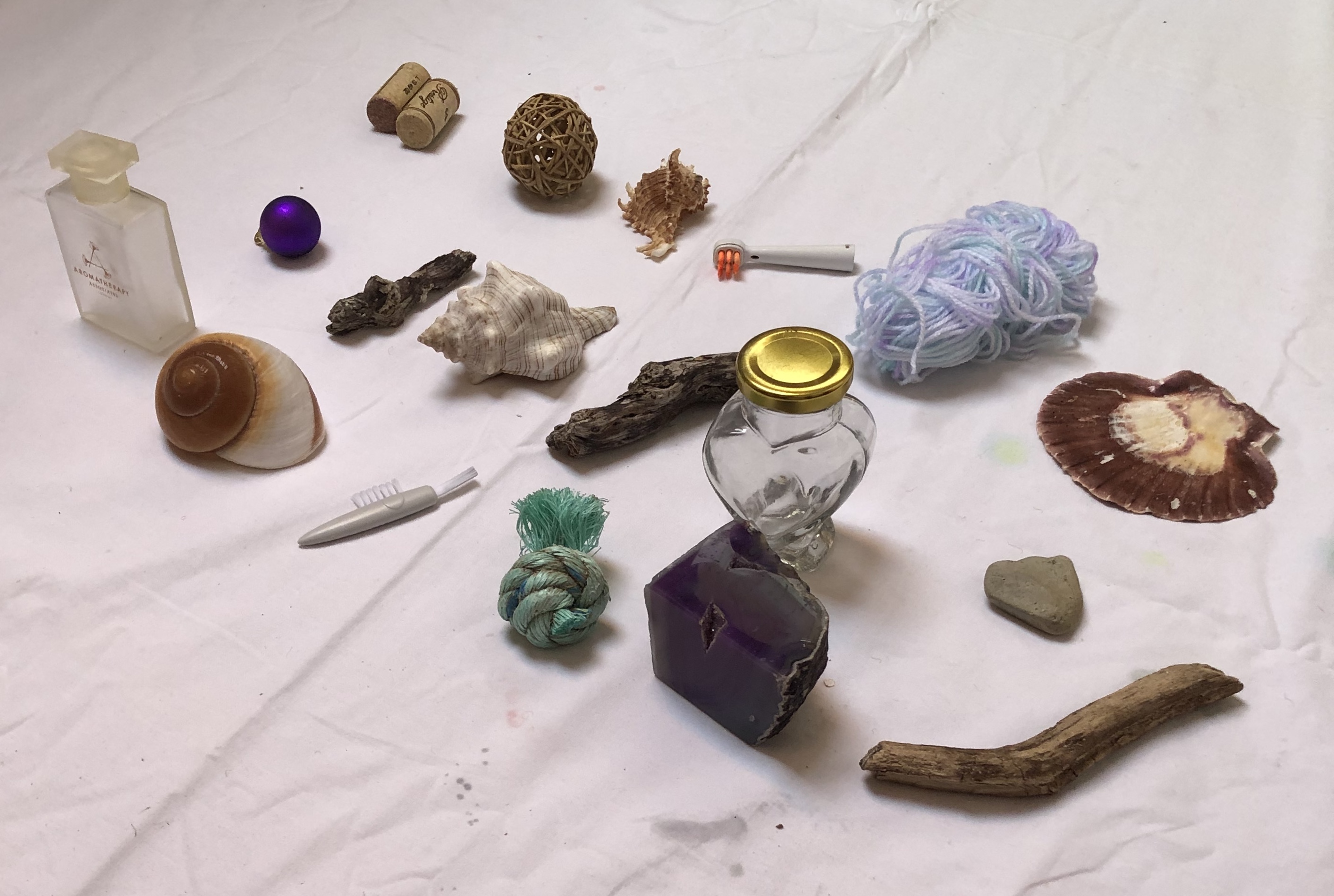
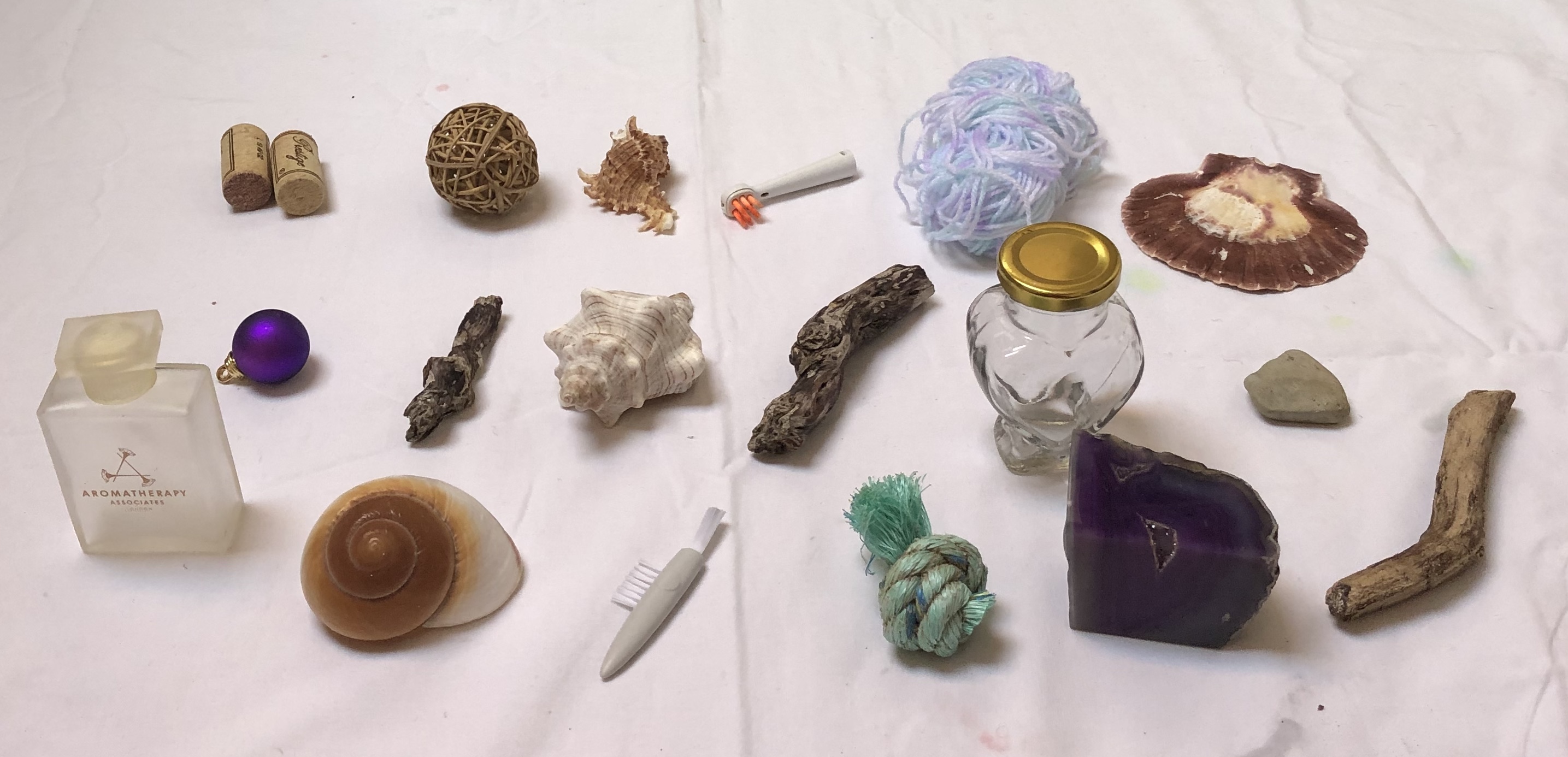
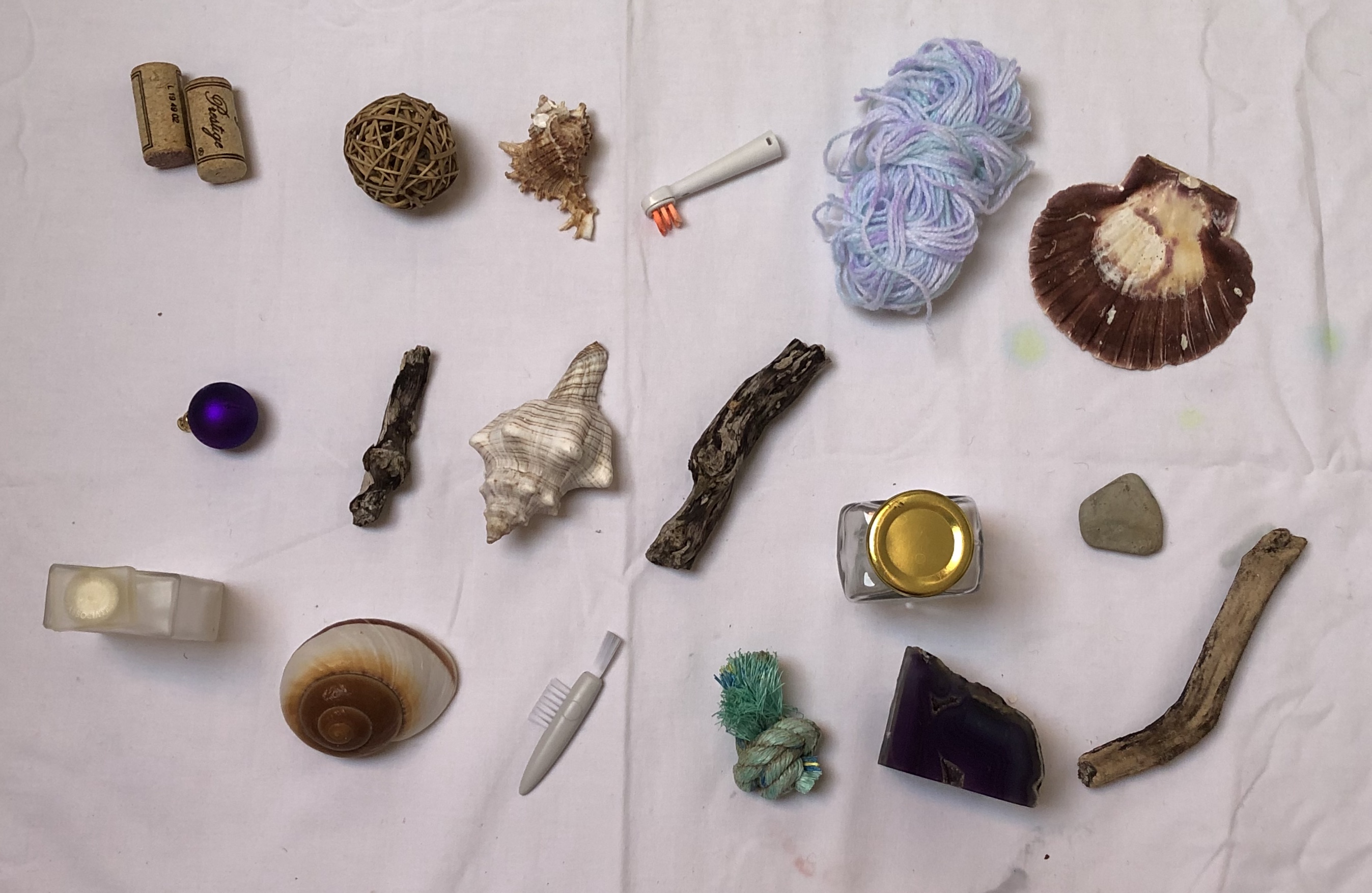
I laid out in a grid and photographed some objects from my drawer of bits which I fondly imagined I would use as props for drawing or painting one day. To make it more Julian Walker-ish, I would (a) give the relative placements more thought (as to what went beside/above/under what) and (b) consider something to make each component individual as well as part of a whole, e.g. a label with place of finding, or a quotation from a poem….possibilities are endless
NOW WHAT?

– This whole “grid” mentality is interesting…I am a very organised person and it is second nature to me to arrange things tidily in grids…..so the ​making​ of grids from collections of things is going to be my ideal…..but on the other hand, I am rather an impatient painter, and am aware that I can be a bit “right, done that, what’s next?”. Painting a few things as a collection in a grid should be fine (e.g. the paint tubes and bottles in the ​Lisa Milroy​ section, above)…but will I become a bit frustrated with a bigger collection in one picture? I thought back to the 20-piece work I did for Assignment 1, but my interest was maintained throughout that by the fact that each individual picture was very different. Self-knowledge can sometimes be an unsettling thing….

**************************************************************

WHAT?

I looked at several of ​David Dipre’s ​paintings online, particularly on www.saatchiart.com​. His favourite subjects are portraits, including self-portraits, with heavy impasto brushstrokes.page11image46294592

SO WHAT?

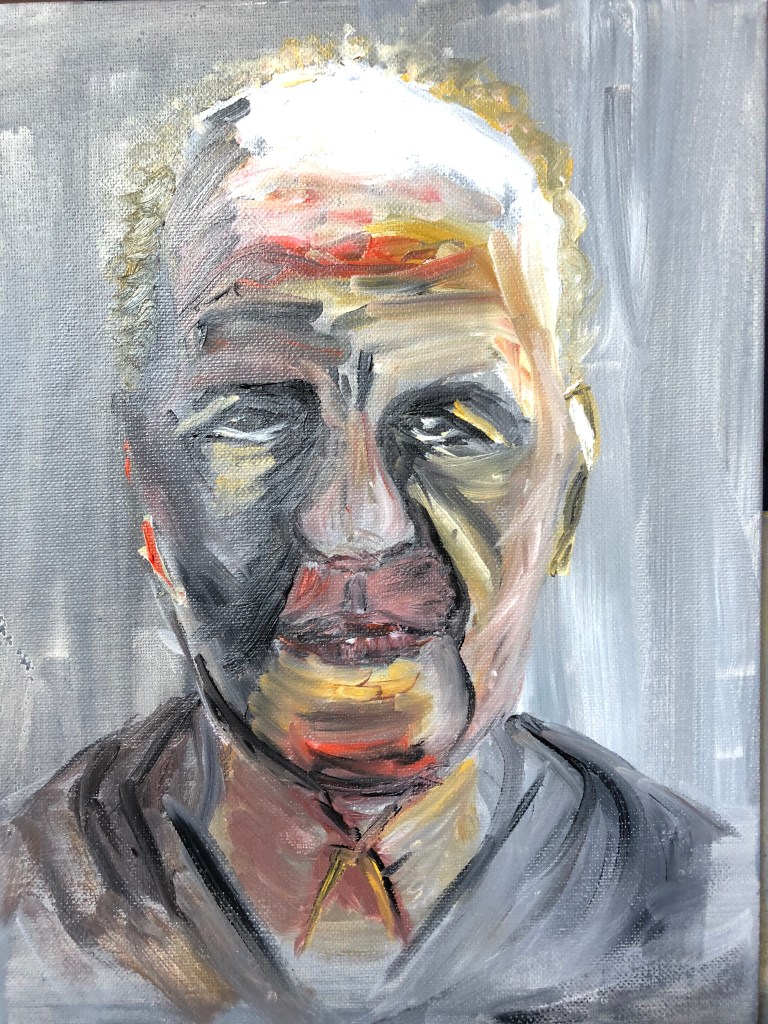
I had been studying the work of Frank Auerbach and, as part of my practice reflecting on my tutor’s feedback on Assignment 1, I had tried an oil portrait of Auerbach painted only from a drawing (​see separate blog post).

I decided to use this painting as a basis for a new painting in the style of David Dipre. My support was a small thin wooden pot (previously used to hold a Camembert), and I wanted to paint the right-hand side of the face (as you look at it) onto the side of the pot so that you had to turn it to get the full image.

I used acrylic paint in a limited palette of three colours (roughly based on the Zorn palette work I had also been doing as part of my “feedback” action points) – Payne’s Grey, Burnt Sienna and Cadmium Yellow. Using a springy palette knife I applied the paint thickly and quickly, going more for an impression than a faithful representation.
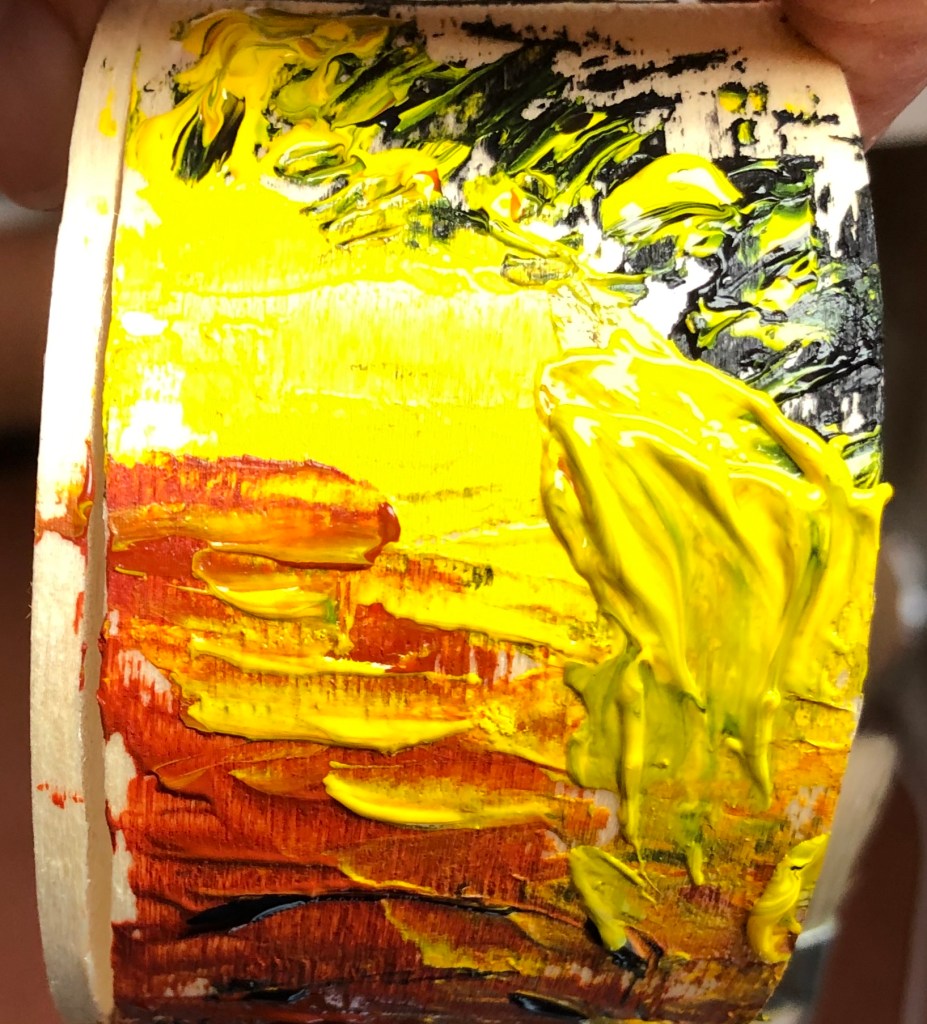
This is the start – top of the head and hair, moving down to forehead wrinkles…..
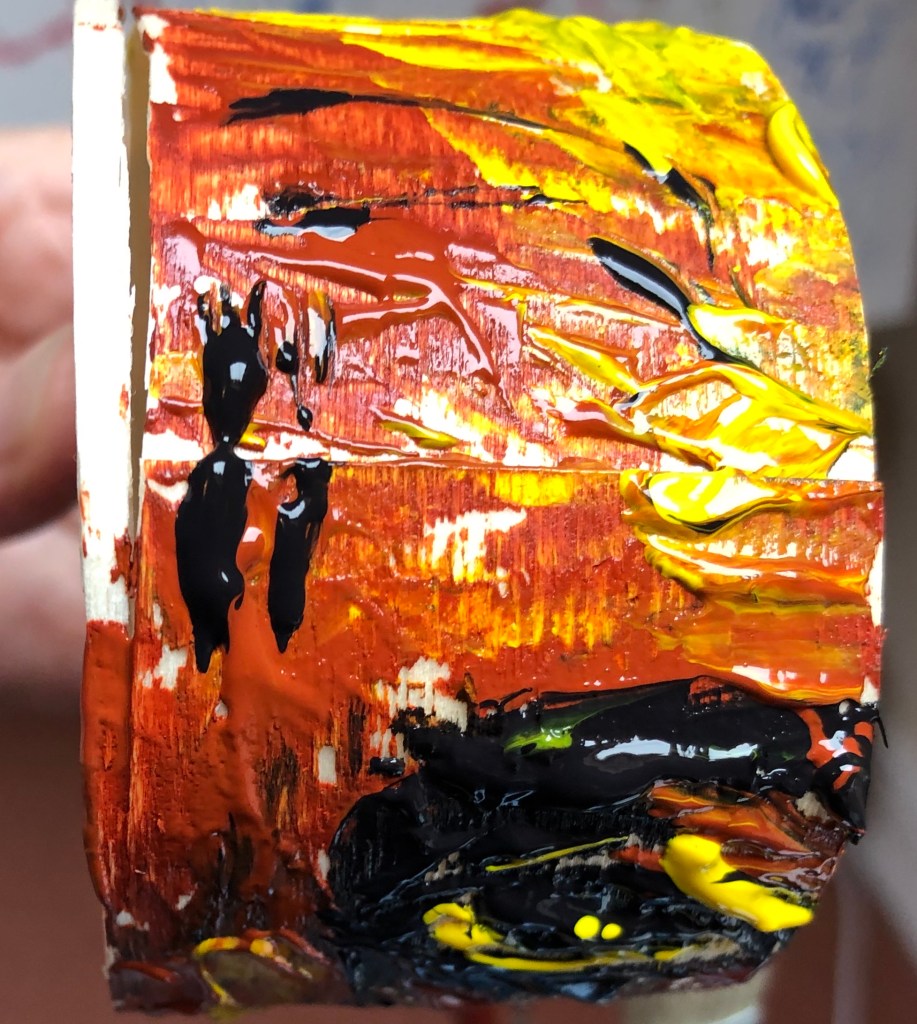
down to eyebrows and mid-brow furrows…
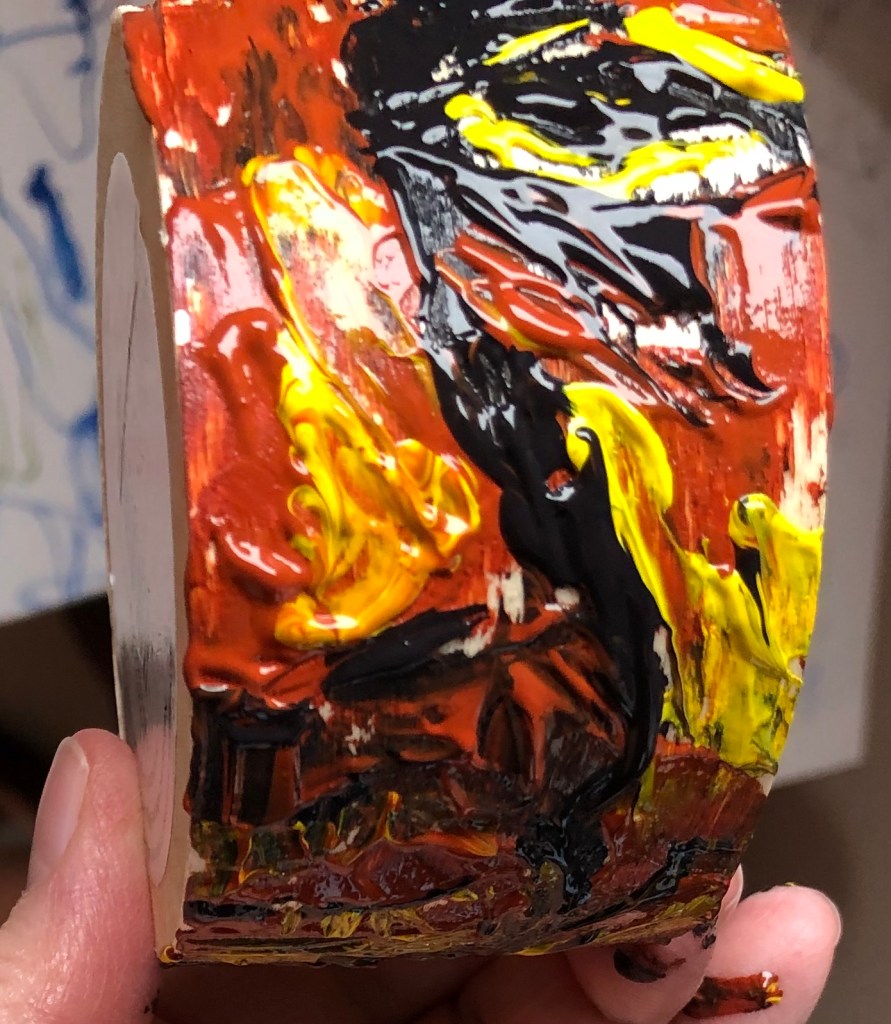
…..eye and nose….
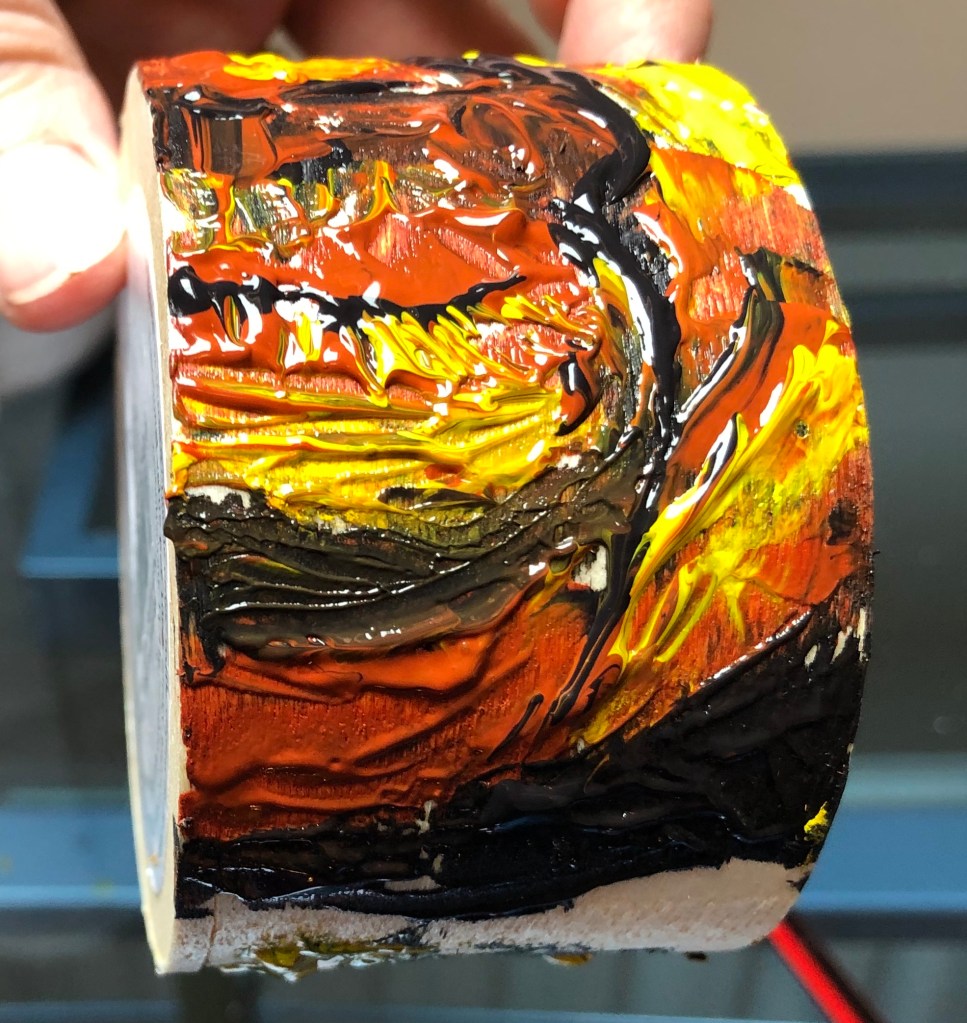
…..mouth and chin – you can just see the start of the hair at the top of the head starting again at the bottom.

Some bits went well:

  • –  Enormous fun
  • –  Eye and nose
  • –  Overall placement, i.e. it filled the space and was reasonably wellproportioned ….and some less well:
  • –  Mouth and chin
  • –  Green hair (grey and yellow mix)
  • NOW WHAT?
  • –  I’m gradually getting into the idea of painting on non-traditional supports – am starting to look around my studio and think “Hmm….wonder what it would be like to paint on ​that…..”
  • –  I have been trying to make paintings being ​decisive​ and ​economic​ following my feedback from Assignment 1. “Decisive” is going well and I am feeling bolder about making bold marks. “Economic” is going less well, for two reasons:
    • –  In trying to loosen up my mark-making I have got into a “go for it” trance-like mode, when I’m in the moment and almost instinctive rather than thoughtful – it all has to happen ​now
    • –  I’m aware of the above and I have tried to make myself pause, step back and take note, when I’ve completed the image if not before – but when I’ve done so I’ve found a “decisive” mark which I don’t like, and am then in a dilemma as to whether to let it stand as honest and authentic, or sort it out, which is when I fall to tweaking and fiddling and trying to wipe bits out and the thing becomes a bit of a mess and decidedly ​un​-economic.Not quite sure how to sort this out…more practice…? ******************************************************************************
  • WHAT?
  • Lee Edwards’​ work is quite wide ranging, but I particularly enjoyed his little figures emerging from wood, e.g.“Fades to memory”
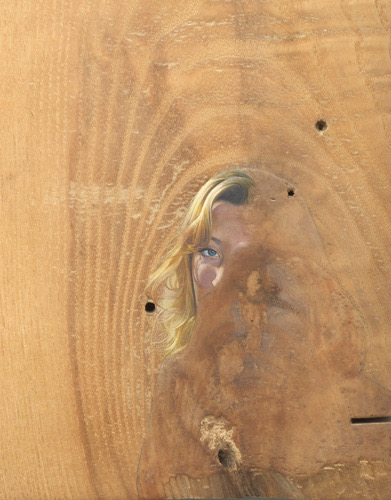
2011
Oil on oak
18 x 15 x 2 cm
seen on his website, ​www.leeedwardsart.co.uk

I like the way he has used the pattern of the support as part of the image, almost as though his figure were conjured up like a genie from under the surface.

SO WHAT?

Seems a bit of a trite connection, and I do want to try painting using wood like this for a support later, but for now I had just received a few tiny pots of Humbrol enamel paint – so was looking for a tiny project to try them out. An interesting cork from a wine bottle was my support, and I applied my paints using a rigger. The paint sticks well to the surface, but really doesn’t do well mixing with water and I got my brush into rather a mess and had to find some turps, which I hate, at the back of a cupboard to get it clean (I have ordered some Zest-It as I enjoyed the vibrant colours of the paint and want to experiment with it more).
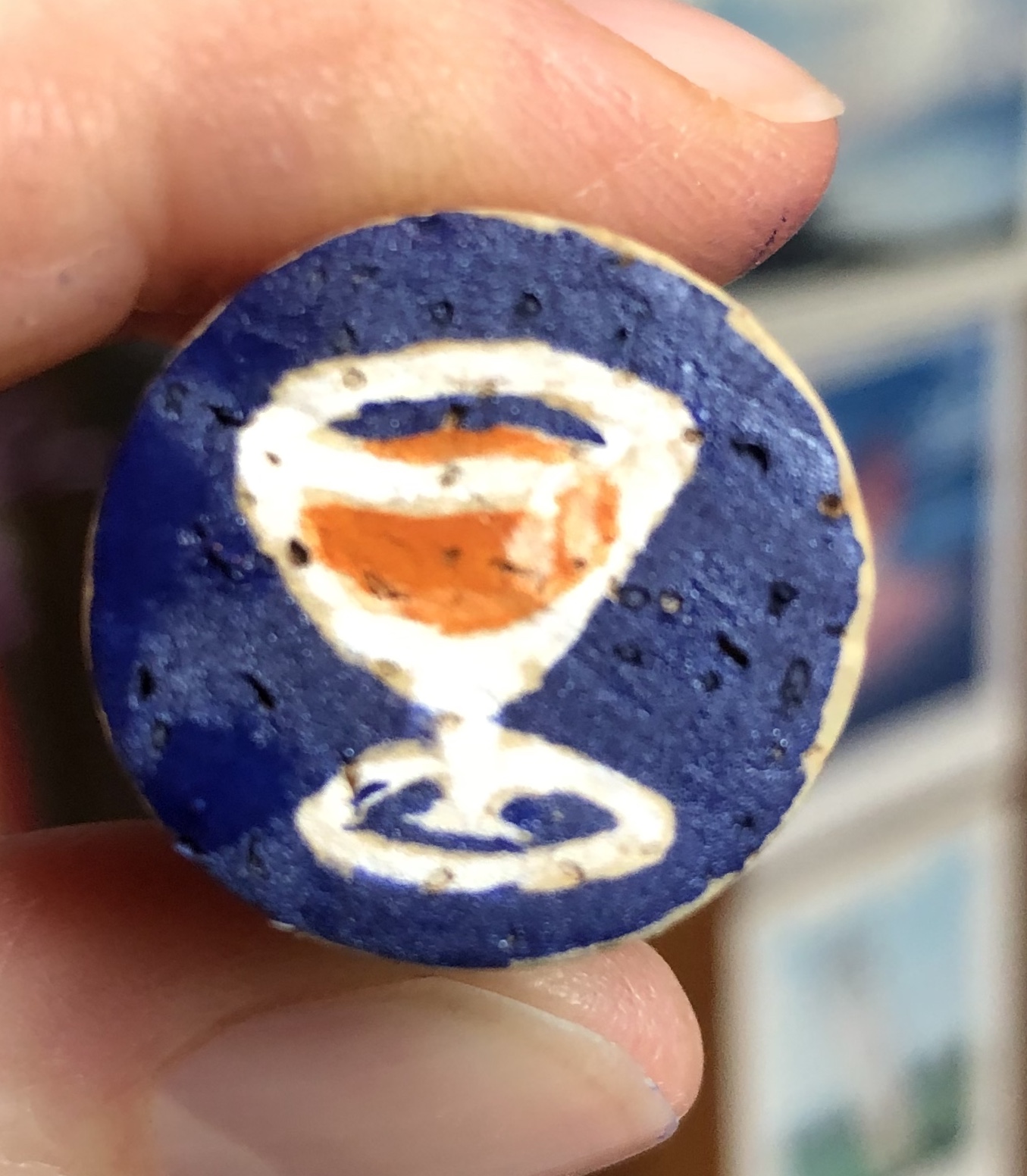
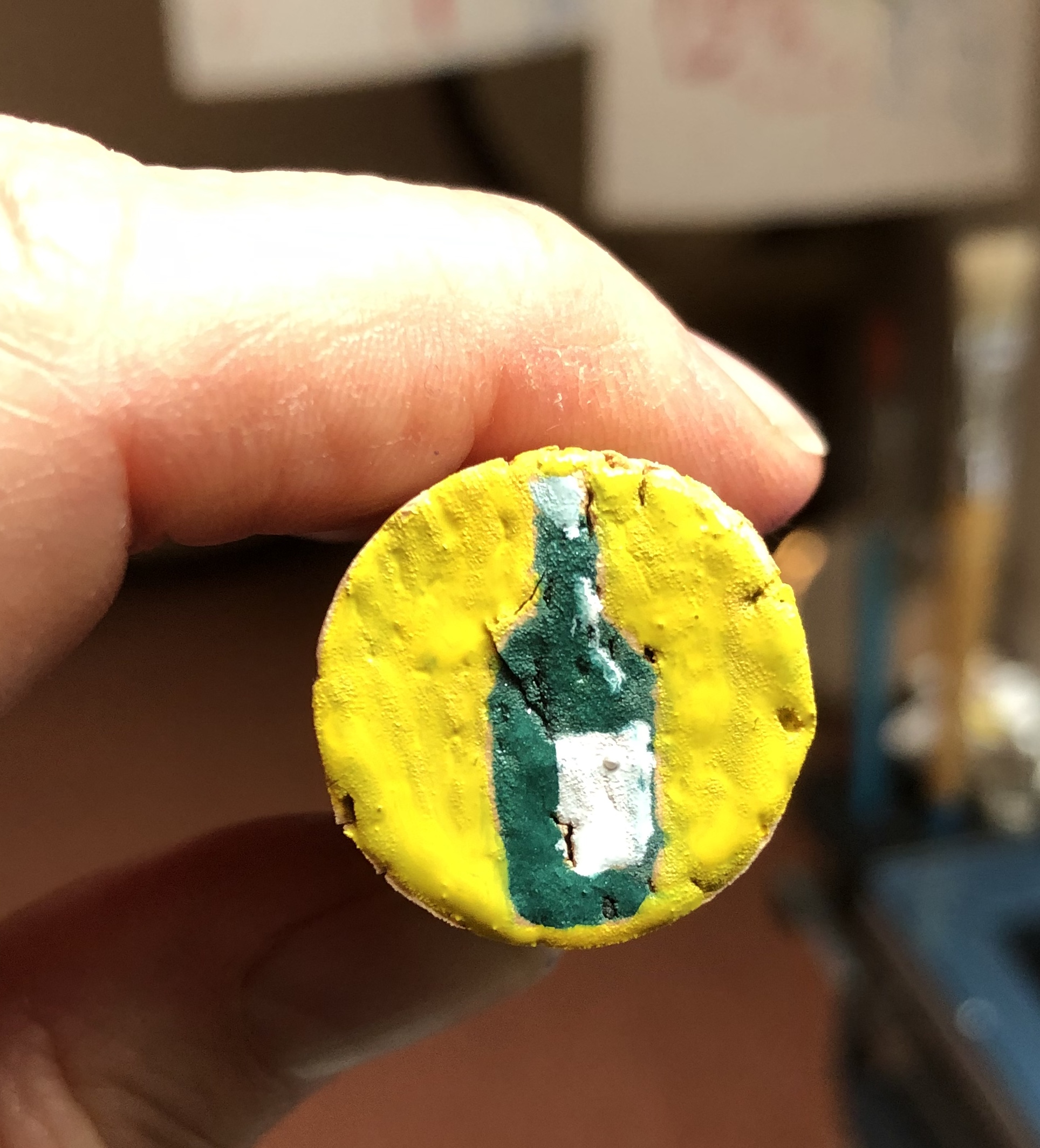
NOW WHAT?

– Well, painting as small as this certainly makes for decisive and economic mark making! – The enamel paint has a solid opacity to it

which I find pleasing – it’s a bit like liquid gouache or runny acrylic. I have bought a small and quite random selection of matt, gloss and metallic finishes, so will be interested to play more and see if I can tell the difference once the Zest-It cleaner arrives.

– The paint is quite smelly which might prove an issue for me personally due to my asthma; however, I have been attracted to the enamel paint pictures by Raqib Shaw who does get some very vibrant effects, and I hope to be able to achieve something working towards his style (if much less detailed and intricate!).
Immediate reflections on Formative feedback – Assignment 1

Overall comments…

  • Really glad my tutor found the images to be a coherent whole
  • I can see what my tutor means by saying I could have pushed aspects like tools, gestures and grounds further – I did get a bit buried in working in the original artists’ styles and lost sight a bit of the main focus of my learning – although I think I did learn a lot from trying all those styles (just possibly not what I was supposed to be learning!)

Feedback on assignment….

Demonstration of technical and visual skills

Quality of outcome

Demonstration of creativity

  • NEXT ASSIGNMENT: note to self – make own work, not derived from other artists – use what I learn from them to create something completely my own

Sketchbooks….

Demonstration of technical and visual skills

Demonstration of creativity

  • I need to get some tone into my continuous line drawings, which are MUCH better when I keep them loose and flowing and don’t fall into my fussier default of broken scribbly lines
  • In other words, have confidence in my observation – look carefully, make bold clear lines – decisiveand economic are the watchwords
  • Think tone! – clear and unfussy

Research….

Context, reflective thinking, critical thinking, analysis

  • Interesting that tutor recommends “research into painters’ drawings” (my italics) – I have so far in Drawing 1 done drawings as ends in themselves and not really thought in terms of drawing for painting
  • I will practise drawing, adding tone, and lifting out with a rubber so that I can see how to be decisive and economic with my brushstrokes
  • See further blog posts for this work

Learning log…..

Context, reflective thinking, critical thinking, analysis

  • Need as a bit of a priority to look at colour mixing – will follow up guidance given. My experience thus far, prior to Part 1, was with watercolour, and a lot of mixing on the paper by dropping colours in – I do need a system to help me be more organised using a palette.
  • Tutor makes the point that I am not consistent in looking back to my learning points and using them….I was aware of this as a problem in Drawing 1 where I would hop from thing to thing; have tried to get better and follow things through, but obviously haven’t achieved this sufficiently.

SO, IMMEDIATE ACTIONS:

  • Look back over my evaluations to understand what I haven’t taken forward enough
  • Work on palette and colour mixing
  • Research recommended artists
  • Introduce tone to my drawings
  • Be more experimental with tools and materials
  • Remember: decisive and economic

Painting 1; Part 1; Exercise 4 – Look at what you see, not what you imagine

WHAT?

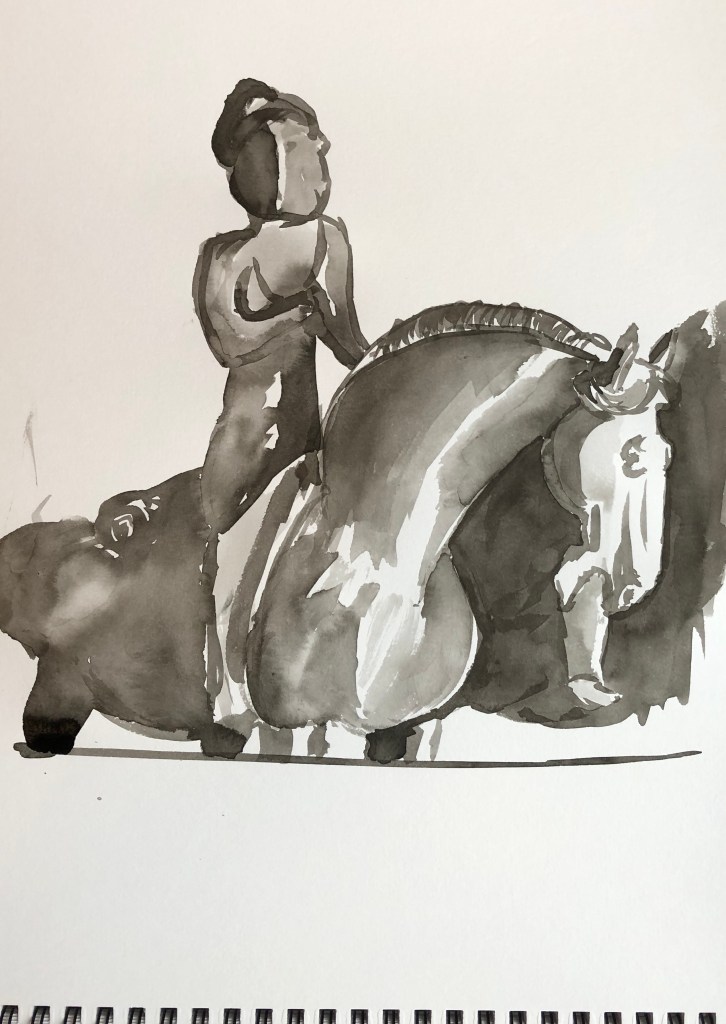
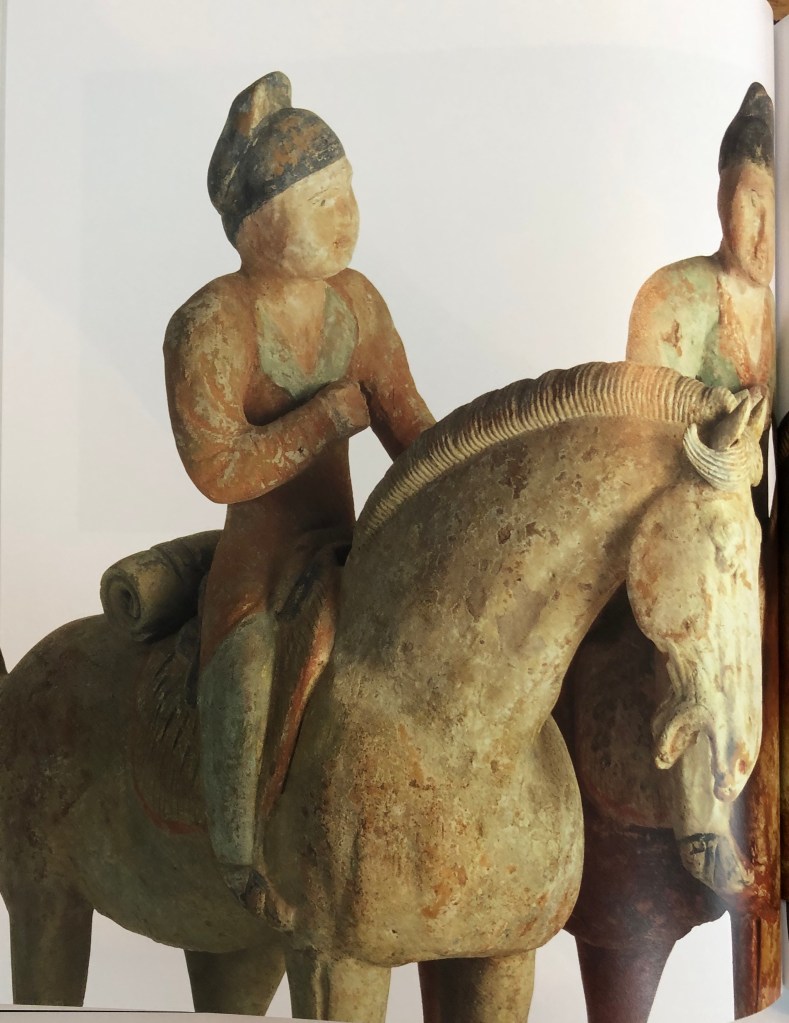
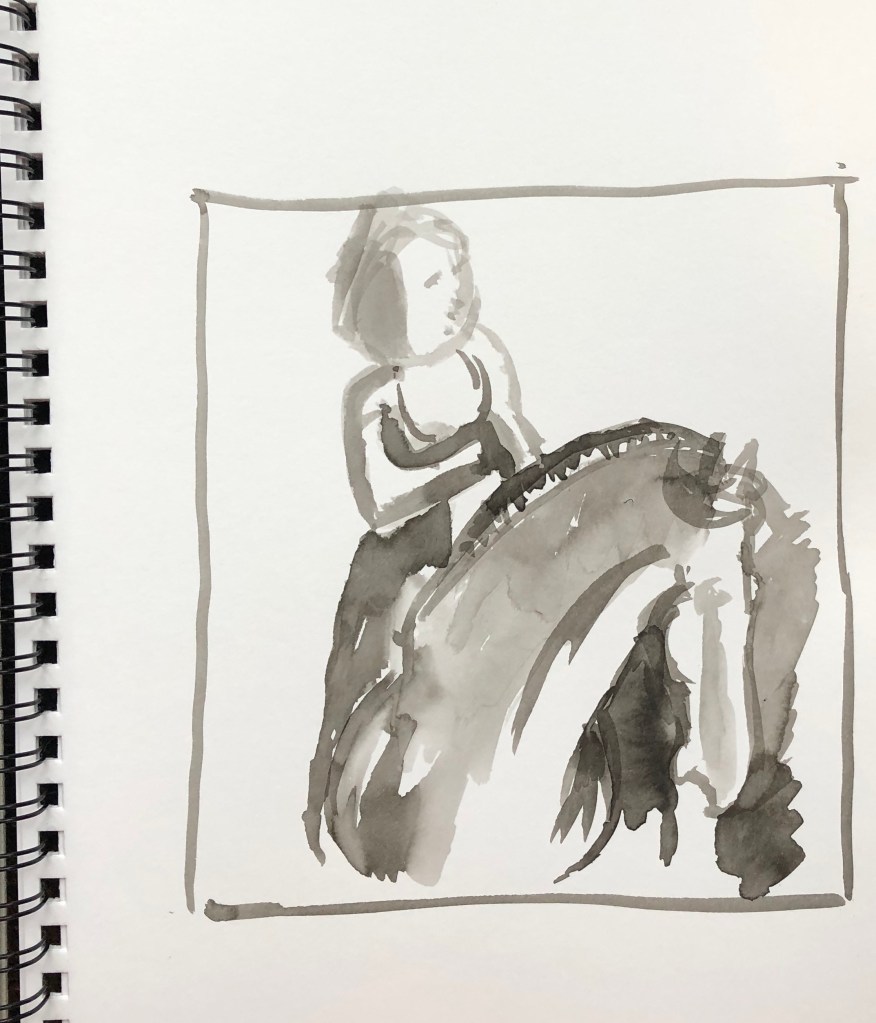
I chose an image of some Chinese pottery from the Compton Verney collection; I am interested in pottery and also Oriental art; as in, it intrinsically appeals, rather than knowing much about it. I focused on the left hand horse and rider for my 10 min upside-down drawing. The notes suggested I choose a different found image for the 20 min painting but I wanted to try and get this right, so stuck with the same picture for both.

SO WHAT?

I chose to use Chinese ink, partly because it seemed appropriate to depict a Chinese stimulus, and also because I am very familiar with it and felt it would be a medium that would respond quickly to a timed task. I used a size 6 round sable.

For my 10 min picture I drew myself a quick frame in my multimedia sketchbook approx the relative dimensions of the photo. I found it a bit discombobulating working upside down and decided to detach myself completely from the “meaning” of the image by painting in the negative spaces – however, I was conscious of working to a time limit and made some errors in placement which threw me out rather.

I therefore decided to stick with this image for the 20 min task, and worked a bit larger, in A3. I must confess to putting in some light (dilute) guiding lines to help me with my bolder wash areas, and I think this has allowed me to have more success in detailed areas like the horse’s head, ears and mane, where I got muddled previously. I managed to build a few washes to create form but would have developed this more had there not been a time limit.

NOW WHAT?

I have learned that:

  • This is quite a liberating technique for subjects where one had a bit of a mental block – I’ve always said I can’t draw horses to save my life, yet this is the best horse I ever done (even though it’s pottery)
  • Using negative space to define shapes only works if you really take the time to look; “slapdash” approximation doesn’t work
  • This exercise confirms my choice of ink as a good medium for rapid tone and form building as it dries so quickly, allowing you to apply the next layer within minutes

Painting 1; Part 1; Exercise 3 – Quick and focused

WHAT?

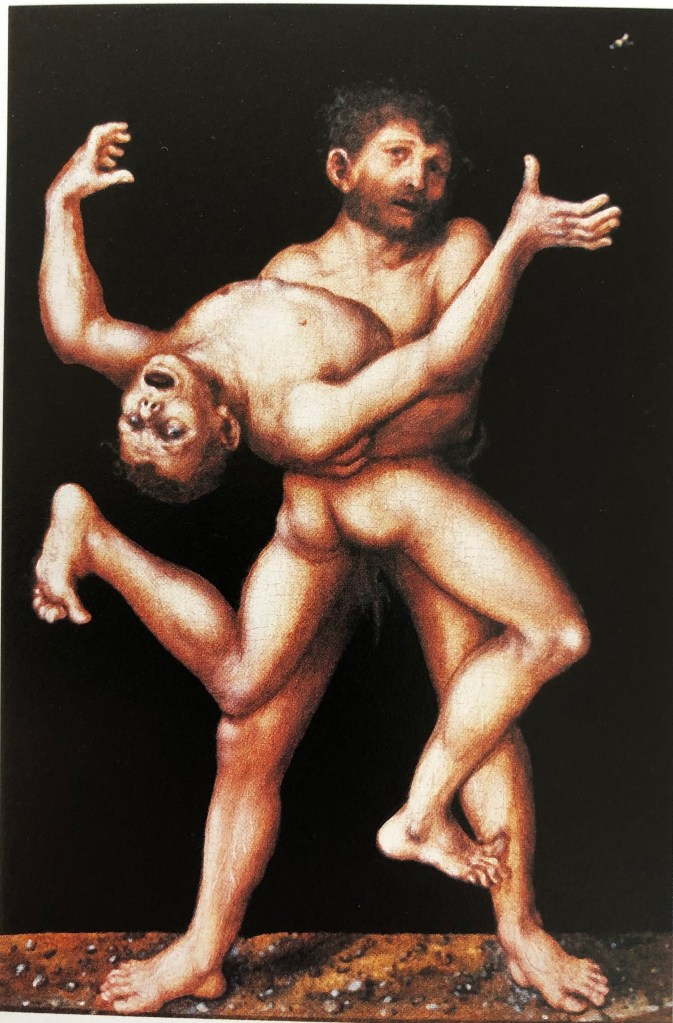
My five found images were:

  1. A. Lucas Cranach the Elder

Hercules and Antaeus

1530

Oil on panel, 26.5 x 17.5 cm

Compton Verney Gallery

  1. B. Lucas Cranach the Elder

Primitive People (detail)

1527-30

Oil on oak, 51.5 x 35.8 cm

National Gallery

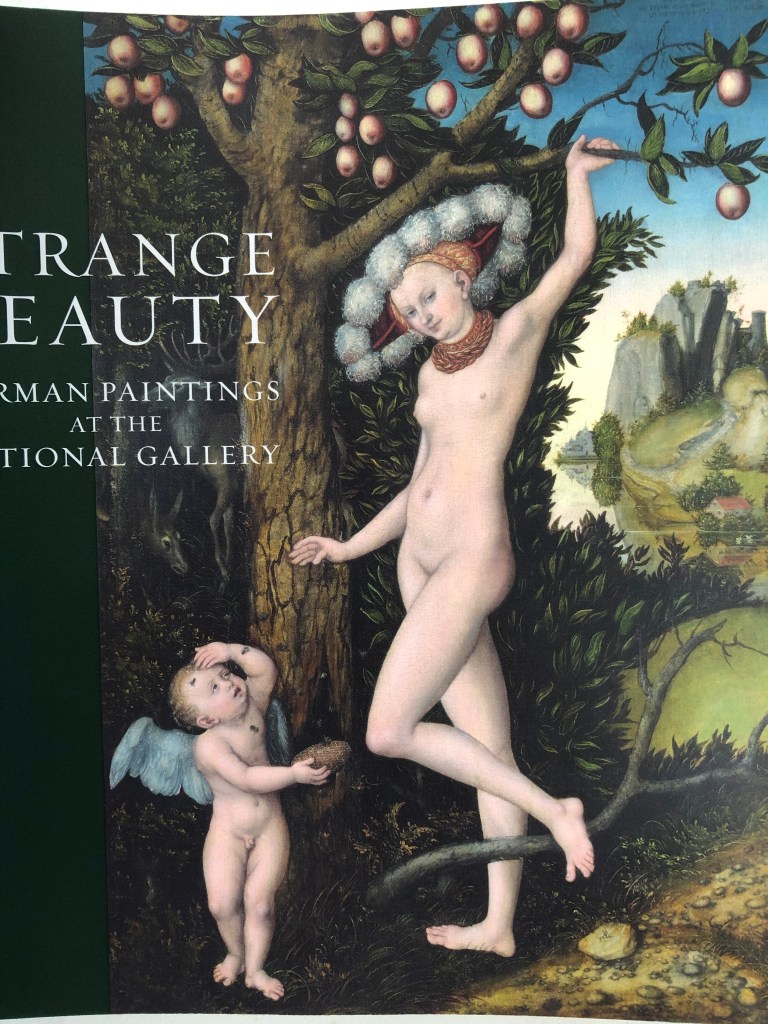
  1. C. Lucas Cranach the Elder

Cupid Complaining to Venus

1526-7

Oil on panel, 82.1 x 55.8 cm

National Gallery

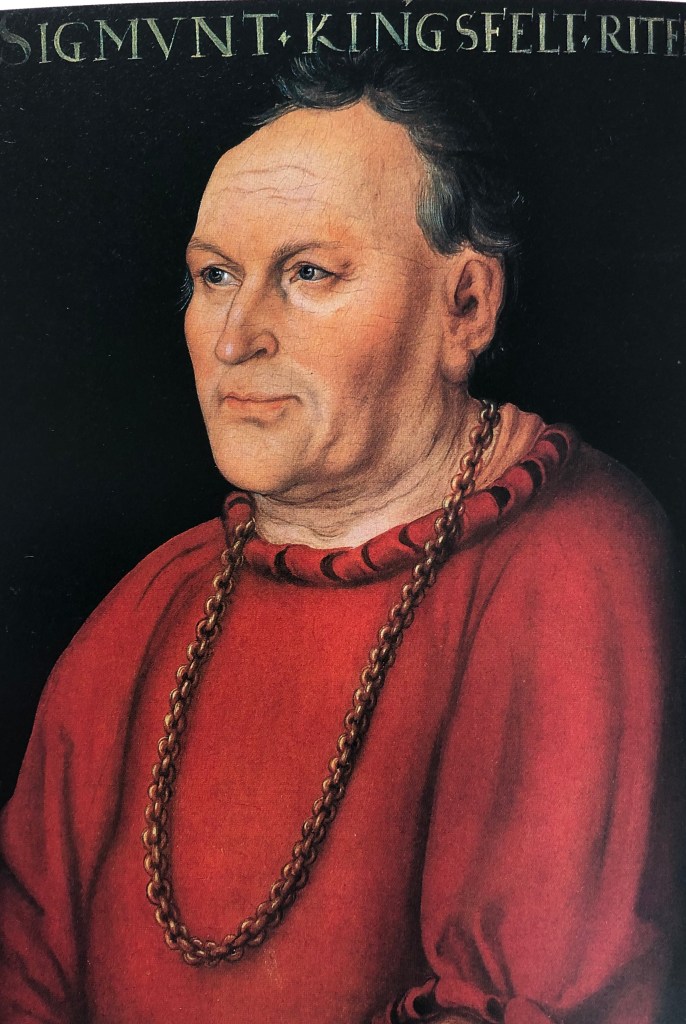
  1. D. Lucas Cranach the Elder

Portrait of Sigmund Kingsfelt

1530

Oil on panel, 37.5 x 25.6 cm

Compton Verney Gallery

  1. E. George Smart

Old Man and Donkey

1833

Collage on paper, 37 x 31 cm

Compton Verney Gallery

SO WHAT?

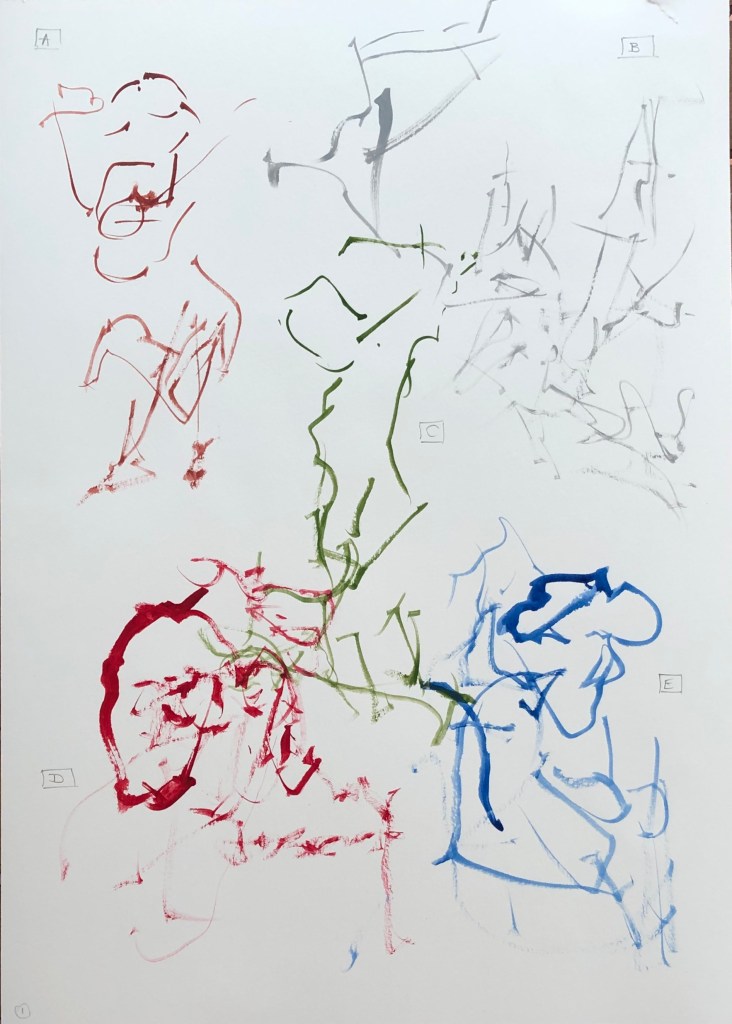
I decided to work with a size 2 rigger in gouache, which makes clear marks, and is quick drying – which to me was an advantage so I could see which picture was supposed to be which.

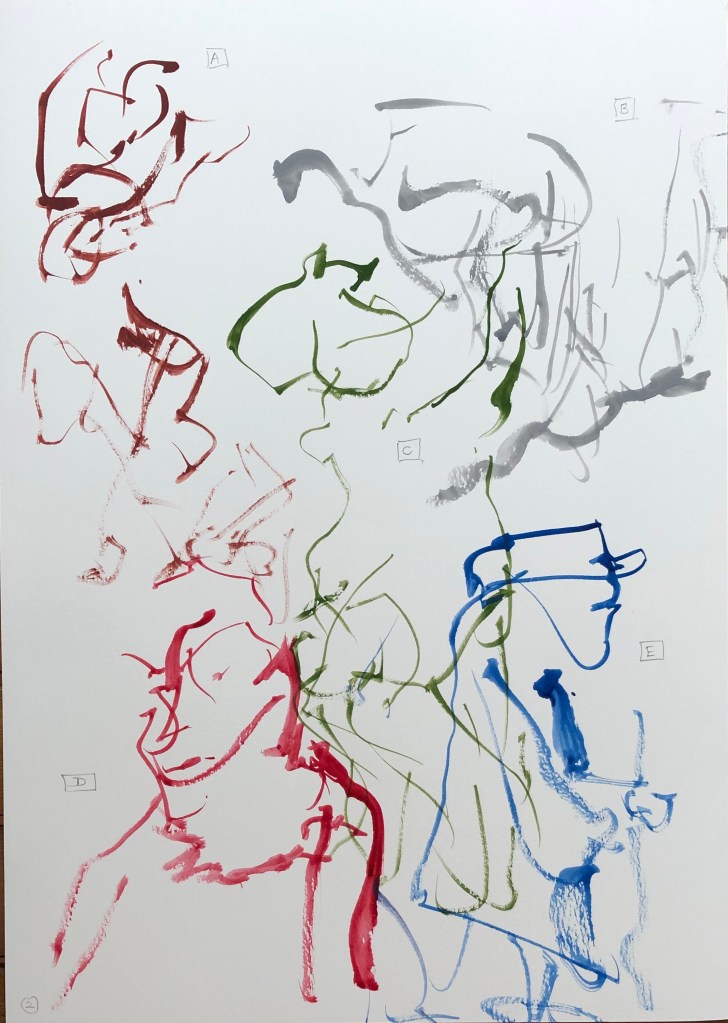
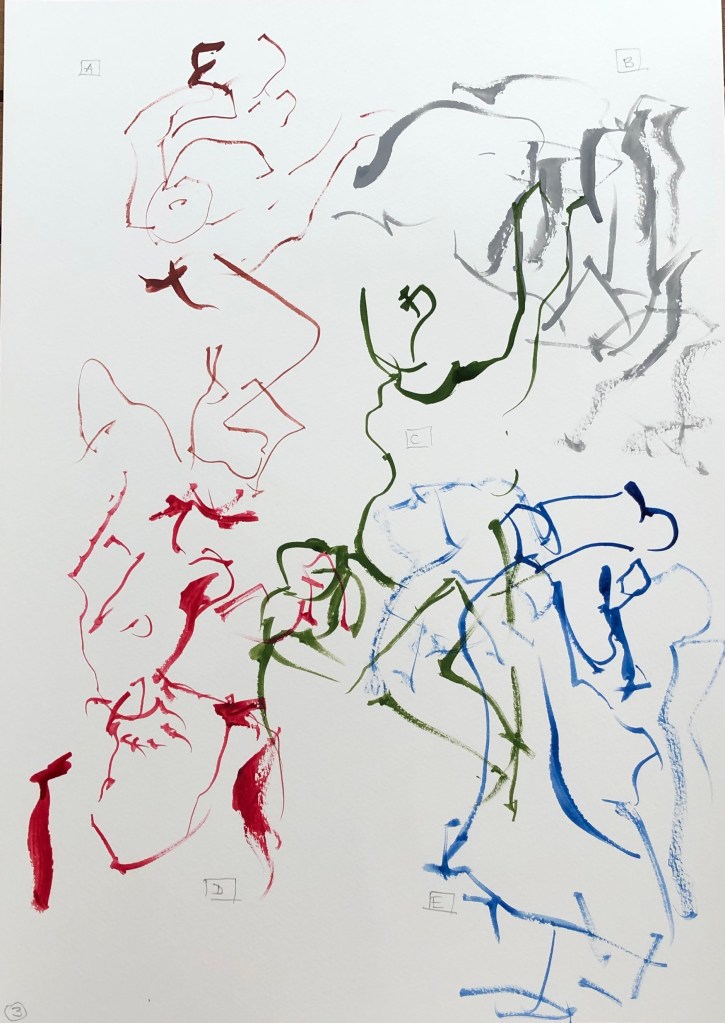
I maintained the same colours and positioning on the page for the three attempts:

  • A was Indian Red
  • B was Neutral Grey
  • C was Olive Green
  • D was Crimson
  • E was Rowney Blue

Attempt 1 was a learning curve in drawing with my left (non-dominant) hand with a rigger like a pencil, 1 minute per image, looking only at the found image and not at my page. Interestingly the one which is pretty unrecognisable is the landscape, the rest being (to my eyes) clearly figures of some sort.

In Attempt 2 I tried to vary the line thickness a bit to convey darker areas – but without looking at it I found this difficult; with a pencil you can feel whether you are making a heavier mark, but without looking at the rigger, you can feel the end of the brush bending but don’t know what sort of mark has resulted.

In Attempt 3 I persisted with my attempt to indicate tone with some heavier marks, and also began all but the first image in a different place to see if I could find an easier way to encapsulate the picture in one minute. Not a great improvement, just different.

NOW WHAT?

I have learned:

  • I need to practise this technique more – it is something I tried in Drawing 1 with pencils or pens, but these are rigid objects where you can “feel” your way; whereas a brush is a flexible tool and reacts differently – a lighter touch which I need to learn
  • Overlapping images are OK – not everything needs to be neat
  • I liked the flowing quality of some of my lines – these can’t be controlled in the same way as a pen or pencil, and feel looser as a result
  • A one-minute drawing/painting felt much easier with a figure which seems like a continuous whole – landscape was an assemblage of separate parts which were difficult to place without looking, especially when you took your brush away to reload with paint.

Painting 1; Part 1; Exercise 2 – Black and white

WHAT?

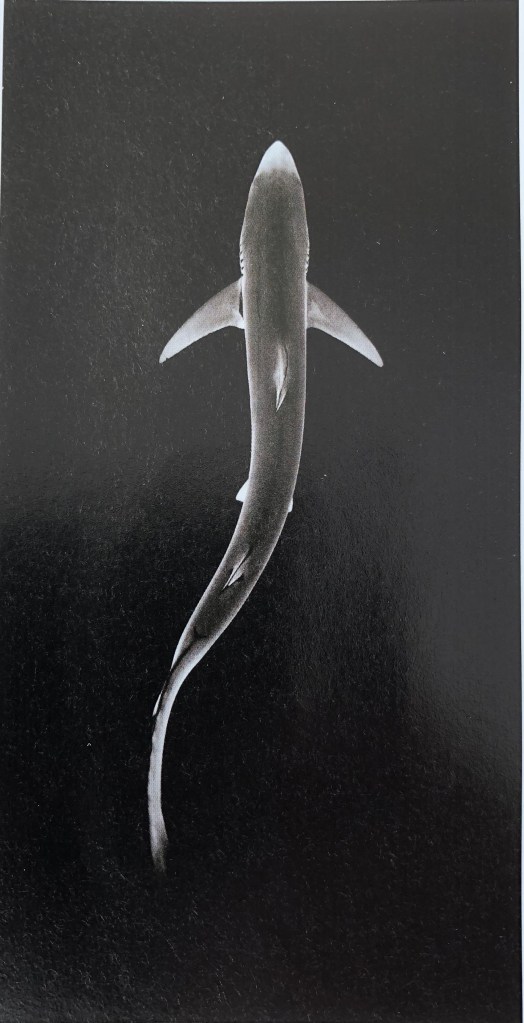
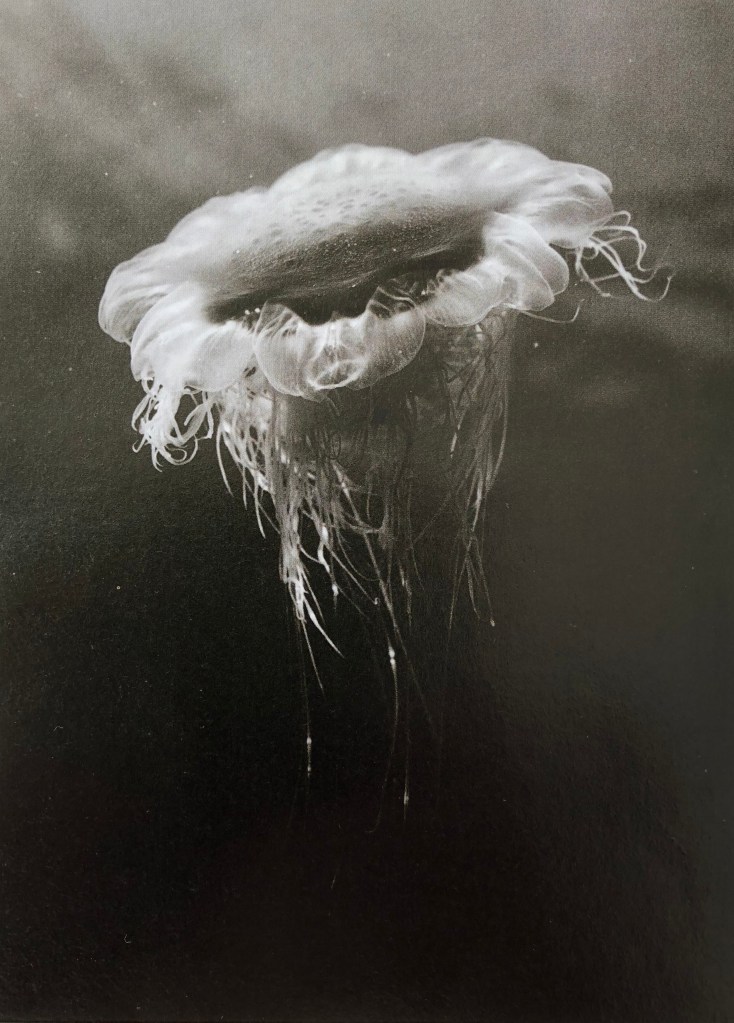
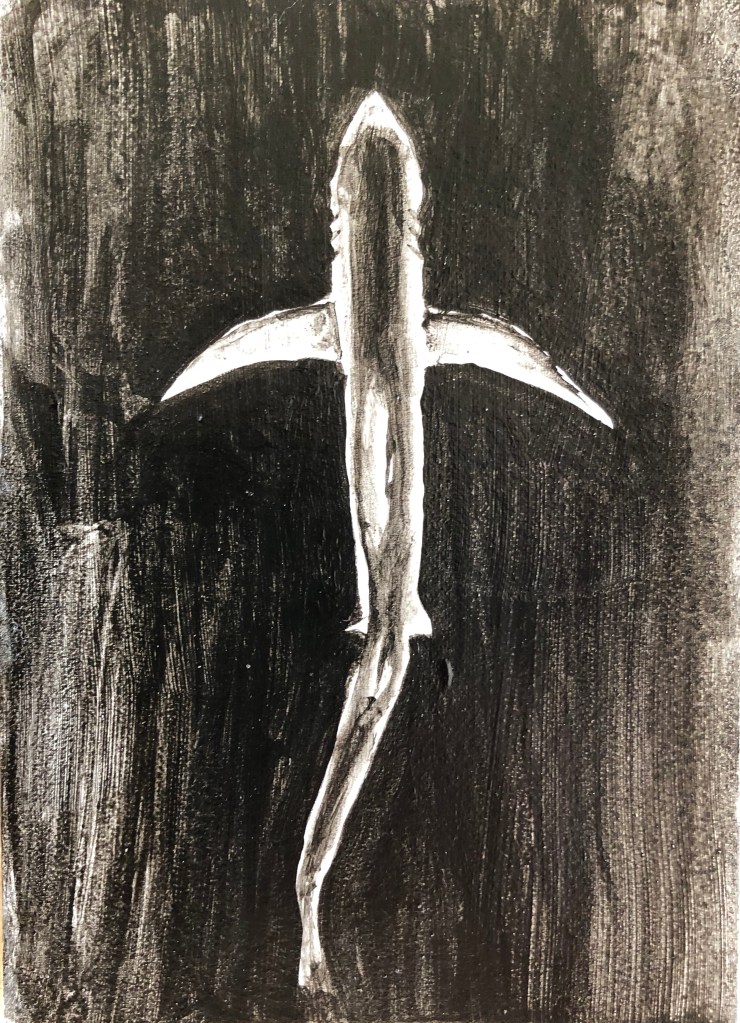
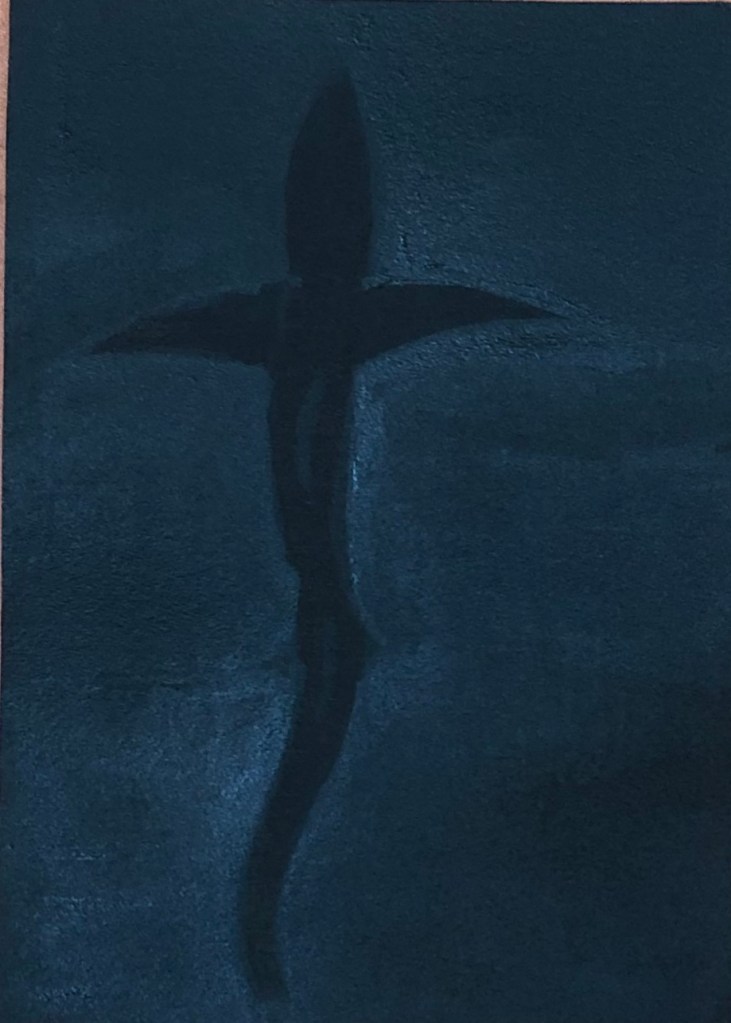
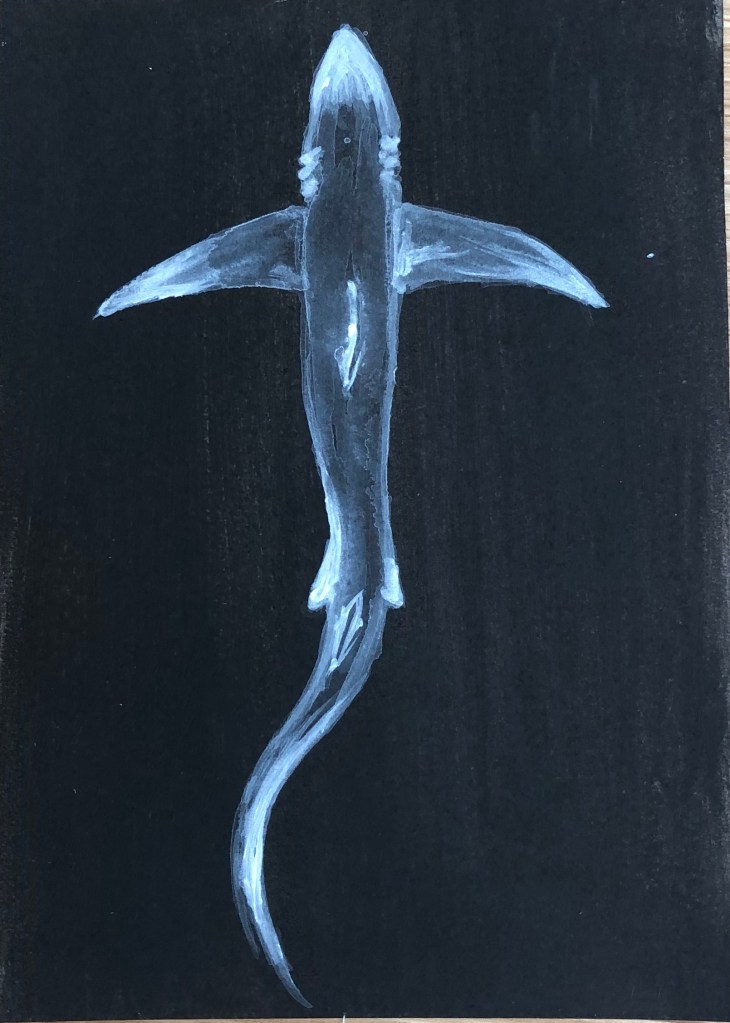
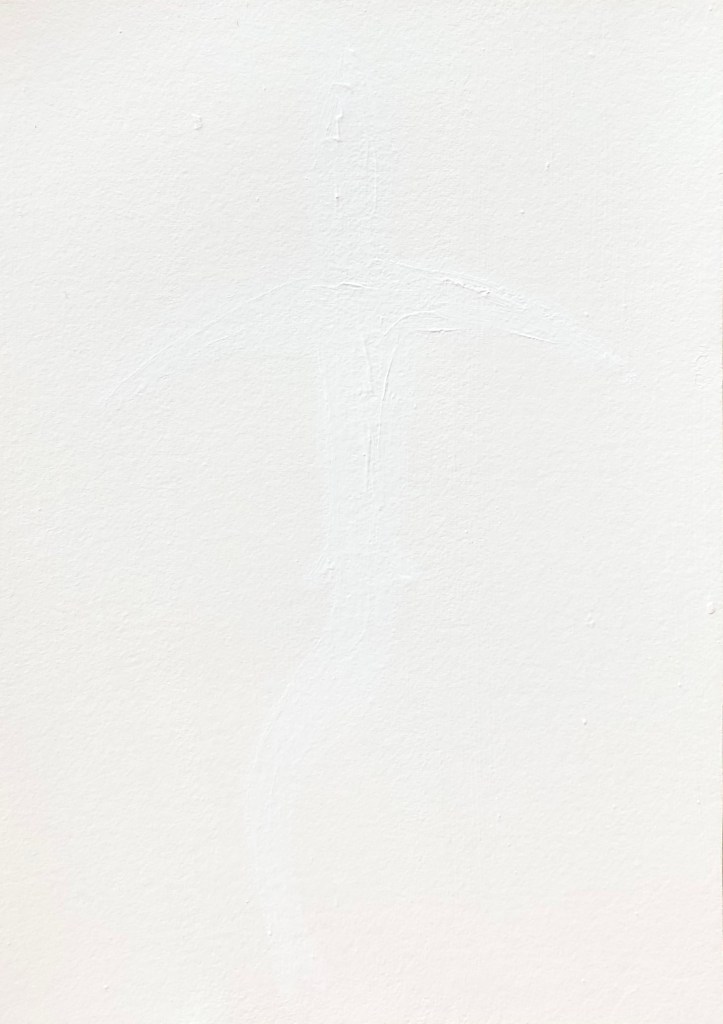
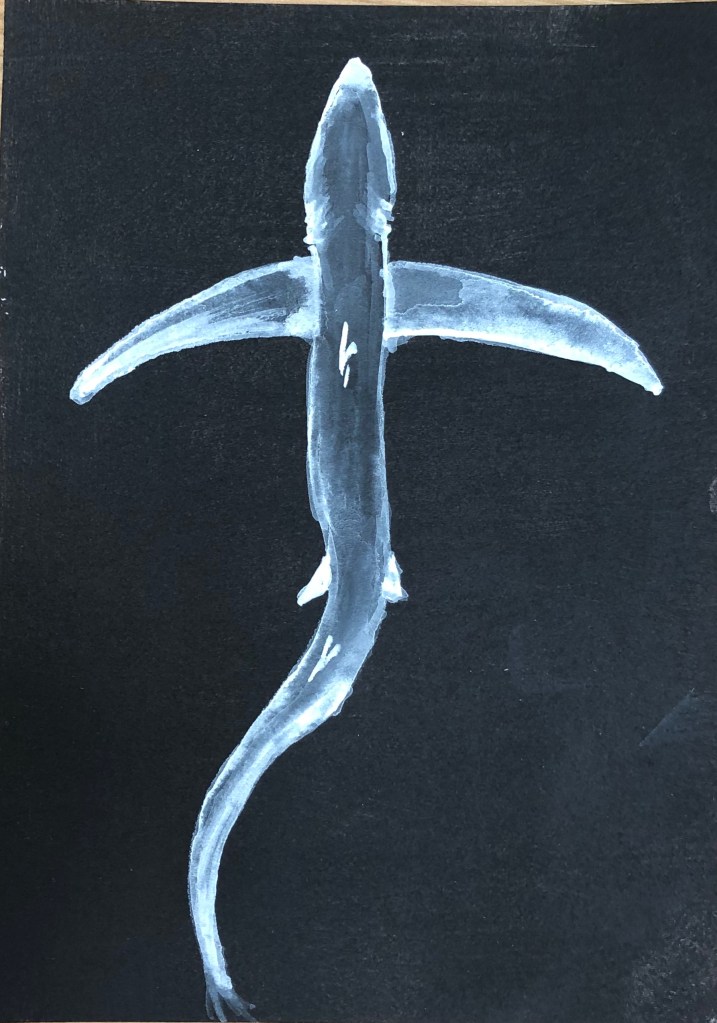
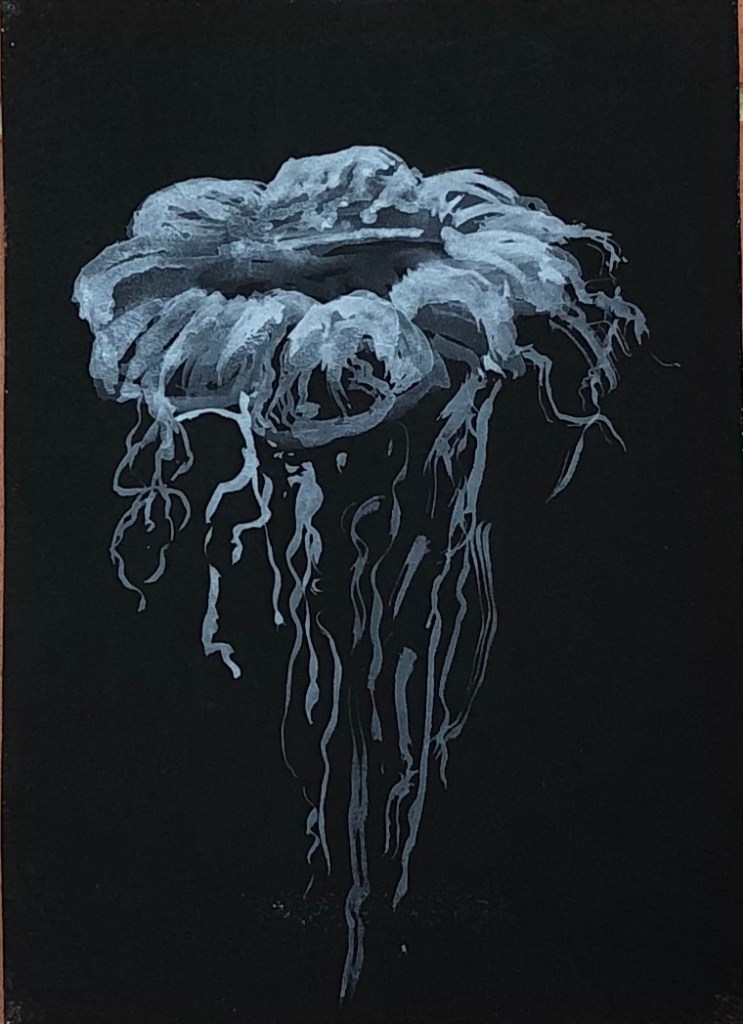
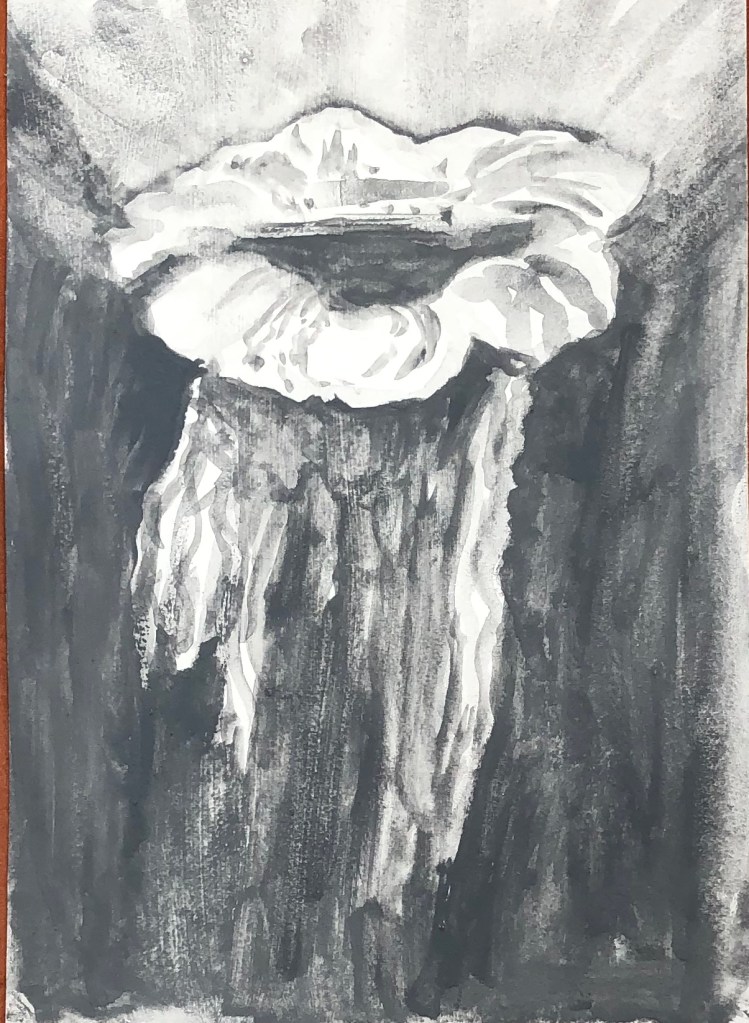
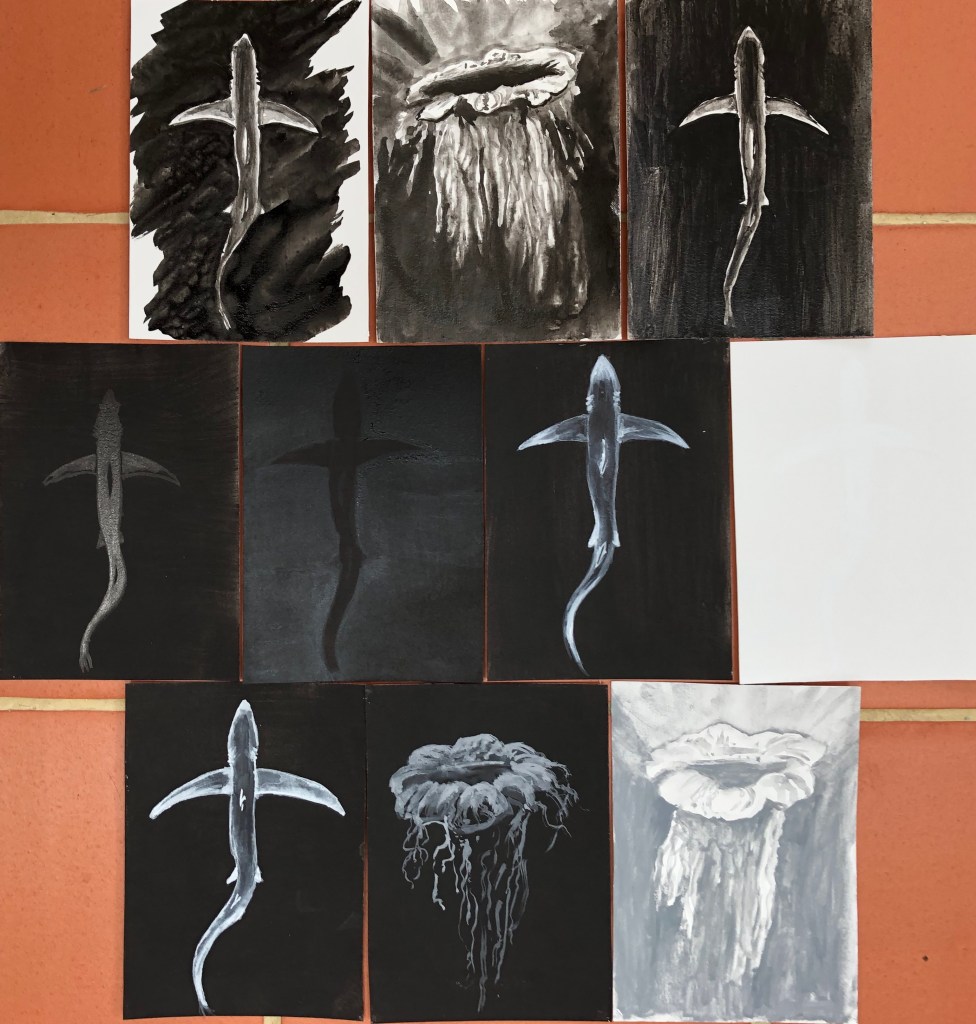
I prepared 10 pieces of hot pressed watercolour paper with black or white acrylic grounds. The two found images I chose to work from were black and white photographs taken by marine scientist and freediver, James Monnington. He dives all around the world but I have chosen two of his images taken down here in the South West; the lion’s mane jellyfish, found in seas around the West Country and Wales, and the blue shark, seen off the coast of Cornwall. I chose these two images as a contrast – one for its simple and elegant lines, and the other for a mass of detail of which I hoped to give an impression rather than an exact representation.

SO WHAT?

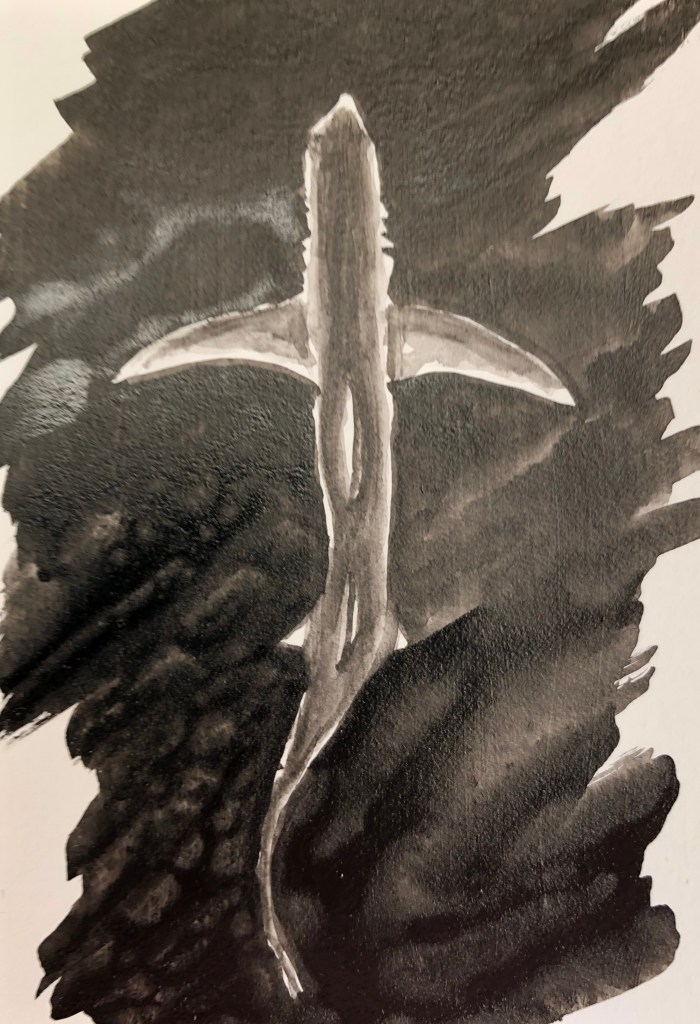
  1. Blue shark in black ink on a white background, using a size 6 round sable. Tried to paint this by putting in the negative shape first and then building up layers of diluted ink within the body of the shark, leaving the very outer edges of its body white. I always seem to find it hard to get crisp edges when painting negative shapes – done better here on the fins than the body, although pleased I managed to indicate the gill slits. Painted this on a hot day so the layers dried quickly and I didn’t get too many “cauliflowers”, which are easily forgotten until too late.
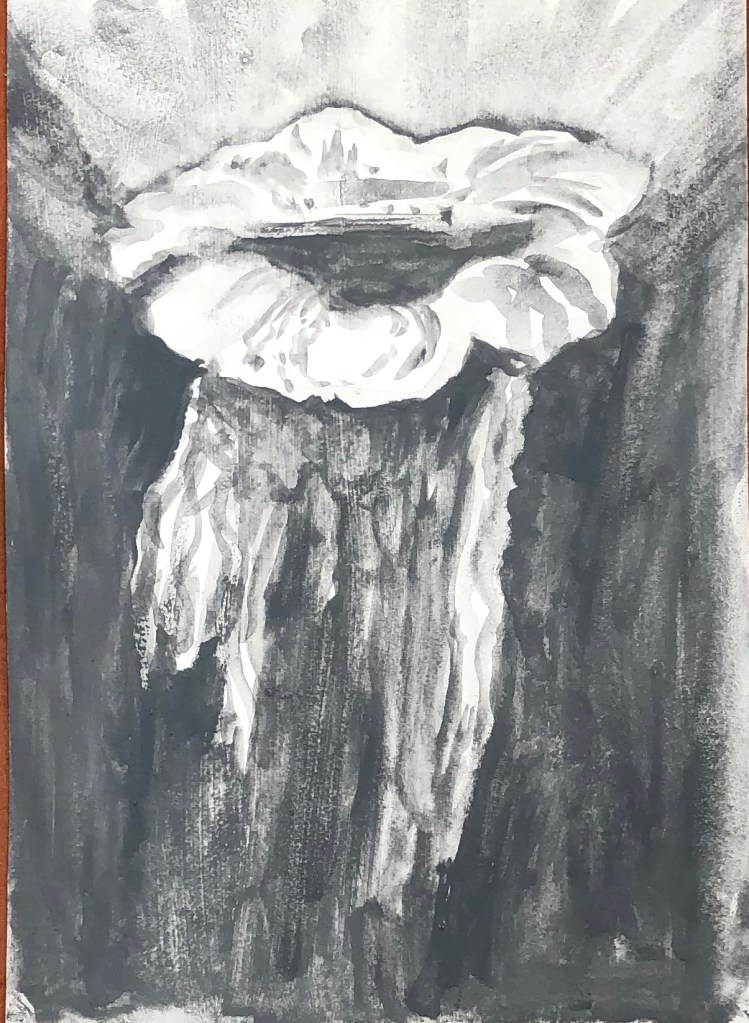
  1. Lion’s mane jellyfish on a white background using black ink using size 6 sable. Not sure how to tackle this; decided to put an extremely dilute ink wash around the body to preserve the white of that, then streaked the rest of the sheet with water, turned image upside down and dropped in lots of undiluted black ink and let it run down, trying to lead it with the tip of the brush and encourage it to go where I wanted. Then painted simple details of the body with a small amount of ink and almost dry brush. Not much like the original, but hopefully you’d recognise it as a jellyfish!
  1. Blue shark in black acrylic on white acrylic ground using size 6 sable. I found slightly dilute black paint hard to apply over the white acrylic ground – I thought I’d applied the ground evenly with vertical and then horizontal stokes, but the black acrylic showed up quite streaky in vertical lines and had to have a second coat applied in virtually undiluted paint, with just a damp brush. I haven’t got the shape of the shark sufficiently sinuous and, once the black is on, it’s hard to get off if in the wrong place. Live and learn.
  1. Blue shark in black Chinese ink on a black acrylic ground. This gave me permission to simplify the image as the light parts of the image could only be conveyed by the shininess of the ink against the matt background – but then it was hard to build up gradations of tone with the ink as it was all just shiny, and the tonal gradations can only be seen from certain angles. It is dramatic, however, when seen in the right light.

  1. Blue shark – Black acrylic on black acrylic ground, size 6 sable.Tried bit of dilute acrylic just to draw an outline – the second it dried it had been absorbed and was invisible. Decided to build up the background with several layers of black to leave a lighter reverse “silhouette” of the shark without any detail – this worked, although needed to go over it over and over – fortunately a hot day so it dried very quickly, although the paper became quite warped.

  1. Blue shark – White acrylic on black acrylic ground, size 2 rigger to allow detail. Built up the tones by starting with very dilute white – again, seemed to be absorbed very quickly and marks soon very ghostly – but gradually got thicker and thicker paint for the lighter whites. It’s still ghostly but I left it like that, seems appropriate for the stealthy subject matter.

  1. Blue shark in white gouache on white acrylic with size 6 sable.  Again tried to go for a white silhouette against the white ground. The chalkiness of the gouache, combined with the fact that it is a whiter white than the acrylic, makes it just about visible, although not something that I would ever use, it’s difficult to make out and photograph.

  1. Blue shark in white gouache on black acrylic with a size 2 rigger. Managed to get a similar ghostly effect as with the white acrylic – stands out more, but slightly less ethereal because the permanent white gouache is a brighter white than my titanium white acrylic – so which you choose would depend on what effect you want.

  1. Lion’s mane jellyfish in grey gouache on black acrylic with size 6 round sable. I’ve enjoyed this the most so far – adding grey to make an image lighter felt counter-intuitive but it’s turned out very jellyfish-y.

  1. Lion’s mane jellyfish in grey gouache on white acrylic using size 6 round sable. Oddly, having just used grey as my “light”, it felt tricky to now change back to the more traditional use of it as “dark” – I don’t think my end product is nearly as translucent.

NOW WHAT?

I haven’t previously done much black and white painting, apart from quite a bit of drawing with black ink on white paper. I’ve learned that:

  • Shiny black (in this case, ink) onto matt black (in this case, acrylic) can give a distinctive and eye-catching outcome
  • Paintings of ghostly, ethereal images are more easily achieved effectively on a dark background – specifically I liked thin white acrylic on black and grey gouache on black
  • I need to give more careful thought to my backgrounds, both in terms of colour and tone, but also in terms of texture, e.g. matt or shiny.

Painting 1; Part 1; Exercise 1

WHAT?

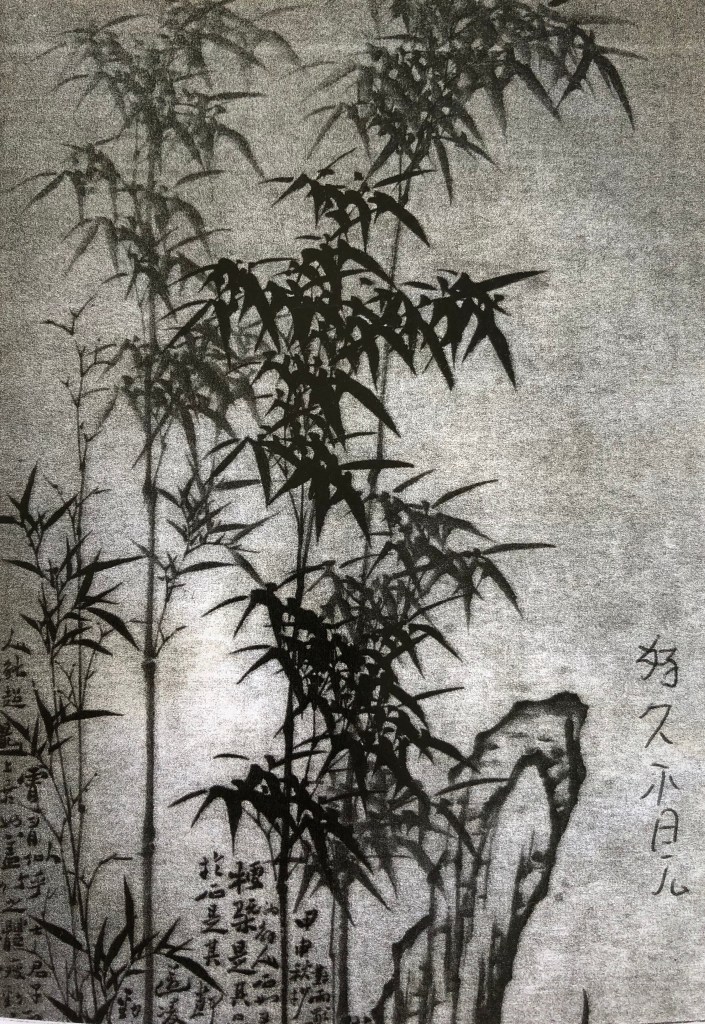
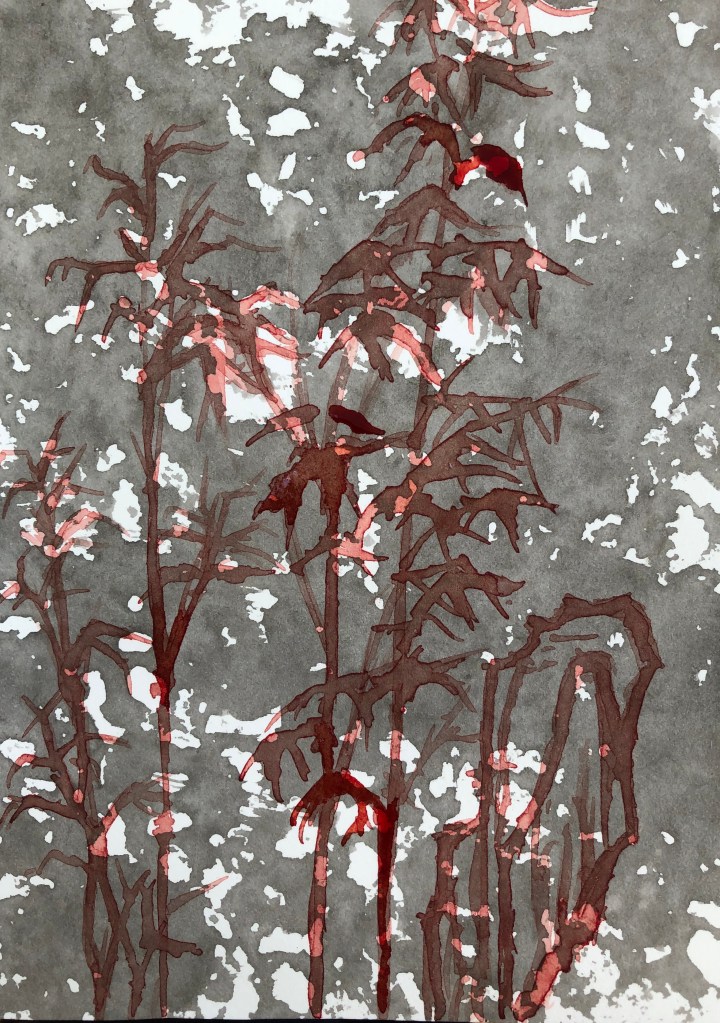
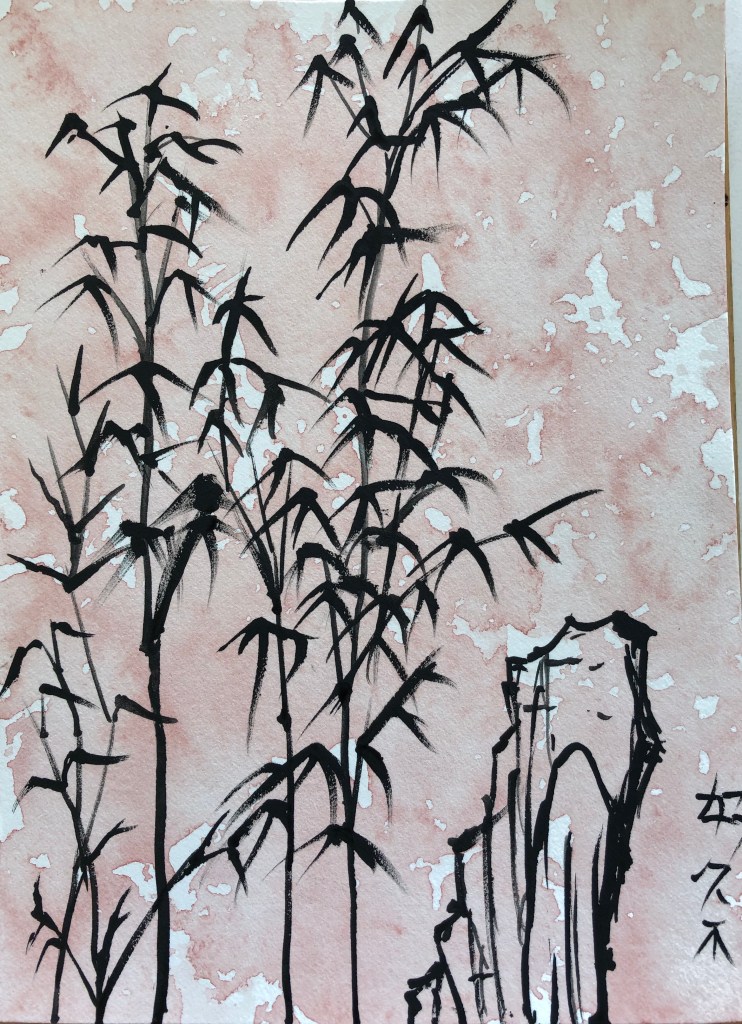
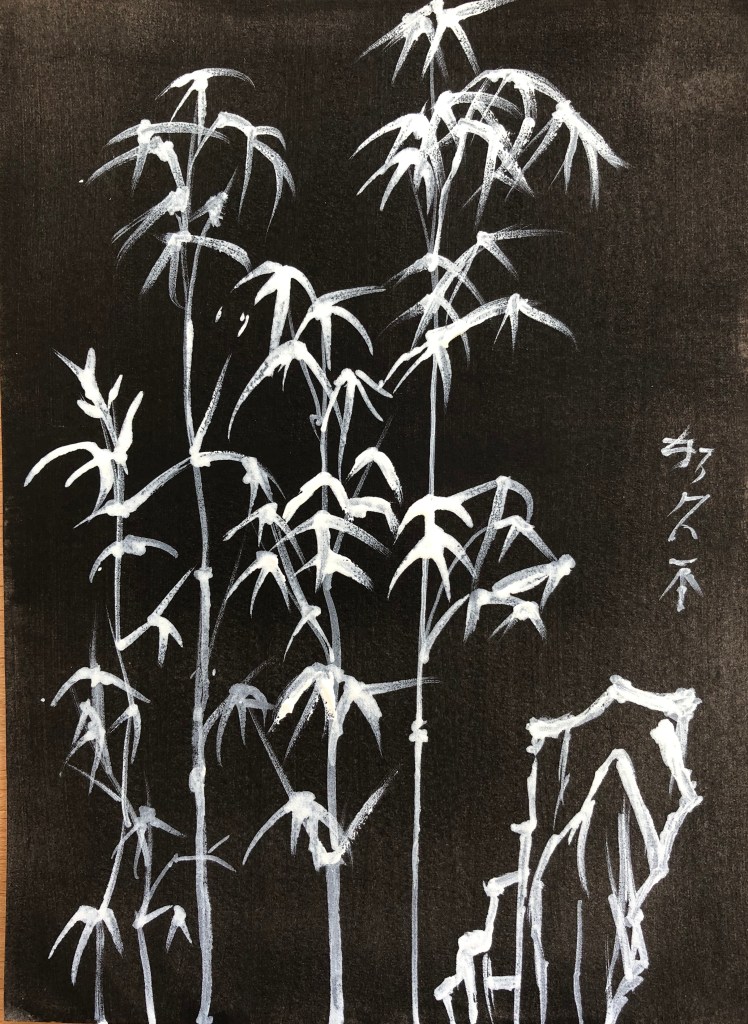
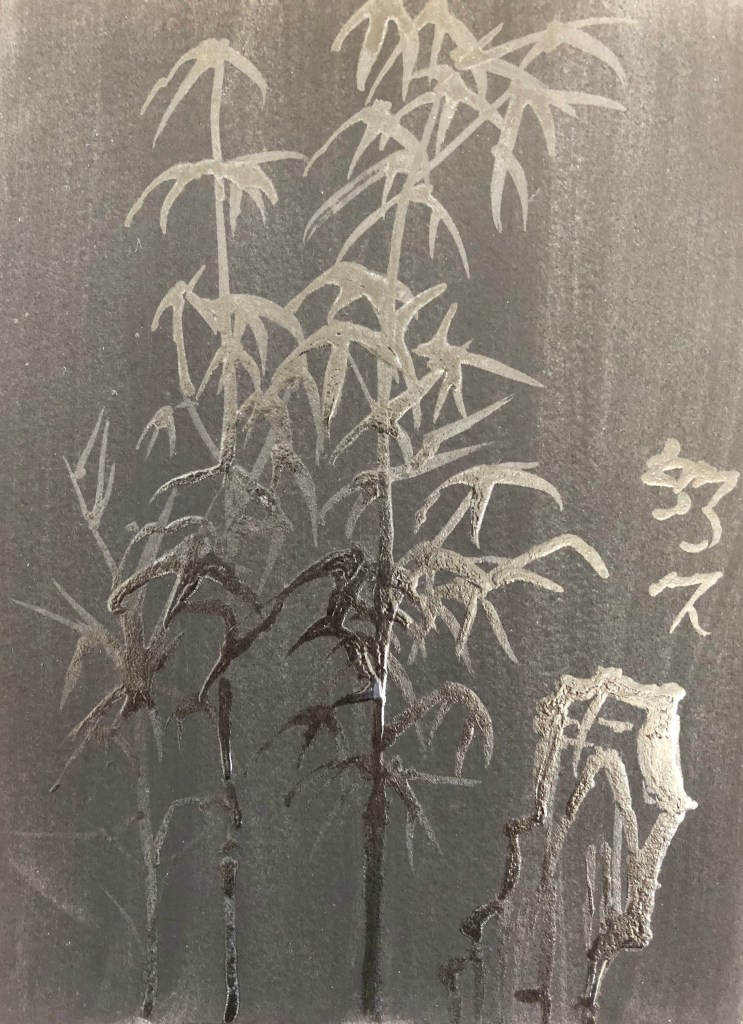
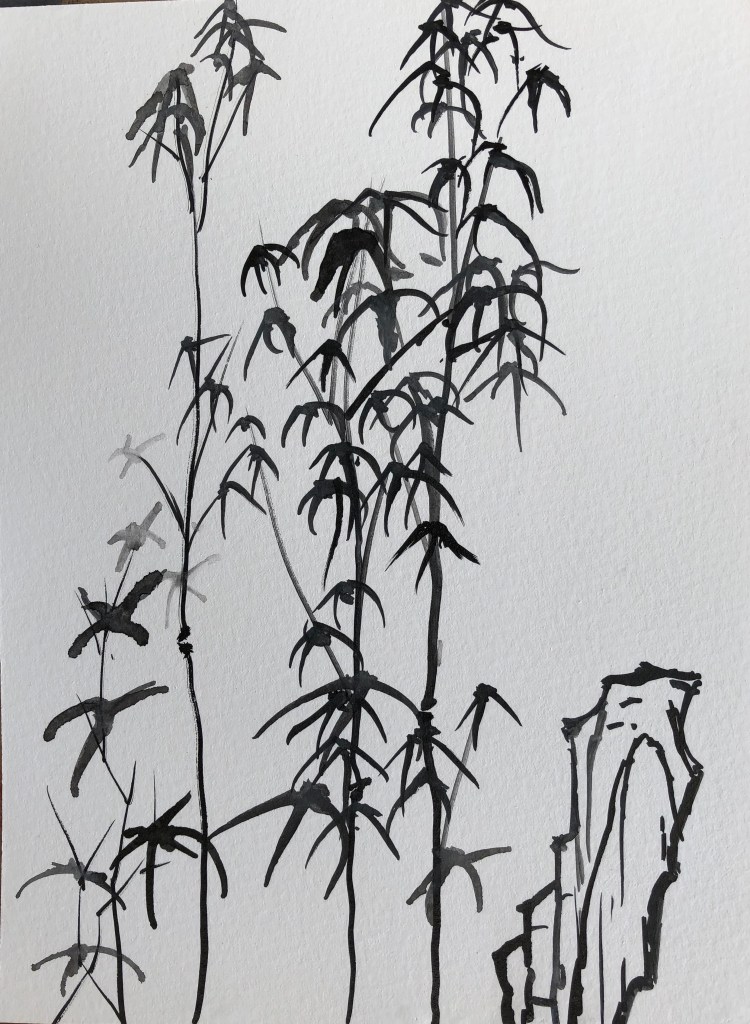
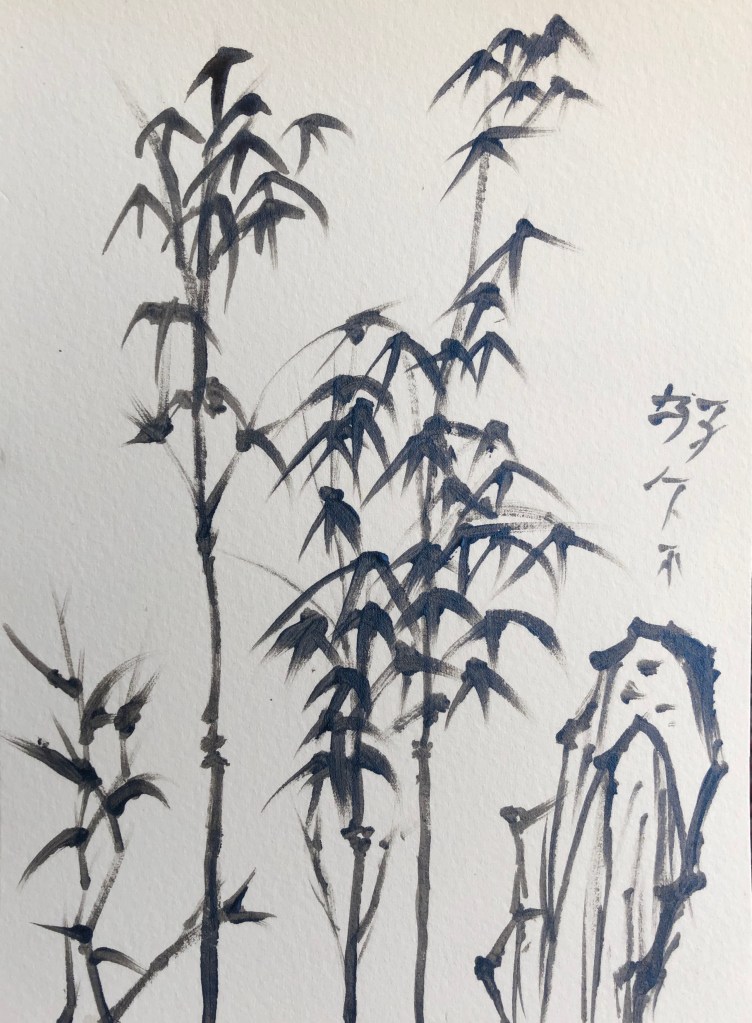
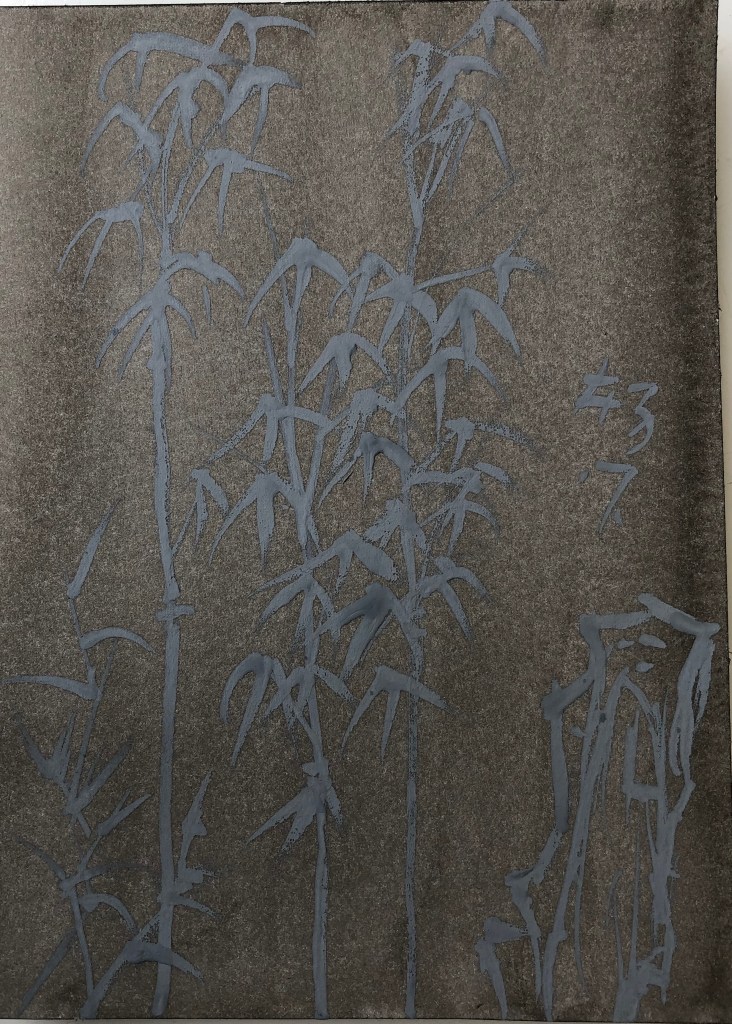
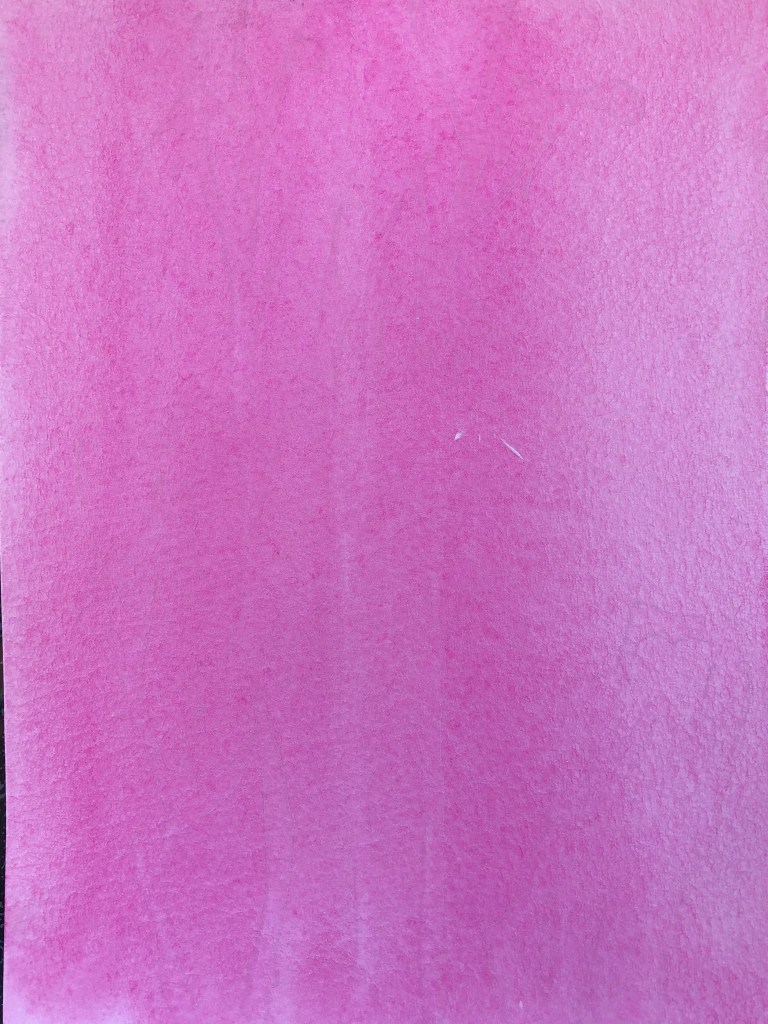
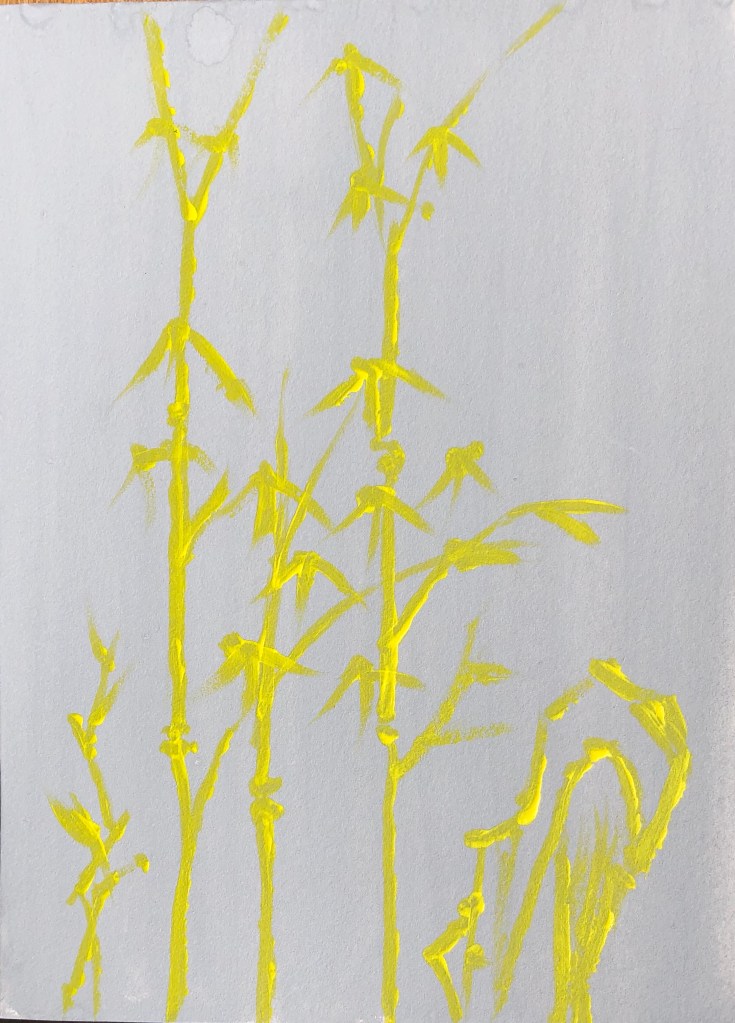
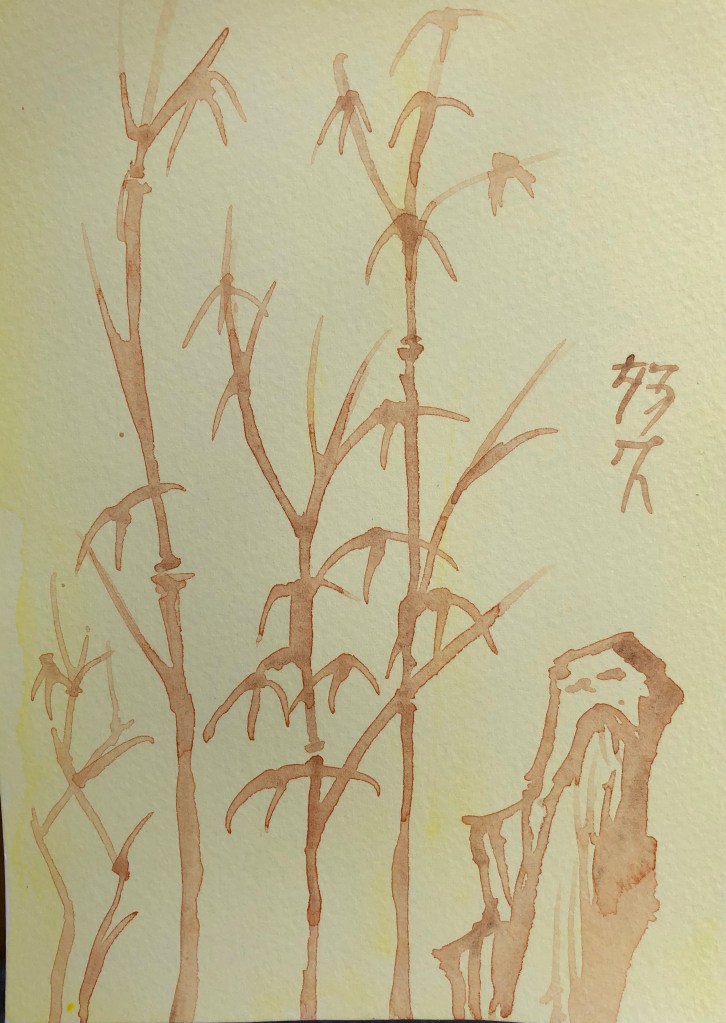
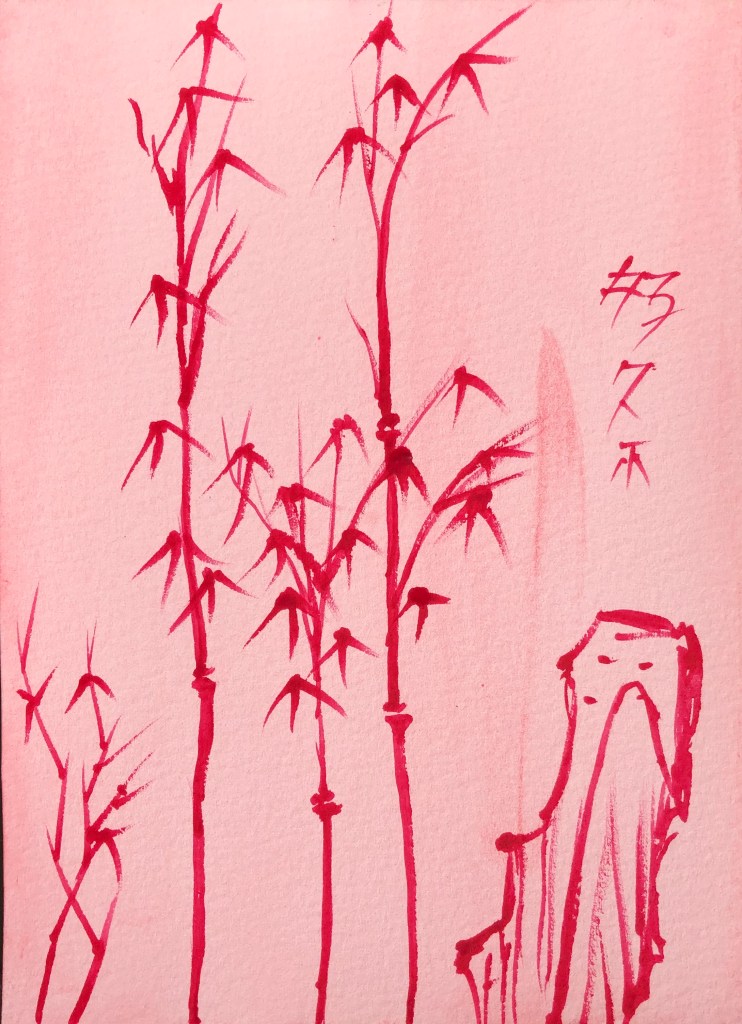
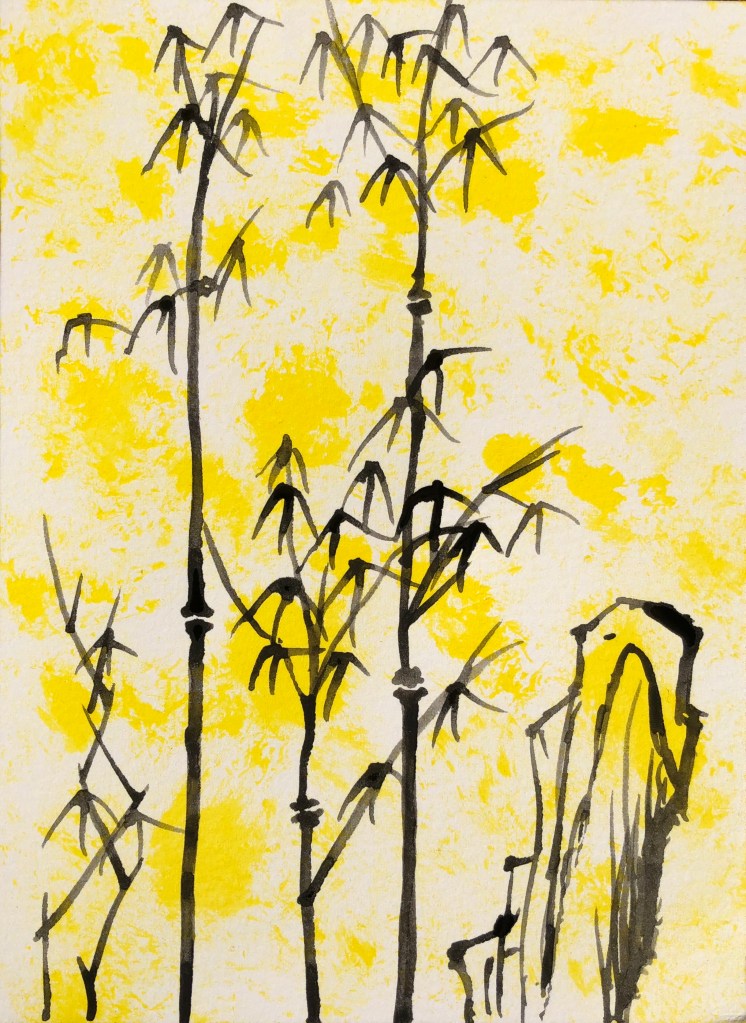
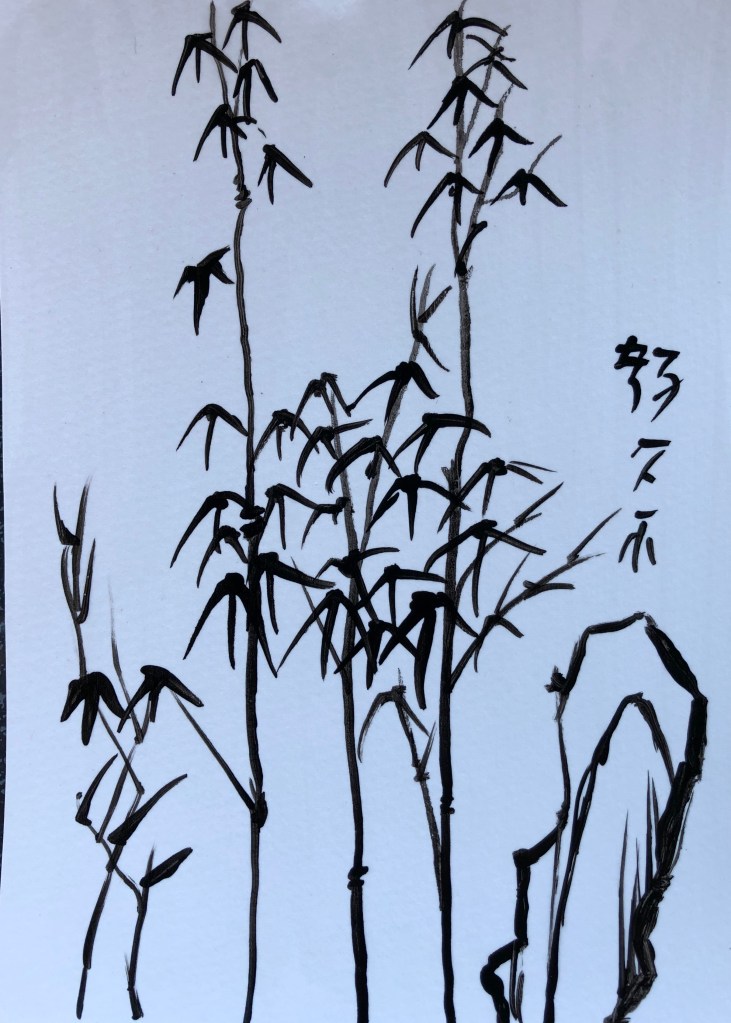
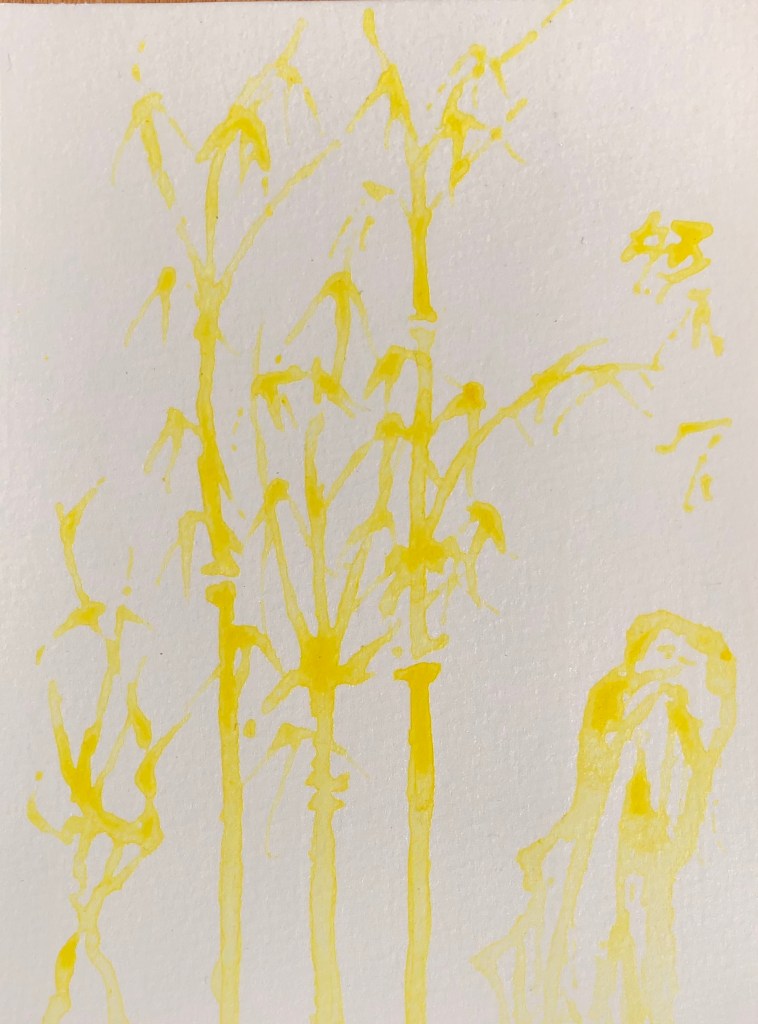
20 sheets HP watercolour paper prepared with various backgrounds as directed using fan brush to get even surface (except for the acrylic varnish, where I used a small hog flat as didn’t want to risk my fan brush). Found image selected to work on has been hoarded for years – bamboo with mountain background – person who sent it to me said “Everything in Chinese painting is symbolic….The painting of Bamboo is second only to landscape in prestige and is infinitely more important than the painting of birds or animals.”
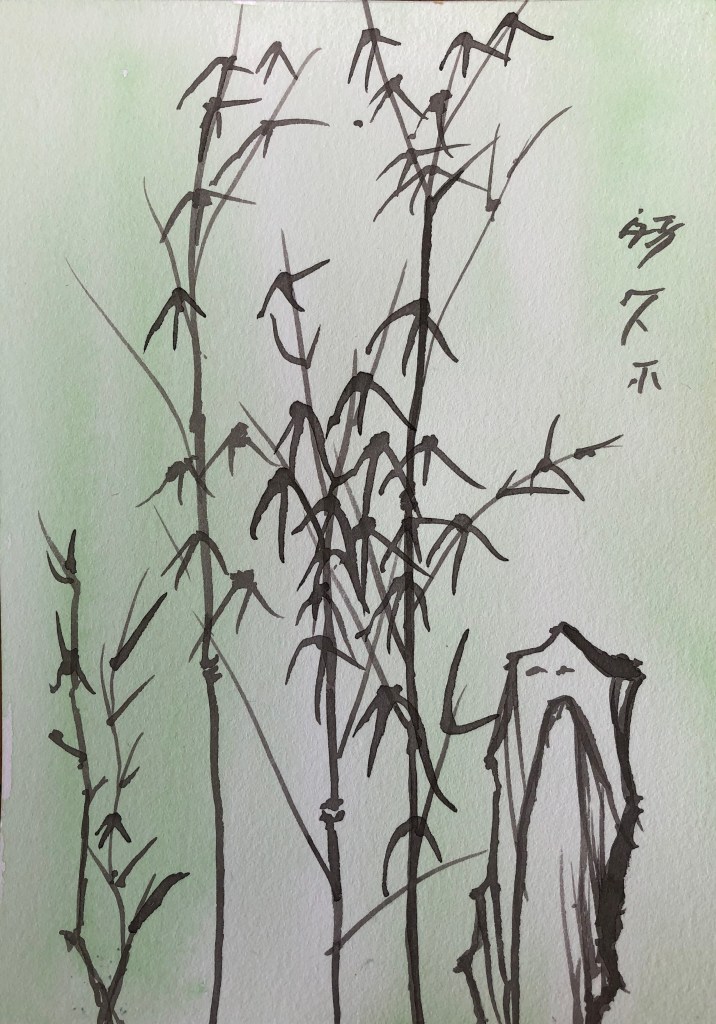
SO WHAT?

  1. Thin perylene maroon watercolour paint applied using rigger to splodgy thin black ink background. I made the paint very (too) watery – hard to make it show up.
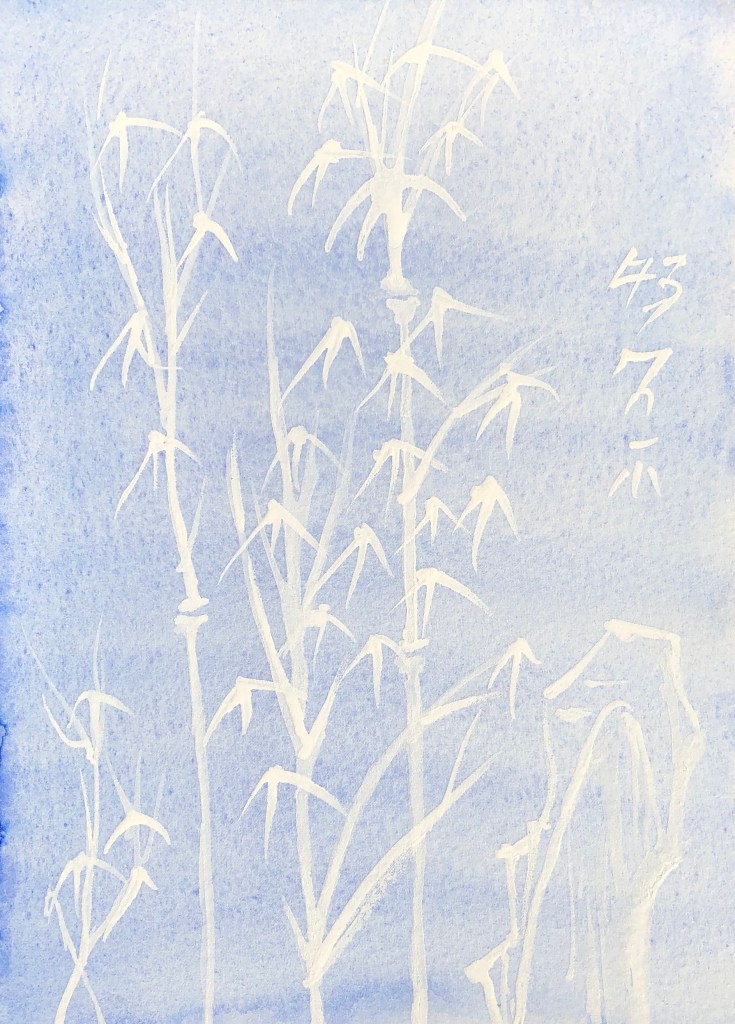
  1. Black egg tempera, only slightly dilute, on splodgy perylene maroon watercolour background, applied with rigger. Much more effective as far as clear line making concerned, also able to perfect my leaf-drawing action (press and flick)
  1. White egg tempera, fairly neat, on black acrylic background, applied with rigger. Did this as a photo negative. Favourite so far.

  1. Acrylic satin varnish on black egg tempera, took a chance using the rigger to apply, gave it a good wash and seems fine. Image clearly visible even when light not directly shining on it, and very dramatic when it is! 

5.Black Chinese ink on white gouache. Struggled a bit to get pointy ends on this surface, and if the brush was wetted with water then the marks spread out – as if the surface was absorbing them as the brush hit the paper. Less good combo.

  1. Blue iridescent acrylic on white watercolour. A weird one – very hard to spread the acrylic over the watercolour background, felt like painting dry-brush all the time, even though the rigger was wet – not sure if it’s because this acrylic paint very thick?
  1. Experimented with grey gouache on thin black ink. From an oblique angle it’s quite an effective contrast of light on dark, whereas straight on it looks quite flat.

  1. Well, this was weird – Pebeo high viscosity Buff Titanium acrylic on thin black ink. Any dilute acrylic marks just seemed to be absorbed into the inked paper and vanished- the only marks which I could keep clear were with neat acrylic, sometimes gone over several times. Paint colour creamy rather than white.

  1. White acrylic on very thin green gouache. A similar tendency (though not so bad) for dilute paint to be absorbed – only thick undiluted acrylic stood out – but hard to be accurate with thick paint using a rigger.
  1. Really thin white acrylic on thin gouache – this was too thin, had to ladle it on to make any impression at all. Clearly visible when wet, but virtually vanished when dry.

11. Thick watercolour (burnt sienna) over grey egg tempera. A pleasing combo – the egg tempera background offers enough resistance to the brush so that it doesn’t skid, without being a drag which makes making the mark you want difficult. Only downside is that the W/colour fades considerably as it dries – you’d need a few layers for it to really stand out.

  1. Thick yellow high viscosity acrylic on grey gouache. This high visc acrylic really lives up to its name – tried using it with a damp rigger but it really didn’t want to be dragged – in the end dried the brush and just used the paint neat – gives an interesting uneven effect.

13. Thin black Chinese ink on thin watercolour – this went on and dried like a dream – an easy-to-use combo.

14. White egg tempera on very thin watercolour – I started off with some very thin egg tempera but could soon see that it was too watery to stand out, so I made it a bit thicker to get a good contrast.

15. Thin burnt sienna watercolour over very thin primary yellow acrylic. Again, a surface offering a pleasing but not overbearing resistance to a runny paint. The watercolour fades but is still clearly visible and layers could be built up.

16. Thick permanent rose watercolour on very thin acrylic (cadmium red). This was a good combo, both in terms of applying medium to background – right amount of resistance yet flow – and also dark red on light red.

17. Thin black acrylic over watercolour splodges (ultramarine and Hooker’s green). This ran well – have learnt not to make it too dilute, so it flowed well over the surface and was clearly visible. The splodges work effectively as a background, making it look from a distance as if there is a load more plant material behind.

18. Thin black gouache on thin acrylic yellow splodges. Pleasing dramatic colour combo. The gouache gave strong coverage even though very dilute.

19. Black acrylic on varnish, applied with a damp rigger – the acrylic seemed to glide smoothly over the surface, only breaking up a little when the paint load was low. Satisfying smooth service to paint on. Interesting that the background looks blue in the photo but bright white in real life.

20. Very thin high viscosity yellow acrylic on varnish. The brush runs well when loaded but, when asked to make a thinner more delicate line, the paint starts to break and bobble into droplets on the surface – as expected from a shiny surface.

NOW WHAT?

I have learned that:

  • If I am going to paint over a ground, particularly a chalky ground such as gouache, in acrylic, I need to make sure that the acrylic is thick enough not to disappear – although bits of “ghostliness” would be good for a mysterious image.
  • Unexpectedly, painting on varnish is easier than I thought, and the paint doesn’t slide everywhere; also, painting with varnish on a dark surface shows up surprisingly well
  • Ink and watercolour are good combinations (although I did know this already – but always good to have it confirmed!)
  • The medium I have most enjoyed using, both as a background and a medium, has been the egg tempera – it provides a matt, very slightly resistant surface for painting onto, and it has produced effective images over a range of backgrounds.

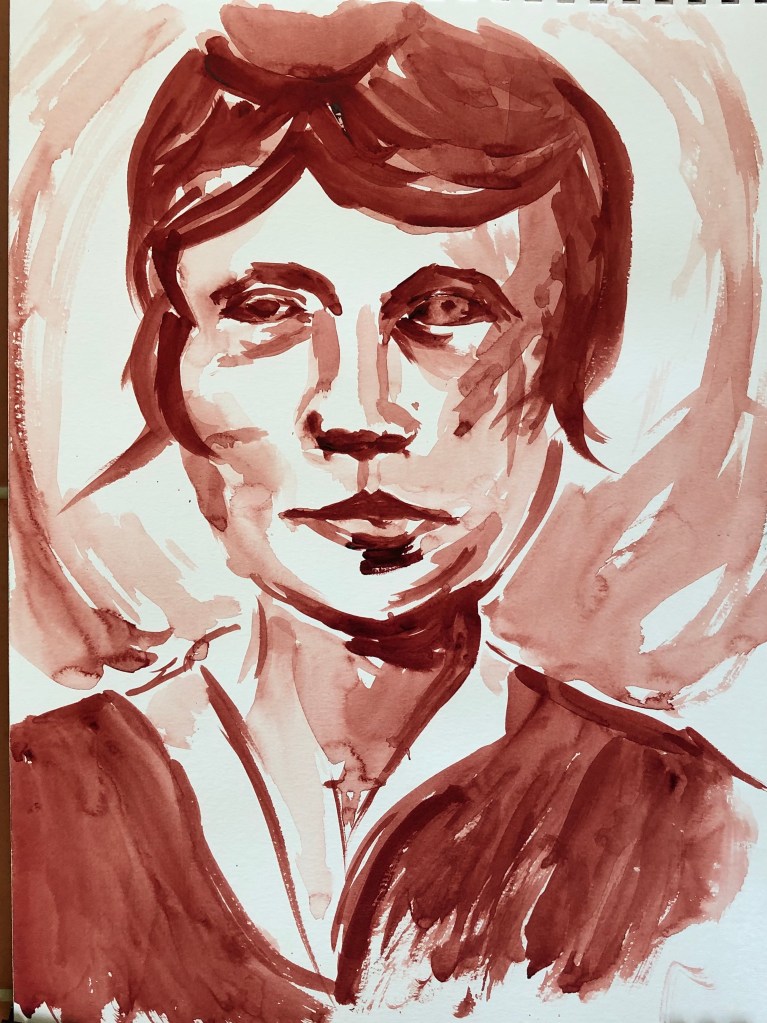
Painting 1; Part 1; Research into Elizabeth Peyton as an example of an artist with a “messy” style

I chose Elizabeth Peyton out of the other “messy” artists I had researched because of her use of colour and the apparent looseness of her brushstrokes.

IMAGE 1

WHAT?

“Georgia O’Keefe (after Stieglitz 1917)”

2006

Watercolour on paper

14.25 x 10.25 in

Collection of JK Brown and Eric G. Diefenbach, New York

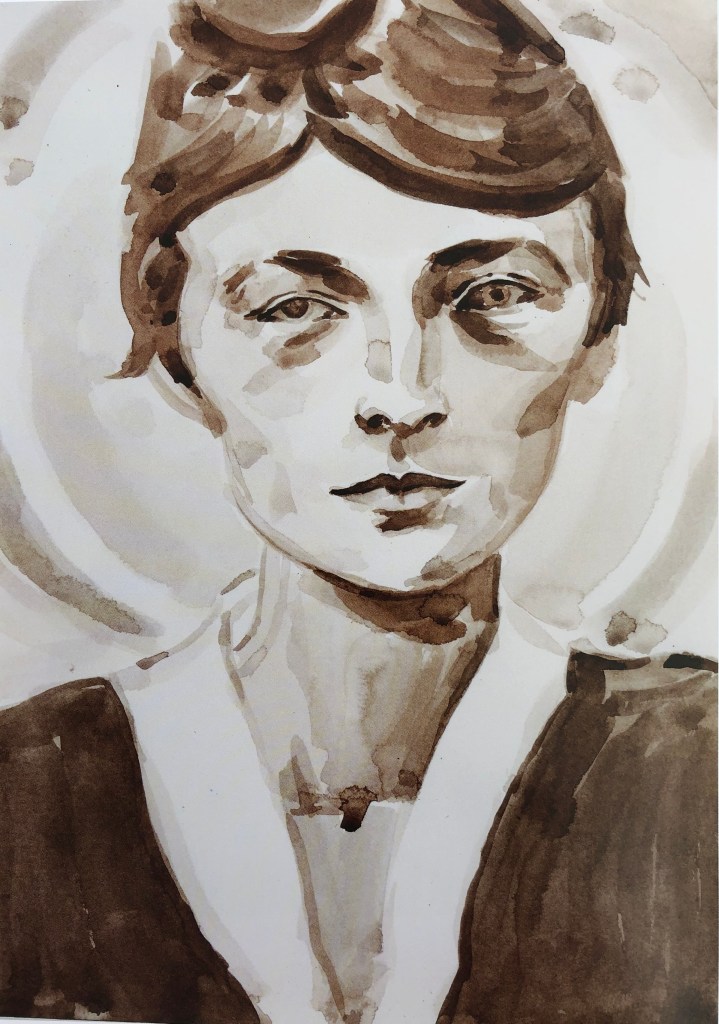
This painting makes me feel that I want to know the person who is the subject and want her to know me; she looks out at you demurely, politely but slightly disinterestedly, and you feel I suppose slightly defensive that this should be so. It reminds me of Alli Sharma’s work in style. The composition is cropped – she could have been “moved down” the page so that her whole head fitted in, but then you wouldn’t have got the nice prim blouse collar. The background has a circular shape which is left to the viewer to interpret but this keeps the eye moving around within the picture rather than wandering out. The brush strokes are large and directional, and the original looks like a sepia or raw umber. E.P. was painting at a time when figurative art was just coming back into fashion, and must have helped with her apparently simple yet evocative pictures of famous figures, whether of pop culture or historical, making them look like “ordinary”, real people.

SO WHAT?

I decided to work in monochrome watercolour too, and at roughly the same size. I chose perylene maroon, a colour which I like and is a bit warmer that the original, and a size 8 sable. I wanted to copy the general image, without worrying about achieving an exact likeness – I felt I wanted to do this quickly, be in the moment, and see what happened. I feel I have achieved something of the looseness of her style, but without her precision – actually quite a tricky combination.

NOW WHAT?

I have learned:

  • I enjoy working quickly and loosely like this, although the outcome does not always have the accuracy I might wish – but it would good for preliminary sketches of an image which eventually might need to be more exact and carefully constructed
  • I never usually try monochrome (except black and white) but it does make for a very striking, eye-catching image
  • I need to give thought to backgrounds as a way to keep the viewer looking

IMAGE 2

WHAT?

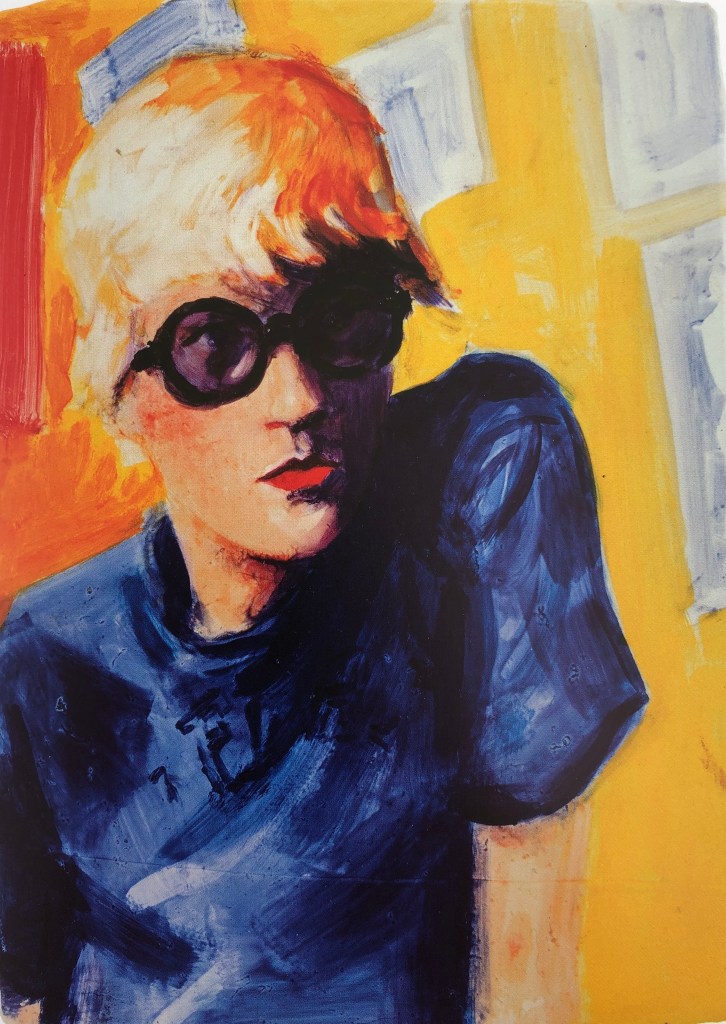
“David Hockney, Powis Terrace Bedroom”

1998

Oil on board

9.75 x 7 in

Kunstmuseum, Wolfsburg

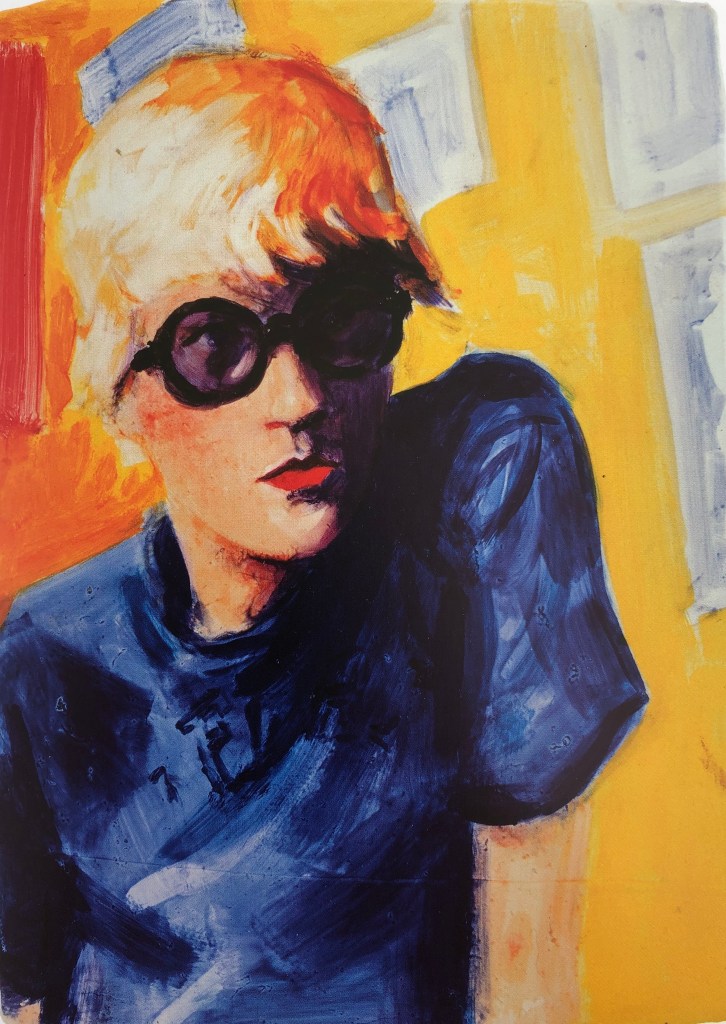
I chose this image unashamedly because of its bright colours; lots of complementary contrasts between purple/yellow and blue/orange, with some zinging reds for good measure. Even though the subject figure looks quite serious, it feels like a happy painting. The figure more or less fills the page, but is offset from centre enough to see the things stuck on the wall behind, which continue that diagonal of his shoulders. It’s quite a small painting – you imagine the artist producing the board from her bag and saying to the sitter “Don’t move – that’s exactly the pose I want to capture!”

SO WHAT?

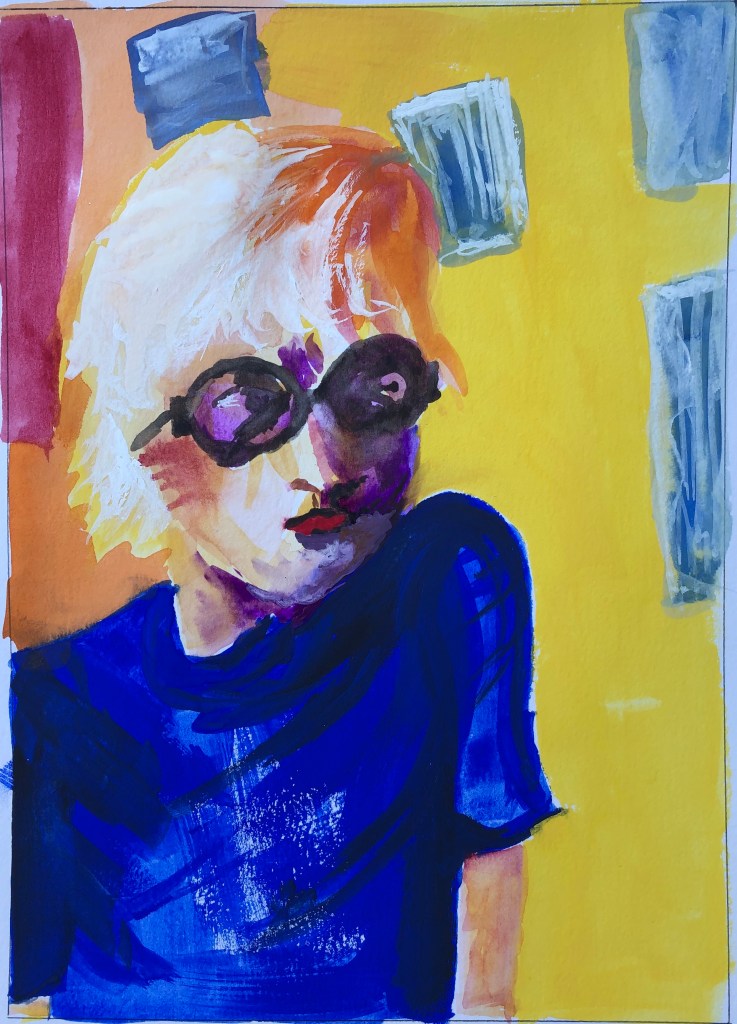
Again, I decided to work the same size as E.P., so I ruled that out in my multimedia sketchbook. I wanted to work quickly again to produce a rough copy, not concerning myself with likeness, but focusing more on exploring those colour combinations. I decided to work with gouache, a recent discovery for me – I like the slight chalkiness it has and the fact that you can overlay colours. I used a soft half-inch flat brush.

It was great fun to do, and I got some rough colour matches, although I think another layer of the background orange and yellow would have brought those out even more.

NOW WHAT?

I have learned:

  • Bright colours really can be fun!
  • As I have been experimenting with unfamiliar types of paint, I have enjoyed their differing textures. I now need to also consider their finish – the gouache is chalky, which “felt” good to me, but it gives a flat finish in comparison to E.P’s oil, which seems to retain and show the brush strokes in more detail.
  • If I want a really strong depth of colour, I might need to try building up layers rather than relying on the first applied fairly thickly.

Painting 1; Part 1; Research into painters using a “messy” style

Denis Castellas

Example:

“Untitled (Mozart)”

2005

Oil on canvas

74 x 78 in

Seen on www.mutualart.com

  • In several of his pieces, the character is complete in parts and only indicated for the rest – this one is more traditionally filling the canvas (many others leave a substantial part of the canvas unoccupied), but the right side of the face is more developed than the left
  • Large crossing brushstrokes in the undefined background
  • Interesting to choose to work so large for a head-and-shoulders portrait

Cecily Brown

Example:

“Figure in a Landscape”

2002

Oil on linen

80 x 80 in

Seen on http://www.gagosian.com

  • Quote from Cecily on the above website: “The place I’m interested in is where the mind goes when it’s trying to make up for what isn’t there.” Seems to sum up her images well.
  • Many paintings brightly coloured – this is a sedate example – she’s very good at flesh tones
  • Style seems chaotic but this is what pulls you in, because you can see there are bits of things which your brain can identify

Carole Benzaken

Example

“Magnolias 25 (Diptych)”

2016

Indian ink and pencils, laminated on glass

120 x 160 cm

Carole Benzaken & Galerie Nathalie Obadia,

Paris, Brussels

  • Just loved the combination of colours in this; also the technique reminded me a bit of my outcome for Drawing 1 Assignment 5
  • Some of her images are deliberately “fuzzy”, like a blurred camera shot
  • She experiments with a wide range of materials and techniques

Elizabeth Peyton

Example:

“David Hockney, Powis Terrace Bedroom”

1998

Oil on board

9.75 x 7 in

Kuntsmuseum Wolfsburg

  • Blue, orange, yellow, red – this image fairly jumps out at you
  • Her work seems to jump between near-monotones and then these brightly coloured pieces; also between pop-culture subjects and historic characters – but always portraits
  • Her brushstrokes are loose, often wide, and directional

Chantalle Joffe

Example:

“Walking Woman”

2004

Oil on board

305 x 124 cm

Seen on www.saatchigallery.com

  • She paints people, generally female, sometimes children, often on large, over-life-size supports
  • Dramatic angles in this composition with the vertical figure cutting through 
  • Her figures look out of the picture, almost at you but more as if they’re looking at someone standing just behind you; somehow this makes them engaging and slightly mysterious
  • Her painting style “embraces” a lot of drips and runs

Jasper Joffe

Example:

“Heart”

2004

Oil on canvas

230 x 190 cm

Seen on www.saatchigallery.com

(He also has many works on his website,

http://www.joffeart.com)

  • Some of his work is brightly coloured; others, as here, almost a monotone
  • Figures are often contorted (of which this is an extreme example) or drawn over
  • Many of his works are very large, allowing for big, loose strokes
  • Apart from the subject matter, the gradual darkening of tone as you move towards the top/back is unsettling, threatening

Harry Pye

Example:

“You Just Don’t Understand)”

2007

Can’t find details of painting – seen on 

www.harrypye.com

  • Quite a pop art style, brightly coloured
  • Despite the jolly, almost cartoon-like style, many of the characters in his pictures look sad – as here – I think sad faces pull the viewer in, make you wonder what’s wrong
  • The direction of brush strokes, so far as I can see, is not important to the picture

Painting 1: Part 1: Research into Peter Doig as example of artist using pattern and colour

IMAGE 1

WHAT?

“Grasshopper”

1990

Oil on canvas

200 x 250 cm

Seen on www.saatchigallery.com

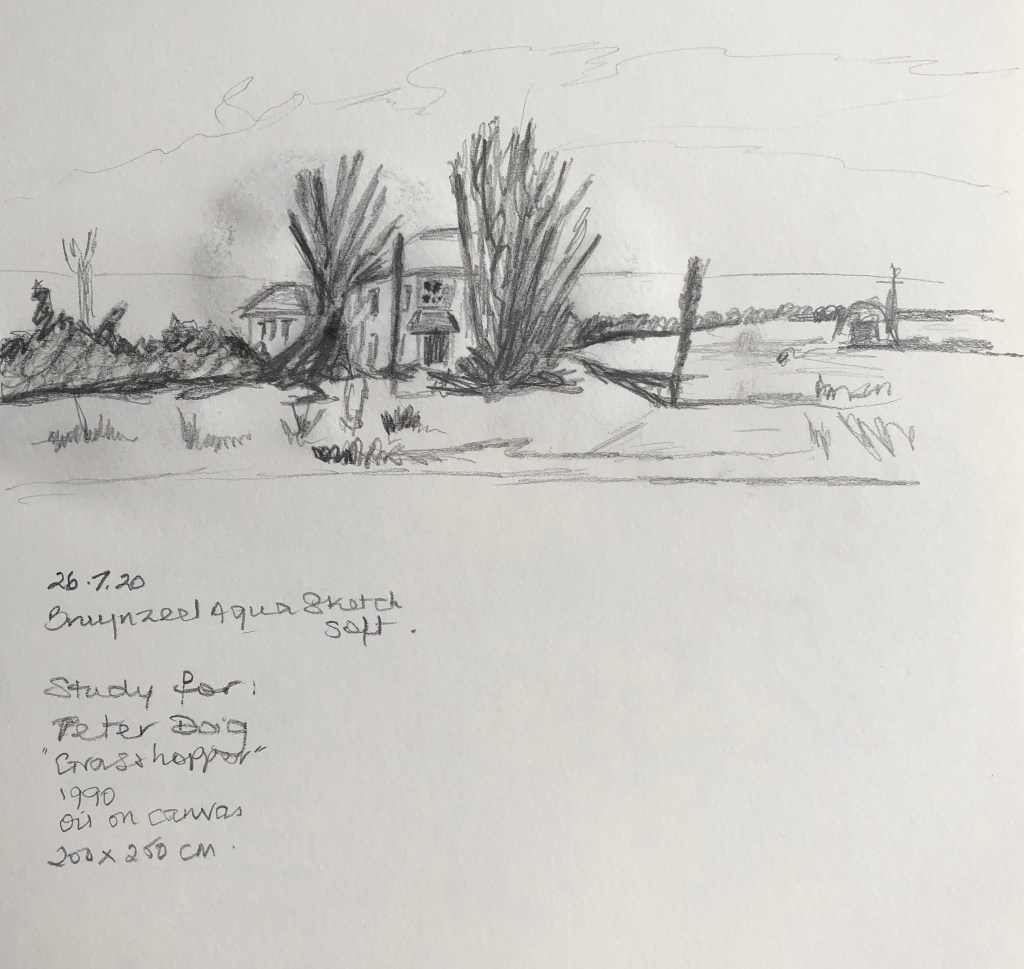
This painting takes me off somewhere warm and sparsely populated; the Catalogue Notes on www.sothebys.com suggest it is showing the wide open spaces of Canada, although apparently Doig himself said that the places he painted were dreamlike and imaginary. At first I was more interested in it than liking it but, the more I have worked with it, I have come to appreciate it. The composition is very striking, horizontal thirds, the top and bottom being quite textural, the middle section, where the eye settles first, much smoother. The things that grab your attention, house and large dark tree, are absolutely central.The palette is interesting – predominantly the complementary pairings of blue/orange and red/green, with a streak of yellow (quite a muted yellow) through the middle. The title seems to bear little relation to the image; the website above suggests that this is a grasshopper’s-eye view.

SO WHAT?

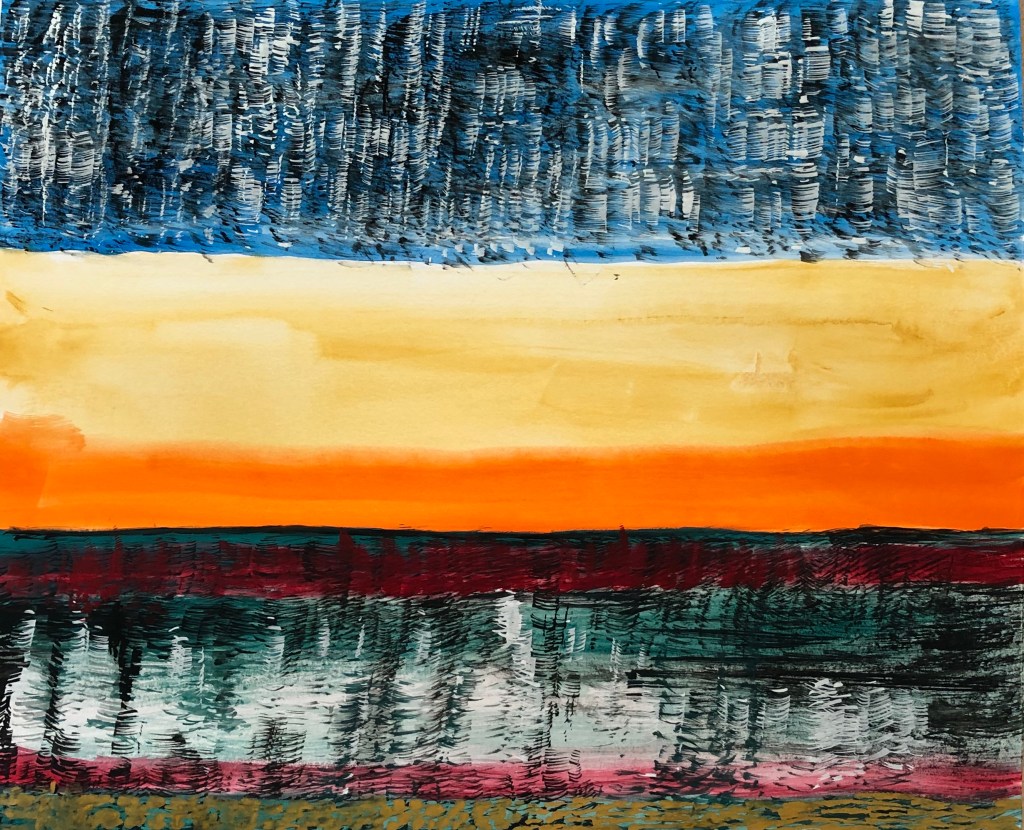
I did a quick pencil sketch of the central section with a water-soluble pencil, just so that I felt I understood its structure. What really interested me was the patterning of the top and bottom sections and how that was achieved, so I decided to focus on that to investigate further.

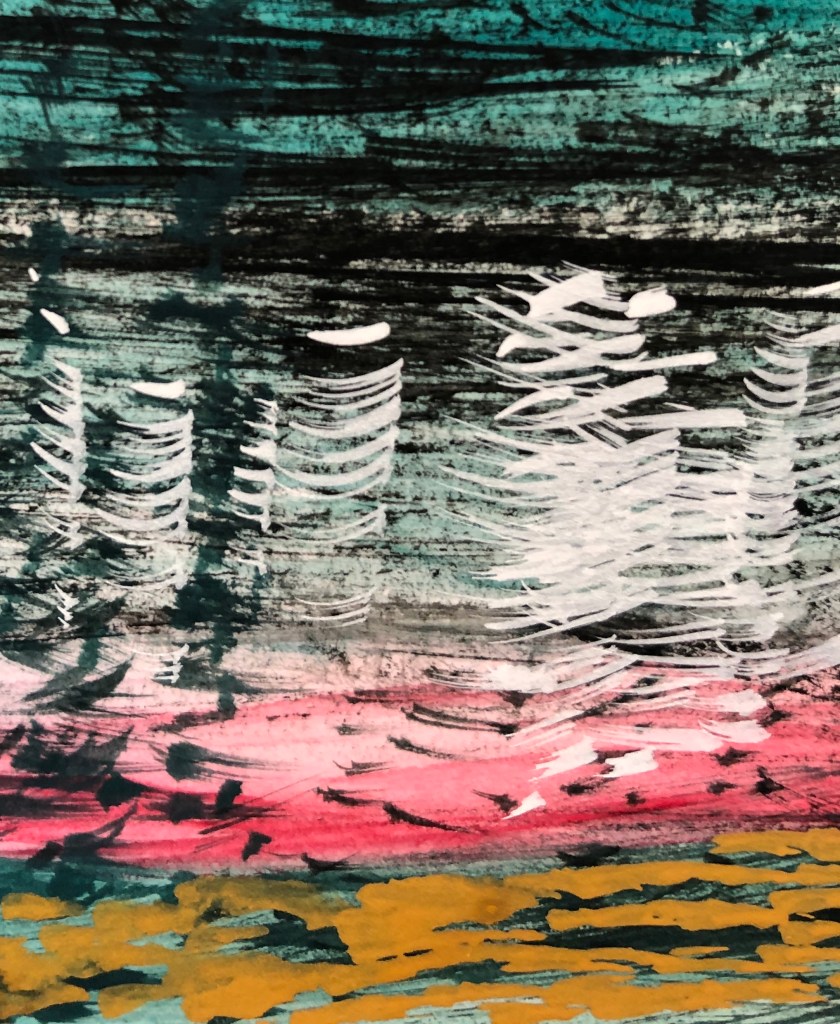
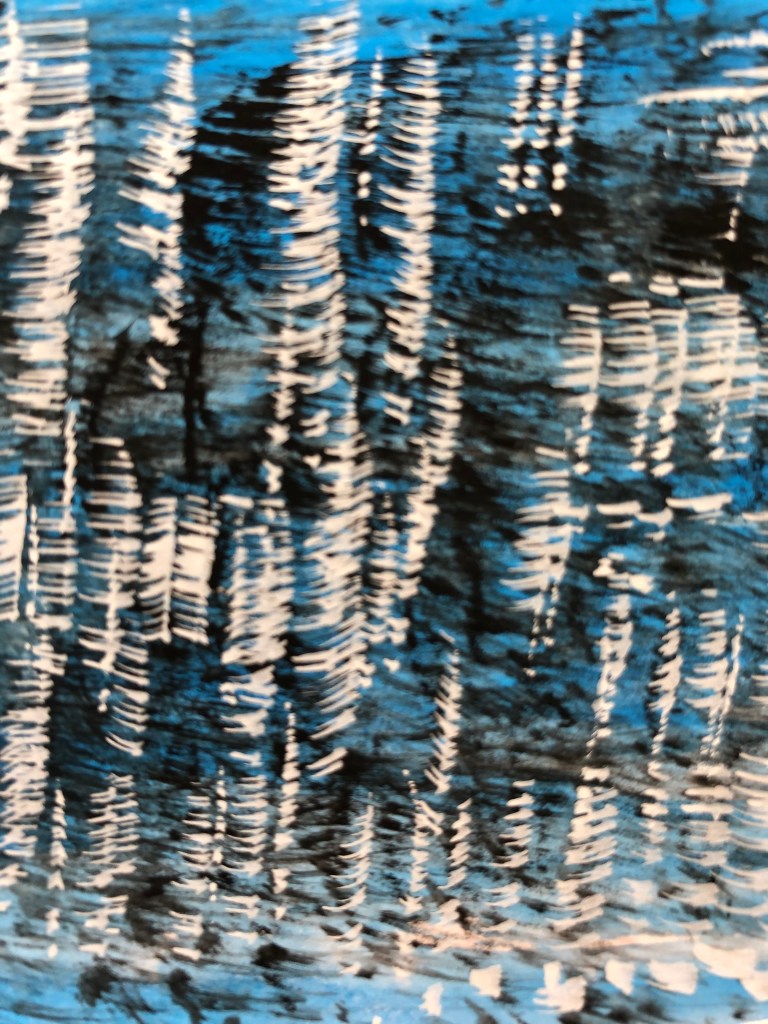
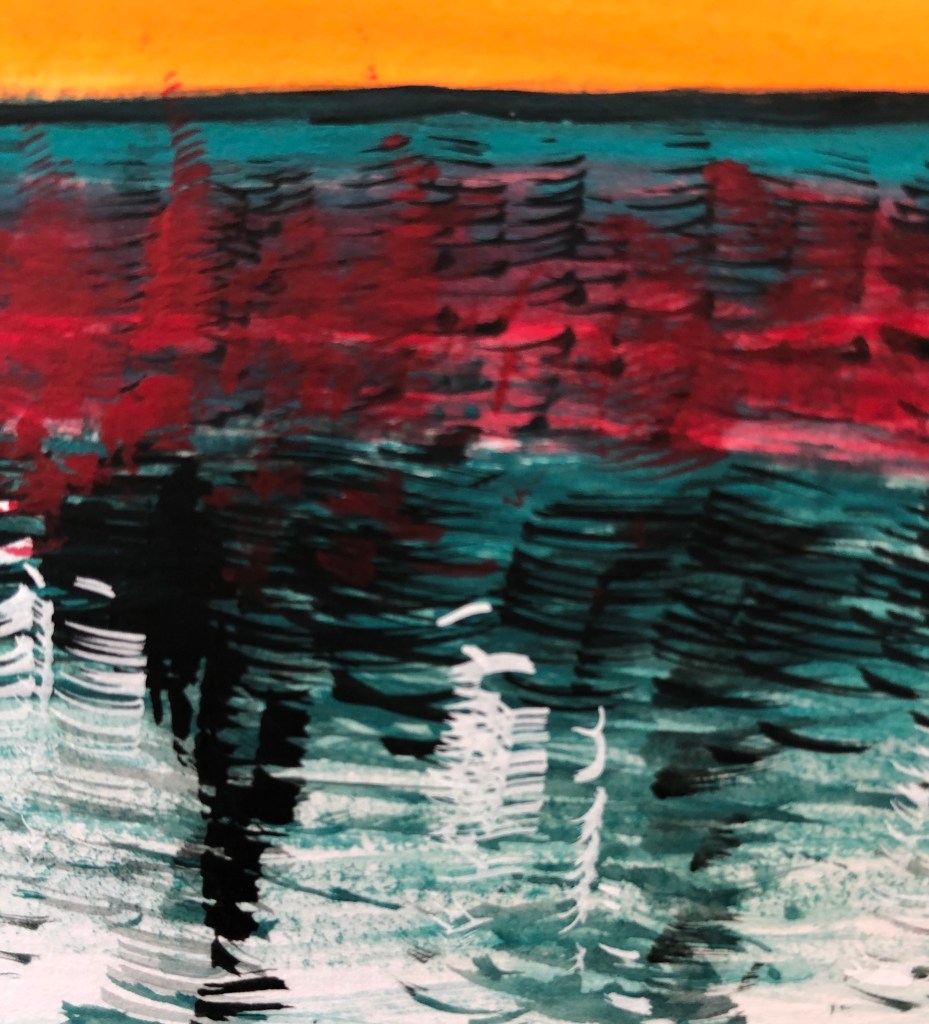
I decided to work in gouache, because I hadn’t used that to paint with before except as small highlights for watercolour paintings. I worked on multi-media paper in my sketchpad, using roughly the same proportions as the original, and laid down basic bands of colour and let them dry completely before working over them.

I was then able to experiment on the top and bottom sections to try and get that dotted, almost woven effect Peter Doig gets. I tried various marks with a fan brush; dabbing end-on with a flick seemed to produce something similar to his, so I played around with this in the sky with black and white, and in the water section with viridian and crimson. It was similar, but not right. Finally I tried making dashes with the corner of a soft flat brush in yellow ochre right at the bottom, and think this was possibly one of the techniques he might have used. 


This is my final version.

NOW WHAT?

  •  I realised that the scale at which we were working was vastly different; hence the exact mark making possibilities were not the same
  • What seems like a deceptively simple composition is actually a huge number of brushstrokes!
  • Interesting to think of patterns being made by varying brushstrokes

IMAGE 2

WHAT?

“The Architect’s Home in the Ravine”

1991

Oil on canvas

220 x 275 cm

Seen on www.saatchigallery.com

This picture is a bit spooky – makes you feel that you really should be running away, but you have to look. Reminds me of those James Bond films where the hero creeps over the ridge and finds the enemy den just as someone creeps up behind him and slugs him over the head.

The composition is really clever – lots of diagonals in the mid ground buildings, that light-coloured curve to the left (a pool?) just making the whole thing not too unremittingly spiky, then the viewer effectively “cut off” from the mid ground by the foreground of vertical trees and a huge mesh of branches – almost as if it’s fence posts and wire net fencing. It’s quite a compulsive experience for the viewer as he tries to peer through the obstacles to make out what’s going on behind. Peter Doig has gone for a palette of complementary blue/orangey-brown (cool/warm). The use of so much white is interesting – why are the branches white? Is it meant to be snowy (more comfortable scene) or reflecting light, maybe from the curved structure which is actually a giant spotlight (less comfortable scene). The title again is ambivalent – “The Architect’s Home…” (cosy)…”in the Ravine” (not cosy). It was painted a year after “Grasshopper”.

SO WHAT?

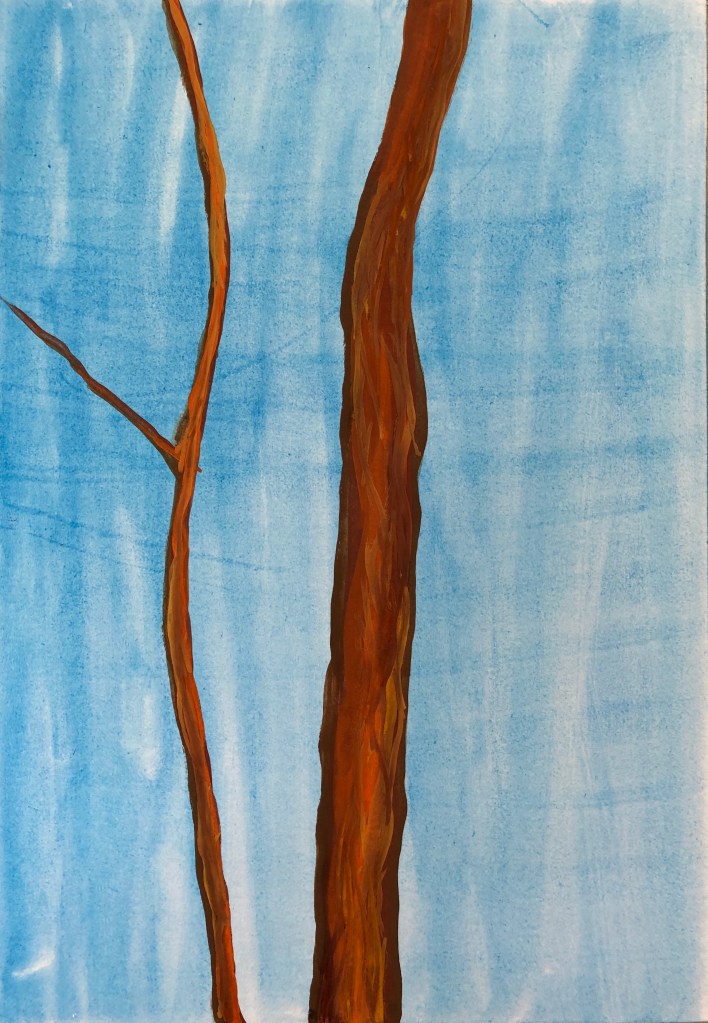
This must have been constructed in so many layers (if it were me I would have gone from the back to the front) that I decided to look at just the foreground and see if I could replicate how Doig did it. This is another large painting, so I decided to just work a small section onto A3 stretched paper. I laid on a rapid wash of blue gouache using vertical brush strokes with a huge round, let that dry, then focused on just two trees (part), and built them up with layers of raw umber, burnt sienna, flame orange and yellow ochre. 

Once that had dried, I used a rigger and white gouache to draw in the branches. Think it might have ended up looking a bit like one of David Hockney’s swimming pool paintings!


NOW WHAT?

I have learned:

  • The use of pattern can significantly enhance, indeed “make” a painting
  • Paintings like this, which involve one thing in front of another in front of another…need a lot of careful planning before you start
  • I rather like the effect of the image I’ve produced with its complementary colours and clean simple line pattern – so not everything needs to be complicated!

Painting 1; Part 1; Research – painters using colour and pattern

Peter Doig

Example:

“The Architect’s Home in the Ravine”

1991

Oil on canvas

200 x 275cm

Seen on http://www.saatchigallery.com

  • Uses pairs of complementary colours a lot (as here, blue and orange)
  • Interesting composition with the vertical foreground trees, and then the buildings at angles behind pulling you through into the dark woods in the background
  • The lattice of little branches might at first appear a barrier to a viewer, but actually it pulls you in to try and work out what’s behind – very clever

Edouard Vuillard

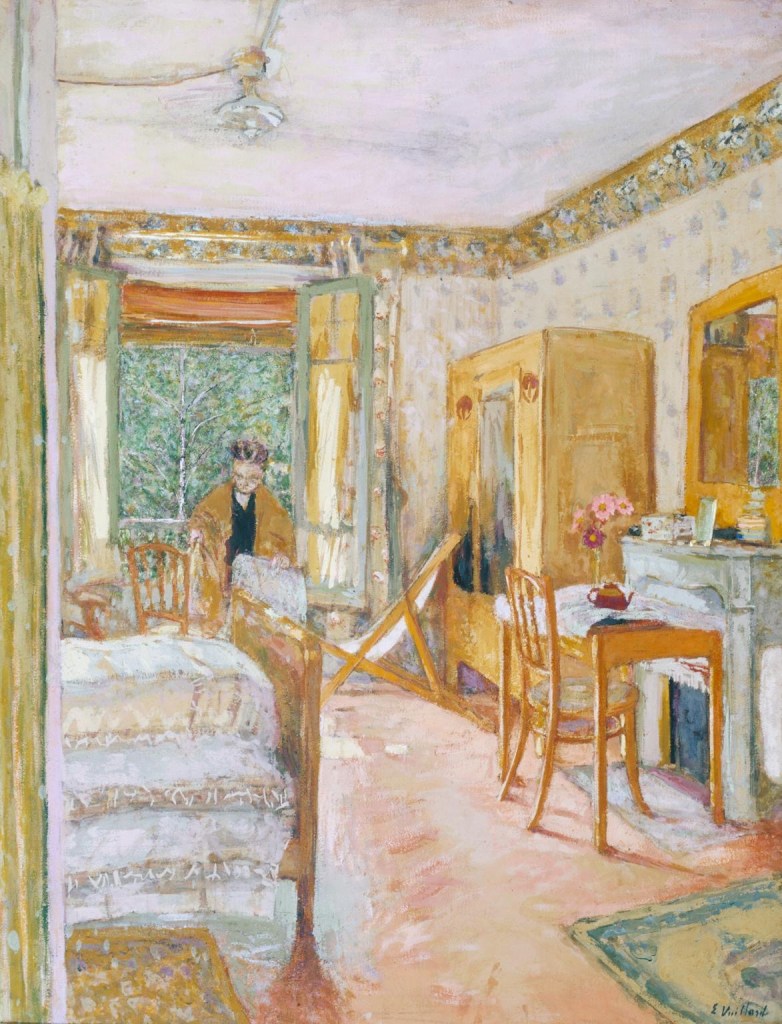
Sunlit Interior c.1920 Edouard Vuillard 1868-1940 Bequeathed by the Hon. Mrs A.E. Pleydell-Bouverie through the Friends of the Tate Gallery 1968 http://www.tate.org.uk/art/work/T01075

Example:

“Sunlit Interior”

1921

Distemper on paper mounted on canvas

32.75 x 25 in

Tate, London; Image released under Creative Commons CC-BY-NC-ND (3.0 Unported)

  • Pastel, sunny colours – either because of the medium used – or more likely the medium was deliberately selected to create this effect
  • Also uses juxtaposition of complementary colours; red/green, orange/blue – these add a bit of “zing” to what might otherwise be too sugary a scene
  • He really loved his pattern details – we went to an exhibition of paintings relating to his mother a couple of years ago at the Barber Institute, where his depiction of interiors with all their patterned wallpaper, carpet, china etc was striking

Tal R

Example:

“New Quarter”

2003

Mixed media on canvas

250 x 250 cm

Seen on www.saatchigallery.com

  • Blocks of strong colours, lot of primary and secondary colours, black and white
  • Strong directional composition: horizontals and verticals top and bottom with diagonal element centrally
  • Lots of patterned sections in the clothes and the buildings – stripes, grids, blobs – even in the grass!

Daniel Richter

Example:

“Trevelfast”

2004

Oil on canvas

283 x 232 cm

Seen on www.saatchigallery.com

  • Strong contrasts between black elements and the fiery reds, oranges and yellows, which also then contrast with the icy whites and blues at the bottom
  • Unusual cross-shaped composition, with the vertical central tree and the horizontal central galloping figure – my eye is constantly drawn to the point where they meet
  • Really big painting!